
 Worksheets
6th Weather Test Review
Total questions: 20
Worksheet time: 10mins
Tornadoes form in the same type of cloud as thunderstorms.
True
False
The boundary where unlike air masses meet but do not easily mix is called a(n) jet stream.
True
False
Rain or snow usually is associated with falling air pressure.
True
False
The low air pressure of anticyclones is often associated with storms and precipitation.
True
False
At a warm front, warm air meets and moves over cold air.
True
False
Storms that form within large cumulonimbus clouds and produce rain and lightning are called ____________________.
On newspaper weather maps, colors are often used to indicate ____________________ ranges for different areas.
A long period of scarce rainfall or dry weather called a _____________ may result in a shortage of water.
A hurricane’s storm surge is caused by a combination of high winds and ____________________.
Sudden, violent floods that occur shortly after a storm are called ____________________.
The collecting of weather data in the last 40 years has been improved mostly by
Small lines at the end of the shaft that represents wind direction on a weather map indicate
Wind speed
Weather associated with an anticyclone is generally
Cold, dry air affecting the northern United States in winter often comes from
continental polar air masses
continental tropical air masses
maritime polar air masses
maritime continental air masses
Very high feathery clouds are called
Two conditions are required for cloud formation: cooling of the air and
the presence of particles
Relative humidity can be measured with a(an)
psychrometer
thermometer
What is the name of the process by which water vapor enters the atmosphere during the water cycle?
What type of front involves a stalemate between two weather fronts?
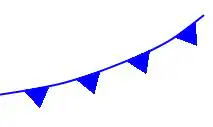
What type of front is represented by this symbol on a weather map?
humid front
warm front
cold front
dry front

