
 Worksheets
Introduction to Organic Chemistry
Total questions: 45
Worksheet time: 2hrs 32mins
TRUE or FALSE.
All organic compounds are obtained from living organisms or "organic materials" while all inorganic compounds are obtained from earth's mineral constituents or "inorganic materials".
(a)
Carbon has (a) valence electrons.
Which of the two is an Organic Compound?


____________ groups are atoms, groups of atoms or bond that determine the characteristic of an organic compound.
Aliphatic
Aromatic
Functional
Hydrocarbon
Aliphatic hydrocarbons consist only single bonds, and so are called ____________ hydrocarbons.
unsaturated
saturated
aromatic
chain
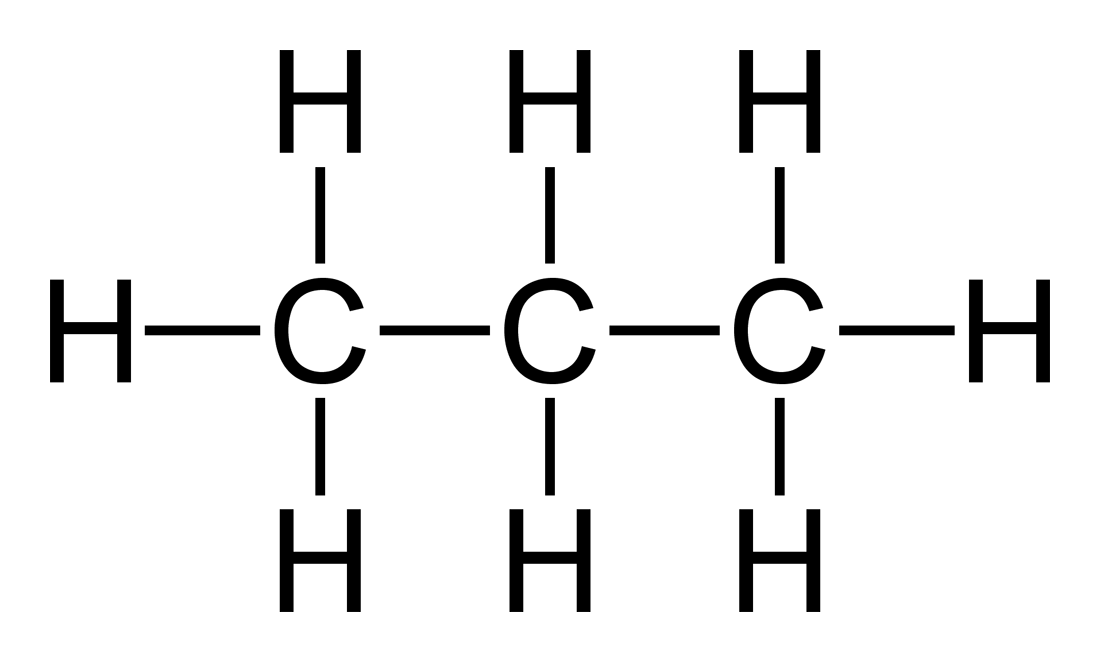
How many carbon atoms are in propane?
1
2
3
4

How many hydrogens are missing from this extended structural formula?
6
7
8
9

What is the condensed formula of this structure?
CH3CH2CH2OH
CH3COCH3
CH3CH2CHO
CH3OCH2CH3

What is the molecular formula for structure showed?
C8H18
C3H3
C8H3
C3H2(CH3)3

How many single covalent bonds does benzene (C6H6) molecule have?
3
6
9
12
Isomers are molecules that have the _________molecular formula (contain the same number of atoms) but ______ structurally (having different arrangement of the atoms in space).
differ, differ
same, differ
same, same
differ, same
What is a functional group?
Atoms or group of atoms that give specific characteristics to a molecule
Group of molecules that make up a group of atoms
Group of molecules that give specific characteristics to an atom
Group of atoms that give specific characteristics to an element

Classify the compound based on the functional group present.
Ether
Ketone
Ester
Carboxylic acid
Compounds which only contain carbon and hydrogen are termed as
hydrocarbons
organic compounds
inorganic compounds
carbohydrogens
Hydrocarbons that contain a delocalized ring of π-bonds such as benzene ring are called ___________ hydrocarbons.
aromatic
aliphatic
organic
cyclo
Aliphatic hydrocarbons consist only single bonds, and so are called ____________ hydrocarbons.
unsaturated
saturated
aromatic
chain
Hydrocarbons, the simplest family of carbon compounds, are made from these two elements:
Hydrogen and Copper
Helium and Carbon
Hydrogen and Carbon
Compounds that are composed of the same number and type of atoms but have them arranged in different ways are ___________.
isomers
isotopes
polymers
alkanes
Which of the following would have the highest boiling point?
C3H8
C4H8
C5H12
C22H44

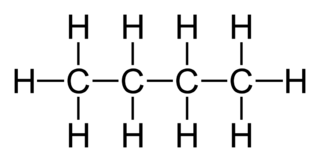
Is the name of doubled bonded, unsaturated hydrocarbons.
Alkanes
Alkenes
Allkynes
Tanins

What is the name of this hydrocarbon?
1 - butane
1 - butene
2 - butane
2 - butene
Which of the following shows the structure of propene?


Which of the following shows the structure of ethene?

What chemical is this? (C5H10)
Pentene
Pentane
Hexane
Heptene

Choose the name of the compound
4-octyne
5-octyne
4-octene
5-octene

Choose the name of the compound
1-propene
2-propene
propane
2-propyne

Choose the name of the compound
3-butyne
2-butyne
3-butene
2-butene

Choose the name of the compound
2-pentyne
3-pentyne
2-pentene
3-pentene
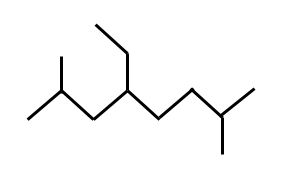
Give IUPAC nomenclature for this compound
2,7-dimethyl-5-ethyloctane
5-ethyl-2,7-dimethyloctane
2,7-dimethyl-3-ethyloctane
4-ethyl-2,7-dimethyloctane
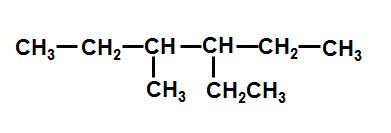
Give the IUPAC name for this compound
3-methyl-4-ethylhexane
3-ethyl-4-methylhexane
3-methyl-4-ethylheptane
3-ethyl-4-methylheptane

What functional group is shown?
amino
hydroxyl
carboxyl
sulfhydryl

What functional group is shown?
carbonyl
hydroxyl
carboxyl
amino

What functional group is shown?
halide
hydroxyl
amino
carboxyl

Name this compound.
Butanol
Butene
Oxybutanol
Butanoic acid

Name this compound.
Nitroethane
Ethylamine
Aminoethane
Ethamine
The structural formula of ethyl 2-methylpropanoate is ...


______________ are the chemicals which give fruits their smell.
fructose
lactose
esters

