
 Worksheets
23- BUỔI 01
Total questions: 32
Worksheet time: 16mins
1. Which of the following objects does the Earth look like?
Trái Đất có hình dạng giống vật nào dưới đây?
Egg
Trứng
Pineapple
Quả dứa
Orange
Cam
Banana
Chuối
Corn
Bắp ngô
2. How long does the Earth take for one revolution about itself?
Trái Đất quay 1 vòng quanh chính nó mất bao lâu?
1 hour
1 giờ
1 day
1 ngày
1 week
1 tuần
1 month
1 tháng
1 year
1 năm
3. How long does it take for the Earth to revolve around the Sun?
Trái Đất quay 1 vòng quanh quanh Mặt Trời mất bao lâu?
1 hour
1 giờ
1 day
1 ngày
1 week
1 tuần
1 month
1 tháng
1 year
1 năm
4. How are Mercury, Venus, Earth, and Mars ALIKE?
Sao Thủy, Sao Kim, Trái Đất và Sao Hỏa là là hành tinh như thế nào?
They are made of rock
Chúng được làm bằng đá
They are the farthest planets from the Sun
Chúng là những hành tinh xa Mặt Trời nhất
They are mostly made of gas
Chúng chủ yếu được làm bằng khí
They are the largest planets in the solar system
Chúng là những hành tinh lớn nhất trong hệ Mặt Trời
5. Why is the moon bright in the night sky?
Tại sao mặt trăng sáng trên bầu trời đêm?
The moon is made of burning gasses.
Mặt trăng được tạo ra từ khí đốt.
The moon reflects light from the Earth.
Mặt trăng phản chiếu ánh sáng từ Trái đất.
There is a source of light inside of the moon.
Có một nguồn ánh sáng bên trong mặt trăng.
The moon reflects light from the Sun
Mặt trăng phản chiếu ánh sáng từ Mặt trời
6. Which planet is the hottest?
Hành tinh nào là nóng nhất?
Earth
Trái đất
Neptune
Sao Hải vương
Mercury
Sao Thủy
Venus
Sao Kim
7. What do we call Jupiter, Saturn, Uranus and Neptune?
Chúng ta gọi sao Mộc, sao Thổ, sao Thiên Vương và sao Hải Vương là
Outer Planets
Hành tinh vòng ngoài
Terrestrial Planets
Hành tinh đất liền
Inner Planets
Hành tinh vòng trong
Rocky planet
Hành tinh đá
8. Which planet below is closest to the Sun?
Hành tinh nào dưới đây gần Mặt Trời nhất?
Earth
Trái Đất
Venus
Sao Kim
Jupiter
Sao Mộc
Mars
Sao Hỏa
Mercury
Sao Thủy
9. Which is the second closest planet to the sun?
Hành tinh nào gần mặt trời thứ hai?
Saturn
Sao Thổ
Mercury
Sao Thủy
Venus
Sao Kim
Earth
Trái Đất
10. Which planet is third from the sun?
Hành tinh nào gần mặt trời thứ ba?
Mars
Sao Hoả
Pluto
Sao Diêm Vương
Venus
Sao Kim
Earth
Trái Đất
11. Which one below is a star?
Đáp án nào dưới đây là 1 ngôi sao?
Earth
Trái Đất
Sun
Mặt Trời
Moon
Mặt Trăng
Mars
Sao Hỏa
Mercury
Sao Thủy
12. Which one below is the satelite of the Earth?
Đáp án nào dưới đây là vệ tinh của Trái Đất?
Earth
Trái Đất
Sun
Mặt Trời
Moon
Mặt Trăng
Mars
Sao Hỏa
Mercury
Sao Thủy
13. Which one below is a satellite?
Đáp án nào sau đây là tên của một vệ tinh?
Earth
Trái Đất
Sun
Mặt trời
Moon
Mặt Trăng
Uranus
Sao Thiên Vương
Mercury
Sao Thủy
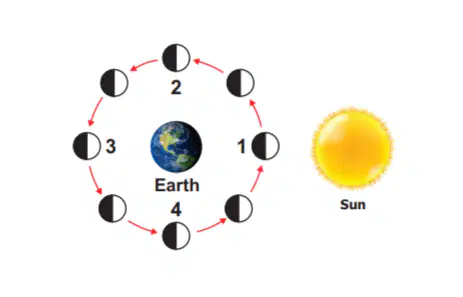
14. In which position of the moon would there be the lunar eclipse?
Vị trí nào của mặt trăng trong các vị trí bên dưới có thể xảy ra nguyệt thực?
1
2
3
4
None of these
15. In which position of the moon would there be the solar eclipse?
Vị trí nào của mặt trăng có thể xảy ra hiện tượng nhật thực?
1
2
3
4
None of these
16. Which one is an example of a natural statellite?
Đáp án nào là ví dụ của một vệ tinh tự nhiên?
Halley’s comet
Sao chổi Halley
The Moon
Mặt Trăng
The Sun
Mặt Trời
Jupiter
Sao Mộc
Mars
Sao Hỏa
17. What are day and night on The Earth caused by?
Đâu là nguyên nhân tạo ra ngày và đêm trên Trái Đất?
Revolution of The Earth
Trái Đất quay quanh Mặt Trời
Revolution of the Moon
Mặt Trăng quay quanh Trái Đất
Rotation of The Earth
Trái Đất tự quay quanh trục của nó
Rotation of the Moon
Mặt Trăng tự quay quanh trục của nó
Rotation of the Sun
Mặt Trời tự quay quanh trục của nó
18. Which one below is the satellite of the Earth?
Trong các đáp án sau, đáp án nào là vệ tinh của Trái Đất?
Earth
Trái Đất
Sun
Mặt Trời
Moon
Mặt Trăng
Mars
Sao Hỏa
Mercury
Sao Thủy
19. What planet are we staying?
Mars
Mercury
Earth
Venus
Saturn
20. Which country's person is the first to land on the moon?
United States
France
United Kingdom
Germany
China
21. Which of the following revolves around the earth?
Sun
Moon
Venus
Mercury
Mars
22. What is the largest planet in the solar system?
Earth
Mars
Jupiter
Sun
Venus
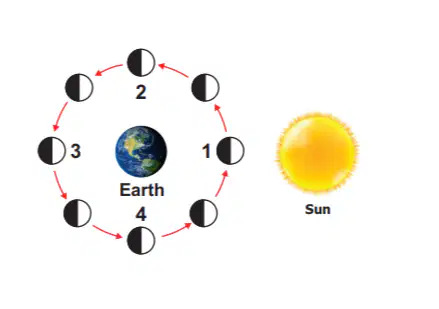
23. A diagram of the Sun-Earth-Moon system is shown below. In which position would the moon be to see a full moon on Earth?
Biểu đồ hệ Mặt Trời-Mặt Trăng-Trái Đất được cho như hình. Đâu là vị trí của Mặt Trăng cho phép ta có thể nhìn được trăng tròn trên Trái Đất?
1
2
3
4
All of these
Tất cả vị trí trên.

24. Which of these shapes does Moon never take?
Hình dạng nào dưới đây không phải là của Mặt Trăng khi nhìn thấy ở Trái Đất?
A
B
C
D
E
25. Where does the light of the moon come from?
The moon produces itself
Reflecting the sun's light
Humans set a big light bulb on the moon
Artificial satellite
None of the above
26. Which country's person is the first to land on the moon?
United States
France
United Kingdom
Germany
China
27. What happen when an area turns its back to the sun?
Summer
Spring
Day
Night
None of the above
28. What is the centre of the solar system?
Earth
Mars
Pluto
Sun
Black hole
29. What is the closest star to earth?
Moon
Mars
Jupiter
Sun
Venus
30. What is the largest planet in the solar system?
Earth
Mars
Jupiter
Sun
Venus
31. The different colours of different stars are due to the variation of:
Màu sắc khác nhau của các ngôi sao khác nhau là do sự biến đổi của:
Temperature/ nhiệt độ
Pressure/ Áp suất
density / Khối lượng riêng
radiation from them/ Bức xạ từ chúng
none of the above / Không có đáp án nào
32. When can we see rainbow?/ Khi nào nhìn thấy cầu vồng
We face sun and raindrops/Chúng ta đối mặt với nắng và mưa
The Sun remains behind us and we face raindrops/ Mặt trời ở phía sau chúng ta và chúng ta phải đối mặt với những hạt mưa
The Sun remains behind us and we face clear sky/ Mặt trời vẫn ở phía sau chúng ta và chúng ta đối mặt với bầu trời quang đãng
In light rainfall we face Sun/ Khi trời mưa nhẹ chúng ta nhìn thấy Mặt trời
The sky remains clear and the sun is at lower position in the sky/ Bầu trời vẫn quang đãng và mặt trời ở vị trí thấp hơn trên bầu trời

