
 Worksheets
Meredith Benchmark
Total questions: 37
Worksheet time: 19mins
Name
Class
Date
1.
The abilities to dissolve in water and to conduct electricity are examples of
a)
natural properties
b)
chemical properties
c)
natural laws of matter
d)
physical properties
2.
Which is the correct equation for calculating density?
a)
Density=Mass/Volume
b)
Density=Mass/Weight
c)
Density=Volume/Mass
d)
Density=Volume/Weight
3.
What is the density of an object whose mass is 180 grams and whose volume is 45 cm3?
a)
4 cm3/g
b)
0.25 g/cm3
c)
4 g/cm3
d)
0.25 cm3/g
4.
In a hetereneous mixture the substances
a)
can be physically separated
b)
are chemically combined
c)
can only be separated through chemical processes
d)
break down into new substances
5.

In the chemical equation shown, what are the reactants?
a)
CH4 and 2O2
b)
2O2
c)
CO2 and 2H2O
d)
CH4
6.
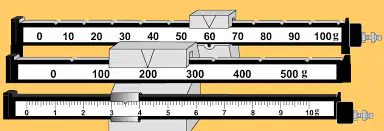
What is the mass of the object on the triple beam balance?
a)
263.5 L
b)
200603.5 g
c)
263.5 g
d)
263.5 cm
7.
A symbiotic relationship in which both organisms benefit is an example of
a)
Commensalism
b)
Parasitism
c)
Mutualism
8.
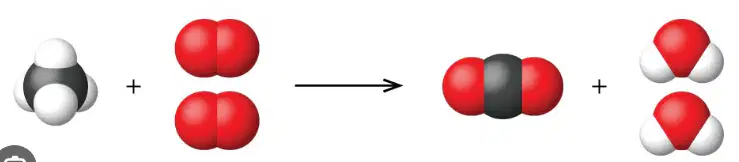
What is the chemical equation for the following molecular formula? Black = Carbon. White = hydrogen. Red = oxygen.
a)
C4H + 4O ---> 2O +C + 2H2O
b)
4O + 1C + 2O2 ---> 2OC + 2H2O
c)
CH4 + 2O2 --> CO2 + 2H2O
9.
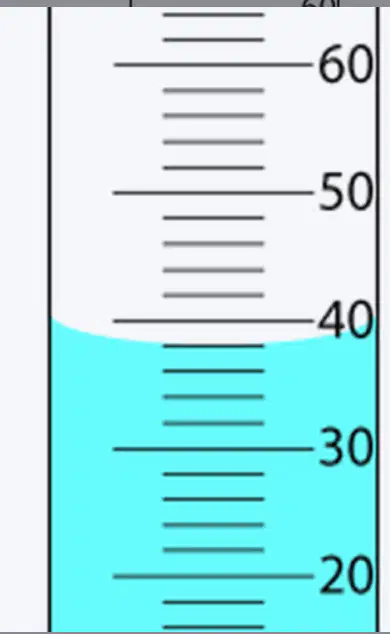
How much water is in the graduated cylinder?
a)
35
b)
40
c)
39
d)
38
10.
In general, what happens to the rate of a reaction when you decrease the temperature of a chemical reaction?
a)
it decreases
b)
it increases
c)
it is unaffected
d)
it increases, and then decreases
11.
Which of the following is a biotic factor that might limit a population of mice?
a)
water for mice to drink
b)
rainy weather that floods the mice's nests
c)
owls that prey on the mice
d)
rocks in which the mice can hide from predators
12.
If a parasite kills its host, it is putting its own life at risk?
a)
true
b)
false
13.
A disruption to an established ecosystem can lead to
a)
new organisms being prevented from moving into the area
b)
changes in the population
c)
more resources for all the organisms that make up the community
d)
hurricanes or volcanic eruptions
14.
Which of the following renewable energy resources comes from the underground?
a)
geothermal energy
b)
wind power
c)
hydropower
d)
solar power
15.
Automobiles contribute to air pollution by
a)
increasing methane
b)
decreasing oxygen
c)
decreasing carbon dioxide
d)
increasing carbon dioxide
16.
Changing the flow of water, such as filling in a wetland for development, impacts the environment by
a)
increasing desertification
b)
increasing flooding and pollution
c)
decreasing erosion
d)
decreasing nutrient depletion
17.
Which of the following terms refers to long term weather patterns in an area?
a)
climate
b)
altitude
c)
weather
d)
prevailing winds
18.
Why do areas near the equator have warmer climates than areas near the poles?
a)
there are fewer mountains near the equator than in areas near the poles.
b)
Sunlight strikes Earth's surface more directly at the equator than at the poles.
c)
Ocean currents carry warm water from the poles to the equator
d)
areas near the equator are generally at higher altitudes than areas near the poles.
19.
As altitude increases, air temperature decreases. So it will be ....
a)
hotter higher up on the mountain than at its base
b)
the same up on the mountain than at its base
c)
cooler higher up on the mountain than at its base
20.
As global temperatures rise, the global sea level is expected to rise in part because
a)
more precipitation is falling
b)
permanent frost is thawing
c)
greenhouse gases cause water to expand
d)
glaciers are melting at a faster rate
21.
One example of a physical change is
a)
burning paper
b)
baking cookies
c)
heating table sugar
d)
dissolving salt in water
22.
One example of a chemical change is
a)
Filtering
b)
Burning wood
c)
Boiling Water
d)
Crushing a Can
23.
Substances that CANNOT be broken down chemically into other substances are
a)
elements
b)
compounds
c)
atoms
d)
molecules
24.
All elements are composed of extremely small particles called
a)
compounds
b)
mixtures
c)
atoms
d)
molecules
25.
What holds atoms together in a molecule?
a)
Density
b)
Gravity
c)
Physical bonds
d)
Chemical bonds
26.
In the laboratory, volumes of liquid are usually measured with a(n)
a)
Electrode
b)
Scale
c)
Triple-Beam Balance
d)
Graduated Cylinder
27.
Anything that has mass and takes up space is called
a)
Matter
b)
Energy
c)
Heterogeneous
d)
Homogeneous
28.
The many overlapping food chains in an ecosystem make up a(n)
a)
Food Web
b)
Niche
c)
Energy Pyramid
d)
Feeding Level
29.
The first organism in a food chain is always a
a)
Consumer
b)
Herbivore
c)
Carnivore
d)
Producer
30.
Which of the following is an example of a population?
a)
the cats and dogs in your neighborhood
b)
the bushes and grass in a park
c)
the rocks in a rock collection
d)
the gray wolves in a forest
31.
A group of antelope leaving the herd in search of better grassland is an example of
a)
immigration
b)
emigration
c)
increasing birth rate
d)
decreasing death rate
32.
The largest population that an environment can support is called its
a)
carrying capacity
b)
limiting factor
c)
birth rate
d)
death rate
33.
Which of the following is considered a renewable resource?
a)
Iron
b)
Sunlight
c)
Coal
d)
Oil
34.
If all members of a species disappear from Earth, the species is said to be
a)
Extinct
b)
Endangered
c)
Threatened
d)
Keystone
35.
Which of the following is considered a nonrenewable resource?
a)
Sunlight
b)
Coal
c)
Corn
d)
Trees
36.
What are the products of photosynthesis?
a)
carbon dioxide and water
b)
oxygen and water
c)
carbon dioxide and sugars
d)
oxygen and sugars
37.
The stage of respiration that releases most of the energy in glucose occurs in the
a)
Nucleus
b)
Chloroplasts
c)
Cytoplasm
d)
Mitochondria
100 %

