
 Worksheets
Quiz on Secondary vs Primary Research
Total questions: 38
Worksheet time: 8mins
Why is research important?
To ignore evidence
To provide facts to support ideas
To make ideas less credible
To confuse readers with unsupported ideas
What does finding a fact in multiple reference sources indicate?
The fact is irrelevant
The fact is definitely inaccurate
The fact is subjective
The fact is more likely to be accurate
Why is it important to consider multiple viewpoints during research?
To stick to the original idea
To avoid complexity
To limit the scope of research
To explore more ideas
When should research be conducted during a project?
Only at the end
Never during the project
Only at the beginning
At all stages of the project
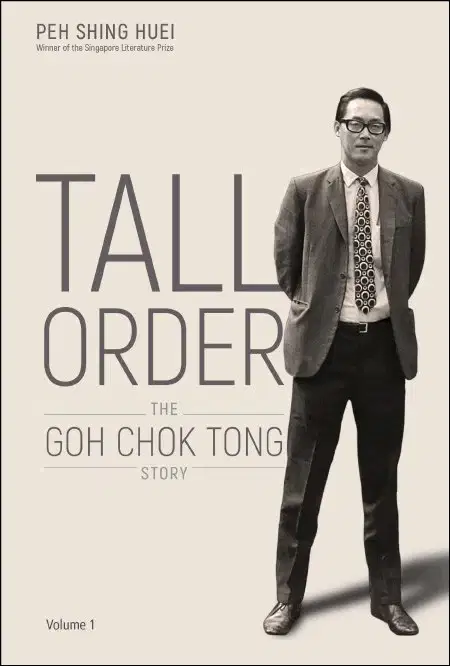
The biography 'Tall Order: The Goh Chok Tong Story' is an example of a
A photograph of your target group testing the prototype you created is an example of a
My mom has CDs of my grandparents being interviewed and telling stories about when they were kids during the Japanese Occupation. We learnt a lot listening to these. What are we listening to?
Primary Sources
Secondary Sources
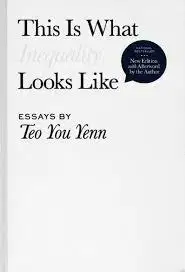
I am writing an essay on inequality for my GP class. I used articles from The Straits Times and This Is What Inequality Looks Like by Professor Teo You Yenn . What am I using?
Primary Sources
Secondary Sources

A survey carried out by your group.
Is this an example of a primary or secondary source?
What should you evaluate when deciding between primary and secondary data?
Whether the data is already available
The color of the data
The length of the data
The font of the data
What is a key consideration when using secondary data?
Font style
Colorfulness
Reliability
Length
What is an important factor to check when evaluating the credibility of a source?
Author's favorite color
Author's credentials
Author's nationality
Author's age
Why is currency important when using secondary data?
To make information irrelevant
To ensure information is outdated
To confuse readers
To ensure information is up-to-date
What is a common mistake to avoid when asking questions in surveys or interviews?
Double-barrelled questions
Single-barrelled questions
Triple-barrelled questions
No-barrelled questions
Determines if the information is directly related to or applicable to the research issue, also if the information is significant, pertinent and important.
relevance
reliability
credibility
adequacy
adequacy
credibility
truthfulness
quality control
structured interview
focus group
panel discussion
survey
the details about the sources being referred to at the end of the research paper
the author's name in parentheses in the beginning of the research paper
acknowledgement of the source of information in the body of the research paper
all the sources referred to in the study
interviewees
research sample
target population
respondents
alternative
definitive
representative
constructive
when the work was written
when the work was accessed by the researcher
when the work was published
when the work was edited
Introduction and Purpose
Data Collection Sources
Literature Review
Discussion of Findings
target population
sample
empirical data
interviewees
What is a big reason for why focus groups are used?
All participants will be completely comfortable with speaking openly
They don't require a great deal of preparation
They're not a time consuming way of doing research
Can help researchers learn more deeply about needs a community may have
Focus Group Dicussions is the method/techniques of which data:
Qualitative
Quantitative
Both
None
How many participants are usually required for FGD?
1-5
6-10
12-20
7-14
Who is needed to conduct FGD?
Moderator
Participants
Note taker
All are correct
What should you NOT do before a focus group meeting starts?
Double-checking the participants are attending
Start recording
Have your questions ready
Find someone who can lead the group
Which of the following is the primary reason or underlying rationale for
conducting focus groups?
allow for individualized analysis
able to provide more precision than quantitative studies
interaction among group members
ambiance of the focus group promotes direct questioning
Which of these is a main characteristic of a focus group?
It doesn't have a leader
The groups are made up by a lot of people
It's a type of group interview that has more structure
It can have only one participant
Which of the following is a component of ethnographic research?
Being immersed in a social group or setting
Participant observation, interviews, and/or documentary analysis
A written account of an ethnographic study
All of the above
What is one of the main disadvantages of using the covert role in ethnography?
It can be hard to gain access to the social group
It is difficult to take notes without arousing suspicion
The problem of reactivity: people may change their behaviour if they know they are being observed
It is usually too time consuming and expensive to be a realistic option
Which of the following will not help you to negotiate access to a closed/non-public setting?
Gaining the support of a "sponsor" within the organization
Obtaining clearance from a "gatekeeper" or senior member of the group
Joining in with the group's activities without introducing yourself
Offering something in return, e.g. a report of the findings
Is it okay to break the law in order to maintain a "cover"?
Yes, provided it is not very serious
No, never under any circumstances
Yes, because otherwise data on criminal activity would never come to light
Yes, provided it doesn't cause physical harm to someone
Which groups of people are suited for ethnography as a research method?
Adults
People with inherent biases
Children
University students
If you need to find data regarding trends on ageing, which source would you refer to first?
ChatGPT
My MP
Singstat
NUS Sociology Professor
For articles/ books/ abstracts from academic publishers or professional societies, which source should you turn to?
ChatGPT
Straits Times
Google Scholar
Email university professors
Which is the proper format for writing in-text citations (ITCs)?
... is important (Lim, 2022).
... is important (https://www.singstat.gov.sg/, 2024)
... is important (https://www.straitstimes.com/life/beyond-food-where-to-spend-your-cdc-vouchers, 2024).
All of the above.

