
 Worksheets
Latihan Soal USP Bahasa Inggris Peminatan 2023/2024
Total questions: 35
Worksheet time: 35mins

How much is the full cover price for each issue?
Rp 24.000
Rp 30.000
Rp 288.000
Rp 300.000

How long will it take for the first issue to be delivered?
One month
Two weeks
One week
One year
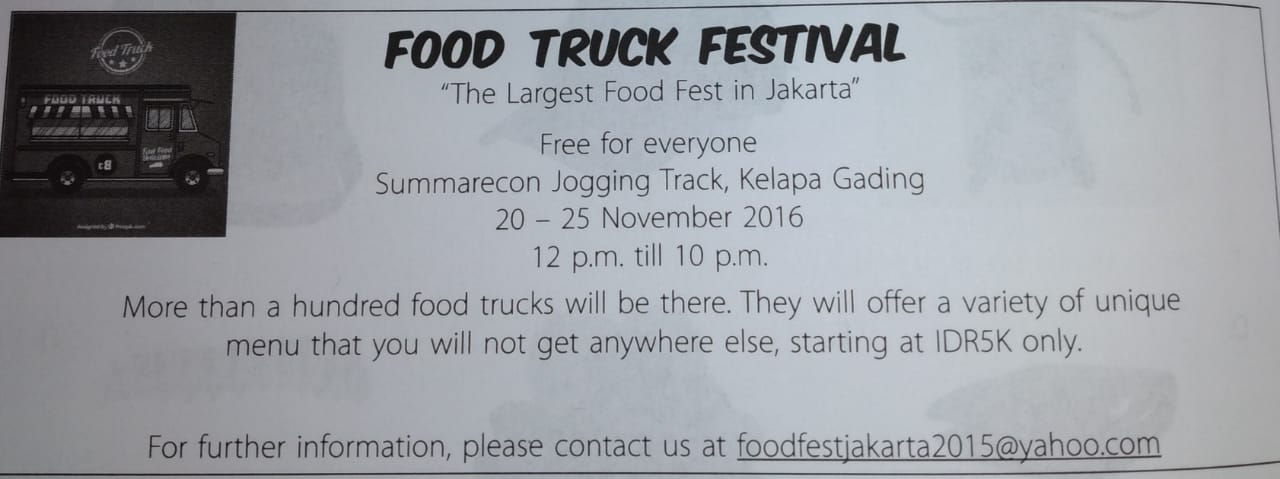
the text tells us about a/an ....
a special trucks
a jogging event
a food festival
a truck exhibition
a car free day event
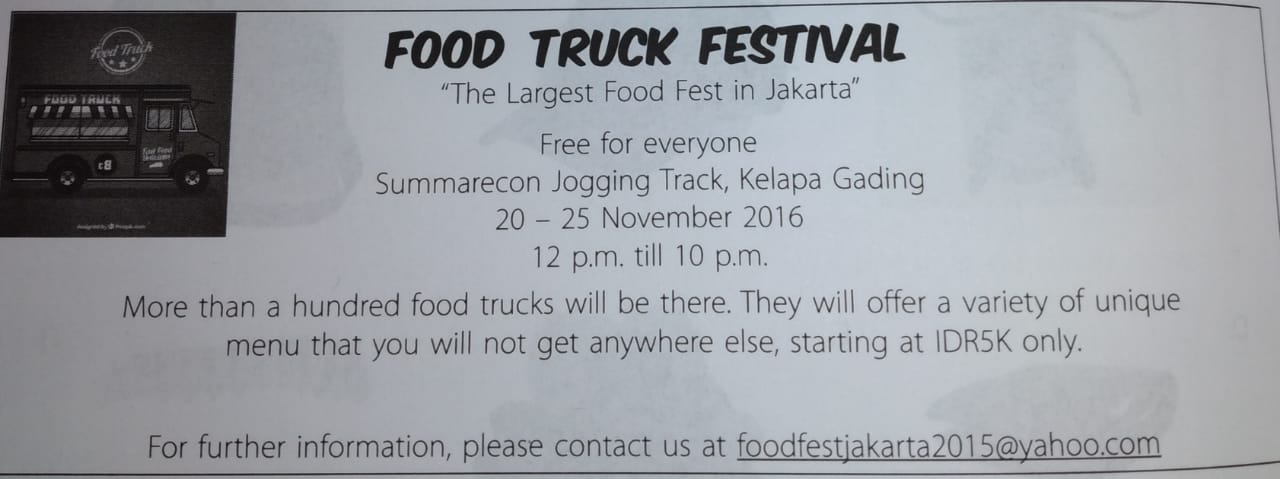
how long will be the event last?
2 days
3 days
4 days
5 days
6 days

This in hand are more valuable than waiting
Early birth catches the worm
A bird in hand is worth two in the bushes
Better late than never
An apple a day keep the doctor away

We need healthy diet to keep healthy
An orange an hour keeps the nurse away
An apple a day keeps the doctor away
Don't judge the book by its cover
The early bird catches the worm

Write the meaning of the proverb:
Better late than never
(a)

What figurative language that you find in the poem?
methaphore
hyperbole
onomatopoeia
personification

In the poem, you see the words : vales, hills, lake, trees, stars and waves.
each of these words is used to appeal to the reader's sense of ...
smell
sight
feeling
taste

1. What is the topic of the poster?
Safety
Art
Environment
Sport
Health

2. What is the meaning of the message in the poster?
We have to be careful to step
We have to live carelessly to destruct the environment
We have to watch our step
We have to watch our step to destruct the environment
We have to live carefully to prevent global warming

6. What event show in the poster?
Club night
Acoustic night
Music show
Fashion show
Music lesson

7. When the event be held?
A. Friday, 3 July 7 pm
Saturday, 3 July 7 pm
Friday, 3 July 8 pm
Friday, 2 July 7 pm
After weekend

The word “ Enrolling” means …
registering
signing out
training
learning

These kinds of services are offered, except…
infant care
preschool
a month free
potty training

What is the genre of the text?
Notice
Banner
Label
Phamplet

“We will help you master any subject,…”
The synonym of the word “master” is…
Play
Learn
Watch
Listen
Mohammad Hatta was born in Fort De Kock (now known as Bukittinggi) into a prominent and strongly Islamic family. His mother's family was wealthy, and Hatta was able to study Dutch as well as finishing Qur'an after school.
In 1919, Hatta went to the HBS in Batavia. He completed his study with distinction in 1921, and was allowed to continue to study at the Erasmus University
Rotterdam) in Rotterdam, the Netherlands. He took economics as his major and earned a doctorandus degree in 1932.
In the Netherlands, Hatta joined the Indische Vereeniging. In 1922, the organization changed its name to Indonesische Vereeniging and later to its Indonesian translation: the Perhimpoenan
Indonesia.
By the middle of 1927, Perhimpoenan Indonesia's activities had alarmed the Dutch authorities. In June 1927, Dutch authorities raided the residence of the organization's leaders, searching through their rooms and putting Hatta and other four Indonesian activists behind bars. After spending nearly six months in prison, they were taken to trial in the Hague. They were permitted to explain themselves during the hearing, and Hatta took to the opportunity to explain Indonesia's nationalist cause. He made a speech to the court explaining that Indonesia's interests were in conflict with those of the Dutch, and that was why they could not cooperate. Hatta advocated cooperation between Indonesia and the Netherlands, but only if Indonesia was independent and treated as an equal partner, not unequally because of its status as a colony. The speech became famous and it is known as the Indonesia Vrij (Indonesia Merdeka) or Free Indonesia speech.
In 1929, Hatta and other Perhimpoenan Indonesia activists were released. In July 1932, Hatta made his way home to Indonesia.
(source: hhtp://en.m.wikipedia.org>wiki>Mohammad Hatta)
- What major did Hatta take in his study?
Economic
Organization
Cooperation
Politics
Islam
Mohammad Hatta was born in Fort De Kock (now known as Bukittinggi) into a prominent and strongly Islamic family. His mother's family was wealthy, and Hatta was able to study Dutch as well as finishing Qur'an after school.
In 1919, Hatta went to the HBS in Batavia. He completed his study with distinction in 1921, and was allowed to continue to study at the Erasmus University
Rotterdam) in Rotterdam, the Netherlands. He took economics as his major and earned a doctorandus degree in 1932.
In the Netherlands, Hatta joined the Indische Vereeniging. In 1922, the organization changed its name to Indonesische Vereeniging and later to its Indonesian translation: the Perhimpoenan
Indonesia.
By the middle of 1927, Perhimpoenan Indonesia's activities had alarmed the Dutch authorities. In June 1927, Dutch authorities raided the residence of the organization's leaders, searching through their rooms and putting Hatta and other four Indonesian activists behind bars. After spending nearly six months in prison, they were taken to trial in the Hague. They were permitted to explain themselves during the hearing, and Hatta took to the opportunity to explain Indonesia's nationalist cause. He made a speech to the court explaining that Indonesia's interests were in conflict with those of the Dutch, and that was why they could not cooperate. Hatta advocated cooperation between Indonesia and the Netherlands, but only if Indonesia was independent and treated as an equal partner, not unequally because of its status as a colony. The speech became famous and it is known as the Indonesia Vrij (Indonesia Merdeka) or Free Indonesia speech.
In 1929, Hatta and other Perhimpoenan Indonesia activists were released. In July 1932, Hatta made his way home to Indonesia.
(source: hhtp://en.m.wikipedia.org>wiki>Mohammad Hatta)
Why did the Dutch authorities put Hatta behind the bars? Because …
Hatta joined the Indische Vereeniging
Hatta asked Indonesia should be treated equally
Indonesia could not cooperate with the Dutch
Hatta made a speech for Indonesian independence
Perhimpoenan Indonesia's activities had made Dutch authorities panic
Mohammad Hatta was born in Fort De Kock (now known as Bukittinggi) into a prominent and strongly Islamic family. His mother's family was wealthy, and Hatta was able to study Dutch as well as finishing Qur'an after school.
In 1919, Hatta went to the HBS in Batavia. He completed his study with distinction in 1921, and was allowed to continue to study at the Erasmus University
Rotterdam) in Rotterdam, the Netherlands. He took economics as his major and earned a doctorandus degree in 1932.
In the Netherlands, Hatta joined the Indische Vereeniging. In 1922, the organization changed its name to Indonesische Vereeniging and later to its Indonesian translation: the Perhimpoenan
Indonesia.
By the middle of 1927, Perhimpoenan Indonesia's activities had alarmed the Dutch authorities. In June 1927, Dutch authorities raided the residence of the organization's leaders, searching through their rooms and putting Hatta and other four Indonesian activists behind bars. After spending nearly six months in prison, they were taken to trial in the Hague. They were permitted to explain themselves during the hearing, and Hatta took to the opportunity to explain Indonesia's nationalist cause. He made a speech to the court explaining that Indonesia's interests were in conflict with those of the Dutch, and that was why they could not cooperate. Hatta advocated cooperation between Indonesia and the Netherlands, but only if Indonesia was independent and treated as an equal partner, not unequally because of its status as a colony. The speech became famous and it is known as the Indonesia Vrij (Indonesia Merdeka) or Free Indonesia speech.
In 1929, Hatta and other Perhimpoenan Indonesia activists were released. In July 1932, Hatta made his way home to Indonesia.
(source: hhtp://en.m.wikipedia.org>wiki>Mohammad Hatta)
“…putting Hatta and other four Indonesian activists behind bars.”(Paragraph 3). The underlined phrase means ….
in jail
at home
in a room
in the court
at a restaurant

Cacti can adapt to hot environments because their anatomical and physiological features ....
A. are unusual
B. are extreme
C. conserve water
D. have large sizes
What does the third paragraph tell us about?
A. The usage of cacti
B. The habitat of cacti
C. The advantages of cacti
D. The characteristics of cacti
The word "blooming" in "Many cactus species are night blooming, as ..." is closest in meaning to ....
A. performing
B. flowering
C. increasing
D. creating
Who to Blame for Student Brawls
Sadly, cases of students getting involved in brawls have been reported nationwide and recently reports of these brawls have increased in number, causing even more casualties. News about a student in Jakarta who died and two others who were injured in a clash between two neighboring high school is not something new. This is just one example of what has been happening to teens all over Indonesia and how violent these brawls have become. Whose fault is this?.
It is the parents' role to teach students morals and norms, while the school directs them to the acceptable norms and behaviors, besides educating them both socially and academically.Parents need to remind students that every action comes with its consequences, either good or bad.There is an argument that students cannot differentiate right or wrong without parents' and school's assistance.
Moreover, the society also has a strong influence on students.Their circle of friends highly influences them.If they belong to a violent circle, they will grow up into violent people.Peer pressure often forces these students into brawls.
In conclusion, adults should set a good example and make sure that students are on the right track.This will not only save them from themselves, but will also result in a brighter tomorrow.
What is the main idea in paragraph 1 ?
adults should set a good example and make sure that students are on the right track
society also has a strong influence on students
cases of students getting involved in brawls have been reported nationwide and recently reports of these brawls have increased in number, causing even more casualties.
how violent these brawls have become.
Sadly, cases of students getting involved in brawls have been reported nationwide and recently reports of these brawls have increased in number, causing even more casualties. News about a student in Jakarta who died and two others who were injured in a clash between two neighboring high school is not something new. This is just one example of what has been happening to teens all over Indonesia and how violent these brawls have become. Whose fault is this?.
It is the parents' role to teach students morals and norms, while the school directs them to the acceptable norms and behaviors, besides educating them both socially and academically.Parents need to remind students that every action comes with its consequences, either good or bad.There is an argument that students cannot differentiate right or wrong without parents' and school's assistance.
Moreover, the society also has a strong influence on students.Their circle of friends highly influences them.If they belong to a violent circle, they will grow up into violent people.Peer pressure often forces these students into brawls.
In conclusion, adults should set a good example and make sure that students are on the right track.This will not only save them from themselves, but will also result in a brighter tomorrow.
Why does whatever students do have consequences?
causing even more casualties.
because whatever they do, they will face the result of their doing
because the influence of society
because whatever they do always based on their parents
SOAL SBMPTN (2014)
Parents send their children to school with the best of intentions, believing that formal education is what kids need to become productive, happy adults. Many parents do have qualms about how well schools are performing, but the conventional wisdom is that these issues can be resolved with more money, better teachers, more challenging curricula, or more rigorous tests. But what if the real problem is school itself? The unfortunate fact is that one of our most cherished institutions is, by its very nature, failing our children and our society.
Children are required to be in school, where their freedom is greatly restricted, far more than most adults would tolerate in their workspaces. In recent decades, we have been compelling them to spend ever more time in this kind of setting, and there is a strong evidence that this is causing psychological damage to many of them. And as scientists have investigated how children naturally learn, they have realized that kids do most deeply and fully, and with greatest enthusiasm, in conditions that are almost opposite to those school.
Compulsory education has been a fixture of our culture now for several generations. President Obama and Secretary of Education Anne Duncan are so enamored of it that they want even longer school days and years. Most people assume that the basic design of today’s schools emerged from scientific evidence about how children learn. But nothing could be further from the truth.
Schools as we know them today are a product of history, not of research. The blueprint for them was developed during the Protestant Reformation, when schools were created to teach children to read the Bible, to believe Scripture without questioning it, and to obey authority figures without questioning them. When schools were taken over by the state, made compulsory, and directed toward secular ends, the basic structure and methods of teaching remained unchanged. Subsequent attempts at reform have failed because they have not altered blueprint. The top down, teach and test method, in which learning is motivated by a system of reward and punishments rather than by curiosity or by any real desire to know, is well designed for indoctrination and obedience training but not much else. It is no wonder that many of the world’s greatest entrepreneurs and innovators either left school early (like Thomas Edison) or said they hated school and learned despite it, not because of it (like Albert Einstein).
Question: What is the topic of the text above?
A. Doubts of effectiveness of American school system
B. Parent's expectation on reformation in American school system
C. Restrictions on children's freedom at the US school
D. Regulation for American children to stay longer at school
E. Absence of a research based school system in the USA.
SOAL SBMPTN (2014)
Parents send their children to school with the best of intentions, believing that formal education is what kids need to become productive, happy adults. Many parents do have qualms about how well schools are performing, but the conventional wisdom is that these issues can be resolved with more money, better teachers, more challenging curricula, or more rigorous tests. But what if the real problem is school itself? The unfortunate fact is that one of our most cherished institutions is, by its very nature, failing our children and our society.
Children are required to be in school, where their freedom is greatly restricted, far more than most adults would tolerate in their workspaces. In recent decades, we have been compelling them to spend ever more time in this kind of setting, and there is a strong evidence that this is causing psychological damage to many of them. And as scientists have investigated how children naturally learn, they have realized that kids do most deeply and fully, and with greatest enthusiasm, in conditions that are almost opposite to those school.
Compulsory education has been a fixture of our culture now for several generations. President Obama and Secretary of Education Anne Duncan are so enamored of it that they want even longer school days and years. Most people assume that the basic design of today’s schools emerged from scientific evidence about how children learn. But nothing could be further from the truth.
Schools as we know them today are a product of history, not of research. The blueprint for them was developed during the Protestant Reformation, when schools were created to teach children to read the Bible, to believe Scripture without questioning it, and to obey authority figures without questioning them. When schools were taken over by the state, made compulsory, and directed toward secular ends, the basic structure and methods of teaching remained unchanged. Subsequent attempts at reform have failed because they have not altered blueprint. The top down, teach and test method, in which learning is motivated by a system of reward and punishments rather than by curiosity or by any real desire to know, is well designed for indoctrination and obedience training but not much else. It is no wonder that many of the world’s greatest entrepreneurs and innovators either left school early (like Thomas Edison) or said they hated school and learned despite it, not because of it (like Albert Einstein).
Question: What is the purpose of the text?
A. To remind American parents that the formal school is basically a product of culture.
B. To discuss if the American school system is truly effective to educate children.
C. To tell the readers that formal schools in the USA have been constantly developed for a long time
D. To review how compulsory education in the USA has met parents expectation
E. To describe how American children learn at school and in real life settings.
SOAL SBMPTN (2014)
Parents send their children to school with the best of intentions, believing that formal education is what kids need to become productive, happy adults. Many parents do have qualms about how well schools are performing, but the conventional wisdom is that these issues can be resolved with more money, better teachers, more challenging curricula, or more rigorous tests. But what if the real problem is school itself? The unfortunate fact is that one of our most cherished institutions is, by its very nature, failing our children and our society.
Children are required to be in school, where their freedom is greatly restricted, far more than most adults would tolerate in their workspaces. In recent decades, we have been compelling them to spend ever more time in this kind of setting, and there is a strong evidence that this is causing psychological damage to many of them. And as scientists have investigated how children naturally learn, they have realized that kids do most deeply and fully, and with greatest enthusiasm, in conditions that are almost opposite to those school.
Compulsory education has been a fixture of our culture now for several generations. President Obama and Secretary of Education Anne Duncan are so enamored of it that they want even longer school days and years. Most people assume that the basic design of today’s schools emerged from scientific evidence about how children learn. But nothing could be further from the truth.
Schools as we know them today are a product of history, not of research. The blueprint for them was developed during the Protestant Reformation, when schools were created to teach children to read the Bible, to believe Scripture without questioning it, and to obey authority figures without questioning them. When schools were taken over by the state, made compulsory, and directed toward secular ends, the basic structure and methods of teaching remained unchanged. Subsequent attempts at reform have failed because they have not altered blueprint. The top down, teach and test method, in which learning is motivated by a system of reward and punishments rather than by curiosity or by any real desire to know, is well designed for indoctrination and obedience training but not much else. It is no wonder that many of the world’s greatest entrepreneurs and innovators either left school early (like Thomas Edison) or said they hated school and learned despite it, not because of it (like Albert Einstein).
Question: Which of the following has the closest meaning to the word "qualms" (Line 4).
A. remarks
B. request
C. doubts
D. views
E. beliefs
It was the dawn of science and technology. Anything seemed possible even the creation of life itself. Victor Frankenstein becomes obsessed with this idea and works relentlessly to prove his theories; but the glory he imagined becomes a living nightmare - not only for him, but for hos friends and family too.
Mary Shelley’s gothic horror story-frankenstein - was first published in 1818 and has been the inspiration behind numerous stage productions and films - many of which strayed a long way away from her original masterpiece. Classical comic presenting a full-colored graphic remains true to this classic tale, bringing the original story to life which has never been created before.
This graphic novel is available in two versions: Original Text and Quick Text editions. The Original Text stays faithful to Shelley's original text, while the Quick Text brings the story up to date by presenting the text into a more simplified style so that the tale is accessible to all readers.
The quick Text edition will allow you to soak up a general feeling for characters and locations, while the Original Text version will help you easily slip into the language in which the novel was written.
Even if you're not studying the original, this graphic novel is worth buying. It's a great story, and should be one that everyone has the chance to read. Now, thanks to this release, even those who don't particularly like to read too much are given the chance to find this tale and hopefully it may encourage them to search out the original book too.
As with the previous classical comics, the presentation is first class. The best grade glossy paper really helps to set this graphic novel head and shoulders above the usual comic book releases on the market. Not only, that you also get a pretty comprehensive biography of Shelley; Mary Shelley's family Tree; a feature that explains what life was like in the year of the book's release; and a brief
Look on how Frankenstein has been adapted to many different formats over the years.
The main idea for the third paragraph is ....
Victor Frankenstein wrote his story with gothic horror style
There are two versions of the graphic novel to enjoy
The different versions of Frankenstein story is always an inspiration for drama and film productions
The simplify ed novel has more interesting pictures for readers to understand
Mary Shelley had two different versions of Frankenstein story adapted for film
It was the dawn of science and technology. Anything seemed possible even the creation of life itself. Victor Frankenstein becomes obsessed with this idea and works relentlessly to prove his theories; but the glory he imagined becomes a living nightmare - not only for him, but for hos friends and family too.
Mary Shelley’s gothic horror story-frankenstein - was first published in 1818 and has been the inspiration behind numerous stage productions and films - many of which strayed a long way away from her original masterpiece. Classical comic presenting a full-colored graphic remains true to this classic tale, bringing the original story to life which has never been created before.
This graphic novel is available in two versions: Original Text and Quick Text editions. The Original Text stays faithful to Shelley's original text, while the Quick Text brings the story up to date by presenting the text into a more simplified style so that the tale is accessible to all readers.
The quick Text edition will allow you to soak up a general feeling for characters and locations, while the Original Text version will help you easily slip into the language in which the novel was written.
Even if you're not studying the original, this graphic novel is worth buying. It's a great story, and should be one that everyone has the chance to read. Now, thanks to this release, even those who don't particularly like to read too much are given the chance to find this tale and hopefully it may encourage them to search out the original book too.
As with the previous classical comics, the presentation is first class. The best grade glossy paper really helps to set this graphic novel head and shoulders above the usual comic book releases on the market. Not only, that you also get a pretty comprehensive biography of Shelley; Mary Shelley's family Tree; a feature that explains what life was like in the year of the book's release; and a brief
Look on how Frankenstein has been adapted to many different formats over the years.
The original text of Frankenstein graphic story makes the readers ....
Understand the style of writing in its era
Curious about the historical background of story
Recognize the different life of Frankenstein story
. Have the inspiration to put the story to a film and drama products
Remind the life of Mary Shelley, the author of Frankenstein
It was the dawn of science and technology. Anything seemed possible even the creation of life itself. Victor Frankenstein becomes obsessed with this idea and works relentlessly to prove his theories; but the glory he imagined becomes a living nightmare - not only for him, but for hos friends and family too.
Mary Shelley’s gothic horror story-frankenstein - was first published in 1818 and has been the inspiration behind numerous stage productions and films - many of which strayed a long way away from her original masterpiece. Classical comic presenting a full-colored graphic remains true to this classic tale, bringing the original story to life which has never been created before.
This graphic novel is available in two versions: Original Text and Quick Text editions. The Original Text stays faithful to Shelley's original text, while the Quick Text brings the story up to date by presenting the text into a more simplified style so that the tale is accessible to all readers.
The quick Text edition will allow you to soak up a general feeling for characters and locations, while the Original Text version will help you easily slip into the language in which the novel was written.
Even if you're not studying the original, this graphic novel is worth buying. It's a great story, and should be one that everyone has the chance to read. Now, thanks to this release, even those who don't particularly like to read too much are given the chance to find this tale and hopefully it may encourage them to search out the original book too.
As with the previous classical comics, the presentation is first class. The best grade glossy paper really helps to set this graphic novel head and shoulders above the usual comic book releases on the market. Not only, that you also get a pretty comprehensive biography of Shelley; Mary Shelley's family Tree; a feature that explains what life was like in the year of the book's release; and a brief
Look on how Frankenstein has been adapted to many different formats over the years.
“... many of which strayed a long way away from ... “ (paragraph 2).
The underlined word can be replaced with
wandered
changed
directed
pointed
avoided
A Story From The Farm Yard Two roosters were fighting fiercely to be the king of the farm yard. One finally gained advantage and the other surrendered.
The loosing rooster slunk away and hid itself in a quiet corner. The winner flew up to a high wall, flapped its wings and crowed its victory, as loud as it could.
Suddenly, an eagle came sailing through the air and carried it off, with its talons. The loosing rooster immediately came out of its corner and ruled the farm yard from then on.
From the text we know that ....
Only one rooster can rule the roost
The roosters are fighting to flap their wings
The eagle had watched them all day
The farm needs a new king
A Story From The Farm Yard Two roosters were fighting fiercely to be the king of the farm yard. One finally gained advantage and the other surrendered.
The loosing rooster slunk away and hid itself in a quiet corner. The winner flew up to a high wall, flapped its wings and crowed its victory, as loud as it could.
Suddenly, an eagle came sailing through the air and carried it off, with its talons. The loosing rooster immediately came out of its corner and ruled the farm yard from then on.
What can we learn from the story?
There's always a bigger enemy in this life
Your friend can be your enemy
Always grab an opportunity before you
Don't be cocky when we have achieved our goal
Mouse Deer and Mr. Crocodile
One day, a mouse deer was walking by the river. He was very starving because he hadn't eaten since morning. It was midday. But he found nothing in the land but dying trees. "Huh... I hate this branches, I don't like it!"
Across the river, there was green grassland, with young leaves. 'Hmm.. it seems delicious' imagined the mouse deer, 'but how can I get there? I can't swim, the current is very rapid?'
The mouse deer was figuring out the way how to reach there. Suddenly, he jumped to the air,'aha.: he then walked to the edge of the river. He didn't see the reflection because the water flowed very fast. He dipped one of his fore legs into the water. A few moment later, appeared Mr. Crocodile showing his sharp teeth. He then laughed, "Ha... ha... ha, you can't run away from me, You'll be my tasty lunch!" said the crocodile.
"Of course I can't. You are very strong, Mr. Croco," replied the mouse deer frightenedly. Then, the other crocodiles approached moving slowly.They approached the edge of the river.
"But, before you all have a party, I wonder how many your members are there in the river. If I know your number exactly, I can distribute my meat evenly,"said the mouse deer.
"Oh...o, great, good idea! But we are a large group, I can't count it precisely," Mr. Croco moaned. "Leave it to me, and I can make it for you!" Now, can you ask the others to line up, from one edge to the other edge of the river? The mouse deer requested. Then the crocodiles arranged themselves in line from one edge to the other edge of the river. The mouse deer jumped to the body of one crocodile to the others while he was counting, 'one, two, three; and so forth up to ten. Then at last he arrived at grassland, and he thanked to the dumb crocodiles.
Why did mouse deer want to go across the river?
Because he was very hungry
Because he wanted to cheat Mr. Crocodile
He wanted to eat some dying trees
He was afraid of the current of the river
Mouse Deer and Mr. Crocodile
One day, a mouse deer was walking by the river. He was very starving because he hadn't eaten since morning. It was midday. But he found nothing in the land but dying trees. "Huh... I hate this branches, I don't like it!"
Across the river, there was green grassland, with young leaves. 'Hmm.. it seems delicious' imagined the mouse deer, 'but how can I get there? I can't swim, the current is very rapid?'
The mouse deer was figuring out the way how to reach there. Suddenly, he jumped to the air,'aha.: he then walked to the edge of the river. He didn't see the reflection because the water flowed very fast. He dipped one of his fore legs into the water. A few moment later, appeared Mr. Crocodile showing his sharp teeth. He then laughed, "Ha... ha... ha, you can't run away from me, You'll be my tasty lunch!" said the crocodile.
"Of course I can't. You are very strong, Mr. Croco," replied the mouse deer frightenedly. Then, the other crocodiles approached moving slowly.They approached the edge of the river.
"But, before you all have a party, I wonder how many your members are there in the river. If I know your number exactly, I can distribute my meat evenly,"said the mouse deer.
"Oh...o, great, good idea! But we are a large group, I can't count it precisely," Mr. Croco moaned. "Leave it to me, and I can make it for you!" Now, can you ask the others to line up, from one edge to the other edge of the river? The mouse deer requested. Then the crocodiles arranged themselves in line from one edge to the other edge of the river. The mouse deer jumped to the body of one crocodile to the others while he was counting, 'one, two, three; and so forth up to ten. Then at last he arrived at grassland, and he thanked to the dumb crocodiles.
" .... But we are a large group, I can't count it precisely," The underlined word has closest meaning with ....
Accurately
Objectively
Definitely
Obviously

