
 Worksheets
cell
Total questions: 28
Worksheet time: 23mins
The jelly-like substance inside the cell membrane that holds organelles is called:
Cytoplasm
Nucleus
Golgi apparatus
Cell wall
Which organelle is responsible for protein synthesis?
Mitochondria
Lysosome
Golgi apparatus
Ribosomes
The rigid structure found only in plant cells is:
Nucleus
Cell wall
Cytoplasm
Cell membrane
The powerhouse of the cell, responsible for cellular respiration, is:
Golgi apparatus
Lysosome
Mitochondria
Ribosome
The control center of the cell, containing genetic information, is the:
Endoplasmic reticulum
Cell membrane
Nucleus
Cytoplasm
Osmosis is the movement of:
All of the above
Water against a concentration gradient
Solutes across a selectively permeable membrane
Ions through a non-permeable membrane
Which cell would water move out of?


If the percentage represents sugar, what direction will water flow?
Into the cell
Out of the cell
Into and out equally (equilibrium)
Osmosis needs _____ energy.
zero
a lot of
10 kilowatts
some

What will happen to the cell in the given solution?
Swell up
Shrink
Stay the same

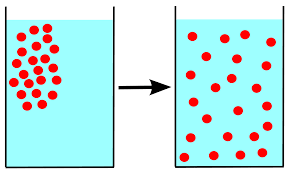
If the dots represent sugar what direction will the water flow?
Into the cell
Out of the cell
Both equally (equilibrium)
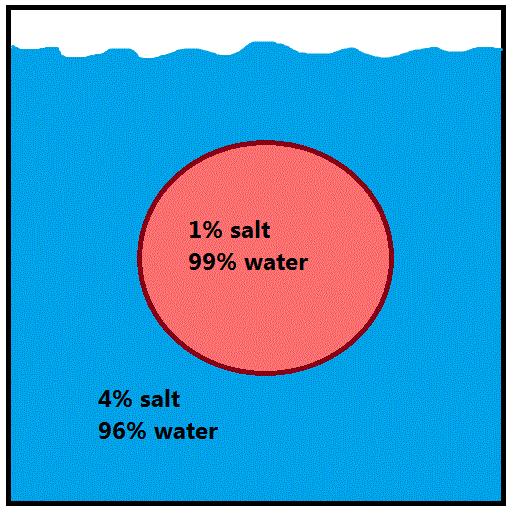
Where will the water go?
Into the cell
Out of the cell
Equally in & out - it's isotonic
There is no water

What is a chromosome?
A small piece of cell membrane
A pair of DNA molecules
The protein center of a cell
Part of the cell's endoplasmic reticulum
How does your body grow as you get older?
Your cells fill with water, and get bigger.
Your cells divide, producing new cells.
Your cells elongate.
Your cells combine with one another.

Which diagram shows cancer cells?
A
B
The process by which a cell divides into two daughter cells is called
Mitosis (cell division)
metaphase
interphase
differentiation
Which of the following happens when a cell divides?
The cell's volume increases
It becomes more difficult for the cell to get rid of wastes
Each daughter cell receives its own copy of the parent cell's DNA
It becomes more difficult for the cell to get enough oxygen and nutrients

