
 Worksheets
Review for Friday 3/15 Test
Total questions: 110
Worksheet time: 5hrs 56mins

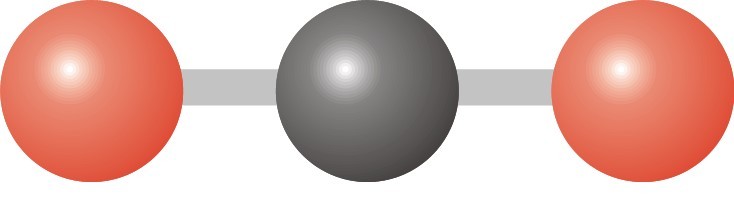
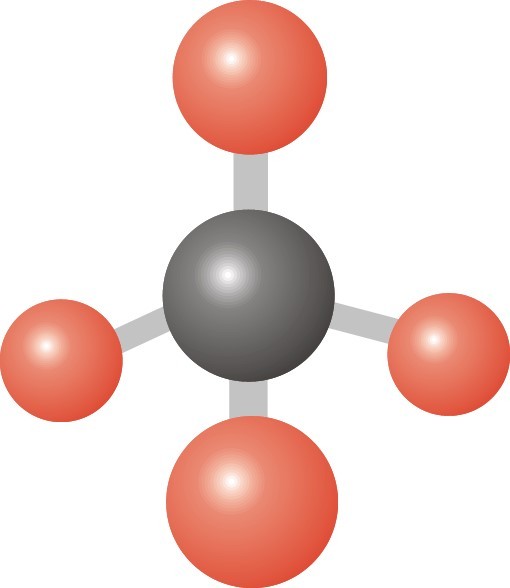
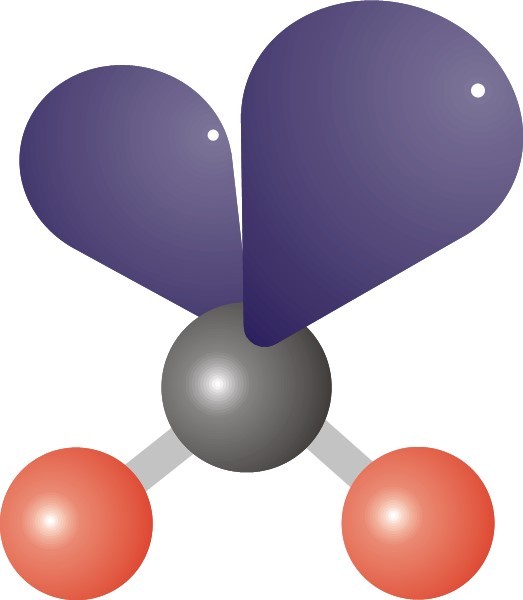
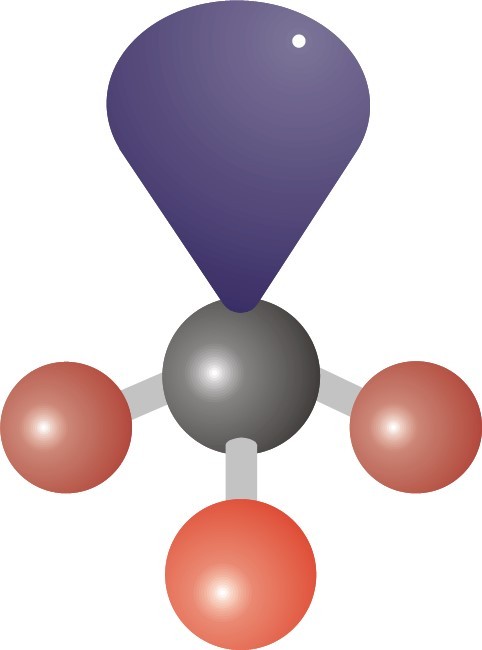
What shape would PH3 have?
Trigonal Planar
Trigonal pyramidal
Bent
Linear


How many unshared pairs of electrons will a bent molecule have?
0
2
3
4
Match the following shapes to their Names

Trigonal Planar

Tetrahedral

Trigonal Pyrimidal

Linear

Bent
Both Carbon Dioxide and water have (a) atoms bonded to the central atom. Carbon Dioxide (CO2) is a (b) Molecule while water (H2O) is a (c) molecule because water has (d) on the central atom.
Think about how many electron groups are around the central atom. Place these structures in order from LEAST groups to MOST groups.
Linear
Trigonal Planar
Tetrahedral
Think about how many electron groups are around the central atom. Place these structures in order from LEAST groups to MOST groups.
Linear
Bent
Trigonal Pyramidal
Which Lewis Structure would be linear? Mark all that apply


Which Structure has a different shape than the others?


When determining molecular geometry, how many electron groups are around the central atom of this structure?
1
2
3
4

What is the AXE # of this molecule?
AX2
AX2E2
AX2E
AX2E4

What is the AXE # of this molecule?
AX2
AX2E2
AX2E
AX2E4

What is the AXE # of this molecule?
AX
AXE
AX3E
AX3
Does the following reference Polar, Nonpolar, or both:
"affected by an electrical charge"?
Polar
Nonpolar
Both
Does the following reference Polar, Nonpolar, or both:
"equal sharing of electrons"?
Polar
Nonpolar
Both
True or False
Attractions between polar molecules are Weaker than attractions between nonpolar molecules.
True
False

Which substance would have the weakest intermolecular forces of attraction?
CH4
NaCl
H2O
MgF2

Intermolecular forces for: NH3
Dispersion Force
Dipole dipole
Hydrogen bonding
Which substance has the weakest intermolecular forces?
Substance A, boiling point of 75 °C
Substance B, boiling point of 105 °C
Substance C, boiling point of 25 °C
Substance d, boiling point of 45 °C
The weaker the intermolecular forces of a substance the _____________ the boiling point
higher
lower

Intermolecular forces for: CO2
Dispersion Force
Dipole dipole
Hydrogen bonding
covalent bond
London forces
hydrogen bond
dipole-dipole attraction


Which substance will have the highest vapor pressure
CH3CH2CH2CH2CH2CH3
H2O
CH4
CH3F
What is vapor pressure
the amount of energy required to evaporate
the amount of energy required to boil
the force per unit area exerted by the gaseous layer above a liquid
the force per unit area exerted by a liquid on the gaseous layer above it
Which of the following molecules would have Van der Waals Forces
CH4
SCO
PCl3
SO2
Which force is only found between polar covalent molecules?
Ionic bond
Dipole Dipole
London Dispersion Force
Covalent bond
In this force, electron movement cause a slight charge at a single instant. This charge is temporary.
Hydrogen bonding
Dipole Dipole
London Dispersion Forces
Ionic Bonds
In ionic solids, what holds the ions together?
Hydrogen Bonding
Dipole Dipole
London Dispersion Forces
Ionic Bonds
Which is not a bond, but is an intermolecular force?
Covalent Bond
Ionic Bond
Hydrogen Bond
These are all bonds
All polar covalent molecule samples contain:
(Check all that apply)
Hydrogen bonds
Dipole Dipole
London Dispersion Forces
Ionic Bonds
Samples of H2O, NH3, and HF all contain:
(Check all that apply)
Hydrogen Bonds
Dipole Dipole
London Dispersion Forces
Ionic Bonds
Nonpolar molecule samples all contain
(Check all that apply)
Hydrogen Bonding
Dipole Dipole
London Dispersion Forces
Ionic Bonds
When one polar molecule attracts another polar molecule it is called:
Hydrogen Bonds
Dipole Dipole
London Dispersion Force
Ionic Bond
Which of these forces is always the strongest?
Hydrogen bonds
Dipole Dipole force
London Dispersion force
Ionic bonds
Intermolecular forces are responsible for which of the following properties?
State of matter
Color
Odor
Conductivity
Intermolecular forces are attractions between ______.
Cations and anions
Atoms within a molecule
Neighboring molecules
Protons and electrons

Which type of IMF is responsible for the attraction pictured above?
Dipole-Dipole Interaction
Ion-Dipole Interaction
Hydrogen Bonds
Covalent Bond
Ionic Bond

Which type of IMF is responsible for the attraction pictured above?
Dipole-Dipole Interaction
Ion-Dipole Interaction
Hydrogen Bonds
Covalent Bond
Ionic Bond

Which type of IMF is responsible for the attraction pictured above?
Dipole-Dipole Interaction
Ion-Dipole Interaction
Hydrogen Bonds
Covalent Bond
Ionic Bond

Which type of IMF is responsible for the attraction pictured above?
Dipole-Dipole Interaction
Ion-Dipole Interaction
Hydrogen Bonds
Covalent Bond
Ionic Bond
Match the Following
Hydrogen Bond
Present in Polar involving N, O, F
London Dispersion Forces
Present in both Polar and Non Polar Molecules
Dipole- Dipole
Polar Substances only
Which of the following is an intramolecular force?
hydrogen bonding
covalent bonding
Which intramolecular force has the greatest strength?
ionic bond
nonpolar covalent
polar covalent
Which of these is the weakest intermolecular force [IMF]?
Dipole-dipole
Hydrogen bonding
London dispersion forces
Which intermolecular force [IMF] do all molecules have?
Dipole-dipole
Hydrogen bonding
London dispersion forces
Which intermolecular force [IMF] requires hydrogen and one of the following: nitrogen, oxygen, fluorine?
Dipole-dipole
Hydrogen bonding
London dispersion forces
Which intermolecular force [IMF] is characterized by partial charges?
Dipole-dipole forces
Hydrogen bonding
London dispersion forces
Which intermolecular force [IMF] causes water to have an elevated boiling point?
London dispersion forces
dipole-dipole forces
hydrogen bonding
Which of these molecules are polar? (Select ALL that apply.)
SO₂
F₂
PCl₃
CH₄
Melting and boiling points depend on thermal energy and the strength of ________
intramolecular forces
intermolecular forces
polar covalent bonds
metallic bonds
C = λν
If an AM radio station broadcasts at
9.95 x 10⁵ Hz, what is the wavelength of this radiation?

Calculate the wavelength of light that has a frequency of 5.2 x 10¹² 1/s.
5.8 x 10 -5 m
5.8 x 10 -7 m
5.19 x 10 14 m
1.56 x 10 23 m

A common infrared laser operates at 1.06 x 10³ nm. What is the energy of a photon with this wavelength? (1 x 10⁹ nm = 1m)
7.02 x 10^-40 J
6.25 x 10^-28 J
3.54 x 10^-15 J
1.87 x 10^-19 J
A wave has a frequency of 10 hz and a wavelength of 4 m. What is the velocity of the wave?
24 m/s
40 m/s
2.5 m/s

What is the electron doing in this image?
Absorbing Energy
Releasing Energy

Does the energy released by this photon have high or low energy?
High
Low

Does the photon released in this image have high or low energy?
High
Low
Electrons (attract/repel) each other.
Attract
Repel
Protons and Electrons (attract/repel) each other.
Attract
Repel

What is happening with the electron in this image?
Absorbing Energy
Releasing Energy
Which Danish physicist proposed an atomic model that described electrons as moving in circular orbits around the nucleus?
Niels Bohr
Tycho Brahe
Stephen Hawking
Carl Sagan
The amount of energy required to move an electron from one energy level to another is a _______ of energy.
atomic emission spectrum
energy level
quantum
Ground State
What is the lowest possible energy level that an electron can occupy?
Lower energy level
Ground State
Excited State
Depressive State
How does an electron get from a lower energy level to an excited state (higher energy level)?
It absorbs light
It emits light
it simply can do whatever it wants
that's how the statistics describe it
Which of the following electronic transitions in the oxygen atom will result in light emission?
ni=1⟶nf=2
ni=1⟶nf=3
ni=3⟶nf=2
ni=2⟶nf=3
How many electrons can occupy the lowest energy level?
1 only
up to 2
up to 4
up to 8

