
Font size
 Worksheets
Plants Review
Total questions: 100
Worksheet time: 3hrs 20mins
What part of the plant absorbs sunlight to make food?
Roots
Stem
Leaves
Flowers
What is the main purpose of a plant's roots?
To make food
To absorb water and nutrients
To store sunlight
To attract bees
What gas do plants absorb from the air to help them make food?
carbon dioxide
oxygen
nitrogen
hydrogen
What is the process by which plants make their own food using sunlight?
Photosynthesis
Respiration
Digestion
Circulation
What is the function of a plant's stem?
to absorb water
to support the plant and transport nutrients
to make food
to attract bees
Where do seeds come from in a flowering plant?
Leaves
Roots
Flowers
Stem
What is the purpose of a flower's petals?
to make food
to attract pollinators
to absorb sunlight
to store water
How do cacti survive in hot deserts?
by storing water in their stems
by attracting bees
by growing tall leaves
by absorbing sunlight
What do plants in a rainforest often have to help them get sunlight in the dense canopy?
large leaves
underground roots
no leaves
no need for sunlight
How do some plants protect themselves from herbivores (animals)?
by growing thorns or spines
by attracting bees
by changing color frequently
by making loud noises
What is adaptation of a plant with long, shallow roots in a windy area?
to anchor the plant firmly in the soil
to absorb more water
to store sunlight
to attract birds
How do plants in cold climates adapt to the freezing temperatures?
by shedding leaves
by growing larges leaves
by producing more flowers
by moving to warmer areas
What adaptation allows a plant to catch insects for nutrients?
long roots
sticky leaves
tall stem
bright-colored flowers
How do plants in sandy environments adapt to the lack of water?
by having deep roots
by growing in water
by storing water in their leaves
by growing tall flowers
What adaptation helps a plant disperse its seeds by wind?
sticky seeds
heavy seeds
seeds with wings or parachutes
no seeds
What is the purpose of a fruit in the plant reproduction process?
to provide shelter for insects
to store sunlight
to protect the seeds and help them spread
to make the plant look attractive
Which of the following is NOT involved in the pollination process?
bees
wind
sunlight
birds
How do some plants use animals to help with pollination?
by producing sweet nectar
by growing tall leaves
by changing color frequently
by making loud noises
What is the process by which a seed begins to grow into a new plant?
Pollination
Photosynthesis
Budding
Germination
What is the purpose of a plant's leaves in the process of photosynthesis?
to absorb water
to make food using sunlight
to anchor the plant
to attract bees
Which part of a plant stores food for later use?
leaves
stem
roots
flowers
Which adaptation helps a plant disperse its seeds by attaching them to animal fur or clothing?
sticky seeds
seeds with wings
seeds with hooks or burrs
no seeds
How do some plants adapt to living in dry environments?
by having large leaves
by storing water in their stems
by growing in water
by shedding leaves frequently
What is the purpose of the plant's nectar?
to make the plant smell good
to attract bees and other pollinators
to provide shade for the plant
to protect the seeds
Which part of a plant helps it take in carbon dioxide from the air?
leaves
roots
flowers
stems
What is the green pigment in plant cells that helps them capture sunlight for photosynthesis?
Melanin
Hemoglobin
Chlorophyll
Anthocyanin
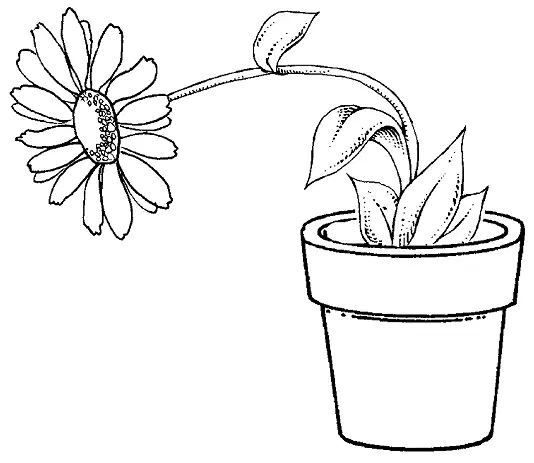
What is the most likelyreason that this plant is bending to the side?
It wants to catch an insect.
It wants to catch an insect.
it is turning toward the sun
It needs water.
Look at the diagram of photosynthesis.
Carbon dioxide + Water + Sunlight = Sugar +◻
What completes the diagram?
water
minerals
nitrogen
oxygen
The male part of the flower is called the stamen.
True
False
The female part of the flower is called the pistil.
True
False
Which part of the flower helps to attract insects for pollination?
Stamen
Pistil
Petal/Petals
Sepal
The sepal protects the flower when it is a bud.
True
False

This is a picture of a flower that has not fully opened. What is it called?
(a)

Name the parts of a flower.
What is number 1 called?
Stamen
Pistil
Petal
Sepal

Name the parts of a flower.
What is number 2 called?
Stamen
Pistil
Petal
Sepal

Name the parts of a flower.
What is number 3 called?
Pistil
Petal
Sepal
Stamen

Name the parts of a flower.
What is number 4 called?
Petal
Stamen
Sepal
Pistil


What part of the plant takes in the nutrients from the soil?
Leaves
Stem
Roots
Flowers

Plants have different needs depending on where they live. In what kind of environment would you find a plant that has an adaptation that allows it to store water?
rainforest
grasslands
tundra
desert

To protect themselves from being eaten, plants may develop special adaptations to keep animals away. What is one of these adaptations.
berries
thorns
vines
fruit

Some plants rely on insects and birds to help them pollinate and reproduce. What adaptation would help a plant attract more insects?
bright flowers
green leaves
sharp thorns
tall stem

In a rainforest, the large canopy can block sunlight. Plants living under the canopy must be able to tolerate shade or adapt in order to get light. What adaptation could help plants get more sun?
strong roots
climbing vines
needles
spores

A nice smell is an adaptation that ...
helps the plant keep water inside the leaves.
pokes animals that try to eat the plant
attracts pollinators to the plant
holds the plant in place
Which of the following plants is probably found in a place where there is a cold winter season? A cactus, maple tree, water lily or palm tree?


What is the function of the leaves of a plant?
absorb light and use water and air to make food
carry water and nutrients throughout the plant
make seeds
attract bees

Which structure absorbs nutrients and water and anchors the plant into the ground?
roots
stem
seed
leaves

Which plant part carries water and nutrients throughout the plant?
stem
roots
leaves
flowers

Which structure is responsible for producing new plants?
seed
flower
leaf
fruit

The thorn on a rose is an example of a _______________.
spine
seed dispersal
defense mechanism
photosynthesis
Are the organs where plants use photosynthesis to produce their food.
Leaves
Stems
Roots
Detect Sunlight
What is an adaptation?
it's like when you get a baby from another family
it's like when you can't breathe water so you die
a change in a population of living things that helps them survive in an environment
it's like when you go to a store and everything is on sale
If plants didn't adapt as their environments changed, they would
save a lot of time.
not survive.
get taller every year.
be safe forever because they were already fine.
Plants need ________________ to survive.
twinkies, chips, and soda
food, water, and shelter
air, water, and sunlight
sunscreen, a hot tub, and a mask
How does a cactus adapt to its environment? Select all that apply.
It stores water in the stems
It has waxy skin to help hold in water
It only has one root
It has spines to protect it from predators and provide shade for the plant

Why would a plant have thick, waxy leaves?
to move water up the plant
to help store water
to help it float
Which of the following is NOT an adaptation for plants to reproduce?
Bright colors and strong scents attract pollinators
Animals carry seed pods on their fur to new places
Plants can use wind to spread their seeds
Seeds travel underground and a new plant grows in a new place
What is the function of a flower?
To absorb water and nutrients
To hold the plant upright
To take in sunlight and make food
To attract pollinators and help the plant reproduce
What do seeds do?
They attract pollinators
They allow the plant to reproduce
They absorb sunlight
They absorb water
Is it possible for a plant to survive if the roots are removed from the soil?
Yes. As long as the plant has water it can survive
No. Plants will die without soil
Where in the plant does photosynthesis occur?
Flower
Leaves
Stem
Roots
Which structure of a plant is responsible for anchoring it to the ground?
Flower
Leaf
Stem
Roots
I have an outer coat, a food store and a baby plant in me. What am I?
Radicle
Fruit
Seed
Root

Which of the following is not a part of a seed?
Seed coat
Food store
Baby store
Embryo

Give a title to this diagram.
Parts of a Plant
Parts of a baby Plant
Parts of a baby Seed
Parts of a Seed

Which part is labelled A?
Seed coat
Embryo
Cotyledon
Seedbryo

What is the part labelled B called?
Seed coat
Cotyledon
Embryo
Babybryo

What is the part labelled C called?
Seed coat
Seed garment
Plant coat
Embryo coat

Another name for the food storage in the diagram is_____
Foodlydon
Cotyledon
Seedlydon
Embryolydon

Growing from a seed to a new plant is called________
Photosynthesis
Embryonation
Germination
Farming
The new plant that comes out of a seed is called _________
shoot
root
seedling
tree

Select the things a seed needs for germination.
Water
sunlight
nutrients in soil
photosynthesis

Which of these lists the basic needs of plants?
air - water - shelter - food
space to grow - water - love - air
nutrients - water - air - space to grow
sunlight - water - nutrients - air - space to grow
The stages that an organism goes through as it grows and changes is called --
a structure.
basic needs.
hibernation.
a life cycle.

The correct order of the stages in a plant life cycle are --
adult - seedling - seed - germination
germination - seed - adult - seedling
seed - germination - seedling - adult
seedling - seed - adult - germination

The _____ stage in a plant's life cycle happens after germination when the young plant grows.
seedling
adult
roots
flower

Which of these stages happens AFTER a seed is planted and BEFORE it grows into a seedling?
adult stage
seedling stage
germination stage
seed stage

The last stage of a plant's life cycle is the _____ stage when the plant can make seeds.
germination stage
adult stage
seedling stage
roots stage

The stage of a plant life cycle when seeds begin to grow and sprout roots is the --
bean stage.
germination stage.
seedling stage.
adult stage.

__________ is the process that plants use to breathe and make food.
Photographs
Oxygen
Hydrogen
Photosynthesis
If plants breathe in carbon dioxide, what do they breathe out?
Nitrogen
Oxygen
Carbon monoxide
Helium

What 3 things do plants need for the process of photosynthesis?
Sunlight, oxygen and sugar.
Water, soil and oxygen.
Sunlight, carbon dioxide and water.
Sunlight, soil and water.
What is the compund that plants use to absorb the energy from sunlight?
Carbon dioxide
Chlorophyll
Nitrogen
H2O

What color is chlorophyll?
Green
Blue
Red
Purple
Sunlight is the main source of energy that drives photosynthesis process.
True
False

The plants gets its nutrients from sugar, called __________.
Galactose
Fructose
Sugar
Glucose

This image correspond to___________.
Flower
Oxygen
Carbon dioxide
Sunlight

this image correspond to ___________.
Water
Chlorophyll
Sunlight
Oxygen
Photosyntheis is the process in which humans, and animals use energy from sunlight to produce sugar.
True
False

