
Font size
 Worksheets
The Tragedy of Romeo and Juliet Act Three Review
Total questions: 15
Worksheet time: 5mins

What is the most likely meaning of exile as it is used in this sentence?
After long consideration, the queen chose to exile her former advisor to another country for his part in the crime.
send someone to prison for committing a crime against the government
punish someone by forcing the person to leave a place permanently
reward someone for courageous support of a nation’s leader
forgive someone for a criminal act because the act was unintentional
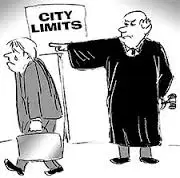
Which of the following situations best illustrates what happens to someone who experiences banishment?
The person packs his or her belongings and leaves the country, probably never to return.
The person receives an award for courageous service to his or her country.
The person is invited to return home after working in government service in another country.
The person is forgiven for a crime in exchange for providing evidence against more important criminals.

If the President were to pardon someone who has been convicted of a crime and sent to prison, which of the following must be true? Base your answer on the meaning of pardon.
The person would serve a longer sentence.
The person would be forced to leave the country.
The person would be freed from prison.
The person would not be allowed to testify in his or her defense.

What is the meaning of the Latin prefix ex-?
away or out of
inside or within
at or toward
next or after

The word extract comes from the Latin root word -tract-, which means “to draw or pull,” plus the prefix ex-. Based on this information as well as your knowledge of the prefix ex-, identify the choice that best describes what it means to extract a tooth.
to chip or damage the tooth
to repair or fix the tooth
to push or put pressure on the tooth
to take out or remove the tooth

Why does Romeo at first try to stop the fight with Tybalt in Act III, Scene i, of The Tragedy of Romeo and Juliet? Choose two options.
Romeo feels connected to members of Juliet’s family.
Romeo does not believe Mercutio is as good as swordsman as Tybalt.
Romeo wants peace between his friends and his new wife's relations.
Romeo admires Tybalt, even though Tybalt is a Capulet.

Why does Romeo ultimately kill Tybalt in Act III, Scene i, of The Tragedy of Romeo and Juliet?
Tybalt kills Mercutio.
Tybalt is a Capulet.
Tybalt threatens Benvolio.
Tybalt calls Romeo a villain.

After Tybalt’s death in Act III of The Tragedy of Romeo and Juliet, how does the Prince punish Romeo?
with imprisonment followed by execution
with loss of his noble title
with imprisonment for life
with banishment

What is the main purpose of Act III, Scene iv, of The Tragedy of Romeo and Juliet, in which Juliet’s parents speak with Paris?
to prove that Juliet is grieving over the death of Tybalt
to stress Lady Capulet’s opposition to the marriage of Paris and Juliet
to show Capulet’s decision that Juliet will marry Paris the following Thursday
to show that Capulet will pursue the feud between the families indefinitely
At the end of The Tragedy of Romeo and Juliet, Act III, what does Juliet decide to do?
plead with the Prince to lift the decree of Romeo’s banishment
send a message to Romeo telling him it is not safe to remain in Verona
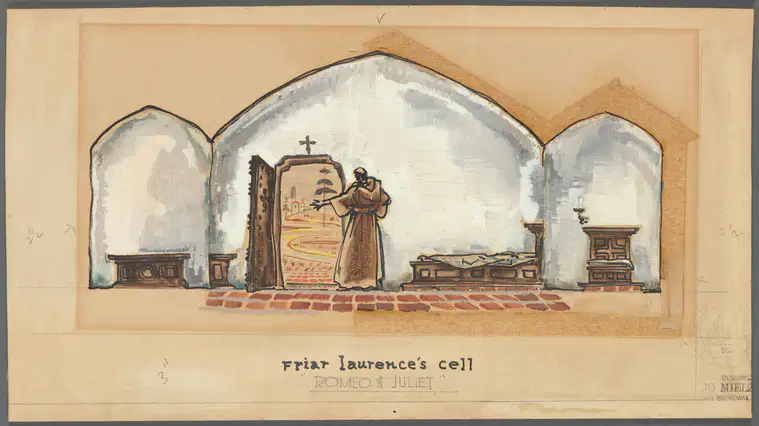
visit Friar Lawrence in his cell to seek his advice
tell her parents the truth about her marriage

In these lines from Act III, Scene v, of The Tragedy of Romeo and Juliet, to whom is Juliet speaking in the aside?
Lady Capulet. That same villain Romeo.
Juliet. [Aside] Villain and he be many miles asunder. —
God pardon him! I do, with all my heart;
And yet no man like he doth grieve my heart.
Romeo
Lady Capulet
the audience
the Nurse
In Act III, Scene ii, of The Tragedy of Romeo and Juliet, Juliet delivers a long speech directed to the Nurse. What is the correct term for this type of speech?
aside
soliloquy
monologue
foil

What is being personified in the following line?
Happiness courts thee in her best array;
the night
her love
happiness
Juliet

Read the excerpt below from the beginning of Scene ii of The Tragedy of Romeo and Juliet, Act III.
Juliet is on stage alone as she delivers this long speech. What term is used to describe this speech?
Juliet. Gallop apace, you fiery-footed steeds,
Towards Phoebus’ lodging! Such a wagoner
As Phaëthon would whip you to the west
And bring in cloudy night immediately.
Spread thy close curtain, love-performing night,
That runaways’ eyes may wink, and Romeo
Leap to these arms untalked of and unseen.
dialogue
soliloquy
aside
monologue

What is the purpose of this long speech?
It provides time for the other characters to change costumes and get on stage.
It reviews events that have happened so far in the play.
It gives the audience insight into Juliet’s true thoughts and feelings.
It establishes the setting for the remaining acts of the play.

