
Font size
 Worksheets
Spring Learning
Total questions: 50
Worksheet time: 1hrs 6mins
The ____ granted the president broad military powers in Vietnam
Geneva Accords
Gulf of Tonkin Resolution
Marshall Plan
Operation Rolling Thunders

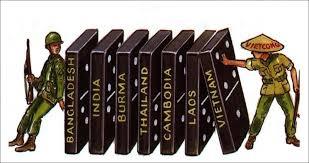


What country laid claim to the land area known as Indochina (now Vietnam) in the 1900s?
England
Japan
United States
France
lowered the federal voting age from 21 to 18
Twenty-eighth Amendment
Twenty-fifth Amendment
Twenty-sixth Amendment
Twenty-third Amendment
What was Kennedy's involvement in the Vietnam War?
he pulled troops out of Vietnam
he added 15,000 troops in South Vietnam
He ended the Vietnam War
He sent over 900 military advisors to South Vietnam
Who were on the Communist side in the Vietnam War? (choose more than 1)
North Vietnamese
South Vietnamese
Americans
VietCong
Why did the U.S go to Iraq?
To look for oil
we thought that Iraq had WMD (weapons of mass destruction)
To find gold
We wanted to become friends with Iraq
Who crashed into the twin towers?
Addam Hussein And Lraq
Olama bin laden and al-quesadilla
Osama bin laden And Al-Qeada
Saddam Hussein and Iraq
What did Saddam Hussein do when he was leaving Kuwait
Set fire to homes
Set people on fire
Set fire to oil fields
Set fire to America
The goal of the Bay of Pigs invasion was to get rid of which communist leader?
Nikita Khrushchev
Joseph Stalin
Fidel Castro
None of the above
Who helped train the Cuban exiles?
FBI
CIA
NSA
Police
Which country became a closer friend of the Cuban government after the Bay of Pigs?
Germany
United States
Soviet Union
Canada
Cuba is located ___________ miles from the United States
90
900
9000
9
The Soviet leader at the time of the Bay of Pigs was___________.
Joseph Stalin
Mikhail Gorbachev
Leonid Brezhnev
Nikita Khrushchev
What happened that ended the fighting in the Korean War? Select all the right answers.
North Korea surrendered.
Both sides agreed to an armistice to stop fighting.
A demilitarised zone was created alone the 38th parallel, which is the current border.
A peace treaty was signed to end the war.

What is a significant reason why the Soviets put missiles in Cuba?
They didn't want to, but Castro asked them to
Because they intended to attack Florida
There weren't any missiles in Cuba
The Soviets disliked the presence of nuclear weapons that were targeted at them from sites in Western Europe and Turkey
What ended the Cuban Missile Crisis?
The USSR removes missiles and the US leaves Cuba alone.
The US uses all of their missiles and destroys Cuba
Cuba forfiets
JFK got tired of fighting and just made a treaty
What was Nixon's policy to ease tension between the U.S. and the Soviet Union?
containment
Strength through Peace
détente
entente
What was the peace agreement that President Carter made between Israel and Egypt?
Treaty of Versailles
Paris Peace Agreement
Helsinki Accords
Camp David Accords
Why did President George H. W. Bush commit United States troops to the Persian Gulf War in late 1990?
Stop the creation of nuclear weapons
To liberate Kuwait and protect our oil interests
Stop Al Qaeda from further terrorist attacks
Gain access to the Suez Canal
What led to the creation of the USA Patriot Act and Dept. of Homeland Security?
Another Red Scare
Terrorist attacks on September 11
The start of the second Cold War
The war in Iraq
Why is the 2000 presidential election significant?
Gore and Bush took each other to court over campaign finance
Bush won the election based on a Supreme Court decision to stop a recount in Florida
Some states petitioned for a recount after losing ballots
The ballots in many states were incorrectly counted
What public project did Nasser hope to pay for with the revenue from taking control of the Suez Canal?
Nile Barrage
Ismailia Canal
Hoover Dam
Aswan Dam
Widening the Canal
President of Egypt during the Suez Crisis
Anwar Sadat
Gamal Abdel Nasser
Yasir Arafat
Menachem Begin
Clinton was impeached but not convicted for -
working with the Russians to secure his 1st term as president
lying under oath about his relationship with an intern.
covering up a break in at the DNC headquarters
for firing the Secretary of War
Who were the main individuals investigated in connection with the Oklahoma City bombing?
Timothy McVeigh and Terry Nichols
James Nichols and Michael Fortier
Terry Nichols and Michael Fortier
Timothy McVeigh and James Nichols
In 2001, Congress passed the Patriot Act. Which was one of the powers granted as result of this act?
increased authority to use electronic surveillance
the right to draft people into the military
federal funding for patriotic groups
the right to create new taxes to fund anti-terrorist activities
Which of the following was NOT a place that Al Qaeda crashed a plane into?
the White House
the Pentagon
the World Trade Centers
a field
After 9/11, the United States created an organization that would make Americans be and feel safer in their communities. What was this called?
Police Emergency Force
TSA
Homeland Security
Protective Services
What type of leader was Saddam Hussein to Iraq?
a dictator
a President
a king
a democratic leader
Which person led the Al Qaeda group?
Osama bin Laden
Saddam Hussein
Hosni Mubarak
Hamid Karzai

