
 Worksheets
PSY 327
Total questions: 11
Worksheet time: 32mins
What are the most commonly recognized learning styles?
The amygdala, a brain region associated with emotional processing, is likely to be most active during learning in which learning style?

Auditory

Visual

Kinesthetic (Hands-on)

Reading/Writing
Which neurotransmitter is most associated with long-term memory formation and consolidation in the hippocampus, a key memory center?
Dopamine
Serotonin
Glutamate
Norepinephrine
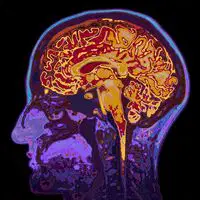
The hippocampus is vital for (a) , which allows us to store and retrieve long-term memories related to learning.
When I learn something new, I try to....
Draw the appearance of a neuron

Which fictional character would you trust to remember your most important secrets?
Hermione Granger from Harry Potter
Sherlock Holmes from Sherlock Holmes
Dory from Finding Nemo
Sheldon Cooper from The Big Bang Theory
Metacognition is often described as 'thinking about (a) .'
In your opinion, what are some potential factors that contribute to forgetting? How might these factors vary depending on the type of information or memory being forgotten?
10-14.
Answer the questions below after watching the video
What is a key benefit of experiencing flow?
Decreased productivity
Increased stress
Lower levels of accomplishment
Higher levels of positive emotions and creativity
What tends to happen to one's perception of time when in a state of flow?
Time seems to stop
Time seems to pass very slowly
There is no change in time perception
Time seems to fly by
Which area of the brain shows changes in activity during flow?
Regions related to sleep
Regions related to hunger
Regions related to attention and self-awareness
Regions related to memory loss
What is crucial for finding flow according to research?
Performing tasks that are extremely easy
Avoiding all challenging tasks
Balancing personal skill level with the task's challenge
Focusing intensely on achieving flow
What should you avoid doing if you want to achieve flow?
Focusing too much on reaching flow
Breaking tasks into small segments
Setting clear goals
Finding a quiet environment
15-18.
Answer the questions below after watching the video
What was the outcome of the study involving surgical residents and their study methods?
Both groups performed equally well.
The group with the modified study method performed significantly better.
There was no noticeable difference in performance.
The control group performed better due to traditional methods.
Which part of the brain is initially involved in forming new memories?
Amygdala
Hippocampus
Neocortex
Thalamus
What is the benefit of testing yourself with flashcards and quizzes?
It makes studying easier.
It is less effective than reading textbooks.
It provides a false sense of competence.
It actively strengthens and updates memory.
What is the advantage of spacing study sessions over time?
It allows for more topics to be covered.
It enhances short-term memory for exams.
It supports long-term memory retention.
It reduces the overall study time needed.

