
Font size
 Worksheets
Workplace Safety Hazard Communication Topic-6
Total questions: 34
Worksheet time: 34mins
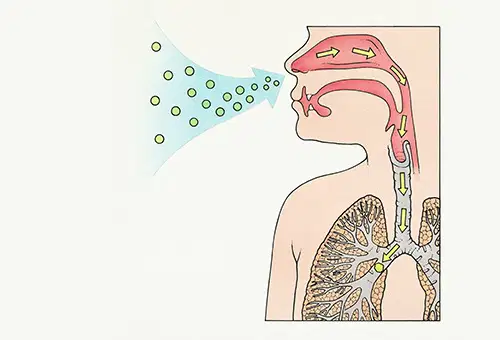
Image 1: Air is breathed in through the nose and into the lungs.
Absorption
Injection
Ingestion
Inhalation

Image 2: A drop of liquid falls onto your hand.
Absorption
Injection
Ingestion
Inhalation

Image 3: You pick up a vial of chemicals, then pick up a piece of food you intend to eat with the same hand.
Absorption
Injection
Ingestion
Inhalation
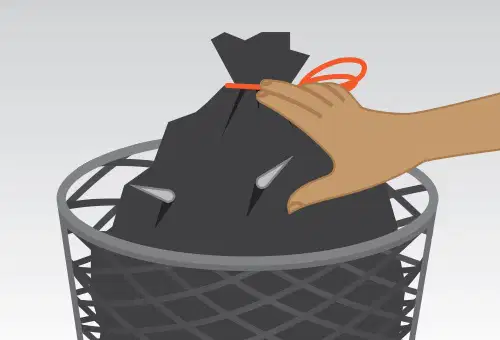
Image 4: You grab a bag full of trash and cut your hand on a piece of glass that is sticking out.
Absorption
Injection
Ingestion
Inhalation
Which route of entry could a chemical use to enter through the body's airways?
Ingestion
Inhalation
Injection
Absorpsion
A(n) __________ exposure is a repeated or prolonged exposure (over months or years) that may bring about slowly developing symptoms. These exposures do not cause immediate, obvious harm and a person may not see, feel, or smell the danger. Effects, however, may be permanent.
Acute
Chronic
Emergency
Short
A(n) ________ exposure is a short term or brief exposure that may create an immediate health hazard.
Acute
Chronic
Emergency
Short
Chemicals can create a physical hazard in the workplace such as causing a fire or explosion.
True
False
View this image and select the route of entry term the hazard applies to.
Inhalation
Ingestion
Injection
Absorpsion
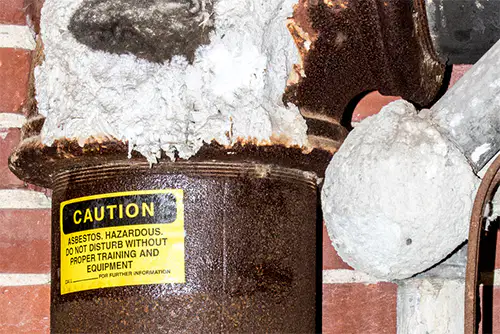
View this image and select the route of entry term the hazard applies to.
Inhalation
Ingestion
Injection
Absorption

View this image and select the route of entry term the hazard applies to.
Inhalation
Ingestion
Injection
Absorption

View this image and select the route of entry term the hazard applies to.
Inhalation
Ingestion
Injection
Absorption

View this image and select the route of entry term the hazard to which it applies.
Inhalation
Ingestion
Injection
Absorption
Who is required to provide information through the "Right to Know" Law?
(Select four)
Employers
Employees
Chemical Manufacturers
Chemical Distributors
Chemical Importers
What does the "Right to Know" Law require from manufacturers, importers, and distributors of chemicals?
Labels
Safety Data Sheets
Labels and Safety Data Sheets
Weekly Briefings
BCD Chemical Distributors has prepared a barrel of hazardous chemicals to be shipped to your employer. Select from the options to determine which items must be in place before it can be shipped.
(Select two)
SDS
Price Tag
Warning Label
Shipping item list
Someone just cleaned the bathroom at work. You walk into the bathroom stall and notice a strong chemical smell. You notify your supervisor and immediately take a look at the SDS. Which section will you review to determine the routes of exposure and symptoms of exposure?
First Aid Measures
Toxicological Information
Stability and Reactivity
Fire-Fighting Measures
Your supervisor asks you to run inventory on the chemical storage cabinet and make sure the SDS are up to date. You notice one of the chemicals does not have an expiration date. What section of the SDS do you review to find the manufacturer contact information?
Identification
Hazard Identification
First Aid Measures
Handling and Storage
While you're at work, you're helping your supervisor transition the manufacturing site for the third shift of workers. You find a secondary container with a label and you need to put it back in the right storage area. What section of the SDS would you look at to determine which storage location and conditions are best?
Identification
Hazards Information
First Aid Measures
Handling and Storage
When working with propane in situations of oxygen deficiency, unknown exposure concentrations, or situations that are immediately dangerous to life or health, what should you always utilize?
Safety Glasses
A NIOSH-approved, self-contained breathing apparatus.
Safety glasses with a face shield.
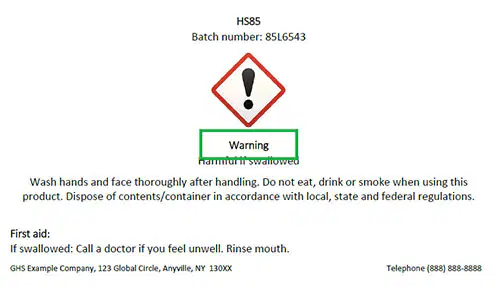
For the area identified, choose the label component that best describes the part indicated.
Signal Word
Hazard Statement
Pitogram
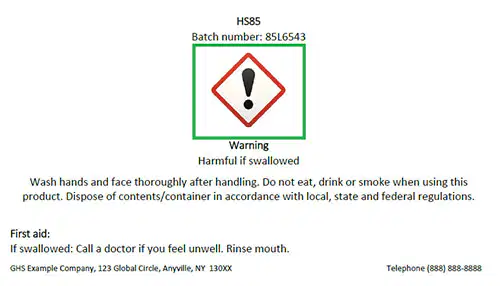
For the area identified, choose the label component that best describes the part indicated.
Signal Word
Hazard Statement
Pictogram
Martin is using a chemical fertilizer. Can you interpret these labels and select what I should be aware of?
See copy of PDF file
Oxidizer
Harmful Irritant
Flammable
Corrosive
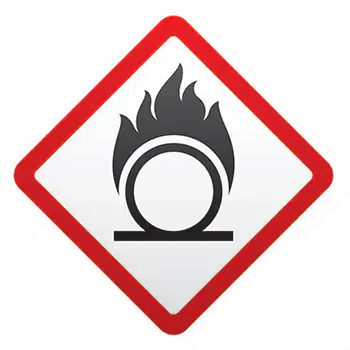
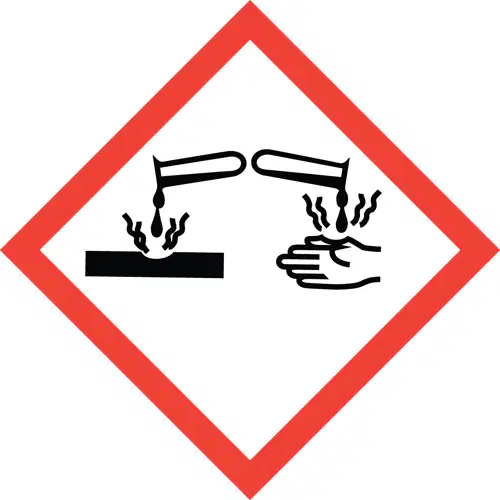
Which of the following pictograms represents acute toxicity?

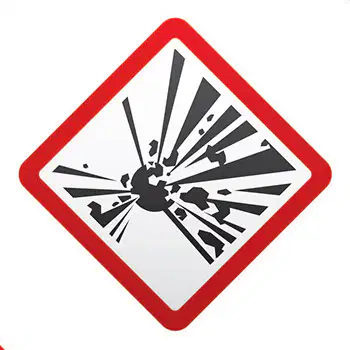

Which hazard is represented in this pictogram?
Corrosion
Health Hazard
Acute Toxicity
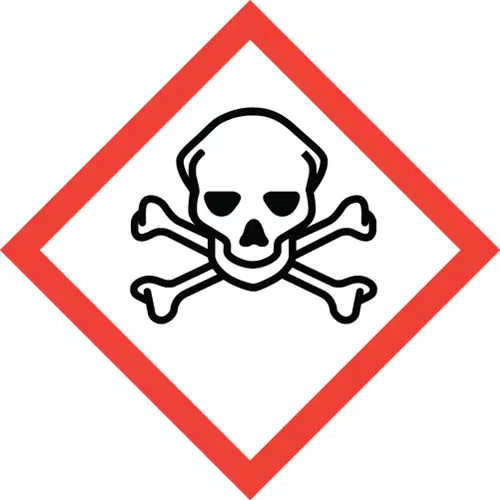
Which hazard is represented in this pictogram?
Corrosion
Health Hazard
Acute Toxicity
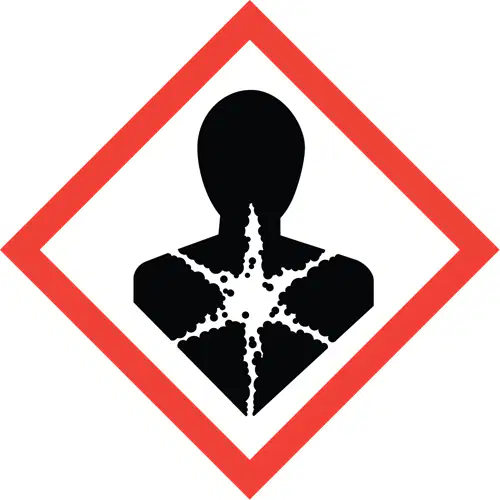
Which hazard is represented in this pictogram?
Corrosion
Health Hazard
Acute Toxicity
As part of a hazard communication program, what is your employer required to have?
(Select Four)
Safety Data Sheets
Labels on each container
Training
List of all employees
List of all chemicals
Your employer lets you know that the Safety Data Sheets are located on a computer in his office. Does this comply with employer responsibilities?
Yes, I can go and ask for them as needed
No, it is not easy to access them while I'm working
No, the SDS must be attached to the chemical container.
Yes, I can print them off whenever it is convenient.
As an employee, who is supposed to provide training on the chemicals you are handling or come in contact with at work?
Distributor
Government
Manufacturer
Employer
Howard has a chemical burn from accidentally spilling a strong basic cleaning solution onto his arm. It causes a small burn mark that goes away after a few weeks. He has no other symptoms. What kind of exposure is this considered?
Acute
Chronic
Deadly
No Effect
Howard is working with a cleaning solution that contains sodium hydroxide. Although he is using gloves, when he pours the solution to dilute it for cleaning use, he spills a bit on his arm. His arm feels slimy to the touch and now has a burn mark. What is the chemical route of entry?
Inhalation
Ingestion
Injection
Absorption
You have just started a new job and your boss gives you a list of chemicals you may come in contact with on the job. What are your other rights as described by the right to know law?
Safety Talks
Excused Absences
Training
Closed to shoe restrictions.
What are the requirements for chemical labels?
Legible
Includes critical information you need to identify the chemical.
Includes warnings about the chemical.
Clearly Marked

