
 Worksheets
2024 6th Grade science Review #2
Total questions: 79
Worksheet time: 2hrs 35mins

What is a warm front
a front where a warm air mass is caught between two colder air masses and brings cool temperatures and large amounts of rain and snow
front when cold air moves under warm air which is less dense and pushes air up (produces thunderstorms heavy rain or snow)
a front where warm air moves over cold air and brings drizzly rain and then are followed by warm and clear weather
a boundary that separates a moist air mass from a dry air mass

True or False:
an air mass is A huge body of air that has similar temperature, humidity, and air pressure at any given height
True
False

What is a cold front?
front when cold air moves under warm air which is less dense and pushes air up (produces thunderstorms heavy rain or snow)
The temperature at which condensation begins
very cold, very dry stable air mass
A boundary between air masses that don't move possibly causing rain for several days

What is a stationary Front?
unstable cold, moist air mass that forms over cold oceans--
Winter and Summer- cold and humid
very cold, very dry stable air mass
unstable, warm, dry air mass that forms over land
Winter - warm and dry
Summer - Hot and dry
A boundary between air masses that don't move possibly causing rain for several days

What is an occluded front?
brings cool temperatures
a front where a warm air mass is caught between two colder air masses
Brings clear weather
brings drizzly rain
brings large amounts of rain and snow

What is a front?
A huge body of air that has similar temperature, humidity, and air pressure at any given height
When any two air masses meet. The four major types are cold fronts, warm fronts, stationary fronts, and occluded fronts.

What is an air mass?
When any two air masses meet. The four major types are cold fronts, warm fronts, stationary fronts, and occluded fronts.
A huge body of air that has similar temperature, humidity, and air pressure at any given height

What is a continental polar (cP) air mass?
An air mass that is cold
An air mass that is warm
An air mass that forms over water
An air mass that forms over land

What is a maritime polar (mP) air mass?
unstable cold, moist air mass that forms over cold oceans--
Winter and Summer- cold and humid
Wet and warm air mass
hot and humid air mass that originates from the ocean region straddling the equator.
very cold, very dry stable air mass

What is a maritime tropical (mT) air mass?
dry air mass
Wet and warm air mass that forms over water
unstable, warm, dry air mass that forms unstable, warm, dry air mass that forms over land
Winter - warm and dry

What is a Continental Tropical (cT) air mass?
unstable, warm, dry air mass that forms over land
Winter - warm and dry
Summer - Hot and dry
forms when cold air moves under warm air which is less dense and pushes air up (produces thunderstorms heavy rain or snow)
An air mass that is cold warm and forms over water
What is the formula for speed?
speed = distance x time
speed=distance / time
speed = time / distance
speed = distance + time
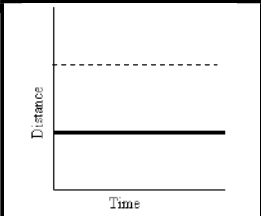
What does the solid line on this graph represent?
Constant speed
Acceleration
At rest
deceleration
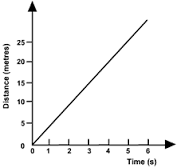
What is the line on this graph showing?
moving away from starting point at a constant speed
moving back towards the starting point at a constant speed
acceleration (getting faster)
deceleration (getting slower)
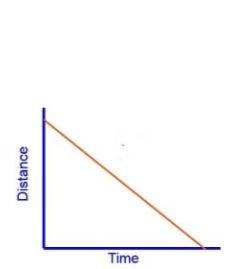
What is this line of this graph showing?
moving away from starting point at a constant speed
moving back towards the starting point at a constant speed
acceleration (getting faster)
deceleration (getting slower)

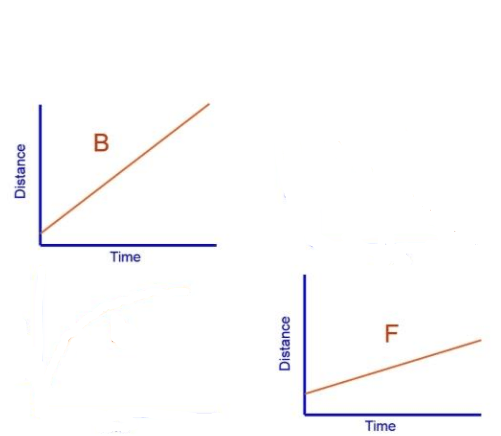


What happened during A to B point?
not moving
increasing speed at a constant rate
moving at a constant speed
acceleration



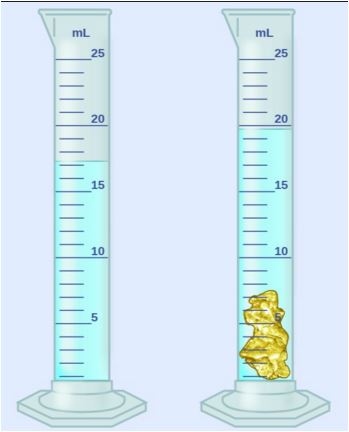

An object is is placed into 45 mL of water. The water rises to 48 mL. What is the volume of the object?
3 mL
93mL
8 mL
83 mL
One big continent or land mass.
Grass
Land
Pangea
Epicenter
Is it true that Epicenter means the point on earths surface directly above an earthquakes focus
true
false
Convergent Boundary
A plate Boundary where two plates move away from each other.
A plate boundary where two plates move toward each other.
A region around a magnetic substance.
Earths land based plants.
The process by which oceanic crust sinks beneath a deep-ocean trench and back into the mantel at a convergent plate boundary.
Plate Tectonics
Epicenter
Pangea
Subduction
Magnetic Fields
A magnetic substance that keeps Earth together.
The substance that makes magnets.
A region around a magnetic substance.
A magnetic substance that is found in the middle of the Earth.
Developed the Continental Drift Theory.
Alfred Waenger
Geologic Events
Plate Tectonics
Continetal Drift
Continental Plates
Plates.
Earths land based plates.
Ocean based plates.
Sky based plates.
Oceanic Plates
Earths ocean based plates.
Earths land based plates.
Earths sky based plates.
Earths air based plates.
The theory that pieces of Earths lithosphere are in constant motion,driven by convection currents in the mantle.
Plate Tectonics
Epicenter
Pangea
Subduction
Geological Events
Earths land based plates.
One big continent or land mass.
major events in Earths past based on geological time,using the study of the plants rock layer.
Earths ocean based plates.
Continetal Drift
The point on Earths surface directly above an Earthsquakes focus.
One big continent or land mass
The theory that the Earths continents have moved over geologic time.
The region around a magnetic substance
A plate boundary where two plates move away from each other.
Epicenter
Pangea
Convergent Boundary
Divergent Boundary
What are ATOMS made up of
particles
Electron,neutrons,protons
matter
elements
mass
The measure of amount of matter in an object
s an object or type of material that allows the flow of charge in one or more directions.
an object or type of material that allows the flow of charge in one or more directions.
conductor
molecules
a material in which electric current does not flow freely
metal
an object or type of material that allows the flow of charge in one or more directions
density
the amount of matter
protons
compound
mass per unit volume
Thermal
air
heat
compound
compound
groups of molecules that are mixed in a completely even distribution
A molecule that has two or more different elements bonded together
basic Element
Earth
water
fire
air
Mixture
solute
colloid
A substance made by mixing other substances
anything that has mass
magnetism
An invisible force pulls certain substances towards a magnet
ability of matter to allow thermal energy to move threw it
solubility
solution
solvent
ability of matter to dissolve in other substances
How much space an object takes up is called...
Mass
Volume
Density
Weight
What is the process called when a solid turns INTO a liquid?
Sublimation
Freezing
Boiling
Melting
What is the process of a liquid turning into a gas called?
Burning
Melting
Boiling
Freezing
What is it called when a solid turns into a gas, without going through the liquid stage?
Sublimation
Melting
Evaporation
Deposition
How much gravity is pulling on you is called....
Volume
Weight
Mass
Density
How much matter is in a object?
Weight
Mass
Gravity
Volume
The part of an atom with no charge is called...
Electron
Subatomic Particles
Neutron
Proton
The part of an atom with a positive charge...
Proton
Nuetron
Electron
Elements
Which part of the atom has a negative charge?
Neutrons
Protons
Nucleus
Electrons
What is a Nucleus?
Where the Electrons and Protons are.
Where the Protons and Neutrons are.
Where the Neutrons and Protons are.
Where the Electrons and Neutrons are.
What is deposition?
A Solid changing to a Gas
A Gas changing to a Solid.
A Liquid changing into a Solid.
A Solid changing into a liquid.

