
 Worksheets
(P8) Forces, Newton's Laws, Electromagnets, & the Universe
Total questions: 19
Worksheet time: 11mins
Forces that occur when objects touch each other
contact forces
non-contact forces
gravity
magnetism
Why does a compass needle point toward a wire that is carrying a current?
wire with a current creates a magnetic field, attracting the magnetic compass needle
the compass needle is made of metal and is attracted to the wire
electrical currents attract metal
compass needles do not point toward a wire carrying an electrical current
What happens to the MASS of an object when it leaves Earth?
stays the same
changes
nothing
Why is understanding the gravity on other planets essential for manned missions?
To predict how humans will adapt to the gravity levels.
To predict how humans will find jobs.
To predict how long it will take to get to other planets.
To predict how much food to take on the voyages.
Choose all forces that act on a boulder sitting still on the ground.
no forces
gravity
ground
push to the left
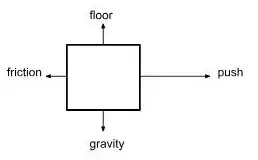
Which forces are balanced?
vertical
horizontal
none
both
Choose all of the ways to increase the effect of the magnetic field of an electromagnet.
move object closer to electromagnet
add additional power sources
wrap more coils of wire
wrap the coils of wire closely together
Which of Newton's Laws of Motion reads: An object in motion remains in motion with the same speed and in the same direction unless acted upon by an unbalanced force.
1st law
2nd law
3rd law
What factors affect the gravitational force between two objects?
mass and distance
mass and gravity
distance and type of object
mass and weight
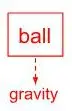
A tennis ball is bounced on the ground. Choose all of the positions that are best described by this free-body diagram.
held up high
dropping
bouncing up
on the ground
What is the standard acceleration due to gravity on Earth?
9.8 m/s^2
3 m/s^2
9.8 m
9.8 m/s
Which of Newton's Laws of Motion reads: The force on an object is equal to its mass times its acceleration.
1st law
2nd law
3rd law
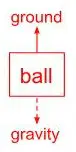
A tennis ball is bounced on the ground. Which position does this free-body diagram best decribe?
held up in the air
dropped
hitting the ground
bouncing back up
Describe the relationships between the gravitational force and distance between objects
increased distance leads to decreased effect of gravity
increased distance leads to increased effect of gravity
decreased distance leads to decreased effect of gravity
there is no relationship between the two
What happens to the WEIGHT of an object when it leaves Earth?
stays the same
changes
nothing
Which of Newton's Laws of Motion reads: For every action there is an equal and opposite reaction.
1st law
2nd law
3rd law
Choose all of the following that describe the role that gravity plays in space.
Holds planets in orbit around the Sun.
Holds moons in orbit around planets.
Keeps objects in space from running into each other.
It has no role in space.
Will this object move? In which direction?
yes, to right
yes, to left
no
yes, up
Describe the relationships between the gravitational force and mass of objects
increased mass leads to decreased effect of gravity
increased mass leads to increased effect of gravity
decreased mass leads to decreased effect of gravity
there is no relationship between the two

