
 Worksheets
Unit 3 Quiz
Total questions: 64
Worksheet time: 1hrs 23mins

This could be the dot diagram of
Mg
Cl
C
O
What is the goal of the Lewis Dot Structure?
To determine the electron position.
To show the element's valence electrons & bonding capabilities.
To find the atomic mass of an element.
To search for the number of electrons in an individual atom.
How many valence electrons should Lithium have in its Lewis dot model?
1
2
3
4

This is a correct dot diagram for nitrogen (N)
true
false

This is a correct dot diagram for carbon (C)
true
false

This is a correct dot diagram for neon (Ne)
true
false
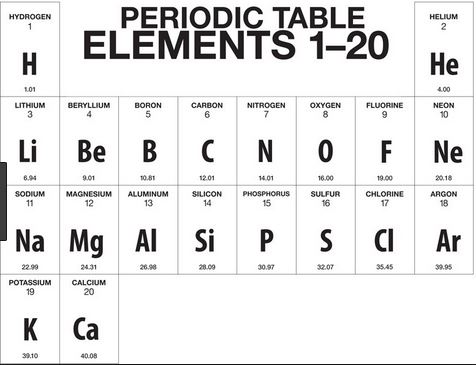
How many valence electrons does Aluminum Have?
1 Valence electron
2 Valence electron
3 Valence electron
4 Valence electron
5 Valence electron
How would you draw a Lewis dot diagram for Magnesium?


Which of the following shows a correct Lewis dot structure?


How many valence electrons does this element have?
2
3
5
10

Which element is shown in the Bohr-Rutherford model in the picture?
Lithium
Boron
Carbon
Neon
Which of these is in group 2?


How many dots would you put around carbon, a group 14 element?
4
6
8
18
The name of this molecule with the molecular formula of N2Cl6 molecule.
Dinickel Six Chlorine
Dinickel Hexachlorine
Dinitrogen Tetrachlorine
Dinitrogen Hexachloride
The molecular formula for dihydrogen sulfide is ___?
HS
H2S2
HS2
H2S
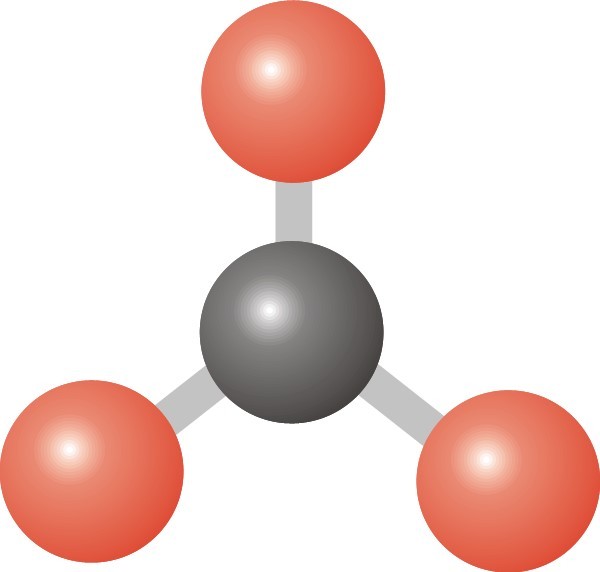
What is this shape called?
Trigonal Planar
Tetrahedral
Trigonal Pyramidal
Bent

What shape would this have?
Trigonal planar
Pyramidal
Tetrahedral
Bent
What is the correct Lewis Dot Structure for ammonia NH3


Which of the following elements will form a cation?
Arsenic
Copper
Bromine
Fluorine
Which of the following will form an anion?
Titanium
Iron
Calcium
Sulfur
Which of the following will form a cation?
Aluminum
Sulfur
Iodine
Nitrogen
Which of the following will form an anion?
Tin
Lead
Chlorine
Zinc
Which of the following elements will form an anion?
Calcium
Cobalt
Nickel
Iodine
Potassium and Sulfur
The name of FeCl₂ is
iron chloride
iron (II) chloride
iron (I) chloride
iron dichloride
LiBr is called
lithium bromine
lithium (I) bromine
lithium bromide
lithuim (I) bromide
Name the following ionic compound: BeCl2
beryllium chlorine
beryllium II chloride
beryllium chloride
beryllium dichloride
Name the following ionic compound: Cs2S
cesium sulfide
cesium sulfate
cesium II sulfate
cesium II sulfide
Which of the following combinations would need roman numerals in the name?
potassium + fluorine
beryllium + oxygen
boron + iodine
gold + oxygen
When naming ionic compounds with transition metals you need to include roman numerals to show the _____ of the metal..
atomic number
mass number
charge
ionization energy
When naming a compound, which of these is written first?
Metal
Nonmetal
Anion
Cation
When naming a compound, what must the last part be?
the element with "ide" at the end
the element with the ending "ite"
the name of the element
the element with "ide" at the end, unless its a polyatomic ion
What is the name of the compound Na2(SO4)?
Sodium sulfate
Sodium sulfide
Sodium sulfite
Sodium sulfuroxide
What is the name of the compound Sc(OH)3?
Scandium (III) hydroxide
Scandium (I) hydroxide
Scandium (II) hydroxide
Scandium hydroxide
The name of the compound Ca3(PO4)2
calcium phosphate
tricalcium diphosphate
calcium phosphorus oxide
calcium phosphide
If I gain electrons I become
Positive because I've added to my atom
negative because I've added electrons
same because i'm balanced
equal because now I have electrons
By looking at the formula of an ionic compound, we can determine the charge (oxidation state) of a transition metal.
True
False
What molecular geometry would PH3 have?
Trigonal Pyramidal
Trigonal Bipyramidal
Bent
Linear

