wayground logo

Free Printable Worksheets

Font size

S
M
L
XL
Worksheets

1.3 Pure and mixed substances

Total questions: 68

Worksheet time: 43mins

Name
Class
Date
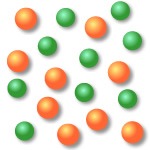
1.
This picture represents: 
a)
Element
b)
Compound
c)
Mixture of Elements
d)
Mixture of Compounds
2.
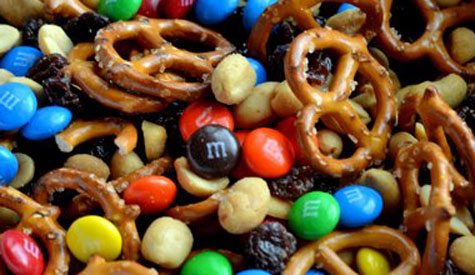
What type of mixture is this?
a)
homogenous mixture
b)
chemical
c)
heterogeneous mixture 
d)
solid mix
3.
A substance in which all the atoms are the same
a)
colloid
b)
homogeneous mixture
c)
solution
d)
element
4.
A mixture in which different materials can be identified easily
a)
element
b)
heterogeneous mixture
c)
homogeneous mixture
d)
solution
5.
A mixture that contains two or more substances blended evenly throughout
a)
heterogeneous mixture
b)
homogeneous mixture
c)
suspension
d)
colloid
6.
Which of the following is an element?
a)
Sugar
b)
Salt
c)
Water
d)
Oxygen
7.
This picture represents which of the following?
a)
element
b)
compound
c)
mixture
8.
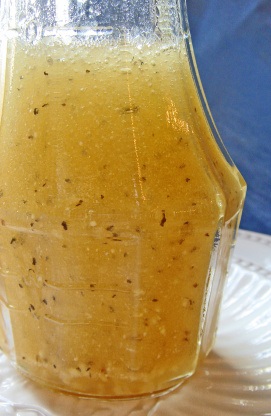
Italian Salad Dressing is a . . .
a)
heterogeneous mixture
b)
homogeneous mixture
c)
Pure Substance
d)
Compound
9.
Can usually be separated in your kitchen (by physical means)
a)
Pure Substance & Element
b)
Pure Substance & Compound
c)
Mixture & Homogenous
d)
Mixture & Heterogenous
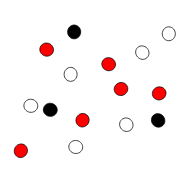
10.

This picture represents a:

a)

Element

b)

Compound

c)

Mixture of Elements

d)

Mixture of Compounds

11.

What type of mixture is this?

a)

homogenous mixture

b)

chemical

c)

heterogeneous mixture

d)

solid mixture

12.

A substance with two or more elements that are combined in a fixed proportion is called a:

a)

heterogeneous mixture

b)

compound

c)

element

d)

homogeneous mixture

13.

A substance in which all the atoms are the same type.

a)

heterogeneous mixture

b)

homogeneous mixture

c)

compound

d)

element

14.

A mixture that contains two or more substances blended evenly throughout

a)

heterogeneous mixture

b)

homogeneous mixture

c)

compound

d)

element

15.

A mixture that is NOT evenly distributed is called a:

a)

compound

b)

homogeneous mixture

c)

heterogeneous mixture

d)

pure substance

16.

This picture represents a:

a)

element

b)

compound

c)

mixture of elements

d)

mixture of compounds

17.
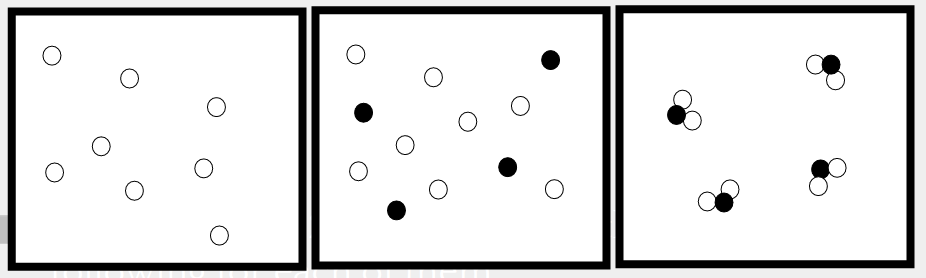
Which one of these pictures represents a mixture? 
a)
1
b)
2
c)
3
d)
1, 2 and 3
18.
This picture represents: 
a)
Element
b)
Compound
c)
Mixture of Elements
d)
Mixture of Compounds
19.

True or False: Matter is divided into two main groups: pure substances and mixtures.

a)

True

b)

False

20.

True or False: The two types of pure substances are elements and compounds.

a)

True

b)

False

21.

Chicken soup is an example of what kind of matter?

a)

homogenous mixture

b)

solution

c)

heterogeneous mixture

d)

compound

22.

Kool-Aid is an example of:

a)

Element

b)

Compound

c)

Homogeneous Mixture

d)

Heterogeneous Mixture

23.

Carbon is an example of:

a)

Element

b)

Compound

c)

Homogeneous Mixture

d)

Heterogeneous Mixture

24.

O2 is an example of:

a)

Element

b)

Compound

c)

Homogeneous Mixture

d)

Heterogeneous Mixture

25.

NaCl is an example of:

a)

Element

b)

Compound

c)

Homogeneous Mixture

d)

Heterogeneous Mixture

26.

Aluminum is an example of:

a)

Element

b)

Compound

c)

Homogeneous Mixture

d)

Heterogeneous Mixture

27.

A metal alloy is a(n):

a)

homogeneous mixture

b)

heterogeneous mixture

c)

element

d)

compound

28.

What is a pure substance made of 2 or more elements chemically combined in a specific ratio (Ex. Water)?

a)

Element

b)

Compound

c)

Mixture

d)

Solution

29.

What is a type of mixture in which different parts can easily be seen (Ex. Vegetable soup)?

a)

Heterogeneous mixture

b)

Homogeneous mixture

c)

Solution

d)

Colloid

30.

What is a well-mixed mixture containing a solvent and at least one solute that has the same properties throughout (Ex. Sugar water)?

a)

Heterogeneous mixture

b)

Colloid

c)

Suspension

d)

Solution

31.

What is a type of mixture that is evenly mixed so you cannot see the parts and it looks all the same (Ex. Paint)

a)

Element

b)

Compound

c)

Heterogeneous mixture

d)

Homogeneous mixture

32.

What is a pure substance that cannot be broken down into any other substances by chemical or physical means (Ex. Oxygen)?

a)

Element

b)

Compound

c)

Colloid

d)

Suspension

33.

What is a mixture in which particles can be seen seen and settle out over time (Ex. Muddy water)?

a)

Solution

b)

Suspension

c)

Colloid

d)

Element

34.

What is a mixture containing small, undissolved particles that do not settle out over time (Ex. Fog)?

a)

Solution

b)

Suspension

c)

Colloid

d)

Compound

35.

A base is a compound that makes hydroxide ions (OH-) when dissolved in water.

a)

True

b)

False

36.

Which of the following values is very acidic on the pH scale?

a)

0

b)

6

c)

9

d)

14

37.

Trail mix is a

a)

Mixture

b)

Substance

38.

Sugar is a

a)

Substance

b)

Mixture

39.

Concrete is a

a)

Substance

b)

Mixture

c)
d)
40.

Table salt (NaCl)

a)

Substance

b)

Mixture

41.

Mercury is (Hg)

a)

Element

b)

Compound

42.

Water is (H20)

a)

Element

b)

Compound

43.

Aluminum is (Al)

a)

Element

b)

Compound

44.

Oxygen is (O2)

a)

Element

b)

Compound

45.

Carbon Dioxide (CO2)

a)

Element

b)

Compound

46.

Is Coffee

a)

Heterogeneous

b)

Homogeneous

47.

Pizza is

a)

Heterogenous

b)

Homogenous

48.

Soil is

a)

Heterogenous

b)

Homogenous

49.

Air is

a)

Heterogenous

b)

Homogenous

50.

Select all of the compounds in these particle diagrams.

a)
b)
c)
d)
e)
51.
Question Image

Match the following

a)
1.

element

b)
2.

compound

c)
3.

mixture of 2 elements

d)
4.

mixture of 2 compounds

52.

Match the term with its definition

a)

a pure substance that consists of one type of atom.

1.

elment

b)

a pure substance that consists of multiple types of atoms chemically joined.

2.

compound

c)

contains two or more different substances physically joined together

3.

mixture

53.
Which of the following are pure substances?
a)
solutions
b)
compounds
c)
homogeneous mixtures
d)
colloids
54.
Which of the following is NOT a pure substance?
a)
milk
b)
oxygen
c)
water
d)
carbon dioxide
55.
A substance that is made up of only one kind of atom is a(an)
a)
compound
b)
homogeneous mixture
c)
element
d)
solution
56.
If an unknown substance CANNOT be broken down into simpler substances, it is 
a)
a compound
b)
an element
c)
a homogeneous mixture
d)
a heterogeneous mixture
57.
If a material contains three elements joined in a fixed proportion, it is a(an)
a)
mixture
b)
solution
c)
atom
d)
compound
58.
Water is a compound because it
a)
can not be broken down into simpler substances
b)
always has two hydrogen atoms for each oxygen atom
c)
is made of water atoms joined together
d)
is heterogeneous
59.
Which of the following is a mixture?
a)
carbon dioxide
b)
silicon
c)
silicon dioxide
d)

Beach sand

60.
Which of the following is a characteristic of a mixture?
a)
has varying properties
b)
has a fixed composition
c)
contains only pure substances
d)
does not reflect light
61.
A mixture that appears to contain only one substance is a(an)
a)
homogeneous mixture
b)
heterogeneous mixture
c)
compound
d)
element
62.
Which of the following is a heterogeneous mixture?
a)
water in a swimming pool
b)
sugar water
c)
a jar of mixed nuts
d)
stainless steel
63.
you are about to open a container of soy milk but notice that there are instructions to "shake well before serving".  The soy milk is most likely a
a)
solution
b)
pure substance
c)
colloid
d)
suspension
64.
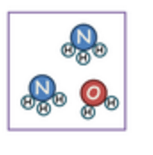
This image represents a(n)
a)
element
b)
compound
c)
mixture
d)
colloid
65.
The air that fills this room would be classified as
a)
an element
b)
a compound
c)
a homogeneous mixture
d)
a pure substance
66.
Why is the composition of every element fixed?
a)
Because it contains only one type of atom.
b)
Because the ratio of atoms is always the same.
c)
Because the atoms are so small.
d)
Because God said so.
67.
Two classifications of a pure substance are
a)
homogeneous and heterogeneous
b)
atoms and elements
c)
elements and compounds
d)
solutions and colloids
68.
Two classifications of homogeneous mixtures would be
a)
solutions and colloids
b)
solutions and suspensions
c)
colloids and suspensions
d)
compounds and solutions