Worksheets
Chemical Bonding
Total questions: 68
Worksheet time: 40mins
The vertical (up and down) columns in the Periodic Table are called
groups
towers
periods
atomic numbers
Which statement best describes the arrangement of elements in the periodic table?
Elements are arranged in decreasing atomic mass from left to right.
Elements are arranged in decreasing atomic number from left to right.
Elements are arranged in increasing atomic number from left to right
Elements are arranged in increasing number of neutrons from left to right.
Atomic number represents which subatomic particle?
electrons
protons
neutrons
All of the elements in a period have the same number of _____.
energy levels
valence electrons
protons
electrons
All of the elements in a group have the same number of _____.
energy levels
valence electrons
protons
electrons
How many electrons can the first energy level hold?
1
2
8
Unlimited
How many electrons can the second and third (for our intents and purposes) energy levels hold?
1
2
8
Unlimited

Is this the correct Bohr model for silicon (Si)?
Yes
No

Is this the correct Bohr model for carbon (C)?
Yes
No
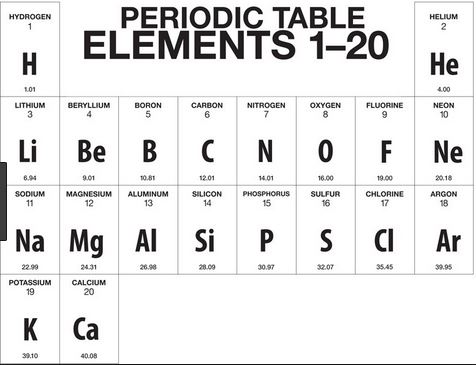
How many valence electrons does Hydrogen Have?
1 Valence electron
2 Valence electron
3 Valence electron
4 Valence electron
5 Valence electron
How many valence electrons does Nitrogen Have?
1 Valence electron
2 Valence electron
3 Valence electron
4 Valence electron
5 Valence electron
How many valence electrons does Silicon Have?
1 Valence electron
2 Valence electron
3 Valence electron
4 Valence electron
5 Valence electron
How many valence electrons does Oxygen Have?
4 Valence electron
5 Valence electron
6 Valence electron
7 Valence electron
8 Valence electron


Na ionizes to a charge of _______
+1
+2
-1
-2
Li ionizes to a charge of _________
+2
+1
-1
-2
K ionizes to a charge of _________.
+1
+2
-1
-2
Be ionizes to a charge of ________.
+1
+2
-1
-2
Mg ionizes to a charge of ______.
+1
+2
-1
-2
Ca ionizes to a charge of _______.
+1
+2
-1
-2
Al ionizes to a charge of _______.
+3
-3
+2
-2
N ionizes to a charge of _______.
+3
-3
+2
-2
P ionizes to a charge of _______.
+3
-3
+2
-2
O ionizes to a charge of ________.
+1
+2
-1
-2
S ionizes to a charge of _______.
-2
-1
+1
+2
F ionizes to a charge of ________.
-2
-1
+1
+2
Cl ionizes to a charge of _________.
-2
-1
+1
+2
Br ionizes to a charge of ________
-1
-2
+1
+2
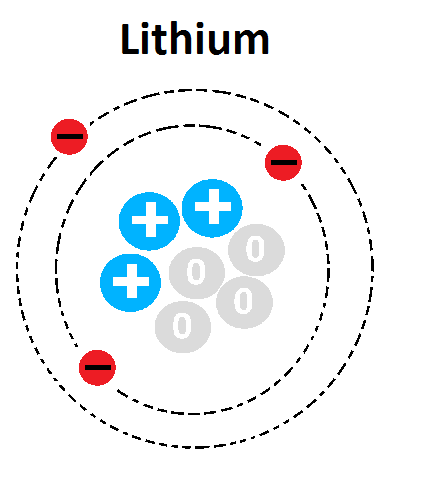
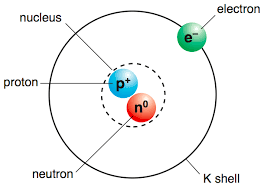
What is the mass number of this atom?
1
3
4
7
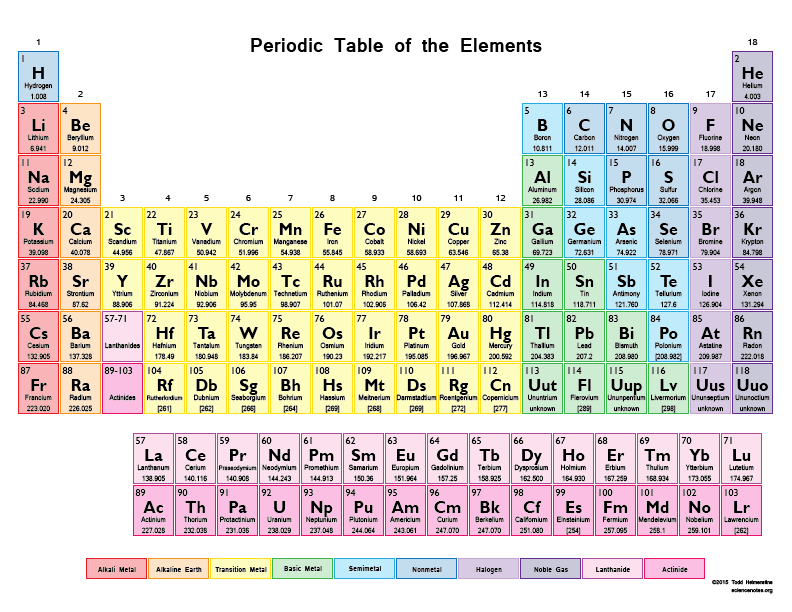
What is the atomic number of Barium, Ba? (enlarge the periodic table)
20
38
56
88
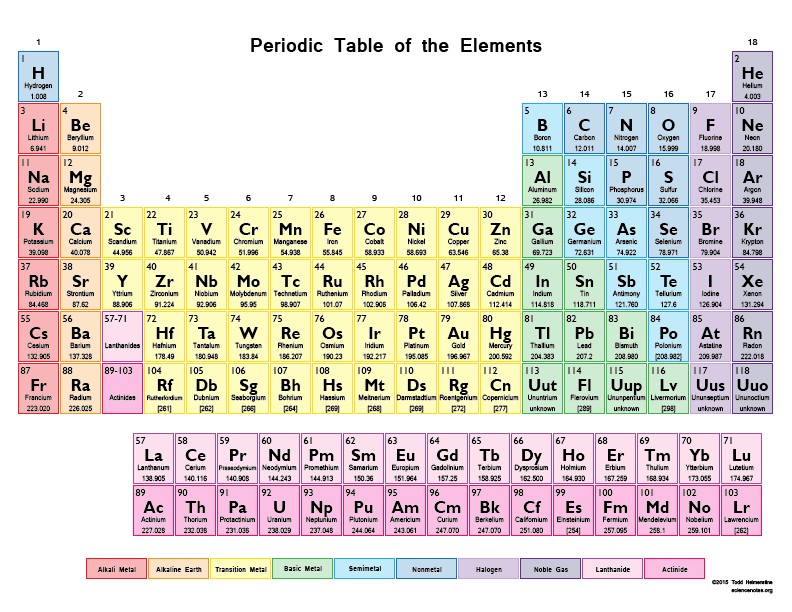
How many protons are in a sodium atom, Na? (tap to enlarge the periodic table)
Sodium has 1 proton.
Sodium has 3 protons.
Sodium has 11 protons
Atoms of the same element which have a different number of neutrons are called _________________.
ions
isotopes
quarks
molecules
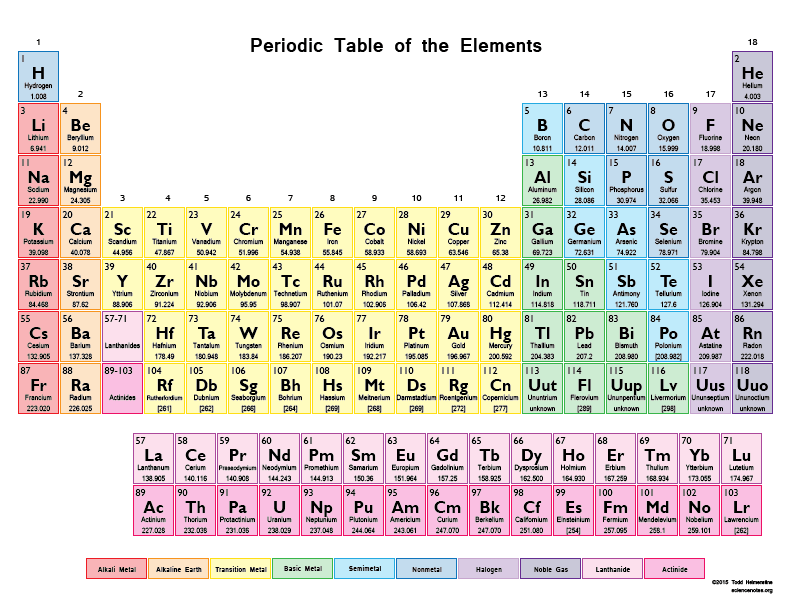
How many neutrons does C-14 contain? (tap to enlarge the image)
6
7
14
8
ALL atoms of the same element have:
same number of proton
same number of nucleon
different number of neutron
different number of electron
If an atom has 12 neutrons and 11 protons, what is its atomic mass?
(a)
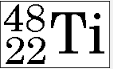

What is the charge on a lithium atom that loses 1 electron?
+1
0
-1
-2



NaBr
H2O

The metal atoms tend to _____________ electrons.
lose
gain