wayground logo

Free Printable Worksheets

Font size

S
M
L
XL
Worksheets

Unit 2 Quest 1 - Atomic Theory, Periodic Table, isotopes

Total questions: 63

Worksheet time: 1hrs 4mins

Name
Class
Date
1.

What is the name of group number 1?

a)

halogens

b)

noble gases

c)

alkali metals

d)

alkaline earth metals

2.

where are the metaloids found

a)

far left, vertical

b)

stair step/diagonal

c)

far right horizontal

d)

at the bottom

3.

A grouping of elements based on similar chemical properties, arranged by columns in the periodic table; also known as a group

a)

family

b)

period

c)

row

d)

isotope

4.

Which color on the image of the periodic table corresponds with the halogens

a)

Black

b)

Red

c)

Blue

d)

Orange

5.

Which color on the image of the periodic table corresponds with the transition metals?

a)

Red

b)

Blue

c)

Black

d)

Orange

e)

Yellow

6.

Vertical columns on the periodic table are called ____?

a)

Rows

b)

Families

c)

Periods

d)

Groups

7.

Most metals share four common physical characteristics. Which of the options is not one of the four?

a)

Malleability

b)

Luster

c)

Conductivity

d)

Ductility

e)

Reactivity

8.

Which of the following is not true of metalloids?

a)

Silicon and Germanium are common metalloids used in computers.

b)

Metalloids contain properties similar to both metals and nonmetals.

c)

Metalloids are found in a stair step line between metals and nonmetals on the periodic table.

d)

Metalloids are the first choice in building materials.

9.
Atoms are made up of three basic parts, which are -
a)
Protons, neutrons, electrons
b)
neutrinos, protons, neutrons
c)
quarks, protons, electrons
d)
electrons, neutrons, and quarks
10.
The nucleus is made up of -
a)
neutrons and electrons
b)
protons and neutrons
c)
protons and electrons
d)
electrons and quarks
11.
Protons have this charge -
a)
positive
b)
negative
c)
neutral
d)
no charge
12.
Electrons have this charge - 
a)
positive
b)
negative
c)
neutral
d)
no charge
13.
Neutrons have this charge -
a)
positive
b)
negative
c)
neutral
d)
They don't exist
14.
What scientist is best known for his "Plum Pudding" model of the atom?
a)
J.J. Tomson
b)
Ernest Rutherford
c)
John Dalton
d)
Democritus
15.
J.J. Thomson provided evidence that an atom...
a)
is the smallest particle of matter
b)
contains negatively charged particles
c)
has an overall negative charge
d)
has an overall positive charge
16.
An atom's overall charge is ________.
a)
positive 
b)
depends
c)
neutral 
d)
negative 
17.
Rutherford's gold foil experiment provided evidence that...
a)
negative and positive charges are spread evenly throughout the atom.
b)
alpha particles have a positive charge.
c)
gold is not a dense as previously thought.
d)
there is a dense positively charged nucleus at the center of an atom.
18.
The first person to propose a theory about an atom was
a)
Democritus
b)
Rutherford
c)
Dalton
d)
Aristotle
19.
What scientist first developed 4 rules for atomic theory, and helped kick start modern chemistry?
a)
J.J. Thomson
b)
Ernest Rutherford
c)
John Dalton
d)
Democritus
20.
Niels Bohr suggested that electrons.......
a)
are found in specific orbits
b)
electrons are scattered throughout the atom
c)
electrons move according to their energy level
d)
electrons are positive
21.
Developed the very first atomic theory
a)
Ernest Rutherford
b)
Schrodinger & Heisenberg
c)
Niels Bohr
d)
John Dalton
22.
The nucleus of an atom can be described as:
a)
spacious and negatively charged
b)
dense and positively charged
c)
spacious and positively charged
d)
dense and negatively charged
23.
True or False: The majority of an atom is made up of empty space
a)
True
b)
False
24.
Isotopes are elements with a different amount of
a)
protons
b)
neutrons
c)
electrons
d)
atoms
25.
Which particle does not contribute mass to the atom?
a)
Proton
b)
Neutron
c)
Electron
d)
Nucleus
26.
In a correctly written symbol what would be located in the "A" position?
a)
number of neutrons
b)
atomic number
c)
number of electrons 
d)
mass number
27.
How many protons are in this element?
a)
79
b)
196
c)
117
d)
Cannot be determined
28.
Because atoms are neutral, the number of protons will be equal to the number of __________ in an atom.
a)
Positrons
b)
Neutrons
c)
Electrons
d)
Nuclei
29.
What are the two main parts of the atom?
a)
nucleus and cytoplasm
b)
nucleus and electron cloud
c)
core and electron cloud
d)
protons and neutrons
30.

What determines chemical reactivity?

a)

protons

b)

neutrons

c)

electrons

d)

isotopes

31.
Which of the following is a physical characteristic of a metal?
a)
texture
b)
malleable
c)
brittle
d)
semi-conductor
32.
Which of the following is a physical characteristic of a nonmetal?
a)
texture
b)
malleable
c)
brittle
d)
semi-conductor
33.
Which of the following is a physical characteristic of a metalloid?
a)
texture
b)
malleable
c)
brittle
d)
semi-conductor
34.
What does luster mean?
a)
Breaks into pieces
b)
can be hammered into thin sheets
c)
No shine
d)
reflects light shiny 
35.
How would this element be classified?
a)
Metal
b)
Nonmetal
c)
Metalloid
d)
Metamorphic
36.
Look at the periodic table that is provided. Where would metals be located? 
a)
to the left of the table 
b)
to the right of the table 
c)
in the zigzag line 
37.
Look at the periodic table that is provided. Where would nonmetals be located? 
a)
to the left of the table 
b)
to the right of the table 
c)
in the zigzag line 
38.

I can be drawn into wires

a)

Malleable

b)

Ductile

c)

Luster

d)

Conductor

39.

Heat and electricity flow through me

a)

Malleable

b)

Ductile

c)

Luster

d)

Conductor

40.
A student is examining the physical properties of a sample. The sample is malleable, but does not conduct electricity nor have luster. This sample would be a...
a)
metal 
b)
nonmetal 
c)
metalloid
41.
If a student observes a silvery solid that is malleable, good conductor, and ductile it is a...
a)
nonmetal 
b)
metal 
c)
metalloid
42.
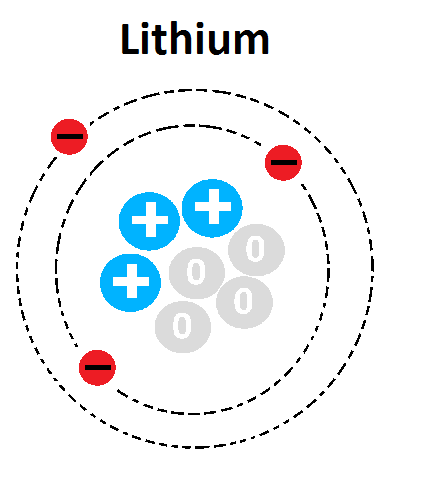
What is the name of this element?
a)
Helium
b)
Hydrogen
c)
Argon
d)
Silver
43.
What is the mass number of this atom?
a)
1
b)
3
c)
4
d)
7
44.
What is the atomic number of this atom?
a)
2
b)
4
c)
6
d)
none of the above
45.

How many electrons can fit on the 1st energy level (orbital) for any Bohr Model?

a)

2

b)

6

c)

8

d)

10

46.
What's a valence electron?
a)
electrons in the second energy level
b)
electrons in the outermost energy level
c)
the atomic number
d)
electrons in the first level
47.

Which Bohr model represents Neon?

a)
b)
c)
d)
48.

How many electrons can go in the Second energy level?

a)

2

b)

8

c)

18

d)

32

49.

76 protons and 114 neutrons

a)

Osmium-114

b)

Osmium-76

c)

Osmium-190

d)

Osmium-190.23

50.

12 protons and 13 neutrons

a)

Mg-12

b)

Mg-13

c)

Mg-25

d)

Mg-24.305

51.

Rubidium has two common isotopes, 85Rb and 87Rb. If the abundance of 85Rb is 72.2% and the abundance of 87Rb is 27.8%, what is the average atomic mass of rubidium?

a)

85.468 amu

b)

37 amu

c)

85.6 amu

d)

86.4 amu

52.

There are two primary isotopes found in any sample of copper: copper-63 and copper-65. The isotope 65Cu composes 69.2% of the sample and 63Cu comprises the other 30.8%. Based on this data, what is the atomic mass of copper?

a)

29 amu

b)

63.546 amu

c)

64.4 amu

d)

63.6 amu

53.

How do you calculate mass number?

a)

Mass x percent

b)

Protons + Electrons

c)

Protons + Neutrons

d)

Neutrons + Protons + Electrons

54.

Carbon-14 has ____ protons, ____ electrons, and _____ neutrons.

a)

6, 6, 8

b)

6, 6, 6

c)

6, 6, 14

d)

6, 10, 14

55.

Isotopes of the same element have the same number of ________ but a different number of _______.

a)

protons, neutrons

b)

neutrons, protons

c)

protons, electrons

d)

electrons, neutrons

56.

An atom of phosphorus has an atomic number of 15 and a mass number of 31. How many neutrons does it contain?

a)

15

b)

16

c)

31

d)

46

57.

The identity of a chemical element is always determined by which of the following?

a)

the number of protons it has

b)

the number of neutrons it has

c)

the number of electrons it has

58.

According to Dalton's atomic theory, all matter is made of ________.

a)

Molecules

b)

Protons, neutrons, and electrons

c)

Atoms

d)

Subatomic particles

59.

What did Dalton propose about compounds?

a)

Compounds are combinations of two or more different types of atoms

b)

Compounds are made up of molecules

c)

Compounds are always in a gaseous state

d)

Compounds have the same properties as their constituent elements

60.

According to Dalton's atomic theory, a chemical reaction is ________.

a)

The creation of new atoms

b)

The destruction of atoms

c)

The rearrangement of atoms

d)

The conversion of atoms into energy

61.

What have we learned since Dalton proposed his theory?

a)

Atoms are indivisible and solid spheres

b)

Atoms are mostly made up of empty space

c)

Atoms have no internal structure

d)

Atoms are identical in mass and properties

62.

Which part of Dalton's atomic theory had to be modified based on the discovery of subatomic particles and isotopes?

a)

All matter is made of atoms

b)

All atoms of a given element are identical in mass and properties

c)

Compounds are combinations of two or more different types of atoms

d)

A chemical reaction is a rearrangement of atoms

63.

What is the law of conservation of mass?

a)

Matter is not created or destroyed in a closed system

b)

A pure compound will always have the same proportion of the same elements

c)

Atoms are indivisible and solid spheres

d)

A chemical reaction is a rearrangement of atoms