
 Worksheets
Chapter 3 Review
Total questions: 66
Worksheet time: 44mins

This change is a
chemical reaction
physical change
musical change
Ice Ice baby
How is a chemical change different from a physical change?
there is no difference
a physical change creates a new substance
a chemical change creates a new substance
Is glass breaking a chemical or physical change?
When mixing milk and vinegar, a white, chunky, solid substance is formed. What has occurred?
Physical change: state of matter
Chemical change: precipitate
Physical change: freezing
Chemical change: new gas
Boiling Water
Physical Change
Chemical Change

Choose the best description below for the image
physical change
chemical change
Physical or chemical?
Watch Video: https://live.myvrspot.com/l?k=670fdac02f915
Physical
Chemical

a change in the chemical composition and identity of a substance
Physical Change
Chemical Change
Physical and Chemical Change
Matter

a change that alters a substance without changing its chemical composition or its identity
Chemical Change
Physical Change
Chemical and Physical Change
Matter

anything that has mass and takes up space
Compressibility
Malleability
Reactivity
Matter

Color, hardness, malleability, solubility, electrical conductivity, density, melting point, and boiling point are examples of
Physical Properties
Chemical Properties

Reactivity, flammability, and the ability to rust are examples of
Physical Properties
Chemical Properties
Which statement describes a chemical property of silicon?
Silicon has a blue-gray color.
Silicon is a brittle solid at 20.°C
Silicon melts at 1414°C.
Silicon reacts with fluorine.
Which statement describes a chemical property of aluminum?
Aluminum is malleable.
Aluminum reacts with sulfuric acid.
Aluminum conducts an electric current.
Aluminum has a density of 2.698 g/cm3 at STP.
Which statement describes a chemical property of hydrogen gas?
Hydrogen gas burns in air.
Hydrogen gas is colorless.
Hydrogen gas has a density of 0.000 09 g/cm3 at STP.
Hydrogen gas has a boiling point of 20. K at standard pressure.
Which is a chemical property of water?
It freezes.
It decomposes.
It evaporates.
It boils.
Select all the terms below that describes ONLY physical properties.
melting point
corrosive
ductile
malleable
Oxidizing
This is a type of mixture where one substance dissolves into another
Solution
Miscibility
Compound
Solubility


Two substances have been combined physically and appear the same throughout is called a.........
A homogeneous mixture
A heterogeneous mixture
An element
A compound


Sand in water
colloid
solution
suspension

Identify the substance in box B.
element
compund
mixture

Identify the substance in box D.
element
compound
mixture

Identify the substance in box Y.
element
compound
mixture

Identify the substance in box W.
element
compound
mixture

Identify this substance.
element
compound
mixture
What is the difference between a compound and a mixture?
one is made of only 1 element, the other is made of several elements
a mixture does not have a chemical formula
a compound can be made many different ways

Identify the substance.
element
compound
mixture
Which tools are best for separating a mixtures of sand, iron filings, and water?
Hot plate and filter
Tweezers and filter
Filter and magnet
Magnet and hot plate
Which substances, when mixed together, maintain their original physical properties?
gravel and water
wood chips, water and sand
sand and water
all of the above
Which mixture can be separated using a filter?
sand and iron filings
saltwater
sand and water
none of the above
Which of the following mixtures can be separated with a magnet?
sand and salt
sand and iron filings
sugar and water
saltwater
All of these can be separated easily EXCEPT -
nuts, bolts, and screws
powdered drink mix, sugar and water
sand and water
iron filings and sand
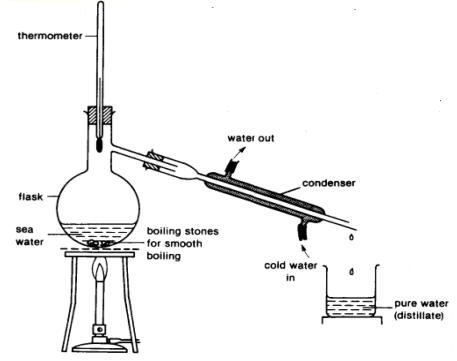
What is the name of this separation technique?
Simple distillation
Fractional distillation
Boiling
Evaporation
Which separation technique is used to obtain pure water from seawater?
Simple distillation
Filtration
Chromatography
Evaporation
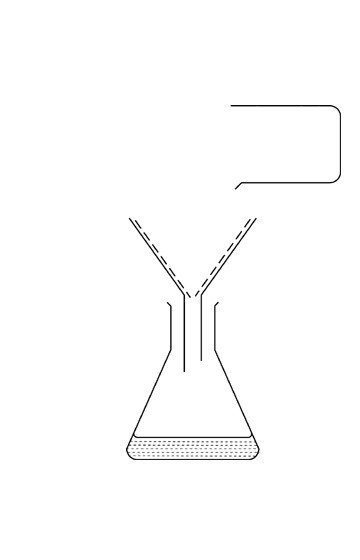
What is the name of this separation technique?
distillation
filtration
evaporation
chromatography
What is the physical property on which fractional distillation depends?
different boiling points
different melting points
different solubilities
different densities
For paper chromatography to work,
the dyes must have different boiling points.
the dyes must have different solubilities in the solvent.
the starting line on the chromatogram must be drawn using pen.
The starting line must be below the level of the solvent.
Which separation technique is used to obtain salt from seawater?
Simple distillation
Filtration
Chromatography
Evaporation
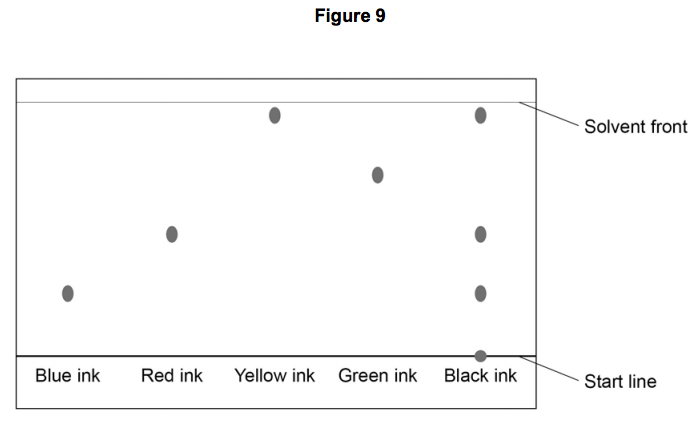
Which ink is a mixture?
Blue
Red
Yellow
Black


What method is shown in the picture?
Filtration
Evaporation
Chromatography
Sieving
To carry out filtration, you will need a...
sieve
magnet
filter paper and a funnel
evaporating basing

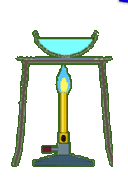
Which separation technique is shown below
filtration
crystallization
sublimation
evaporation

What is fractional distillation?
a process used to separate crude oil
a process used to burn up fuels
a way to make different products
how oil is extracted from the ground
Fractional distillation separates crude oil based on the different __________ of the molecules in the mixture
melting point
boiling point
freezing point
chemical reactivity
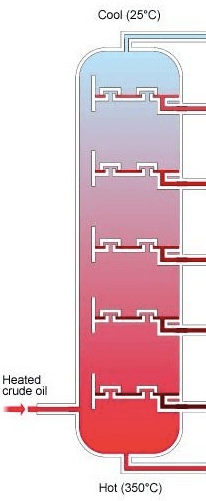
What process happens at each level in the fractionating column?
Evaporation
Condensation
Combustion
Where is the HOTTEST part of the fractionation column
top
right
bottom
left
What is the correct use of Kerosene?
Jet fuel
Making roads
Heating homes
Truck fuel
Convert 30°C into Kelvin.
252K
316°C
303K
-163°C
Convert 89°F into °C.
7.2°C
32°C
32°F
212°F
Convert 24°C into °F.
7.2°C
32°C
75.2°F
°68
109°F = °C
(a)
What is 50°F in kelvin?
323
10
300
283

