wayground logo

Free Printable Worksheets

NEW

Font size

S
M
L
XL
Worksheets

Integrated Science - Chemistry Unit study questions

Total questions: 65

Worksheet time: 1hrs 2mins

Name
Class
Date
1.
What is an ion?
a)
A Charged Atom
b)
A Large Atom
c)
A Small Atom
d)
A Cute Atom
2.
Barium atoms want to form...
a)
an anion
b)
a cation
c)
an onion
d)
a cuddly kitten friend
3.
Why are ions formed?
a)
To make our lives difficult
b)
Because atoms want 8 valence electrons
c)
Because atoms have the same number of protons and electrons
d)
Because atoms gained neutrons
4.
Cations are...
a)
Positive
b)
Negative
c)
Neutral
d)
Purring
5.
Anions are...
a)
Positive
b)
Negative
c)
Neutral
d)
Crying
6.
An atom becomes _________ when it gains electrons.
a)
Positive
b)
Negative
c)
Neutral
d)
Invinsible
7.
An atom becomes _______ when it loses electrons.
a)
Positive
b)
Negative
c)
Neutral
d)
Invinsible
8.
A Radium atom wants...
a)
One more electron
b)
One less electron
c)
Two more electrons
d)
Two less electrons
9.
Which particles change the charge in atoms when ions are formed?
a)
Protons
b)
Electrons
c)
Neutrons
d)
Kittens
10.
What is a Rubidium ion's symbol?
a)
Rb-
b)
Rb+
c)
Rb-2
d)
Rb+2
11.
What is the ionic symbol for a phosphorus atom?
a)
P-3
b)
P+3
c)
P-2
d)
P+2
12.
What is the ionic symbol for Selenium?
a)
Se-2
b)
Se+2
c)
Se-3
d)
Se+3
13.
What is the ionic symbol for a Caesium atom?
a)
Cs+
b)
Cs-
c)
Cs+2
d)
Cs-2
14.
What will be the compound name of the following chemical formula?
NaCl
a)
Potassium Chloride
b)
Sodium Chloride
c)
Calcium Chloride
d)
Sodium Chlorine
15.
Ions that are made of more than one atom are called...
a)
ionic compounds
b)
crystals
c)
polyatomic atoms
d)
ionic bonds
16.
Which of the following is the correct name for MgCl2....
a)
Magnesium Clorine
b)
Magnesium Dicholorine
c)
Magnesium Cloride
d)
Magnesium Dichloride
17.
What is the formula for aluminum fluoride?
a)
AlF
b)
Al2F3
c)
AlF3
d)
Al3F2
18.
How many valence electrons does a bromine atom have?
a)
1
b)
2
c)
6
d)
7
19.
AgF
a)
silver fluoride
b)
silver fluorine
c)
monosilver monofluoride
d)
silver monofluorine
20.
How do the following two elements bond together?
Al3+  O2-         
a)
AlO
b)
Al2O3
c)
Al3O6
d)
Al3O2
21.
Metals tend to 
a)
gain electrons
b)
lose electrons
22.
What is the correct formula for the compound, lithium oxide?
a)
LiO
b)
Li2O
c)
LiO2
d)
Li2O2
23.
The name of Cu₃N₂ is
a)
copper (III) nitride
b)
copper (II) nitride
c)
copper nitride
d)
tricopper dinitride
24.
What is the formula for magnesium phosphide?
a)
Mg3P2
b)
Mg2P3
c)
Mg2PO3
d)
Mg3(PO3)2
25.
Name this compound: 
NaBr
a)
Bromide sodide
b)
Sodium bromide
c)
Sodium bromate
d)
Sodium bromite
26.
The chemical formula for an ionic compound of potassium and oxygen is
a)
KO.
b)
K2O.
c)
K2O2.
d)
KO2.
27.
Na +  and  S -2
a)
Na2S
b)
NaS2
c)
Na2S2
d)
NaS
28.
How do the following two elements bond together?
K1+  S2- 
a)
KS
b)
K8S
c)
K6S3
d)
K2S
29.

Hector claims that a single sodium ion and a single oxygen ion do not bond together to form a stable binary ionic compound. Is he correct? Why or why not?

a)

Hector is incorrect. The two ions have opposite charges, so they will bond together in a binary ionic compound.

b)

Hector is incorrect. The two ions have more than eighteen protons, so they will bond together in a binary ionic compound.

c)

Hector is correct. The sum of the charges of the two ions must be zero in order for them to form a stable ionic compound.

d)

Hector is correct. The sum of the protons of the two ions must be divisible by eight in order for them to form a stable ionic compound.

30.

What is the correct formula of strontium hydroxide?

a)

SrH

b)

SrOH

c)

Sr(OH)2

d)

SrH2

31.

What is the correct name of CuClO2

a)

copper chlorate

b)

copper chlorite

c)

copper chloride

d)

copper chloroxide

32.

What is the correct name of Cs3N?

a)

cesium nitrate

b)

cesium nitrite

c)

cesium nitride

d)

tricesium nitride

33.

What is the correct name of Mg(C2H3O2)2?

a)

magnesium acetate

b)

magnesium carbohydroxide

c)

magnesium glucose

d)

magnesium diacetate

34.

What is the correct name of Ag2SO4?

a)

silver sulfoxide

b)

silver sulfate

c)

silver sulfite

d)

silver tetrasulfoate

35.

How many atoms of oxygen are in Sr3(PO3)2

a)

2

b)

3

c)

5

d)

6

36.

How many atoms of strontium are in Sr3(PO3)2

a)

2

b)

3

c)

5

d)

6

37.

Which of the following names and formulas are correctly paired together?

a)

sodium oxide - NaO

b)

calcium sulfite - Ca2(SO3)2

c)

barium bromate - Ba(BrO2)2

d)

lithium chromate - Li2CrO4

e)

potassium phosphide - KP3

38.
Which of the following is not a compound?
a)
HCl
b)
Cl
c)
NaCl
d)
CO2
39.
How many carbon atom/s are present in the compounds CaCO3?
a)
1
b)
2
c)
3
d)
4
40.
What is made up two or more elements that are chemically combined?
a)
Element
b)
Mixture
c)
Compound
d)
Solids
41.

What does the nucleus of an atom contain?

a)

Electrons and neutrons

b)

Protons and neutrons

c)

Neutrinos and positrons

d)

Electrons and megatrons

42.

Who's model does this represent?

a)

Dalton 1903-1808

b)

Rutherford 1911

c)

Thomson 1897

d)

Bohr 1913

43.
This is a correct dot diagram for fluorine (F)
a)
true
b)
false
44.
This is a correct dot diagram for oxygen (O)
a)
true
b)
false
45.

Which element is this?

a)

Nickel

b)

Neon

c)

Sodium

d)

Nitrogen

46.

Name this element.

a)

Neon

b)

Magnesium

c)

Sodium

d)

Manganese

47.
Is the reaction below exothermic or endothermic?
CH4 + 2O2 → CO2 + H2O + heat
a)
exothermic
b)
endothermic
48.
___________________ are the elements/compounds formed in a chemical reaction (on the right)
a)
Polymers
b)
Bonds
c)
Reactants
d)
Products
49.
In an exothermic reaction, heat is ...
a)
taken in or absorbed
b)
given out or released
50.
In an endothermic reaction, heat is ...
a)
taken in or absorbed
b)
given out or released 
51.
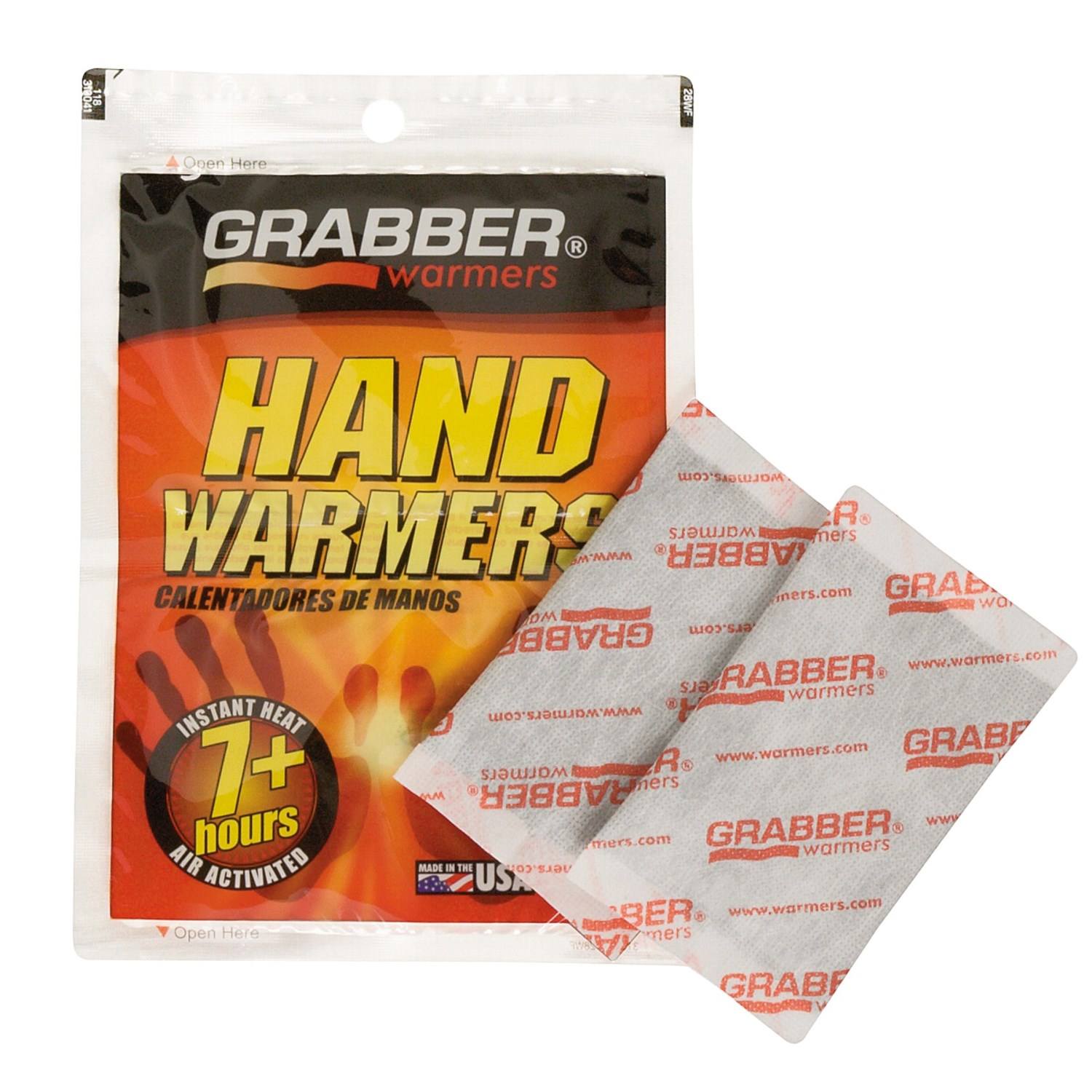
What type of reaction occurs in a hand warmer
a)
exothermic
b)
endothermic
52.
If a chemical reaction is EXOTHERMIC, the temperature would....
a)
Stay the same
b)
Increase
c)
Decrease
53.
After you mix two substances together, a new substance forms.  This is an example of:
 
a)
 Physical Change
b)
 Chemical Change
54.
Sugar dissolves in water.  This is an example of....
a)
Physical Change
b)
Chemical Change
55.
What is the atomic number of Chlorine (Cl)?
a)
17
b)
Cl
c)
35.453
d)
Chlorine
56.
Which element below has 11 protons?
a)
Boron (B)
b)
Nitrogen (N)
c)
Silicon (Si)
d)
Sodium (Na)
57.

An atom is electrically neutral because

a)

the numbers of protons and neutrons are equal.

b)

the numbers of protons and electrons are equal.

c)

neutrons balance the protons and electrons.

58.

Which of the following is the philosopher credited with coining the term "atomos"?

a)

Socrates

b)

Aristotle

c)

Plato

d)

Democritus

59.

Who is the person credited with the formation of the "plum pudding" model?

a)

Thomson

b)

Rutherford

c)

Bohr

d)

Dalton

60.

Who discovered the subatomic particle "electron"?

a)

Dalton

b)

Thomson

c)

Rutherford

d)

Bohr

61.

Who discovered the nucleus of the atom?

a)

Dalton

b)

Thomson

c)

Rutherford

d)

Bohr

62.

 Al2S3 Al_2S_{3\ }  is the formula for aluminum sulfide How many aluminum atoms combine with three sulfur atoms to make aluminum sulfide?

a)

1

b)

2

c)

3

d)

impossible to determine

63.

What is the atomic mass of xenon?

a)

8

b)

54

c)

131.3

d)

impossible to determine

64.

Calculate the molecular mass of  MgF2MgF_2  

a)

62.3

b)

30.0

c)

12

d)

9

65.

Calculate the molecular mass of NaOH.

a)

22.99 amu

b)

28 amu

c)

-1

d)

40 amu