wayground logo

Free Printable Worksheets

Font size

S
M
L
XL
Worksheets

Lab Safety & Equipment Quiz

Total questions: 64

Worksheet time: 1hrs 4mins

Name
Class
Date
1.
If a laboratory fire erupts, immediately
a)
notify your instructor
b)
 run for the fire extinguisher
c)
throw water on the fire
d)
 open the windows
2.
Approved eye protection devices (such as goggles) are worn in the laboratory
a)
 to avoid eye strain
b)
to improve your vision
c)
only if you don’t have corrective glasses
d)
 any time chemicals, heat or glassware are used
3.
If you wear contact lenses in the school laboratory
a)
take them out before starting the lab
b)
you do not have to wear protective goggles
c)
 advise your science instructor that you wear contact lenses
d)
 keep the information to yourself
4.
 If you do not understand a direction or part of a lab procedure, you should 
a)
skip it and go on to the next part.
b)
ask the instructor before proceeding
c)
try several methods until something works
d)
figure it out as you do the lab
5.
 After completing an experiment, all chemical wastes should be
a)
taken home
b)
dumped in the sink
c)
disposed of according to your instructor’s directions
d)
left at your lab station for the next class
6.
 If a lab experiment is not completed, you should 
a)
make up some results
b)
come in during lunch and finish while eating lunch
c)
sneak in after school and work alone
d)
discuss the issue with your instructor
7.
You are heating a substance in a test tube. Always point the open end of the tube 
a)
away from all people
b)
toward another classmate
c)
toward your lab partner
d)
toward yourself
8.
You are heating a piece of glass and now want to pick it up. You should 
a)
pour cold water on it
b)
use tongs
c)
pick up the end that looks cooler
d)
use a rag or paper towels
9.
You have been injured in the laboratory (cut, burn, etc.). First you should
a)
apply first aid yourself
b)
tell the science instructor at once
c)
see a doctor after school
d)
visit the school nurse after class
10.
When gathering glassware and equipment for an experiment, you should
a)
 All of the choices
b)
clean any glassware that appears dirty
c)
examine all glassware to check for chips or cracks
d)
read all directions carefully to know what equipment is necessary
11.
 Personal eyeglasses provide as much protection as
a)
none of these answers
b)
splashproof chemical goggles
c)
safety glasses
d)
a face shield
12.
Long hair in the laboratory must be 
a)
tied back or kept entirely out of the way with a hair band, hairpins, or other confining device
b)
always neatly groomed
c)
held away from the experiment with one hand
d)
cut short
13.
In a laboratory, the following should not be worn. 
a)
all of the answers
b)
dangling jewelry
c)
sandals
d)
loose clothing
14.
 The following footwear is best in the laboratory. 
a)
shoes appropriate for the weather
b)
open-toed shoes
c)
closed-toed shoes
d)
sandals
15.
 Horseplay or practical jokes in the laboratory are 
a)
okay if you are working alone
b)
not dangerous
c)
okay
d)
always against the rules
16.
If a piece of equipment is not working properly, stop, turn it off, and tell 
a)
the science instructor
b)
your best friend in the class
c)
the custodian
d)
your lab partner
17.
When you finish working with chemicals, biological specimens, and other lab substances, always 
a)
wipe your hands on your clothes
b)
wipe your hands on a towel
c)
wash your hands thoroughly with soap and water
d)
treat your hands with skin lotion
18.
Hot glass looks the same as cold glass.
a)
True
b)
False
19.
Return all unused chemicals to their original containers.
a)
True
b)
False
20.
All chemicals in the lab are to be considered dangerous
a)
True
b)
False
21.
Work areas should be kept clean and tidy
a)
True
b)
False
22.
Pipets are used to measure and dispense small amounts of liquids. You should draw the liquid into the pipet using your mouth.
a)
True
b)
False
23.
Laboratory work can be started immediately upon entering the laboratory even if the instructor is not yet present
a)
True
b)
False
24.
Never remove chemicals or other equipment from the laboratory.
a)
True
b)
False
25.
Chipped or cracked glassware is okay to use.
a)
True
b)
False
26.
Read all procedures thoroughly before entering the laboratory
a)
True
b)
False
27.
All unauthorized experiments are prohibited.
a)
True
b)
False
28.

Laboratory aprons must be worn during all lab activities.

a)
True
b)
False
29.
You are allowed to enter the chemical preparation/storage area any time you need to get an item
a)
True
b)
False
30.
It’s okay to pick up broken glass with your bare hands as long as the glass is placed in the trash.
a)
True
b)
False
31.
Never leave a lit burner unattended.
a)
True
b)
False
32.

This is:

a)
test tube clamp
b)

test tube holder

c)

beaker tongs

d)
buret clamp
33.
a)
beaker
b)
graduated cylinder
c)
erlenmeyer flask
d)
test tube
34.
a)
beaker
b)
erlenmeyer flask
c)
graduated cylinder
d)
test tube
35.
a)
beaker
b)
graduated cylinder
c)
test tube
d)
erlenmeyer flask
36.
a)
beaker
b)
graduated cylinder
c)
erlenmeyer flask
d)
test tube
37.
The lab equipment seen in the image should be worn during a lab investigation when...
a)
using glassware.
b)
using chemicals.
c)
using heat/fire.
d)
using any of the above.
38.
A thermometer is used to measure temperature in which metric unit?
a)
Fahrenheit (°F)
b)
Celcius (°C)
c)
Kilometers (km)
d)
Liters (L)
39.
What is measured with a graduated cylinder?
a)
Passage of time
b)
Distance from one thing to another
c)
Weight of an object
d)
Volume of liquid
40.
What is special about graduated cylinders?
a)
They hold large quantities of liquid safely
b)
They measure small amounts very accurately. We use them when precision is important.
c)
They allow us to examine the liquid, we use them when looking for suspended solids.
d)
They are easily heated. We use graduated cylinders to heat liquids
41.
The _________________ is used to simply hold or approximately measure a liquid.
a)
scale
b)
test tube
c)
beaker
d)
thermometer
42.
Name the tool pictured
a)
scalpel
b)
Eye dropper
c)
Tweezer
d)
Forceps
43.
Used to pour liquids into containers with small openings or to hold filter paper 
a)
Funnel
b)
Beaker
c)
Graduated Cylinder
d)
Flask
44.

A device to measure the mass of an object or substance.

a)

Electronic Balance

b)

Thermometer

c)
Mortar & Pestle
d)
Graduated Cylinder
45.
What is the hazard shown in this hazard sign?
a)
Fire
b)
Goku
c)
Flammable
d)
Inflammable
46.
What is the hazard shown in this hazard sign?
a)
Fireworks
b)
Broken Glass
c)
Explosive
d)
Corrosive
47.
What is the hazard shown in this hazard sign?
a)

Corrosive Hazard

b)

Moderate Hazard

c)

Dangerous Hazard

d)

Caution Hazard

48.
What is the hazard shown in this hazard sign?
a)
Explosive
b)
Corrosive
c)
Irritant
d)
High level Irritant
49.
What is the hazard shown in this hazard sign?
a)
Death
b)
Pirates
c)
Corrosive
d)
Toxic
50.

What does this symbol warn us about?

a)

Health hazard

b)

Lung disease

c)

Irritant

d)

Corrosive

51.

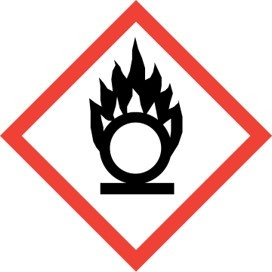
What does this symbol stand for?

a)

Flammable

b)

Oxidising

c)

Non-flammable

d)

Explosive

52.

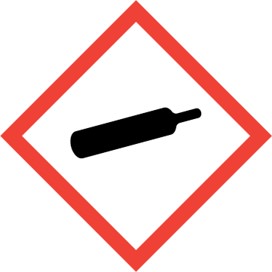
What does this symbol stand for?

a)

Flammable

b)

Oxidising

c)

Gas under pressure

d)

Explosive

53.

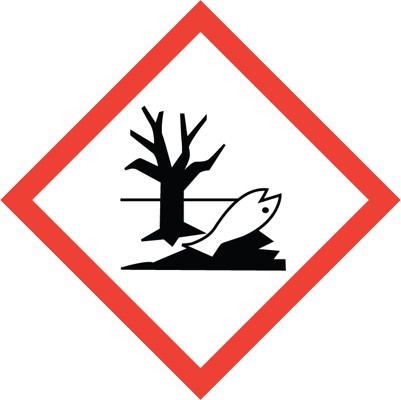
This symbol tell us the chemical it is labelling is:

a)

Harmful to the environment

b)

Dangerous

c)

Toxic

d)

Poisonous

54.

Match the pictogram to the correlating hazard


EXPLOSIVES

a)
b)
c)
d)
55.

What is the name of this piece of equipment?

a)

Thermometer

b)

Bunsen burner

c)

Beaker

d)

Googles

56.
a)

hat rack

b)

scale

c)

thingamabob

d)

test tube rack

57.

This is used to safely heat glassware

a)

wire gauze

b)

plate

c)

steel wool

d)

chainmail

58.

This is used to hold any of the clamps

a)

Ring Stand

b)

Stick

c)

Base

d)

Pole

59.

Used to transfer small amounts of solids

a)

pipette

b)

scoopula

c)

thermometer

d)

pestle

60.

Used to transfer small amounts of solids

a)

pipette

b)

scoopula

c)

thermometer

d)

pestle

61.

This is used to safely mix chemicals

a)

Glass Stirring Rod

b)

Baseball Bat

c)

Test Tube

d)

Stir thingy

62.

This is used for cleaning glassware

a)

Wash Bottle

b)

Spray Bottle

c)

Water Bottle

d)

Washer

63.

Used to get very precise measurements of liquid volume

a)

buret

b)

graduated cylinder

c)

flask

d)

beaker

64.

Used to find the mass of an object

a)

meter stick

b)

digital scale

(electronic balance)

c)

petri dish

d)

triple beam balance