
 Worksheets
SUMMATIVE TEST IN PHYSICAL SCIENCE 2024
Total questions: 37
Worksheet time: 19mins
Which of the following is the most accepted theory about the formation of the universe that explains why it continues to expand?
big bang theory
divine creation theory
steady state theory
oscillating theory
Which of the following is not considered as light elements?
helium
hydrogen
lithium
iron
Which of the following is TRUE about nucleosynthesis?
It is the division of atomic particle
The combination of elements to form compound
It is the creation of everything including all matter in universe
It is the process of creating new atomic nuclei from pre-existing nuclei
Which process is responsible for the formation of light elements such as Hydrogen and Helium?
big bang nucleosynthesis
stellar nucleosynthesis
supernova nucleosynthesis
terrestrial nucleosynthesis
Which element is the lightest and at the same time the most abundant in outer space?
hydrogen
helium
lithium
iron
How do heavier elements formed?
Though combustion
Through nuclear fission
Through nuclear fusion
Through nuclear synthesis
It is atoms of the same element but with different atomic
mass (different number of neutrons).
Element
Isotope
Compound
Chemical
Which element can be formed when three atoms of helium are fused?
carbon
hydrogen
oxygen
silicon
Which element will be formed when Carbon atom is combined with Helium atom?
magnesium
neon
oxygen
silicon
Which phase of star life cycle is our sun?
main sequence star
planetary nebula
red giant
white dwarf
Which of the following is NOT an evidence of star formation?
hydrogen
helium
infrared Radiation
rocks
Which phase of star will be created after the end of red giant
black hole
red super giant
supernova
white dwarf
Which is known as the biggest stars in the universe.
main sequence star
red giant
red super giant
white dwarf
Which of the following gases are major components of star?
carbon and oxygen
helium and carbon
hydrogen and carbon
hydrogen and helium
Which is the first stage of a star’s life cycle?
black hole
nebula
protostar
white dwarf
What is the symbol for an alpha particle?
0+1 e
42He
10n
0-1 e
In main sequence star, Hydrogen fuses and converted to Helium. What element is produced from Helium gas at its core?
carbon
iron
neon
silicon
Which is the second most abundant element in the universe?
carbon
hydrogen
helium
oxygen
Which is a huge luminous ball of hot gas such as Hydrogen and Helium.
comet
moon
planet
star
Which type of nucleosynthesis is responsible for the formation of elements heavier than iron?
Stellar nucleosynthesis
Supernova nucleosynthesis
Primordial nucleosynthesis
Planetary nucleosynthesis
When does a star become unstable?
When it runs out of fuel
When it contracts and expands
When its core is converted to Iron
When the outer shell of star is pulled by the gravity from the center
The periodic table is organized by the number of _____________ in each element's nucleus.
electrons
protons
atoms
neutrons
He created a classification of elements based on their atomic mass/weight.
Millikan
Mosely
Rutherford
Mendeleev
These are chemical elements that do not occur naturally on Earth?
natural-occurring elements
thermonuclear elements
synthetic elements
nuclear elements
Which of the following is a transuranium element?
Neptunium
Helium
Carbon
Uranium
He created a classification of elements based on their atomic number.
Millikan
Rutherford
Mosely
Mendeleev
What is the missing isotope that will balance the following nuclear equation?
94Be + 11H → _______ + 42He
63C
105Ne
63Li
105B

How many neutrons are in this isotope of Uranium?
327
143
92
235
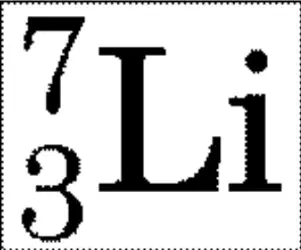
How many protons are in this atom?
4
3
10
6
Complete the nuclear reaction
20985At = ______ + 42He
20885At
20583Bi
20781Tl
20986Rn
II. Identification
This is known as the origin and production of heavy elements.
(a)
This is known as the origin of light elements.
(a)
It is also known as nuclear fusion and the formation of new nuclei actions in the early stages of development of the universe.
(a)
These are elements with atomic numbers beyond 103.
(a)
It is a one-dimensional point which contains a huge mass in an infinitely small space.
(a)
The simplest and smallest particle composed of protons, electrons, and neutrons.
(a)
The substances that cannot be broken down any further by chemical means.
(a)
The central part of an atom that contains protons and neutrons.
(a)
It is a negatively charged particle that orbits the nucleus.
(a)
It is the basic unit of matter that retains the properties of an element.
(a)
III. TRUE or FALSE
Elements are made up of sub-atomic particles called protons, neutrons and electrons.
(a)
The BIGBANG is an explosion.
(a)
The universe was colder 13.8 Billion years ago.
(a)
The identity of an element depends on how many neutrons it has.
(a)
The higher the energy of the particles in an object are, the higher the temperature of that object will be.
(a)

