
 Worksheets
Test Review
Total questions: 187
Worksheet time: 3hrs 57mins
Select the correct front for each definition:
when a cold air mass moves under and pushes out a warmer air mass
occluded front
cold front
warm front
stationary front
Select the correct front for each definition:
when two cold air masses come together on either side of a warmer mass of air, pushing the warm air up
occluded front
cold front
warm front
stationary front
Select the correct front for each definition:
when a warm air mass moves over and pushes out a colder air mass
occluded front
cold front
warm front
stationary front
Select the correct front for each definition:
when two masses of air come together but neither is very strong and powerful so they just sit over an area not moving
occluded front
cold front
warm front
stationary front

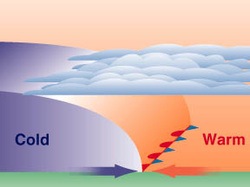
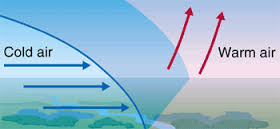
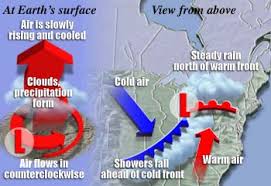
Identify the front
Cold Front
Warm Front
Occluded Front
Stationary Front

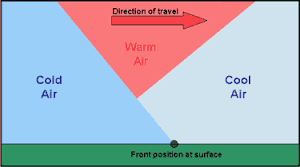
Identify the front
Cold Front
Warm Front
Occluded Front
Stationary Front

Identify the front
Cold Front
Warm Front
Occluded Front
Stationary Front

Identify the front
Cold Front
Warm Front
Occluded Front
Stationary Front
As a warm front passes through an area, what is the weather like?
Bright and sunny and then colder than it was before
Cloudy or rainy and then warmer than it was before
Clear skies and then warmer than it was before
Cloudy or rainy and then colder than it was before
When a stationary front is in an area, what can you expect the weather to be?
Beautiful bright sunny skies for several days in a row
Much warmer than the weather had been before
Much colder than the weather had been before
Cloudy or rainy for several days in a row

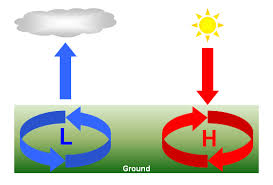
When you see this symbol on the weather map, what does this mean?
High Pressure Area
High Humidity Area
High Temperature Area
Helium Balloon Release Area

When you see this symbol on the weather map, what does this mean?
Low Tide Area
Low Humidity Area
Low Temperature Area
Low Pressure Area
Weather travels in what direction?
East to West
West to East
North to South
South to North

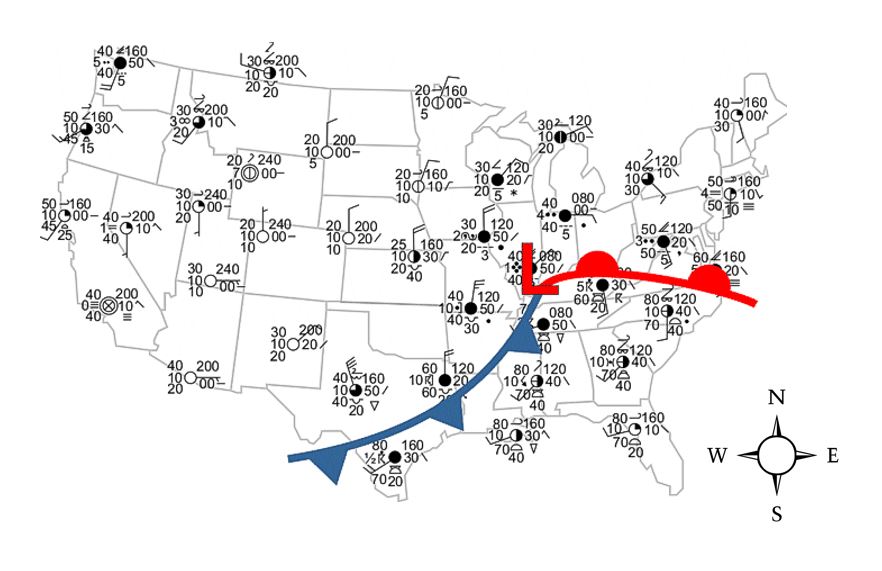
A cold front just reached the area of Idaho that is marked with a star. Which numbered point will the cold front MOST likely reach next?
1
2
3
4

The weather map shows the weather in four states on the same day. Based on this map, the weather in Ohio on the following day will MOST likely be?
foggy
snowy
rainy
sunny
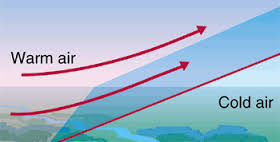


What type of front is shown?
Warm Front
Cold Front
Occluded Front
Stationary Front


This is the symbol for a _____________ weather front.
Cold
Warm
Stationary
Occluded

A _____________ weather front occurs when a cold air mass moves forward, pushing the warm air mass up.
Cold
Warm
Stationary
Occluded

A _____________ weather front occurs two cold air masses meet and push/force the warm air in the middle upwards.
Cold
Warm
Stationary
Occluded
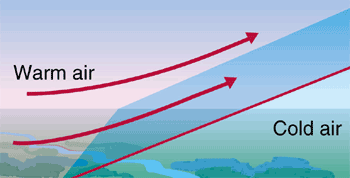
Why does warm air rise above cold air?
Warm air is less dense
Warm air is more dense
Cold air is stronger than warm air

Which type of weather front can produce foggy weather that can last for several days?
Cold
Warm
Stationary
Occluded

Which type of weather front can produce precipitation (rain or snow)?
Cold
Warm
Stationary
Occluded
All of the above
What type of weather will you see along a cold front?
Thunderstorms
Sunny skies
Gentle rain
No weather








Which layer of the atmosphere do we live in?
exosphere
thermosphere
mesosphere
troposphere
Which layer of the atmosphere is the hottest?
exosphere
mesosphere
thermosphere
stratosphere
As altitude (height) increases, air pressure
increases
decreases
stays the same
The 2 most abundant gases in the atmosphere are
helium and nitrogen
nitrogen and oxygen
oxygen and helium
argon and nitrogen
We can see meteors (falling stars) in this layer.
exosphere
thermosphere
troposphere
mesosphere
The density of the air ______ as you go up in the atmosphere.
increases
decreases
stays the same
What is the measure of the force of the gases (air) pushing down on the Earth's surface called?
temperature
gravity
atmosphere
air pressure
Warm air is ______ dense than cool air. Warm air rises and cool air sinks.
less
more
Air is a mixture of many gases. The gas that makes up the LARGEST percentage of the atmosphere is
nitrogen
oxygen
carbon dioxide
helium
Which choice lists 3 layers of the atmosphere ordered from farthest from Earth's surface to closest to Earth's surface?
mesosphere, troposphere, stratosphere
exosphere, mesosphere, thermosphere
thermosphere, exosphere, stratosphere
exosphere, mesosphere, troposphere

What is the second most abundant gas in the atmosphere at 21%?
oxygen
nitrogen
argon
carbon dioxide

Which boy is experiencing warmer temperatures?
the boy standing on top of the mountain
the boy standing at the bottom of the mountain

If you are standing at the BOTTOM of the mountain there is...
higher air pressure
lower air pressure
What gas makes up the largest proportion of air at 78%?
oxygen
nitrogen
argon
carbon dioxide

Contains the Ozone Layer.
Troposphere
Stratosphere
Mesosphere
Thermosphere
All of the above.
Coldest layer.
Troposphere
Stratosphere
Mesosphere
Thermosphere
All of the above.
Greatest air pressure because it has the most molecules.
Troposphere
Stratosphere
Mesosphere
Thermosphere
All of the above.
Auroras and Northern Lights occur here.
Troposphere
Stratosphere
Mesosphere
Thermosphere
All of the above.
78% of the Earth's atmosphere is ___________ and 21% of the Earth's atmosphere is _____________.
Oxygen, Nitrogen
Nitrogen, Oxygen
Nitrogen, Carbon Dioxide
Oxygen, Carbon Dioxide
In what layer of the atmosphere do all weather events occur?
Stratosphere
Exosphere
Mesosphere
Troposphere
In the troposphere, the temperature _____ as altitude increases.
Increases
Decreases
Stays the same
Goes up and down
As altitude increases, air pressure....
Increases
Decreases
Stays the same
Goes up and down
The ozone layer is a sublayer of the ________ layer.
Troposphere
Stratosphere
Exosphere
Mesosphere
Why is the ozone layer vital to life on Earth?
Planes fly in the ozone layer
It is made up of oxygen (O2)
It shields the Earth from ultraviolet (UV) rays from the sun
It causes clouds to be created
In which layer of the atmosphere do meteors burn up?
Troposphere
Mesosphere
Thermosphere
Exosphere
This layer is the hottest layer of the atmosphere?
Troposphere
Stratosphere
Mesosphere
Thermosphere
What is the order of the layers of the atmosphere, starting with the layer closest to Earth's surface?
Stratosphere, Troposphere, Exosphere, Mesosphere, Thermosphere
Troposphere, Stratosphere, Mesosphere, Thermosphere, Exosphere
Troposphere, Stratosphere, Mesosphere, Exosphere, Thermosphere
Troposphere, Stratosphere, Thermosphere, Exosphere, Mesosphere
What layer of the atmosphere has the highest air pressure?
Troposphere
Stratosphere
Exosphere
Mesosphere
Which explanation correctly describes the greenhouse effect?
The process of the atmosphere keeping the Earth's surface dense
The process of the atmosphere trapping the sun's radiation, and making the Earth warm and livable for humans
The process of the atmosphere keep us from floating into space
The process of the atmosphere reflecting all of the Sun's heat back into space
Which layer of the atmosphere do we live in?
Troposphere
Mesosphere
Thermosphere
Stratosphere

Which atmosphere layer contains the Aurora Borealis?
Troposphere
Mesosphere
Thermosphere
Stratosphere
Which atmosphere layer protects living things from the Sun's UV radiation?
Troposphere
Mesosphere
Thermosphere
Stratosphere
Which atmosphere layer blends in with outer space?
Troposphere
Mesosphere
Exosphere
Thermosphere
In which atmosphere layer does weather occur?
Exosphere
Troposphere
Mesosphere
Stratosphere

Which atmosphere layer protects the Earth's surface from meteors?
Troposphere
Mesosphere
Exosphere
Stratosphere
Which is NOT a reason that Earth's atmosphere is important?
It protects living things from ultraviolet radiation
It burns up meteors to keep them from hitting the Earth
It increases acid rain production
It keeps Earth's surface at a comfortable temperture
Which elemental gas makes up around 80% of the Earth's atmosphere?
Hydrogen
Nitrogen
Oxygen
Helium

Which atmosphere layer do unmanned satellites circle the Earth in?
Mesosphere
Exosphere
Stratosphere
Thermosphere
Generally, as altitude increases, what happens to air pressure?
It increases.
It decreases.
It stays the same.
It changes within each atmosphere layer.
Which atmosphere layer contains the Ozone Layer?
Stratosphere
Troposphere
Mesosphere
Exosphere
Why is it difficult to breathe at higher altitudes?
There is less oxygen as altitude increases.
There is a larger amount of carbon dioxide as altitude increases.
Gases in the atmosphere become thinner as altitude increases.
It is difficult to breathe cold air.
What is the primary composition of the Earth's atmosphere?
95% oxygen and 5% nitrogen
78% nitrogen and 21% oxygen
21% nitrogen and 78% carbon dioxide
50% nitrogen and 50% oxygen
Which layer of the Earth's atmosphere is closest to the surface?
Stratosphere
Exosphere
Mesosphere
Troposphere
What layer contains the ozone layer?
Mesosphere
Thermosphere
Stratosphere
Troposphere
In which layer does temperature increase with altitude?
Exosphere
Mesosphere
Stratosphere
Troposphere
Which layer is characterized by extremely low temperatures?
Stratosphere
Mesosphere
Thermosphere
Exosphere
Where does the temperature significantly rise due to the absorption of solar radiation?
Thermosphere
Stratosphere
Mesosphere
Troposphere
Which layer merges gradually with the vacuum of space?
Exosphere
Stratosphere
Mesosphere
Thermosphere
How does atmospheric pressure change as altitude increases?
Decreases then increases
Decreases continuously
Remains constant
Increases then decreases
In which layer is the air density extremely low, allowing gases to escape into space?
Mesosphere
Stratosphere
Troposphere
Exosphere
The main purpose of the text titled "Earth's Atmosphere: A closer look" is to:
Persuade readers to take action against air pollution
Describe the composition and structure of Earth's atmosphere.
Detail the history of scientific research about the atmosphere.
Entertain by highlighting bizarre facts about the atmosphere
Which sentence from the text best supports the idea that the atmosphere is essential for life on Earth?
"It plays a vital role in supporting life on Earth by providing oxygen, regulating temperature, and protecting from radiation."
"The atmosphere is primarily made up of nitrogen (about 78%) and oxygen (about 21%)"
"The stratosphere contains the ozone layer, which absorbs harmful ultraviolet radiation from the Sun."
"As we move higher in the toposphere, the temperature decreases."
Which of the following is the most objective summary of the information about the atmosphere's layers?
The troposphere is the most important layer because we breathe the air in it.
The exosphere is the weirdest and hottest layer of the atmosphere because it's closest to space.
The atmosphere has five layers, each with unique properties of temperature and composition.
Scientists have wasted a lot of time studying layers we can't get to, like the thermosphere.
In the sentence, "It plays a vital role in supporting life on Earth…," the word "vital" most likely means:
temporary
unnecessary
Which sentence from the text best supports the idea that the ozone layer plays a critical role in protecting life on Earth?
"The stratosphere contains the ozone layer, which absorbs harmful ultraviolet radiation from the Sun."
"Apart from nitrogen and oxygen, there are also trace amounts of other gases such as carbon dioxide, argon, and water vapor."
"...the temperature increases with altitude in the stratosphere."
"In the mesosphere, the temperature decreases again."
In the sentence, "The atmosphere is divided into five distinct layers…," the word "distinct" most likely means:
Blurry and overlapping
Clearly separate
Unknown
Similar in function
In the sentence, "At the same time, atmospheric pressure also changes with altitude," the word "altitude" most likely means:
Temperature
Type of gas
Height above Earth's surface
Time of Day
In the sentence "...the thermosphere is characterized by high temperatures due to the absorption of solar radiation," the word "absorption" most likely means:
Blocking
Releasing
Taking in
Changing direction

Near Fort Walton Beach, Florida, Hurricane Opal caused a rapid rise in water levels along the coast, and water reached 24 ft. This caused extensive flooding and destruction. What is such an event called?
thunder
lightning
tornado
storm surge
Severe weather can cause damage to property. Which of the following weather conditions would most likely cause damage to crops, cars, and windows?
hail
rain
thunder
lightning
Certain places in the United States occasionally experience weather events caused by violently rotating columns of air stretching from a cloud to the ground. What are such weather events called?
tornadoes
hurricanes
storm surges
thunderstorms

The following are all types of severe weather except
Thunderstorms
Heavy Rain
Hurricanes
Tornadoes

_____ is an intense local storm with strong winds, heavy rain, frequent cloud to ground lightning, thunder and sometimes hail.
tornadoes
hurricanes
storm surges
thunderstorms
_____ is an electrical discharge that happens between positive and negative charged particles.
tornadoes
hurricanes
lightning
thunderstorms

_____ is a strong tropical low pressure system with strong winds, heavy rains and storm surge.
tornadoes
hurricanes
lightning
thunderstorms
_____ is a destructive, rotating column of air with very high winds.
tornadoes
hurricanes
lightning
thunderstorms

In order to help stay safe during severe weather you should do the following:
Plan Ahead
Listen for storm updates
Follow safe recommendations of state and local officials
All answers are correct
Thunder is caused by
Super-heated air expanding rapidly breaking the sound barrier
Clouds crashing into each other
Large up drafts of wind breaking the sound barrier
Positive and negative particles bouncing off each other

What type of severe weather do you see in this picture?
hurricane
tornado
thunderstorm
blizzard

What type of severe weather does this picture show?
tornado
thunderstorm
blizzard
hurricane
Which of the following should you NOT do during a thunderstorm if you want stay safe?
stay inside
go swimming
stay away from trees
stay away from water
During a tornado what should you NOT do if want to stay safe?
Stay away from windows
Lie flat in a ditch if you cannot get inside
Stay in your car
Go to a shelter
A family moves to the inner most room in their home, away from windows, and uses a mattress as a cover. What type of severe weather are they trying to escape?
drought
flood
tornado
blizzard
A student learns not to take shelter under trees during thunderstorms. Why should the student listen to this advice?
Thunderstorms have the possibility to form hail that can cause injury.
Thunderstorms have heavy rains that can cause flooding.
Thunderstorms have lightning that can strike tall objects.
Thunderstorms have the possibility to form tornadoes that can lift dust and debris.
Tornadoes with a wind speed of 207-318 mph occur frequently in the United States. How can a person in a house best stay safe during severe tornadoes?
Lock all the doors and windows in the house.
Place a smoke detector in every room of the house.
Take shelter in a room with heavy furniture and access to water.
Take shelter in a room without windows below ground level.

The table lists a weather condition, its effects, and the safety measures recommended during the weather condition. Which weather condition is described?
earthquake
hurricane
thunderstorm
tornado

The diagram represents a satellite image of a giant storm.
What is the center of the storm indicated by line Y called?
ear
eye
mouth
nose
Which would occur during a thunderstorm?
heavy rains and lightning
hurricanes and strong winds
high winds and little rain
tornados and light winds
Zach is asked by his teacher to mention a feature of tornadoes.
What could his answer be?
They lead to hailstorms.
They appear as a giant funnel.
They form over warm ocean water.
They are associated with heavy rain.

A student observes a picture of a storm that has a funnel-shaped cloud, as shown.
If unable to find shelter, which location is most secure when such a storm strikes?
inside a car
near a window
in an open area
in a low-lying ditch
The local NOAA weather service forecast office warns that a severe thunderstorm is approaching an area from the southeast. Which safety measure should people who reside in the area follow?
Stay near windows.
Stay out of water.
Take shelter under trees.
Do not enter enclosed buildings.
During which type of storm should you board up windows in your house and move further inland if you are near the coast?
blizzard
hurricane
thunderstorm
tornado

Use the table which shows the characteristics of major weather phenomena to answer this question.
According to the table, Storm A would be classified as which type of storm?
blizzard
hurricane
thunderstorm
tornado
What are thunderstorms?
a storm with thunder and lighting and typically also heavy rain or hail
a storm with high winds and heavy snowfall.
a mobile, destructive vortex of violently rotating winds having the appearance of a funnel shaped cloud and advancing beneath a large storm system.
a huge storm with strong winds and storm surges
What are tornadoes?
a storm with thunder and lighting and typically also heavy rain or hail
a storm with high winds and heavy snowfall.
a mobile, destructive vortex of violently rotating winds having the appearance of a funnel shaped cloud and beneath a large storm system.
a huge storm with strong winds and storm surges
A supercell spawns a funnel cloud that touches the ground is called a:
hurricane
tornado
thunderstorm
blizzard
How many categories are there for a hurricane?
10 Categories
5 Categories
3 Categories
7 Categories
Hurricane force winds pushing down on the water creating high water levels and waves moving ashore is called:
Storm Surge
Hurricane
Tropical Wave
Tropical storm
What do hurricanes need as fuel?
warm and moist air
hot and dry air
cold and moist air
dry and warm air

What is the scale that is used to measure tornadoes damage?
Mohs Scale
Enhanced Fujita Scale
Saffir Simpson Scale
McDonalds Scale


Name the hurricane predicting technology that contains sensors that report pressure, temperature, humidity, wind speed, and wind direction. The sensors capture data two times each second, which is a lot of information to gather.
Deep Ocean Assessment and Reporting (DART)
Dropsondes
Phased array
Doppler radar
What are 3 building methods that would fortify your home against a hurricane?
do not criss-cross the frame, rectangular shape, wind-tested windows.
frame is constructed with short nails, thin concrete slab, cube shaped.
round shape, thick, high-wind tested windows, home is lifted off the ground at least 20 feet.
thick concrete slab, raise the home 5 feet, only use nails in the frame construction.
What kind of damage is caused by a EF5 tornado?
tree branches broken; sign boards damaged
roofs torn off frame houses; large trees broken or uprooted
some walls torn off homes; trains turned over; most trees uprooted
cars thrown farther than 100 meters; trees debarked; strong frame houses leveled and scattered
A ________________ is an intense storm with strong winds, heavy rain, lightning, and thunder.
tornado
hurricane
thunderstorm

Electricity may flow within the cloud also flow between the cloud and the ground. These electrical currents are _________________.
thunder
particles
lightning
When lightning moves through the air, the air gets very hot. The hot air expands rapidly. As it expands, it makes the air vibrate. These vibrations release energy in the form of sound waves called ______________.
thunder
particles
lightning
A _________ can from when a rapidly spinning column of low pressure air, called a funnel cloud touches the ground.
thunderstorm
hurricane
tornado
A tornado begins as a ___________ cloud that pokes through the bottom of a cumulonimbus cloud.
cirrus
cumulus
funnel
stratus
A _____________ is a large, rotating low-pressure system that forms over the warm waters of oceans near the equator.
tornado
hurricane
thunderstorm
flooding
Lightning heats the air so much that the air expands. The sound created by the sudden expansion and contraction is called _______________________.
expansion
thunder
radar
lightning
Most hurricanes
cannot be seen from space
cross exposed land
become dangerous category 5 storms
lose their power when they move into cooler waters or moves over land
Winds are generated when air flows from a high pressure area into a ____.
region of intense moisture
cold front
low pressure area
storm that is already in progress
Thunderstorms form along a cold front
True
False

Thunderstorm clouds are known as _____.
cirrus clouds
stratus clouds
cumulonimbus clouds
cumulus clouds
These storms produce the Earth's most powerful winds
thunderstorms
hurricanes
tornadoes
The calm area in the center of a hurricane is called the _____.
draft
funnel
eye
squall

The most dangerous aspect of a hurricane that comes ashore is the ________.
storm surge
eye wall
wind speed
rainfall
Hurricanes can produce tornadoes
True
False

About 75% of the world's tornadoes happen in the United States during Springs and early Summer when cold, dry from Canada meets warm, moist air from the Gulf of Mexico. This relatively flat part of the country is known as ________________.
Tornado Paradise
Thunderstorm Lane
Tornado Alley
Hurricane Row
Many people think that the winds are the most damaging part of a hurricane-most of the damage from hurricanes is actually caused by flooding from heavy rains and _________ _________, which is the rise in sea level that happens during a storm.
water evaporating
storm surge
wind speed
strong winds
Thunderstorms, hurricanes, and tornadoes form at __________ pressure systems, where you have warm (typically moist/humid) air quickly rising.
low
high

A funnel cloud and a tornado are the same.
True
False
Theses storms are the largest and most powerful storms on the planet.
Thunderstorms
Hurricanes
Tornadoes

