Wayground logo

Free Printable Worksheets

Font size

S
M
L
XL
Worksheets

Ecology Review

Total questions: 50

Worksheet time: 50mins

Name
Class
Date
1.
In the energy pyramid here, which organisms have the most energy available?
a)
Producers
b)
Carnivores
c)
Herbivores
d)
Top Predator
2.
In the energy pyramid below, which organism has the least amount of energy available?
a)
Producers
b)
Herbivores
c)
Carnivores
d)
Top Predator
3.
If there is 1000 Kcal available in the producers in trophic level 1, how much energy is available in the herbivores in trophic level 2?
a)
10 Kcal
b)
1 Kcal
c)
100 Kcal
d)
1000 Kcal
4.

What amount of percentage does the energy decrease as it goes up the pyramid?

a)

100%

b)

1000%

c)

10%

d)

1%

5.

A system of food chains that shows the transfer of energy  is termed

a)
food web
b)
food chain
c)
prey
d)
predator
6.
Biodiversity is 
a)
the variety of species within an ecosystem
b)
a large number of the same species in an ecosystem
c)
an abundant amount of the same primary consumers 
d)
the ability to have an abundant source from the same species
7.
What does every food chain start with? (Even if it's not drawn or written there!)
a)
producers
b)
sun
c)
consumer
d)
decomposers
8.
An organism that needs to eat other organisms to obtain energy is known as a:
a)
Autotroph
b)
Producer
c)
Consumer
d)
Mutualist
9.
What does a food web represent?
a)
All connections of energy flow throughout all organisms in a habitat.
b)
The specific ways that mutualism is carried out.
c)
A single pathway or energy flow between organisms. 
d)
How carnivores get their food. 
10.
What are the Abiotic factors in this image? 
a)
water, sunlight, dirt, air
b)
birds and plants
c)
birds, water, dirt
d)
plants, water
11.
A human & a Tape Worm: The tape worm gets a place to live in the intestines of the human and food from the human. The human loses weight and nutrients from the tape worm.
a)
Mutualism
b)
Commensalism
c)
Parasitism
12.
Bird & Tree: A bird builds a nest in a hole in the trunk of the tree. It is protected from the rain and predators. The tree is not harmed or helped by the bird.
a)
Mutualism
b)
Commensalism
c)
Parasitism
13.
Largest number of individuals of a population that the environment can support...  
a)
carrying capacity
b)
population crash
c)
lag phase
d)
mutualism
14.
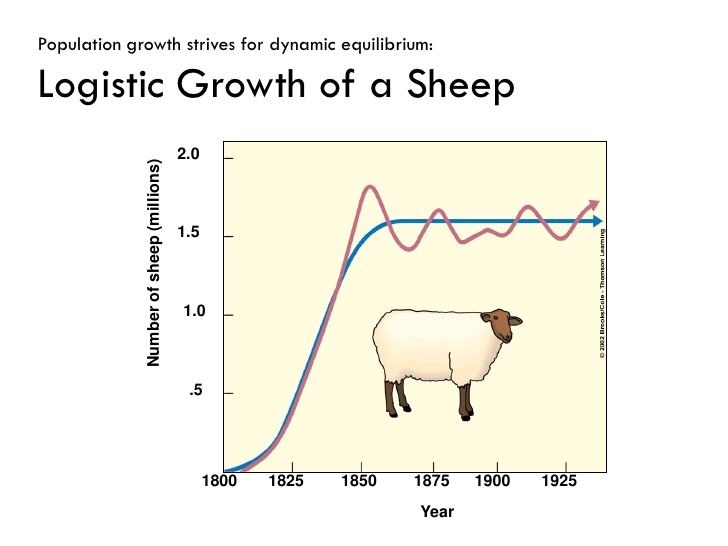
What is the carrying capacity for this sheep population?
a)
1.8 million
b)
1.25 million
c)
1.6 million
d)
1.o million
15.
Food, water, sunlight, shelter, and space are resources that are often __________.
a)
limiting factors
b)
wet
c)
messy
d)
found in rocks
16.

Which statement sounds accurate based on the graph data?

a)
The zebra and lions do not affect each other
b)
when lions population increases, so does the zebra population
c)

When the lion population increases, it causes the zebra population to decrease

d)
when zebra populations go down, the zebra population goes up. 
17.
What type of growth is represented behind?
a)
exponential
b)
logistics
c)
a good kind
d)
representative
18.
What point on the graph represents the carrying capacity?
a)
A
b)
B
c)
C
d)
D
19.

An S-shaped curve is known as

a)

Exponential graph

b)

Logistic Graph

c)

Survivorship curves

d)

Graphs

20.
The first organisms that appear in an ecological community
a)
ecological succession 
b)
primary succession 
c)
secondary succession
d)
pioneer species
21.
The picture shows what type of succession?
a)
primary
b)
secondary
c)
tertiary
d)
quadanary
22.
The picture shows what type of succession?
a)
primary
b)
secondary
c)
tertiary
d)
quadanary
23.
The final stable community of plants and animals is called:
a)
pioneer community
b)
farmland
c)
climax community
d)
old field
24.
Succession that occurs in an area with NO SOIL
a)
ecological succession 
b)
primary succession 
c)
secondary succession
d)
pioneer speciles
25.

Succession that occurs in an area where soil is already present

a)
ecological succession 
b)
primary succession 
c)
secondary succession
d)
pioneer speciles
26.

A species that plays a critical role in the health, maintenance, growth, or definition of an ecosystem.

a)

keystone

b)

invasive

c)

engineer

d)

predator

27.

A species that does not belong in a balanced ecosystem, comes in, and changes it (usually for the worse).

a)

flagnship

b)

umbrella

c)

invasive

d)

predator

28.

Select the best definition for the term 'ecological niche'

a)

The physical space where a species lives

b)

A summation of the relationships and interactions a species has with other biotic and abiotic factors

c)

A representation of what a species preys on, and what preys on it i.e. it's place in a food chain

d)

When a species does a job or function that no other species carries out

29.

Which of the following would be the most likely effect, if there were a sudden increase in the cricket population?

a)

There would be a decrease in the small bird population.

b)

There would be a decrease in the grass/flowers population.

c)

There would be a decrease in the mice population.

d)

There would be an increase in the grass/flowers population.

30.
In this food chain, what will happen if the frogs become extinct?
a)
The snakes will increase.
b)
The grasshoppers will decrease.
c)
The eagles will remain the same.
d)
The grasshoppers will increase.
31.

How can the removal of a keystone species affect an ecosystem?

a)

It can increase biodiversity.

b)

It can lead to a more stable ecosystem.

c)

It can cause a trophic cascade and disrupt the ecosystem balance.

d)

It has no significant effect.

32.

The largest threat to biodiversity is

a)

bacteria

b)

fungi

c)

humans

d)

plants

33.
Identify the process shown in this diagram.
a)
Extinction
b)
Toxin Accumulation
c)
Pollution
d)
Biomagnification
34.

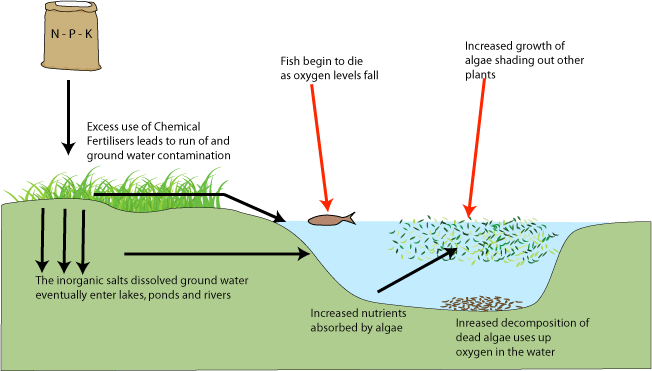
An increase in the amount of nutrients (from fertilizers) in a lake is known as

a)

calcification

b)

cellular respiration

c)

eutrophication

d)

photosynthesis

35.
The process of plants losing water through their leaves is called ____.
a)
condensation
b)
evaporation
c)
transpiration
d)
exhaling
36.
Where are denitrifying bacteria found?
a)
In the soil
b)
Root nodules
c)
In dead things
d)
In the atmosphere
37.
What is the only process that removes carbon from the atmosphere?
a)
combustion
b)
cellular respiration
c)
photosynthesis
d)
decomposition
38.

Which cycle DOESN'T have an atmosphere component (part)?

a)

carbon

b)

nitrogen

c)

phosphorus

d)

water

39.

___________ is the most abundant gas in our atmosphere at 78%.

a)

Oxygen

b)

Carbon Dioxide

c)

Phosphorus

d)

Nitrogen

40.
The movements of energy and nutrients through living systems are different because
a)
energy flows in one direction, and nutrients recycle.
b)
energy is limited in the biosphere, and nutrients are always available.
c)
nutrients flow in one direction, and energy recycles.
d)
energy forms chemical compounds, and nutrients are lost as heat.
41.

More carbon dioxide (CO2) is released in the atmosphere today than in the past because of

a)

the level of nitrogen in the air.

b)

the burning of fossil fuels.

c)

the breakdown of ammonia into nitrites.

d)

chemical erosion.

42.

Which definition best fits the term population?

a)

A group or organisms of the same species that live in the same area and interact with one another.

b)

A group of many populations (of different species) that live and interact with one another

c)

A group of populations of many different species that live and interact with both one another and all of the abiotic factors in their environment.

d)

A set of different ecosystems that acer connected by similar geographic features and share the same or similar climate.
43.
What are the ecological levels of organization from smallest to the largest?
a)
organism, population, community, ecosystem, biome, biosphere
b)
organism, community, population, ecosystem, biome, biosphere
c)
organism, population, community, biome, ecosystem, ecosphere.
d)
organism, community, population, biome, ecosystem, ecosphere
44.
What do we call organisms that eat both plants and animals?
a)
carnivore
b)
herbivore
c)
omnivore
d)
autotrophs
45.
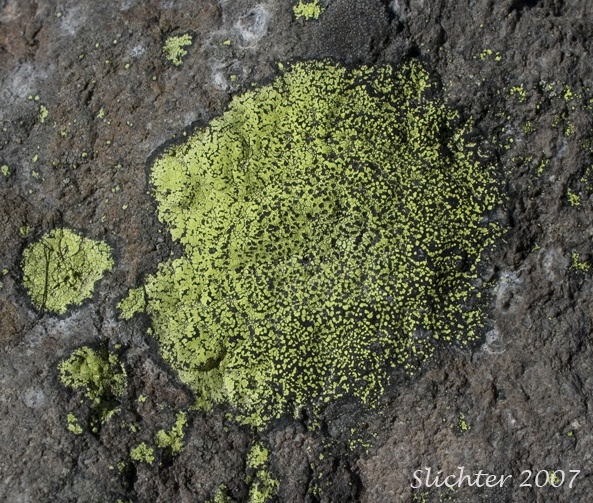
What is the name given to lichen or algae after a primary succession?
a)
pioneer species
b)
volunteer species
c)
founder species
d)
conqueror species
46.

___ states that two species cannot exist together if they compete for the same resources. One will either die out or migrate, or they will adapt to separate resources.

a)

Hardy-Weinberg Principle

b)

Limiting Nutrient Principle

c)

Competitive Exclusion Principle

d)

Tolerance Principle

47.

Several species of warblers can live in the same spruce tree ONLY because they

a)

have different habitats within the tree.

b)

don’t eat food from the tree.

c)

occupy different niches within the tree.

d)

can find different temperatures within the tree.

48.
Which of the following is TRUE of predator/prey relationships?
a)
The amount of prey does not affect the number of predators.
b)
Herbivores are limited by the number of prey in an ecosystem.
c)
Humans are not considered predators.
d)
The number of predators is determined by available prey.
49.
According to the food web, which of the following organisms can be classified into more than one trophic level? 
a)
grasshopper
b)
owl
c)
rabbit
d)
frog
50.
Based on the food web shown above, which of the following is most likely responsible for the rabbit population trend as shown in the graph? 
a)
increase in amount of grass
b)
decrease in amount of grass
c)
overpopulation in squirrel population
d)
increase in rabbit population