NEW
Font size
 Worksheets
10-2 The Role of Energy
Total questions: 20
Worksheet time: 11mins
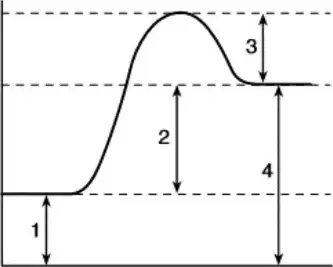
Given the potential energy diagram representing a reaction: Which letter represents the heat of the reaction?
1
2
3
4
Which value is defined as the difference between the potential energy of the products and the potential energy of the reactants during a chemical change?
heat of fusion
heat of reaction
heat of deposition
heat of vaporization
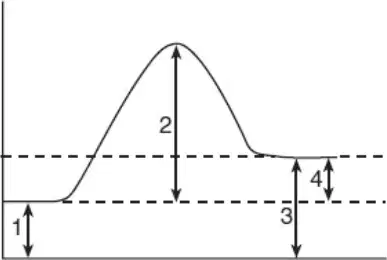
Given the potential energy diagram for a chemical reaction: Which number represents the enthalpy?
1
2
3
4
For a chemical reaction, the heat of reaction is equal to the
potential energy of the reactants, only
potential energy of the products, only
potential energy of the products plus the potential energy of the reactants
potential energy of the products minus the potential energy of the reactants
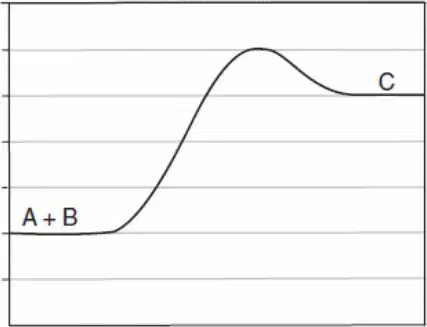
Given the equation and potential energy diagram representing a reaction: If each interval on the axis labeled “Potential Energy (kJ/mol)” represents 10 kJ/mol, what is the heat of reaction?
+60 kJ/mol
+20 kJ/mol
+30 kJ/mol
-40 kJ/mol
In a chemical reaction, the difference between the potential energy of the products and the potential energy of the reactants is equal to the
activation energy
kinetic energy
heat of reaction
rate of reaction
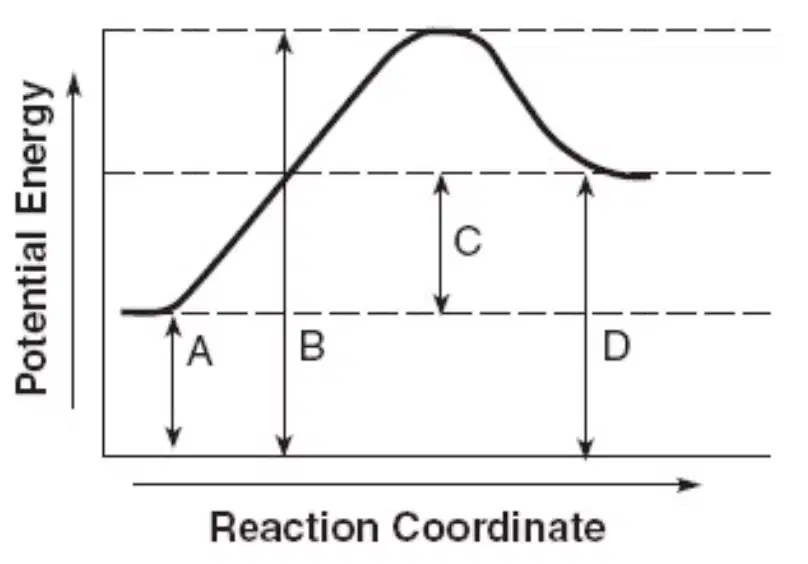
Base your answer to the question on the information and potential energy diagram below.
Chemical cold packs are often used to reduce swelling after an athletic injury. The diagram represents the potential energy changes when a cold pack is activated.
Which lettered interval on the diagram represents the heat of reaction?
A
B
C
D

Given the potential energy diagram for a reaction:
Which intervals are affected by the addition of a catalyst?
1 and 2
1 and 3
2 and 4
3 and 4
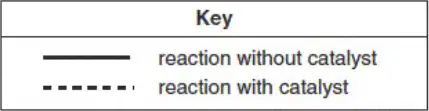
Which potential energy diagram represents the change in potential energy that occurs when a catalyst is added to a chemical reaction?


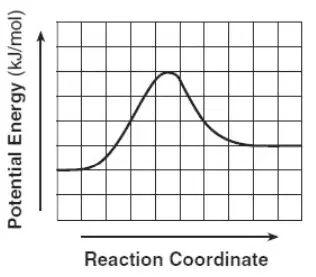
Given the potential energy diagram for a reversible chemical reaction:
Each interval on the axis labeled "Potential Energy (kJ/mol)" represents 10 kilojoules per mole. What is the activation energy of the forward reaction?
10 kJ/mol
30 kJ/mol
40 kJ/mol
60 kJ/mol
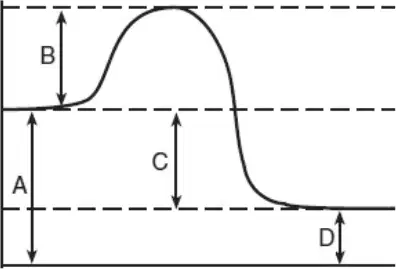
Given the potential energy diagram representing a reversible reaction: The activation energy for the reverse reaction is represented by
A + B
B + C
B + D
C + D
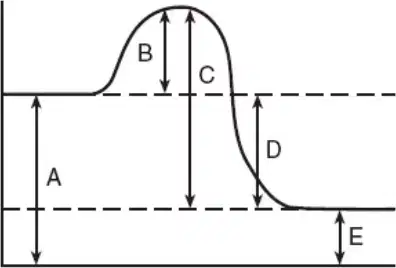
Which potential energy interval in the diagram represents the activation energy of the forward reaction?
A
B
C
D
E
In which potential energy diagram below does the arrow represent the activation energy of the forward reaction?
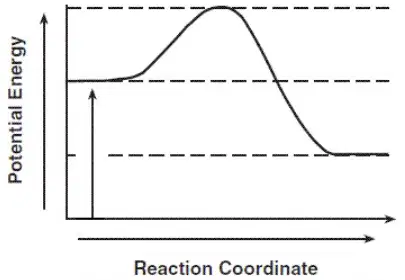
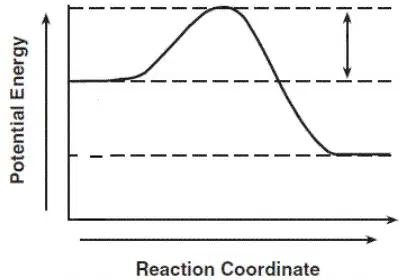
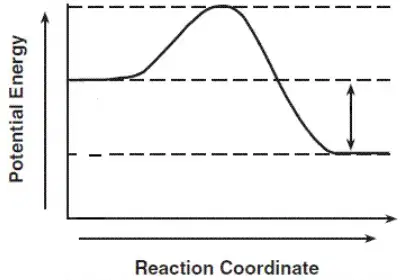
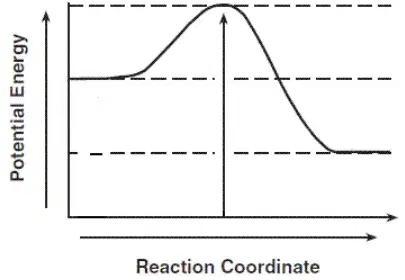
Given the balanced equation representing a reaction:
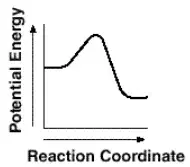
N2(g) + O2(g) + 182.6 kJ → 2NO(g)
which potential energy diagram below correctly illustrates this reaction?
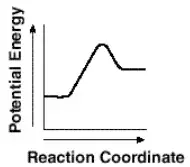

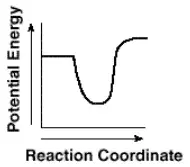
Base your answer to this question on the reaction represented by the balanced equation below.
2H2(g) + O2(g) → 2H2O(l) + 571.6 kJ.
Choose the correct potential energy diagram that illustrates this reaction.
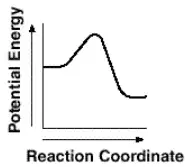

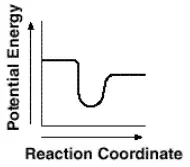
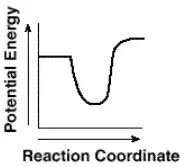
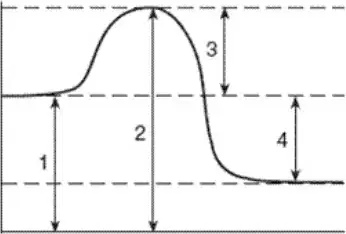
Given the potential energy diagram for a reaction, which interval on this diagram represents the difference between the potential energy of the products and the potential energy of the reactants?
Interval 1
Interval 2
Interval 3
Interval 4
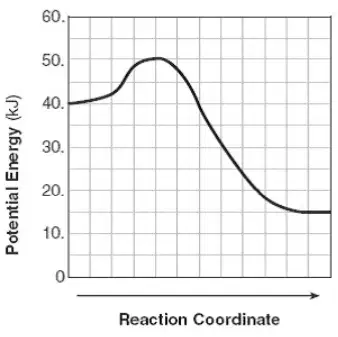
Given the potential energy diagram for a chemical reaction:
Which statement correctly describes the energy changes that occur in the forward reaction?
The activation energy is 10 kJ and the reaction is endothermic.
The activation energy is 10 kJ and the reaction is exothermic.
The activation energy is 50 kJ and the reaction is endothermic.
The activation energy is 50 kJ and the reaction is exothermic.
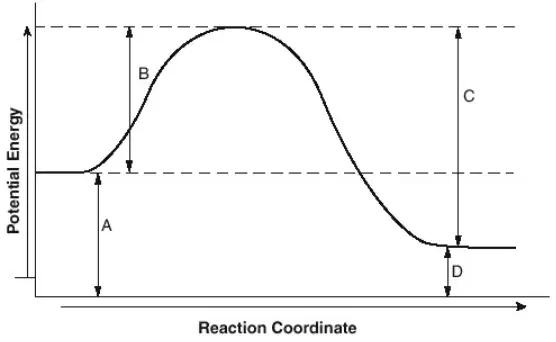
Which lettered interval on the diagram represents the potential energy of the products?
A
B
C
D

In the potential energy diagram, which letters represent the activation energy of the forward and reverse reactions, respectively?
A and C
A and D
B and C
B and D
Which potential energy diagram represents an exothermic reaction?