
 Worksheets
Ecosystems Task Cards 1-20
Total questions: 20
Worksheet time: 10mins
Name
Class
Date
1.
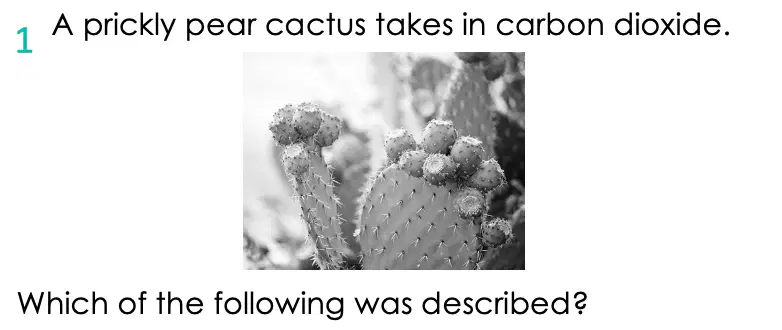
1.
a)
Two organisms interacting
b)
An organism interacting with a nonliving component of its ecosystem
c)
Two organisms competing for space
d)
A producer helping another producer
2.
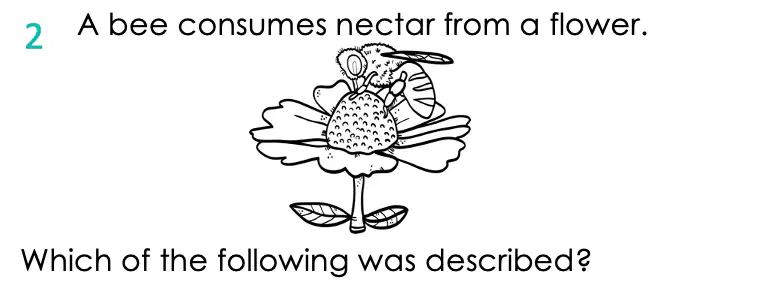
2.
a)
Two organisms competing for food
b)
A producer helping another producer
c)
An organism interacting with a nonliving component of its ecosystem
d)
An organism depending on another organism for energy
3.
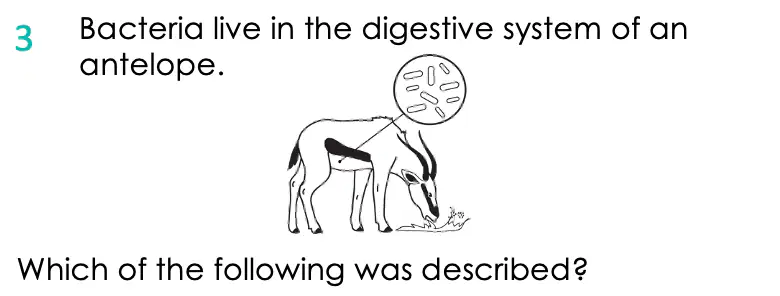
3.
a)
A consumer interacting with a producer
b)
A producer helping another producer
c)
An organism interacting with a nonliving component of its ecosystem
d)
An organism depending on another organism
4.
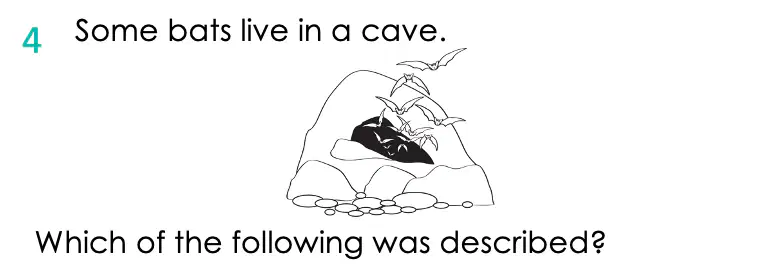
4.
a)
Different species competing for food
b)
Organisms using nonliving components of their environment for food
c)
Organisms using nonliving components of their environment for shelter
d)
Organisms using living components of their environment for shelter
5.
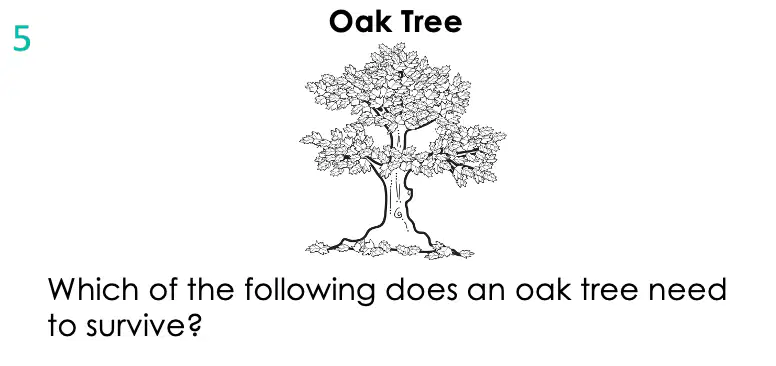
5.
a)
Carbon dioxide
b)
Wind
c)
Predators
d)
Oxygen
6.
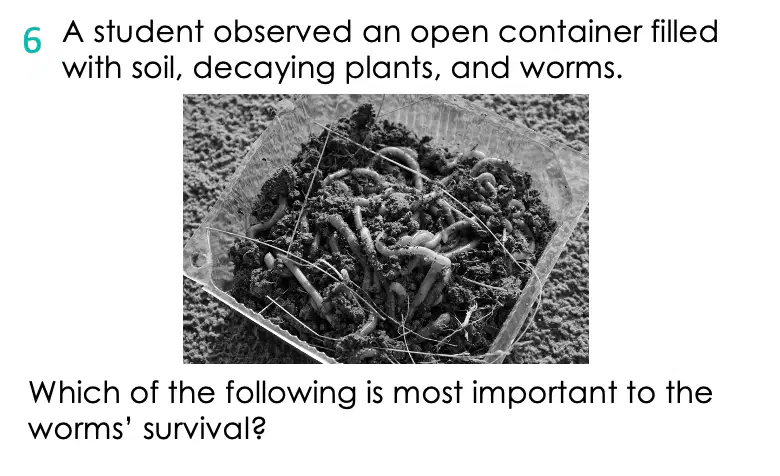
6.
a)
Carbon Dioxide
b)
Oxygen
c)
Plastic
d)
Sunlight
7.
7.
a)
A hermit crab inside a shell
b)
A bird nesting in a tree hollow
c)
Rabbits consuming grass
d)
A tree producing acorns
8.
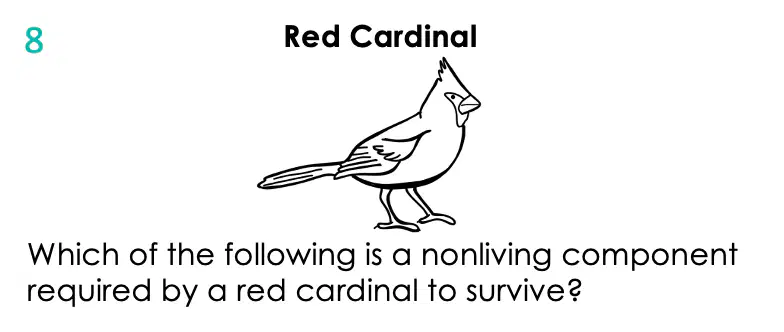
8.
a)
Carbon Dioxide
b)
Seeds, berries, and insects
c)
Oxygen
d)
All of the above
9.
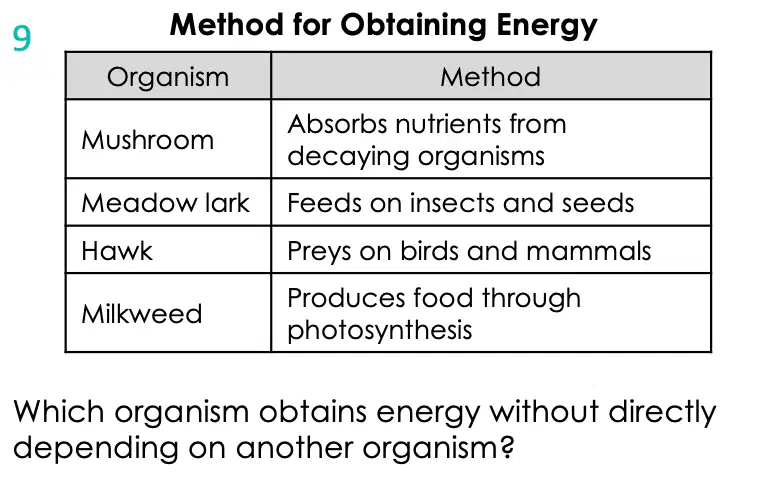
9.
a)
Mushroom
b)
Meadow Lark
c)
Hawk
d)
Milkweed
10.
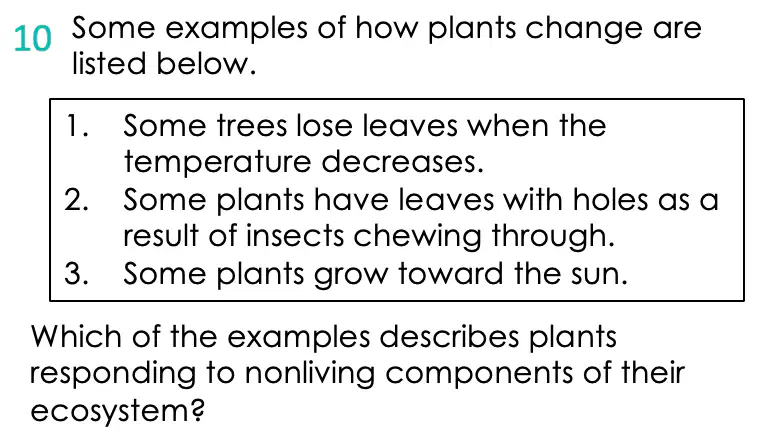
10.
a)
Example 1 only
b)
Example 2 only
c)
Example 1 and 3 only
d)
Examples 1, 2, and 3
11.

11.
a)
A ghost crab preys on small crabs and clams.
b)
A ghost crab can run forward, backward, and sideways on the tips of its legs.
c)
A ghost crab hides by burrowing in the sand.
d)
Camouflage helps a ghost crab blend in with the sandy beach.
12.

12.
a)
Fungi get nutrients from dead tree trunks.
b)
Fungi return nutrients to the soil, which are then used by plants.
c)
Bacteria live on a human’s hands.
d)
Worms move across the sidewalk.
13.
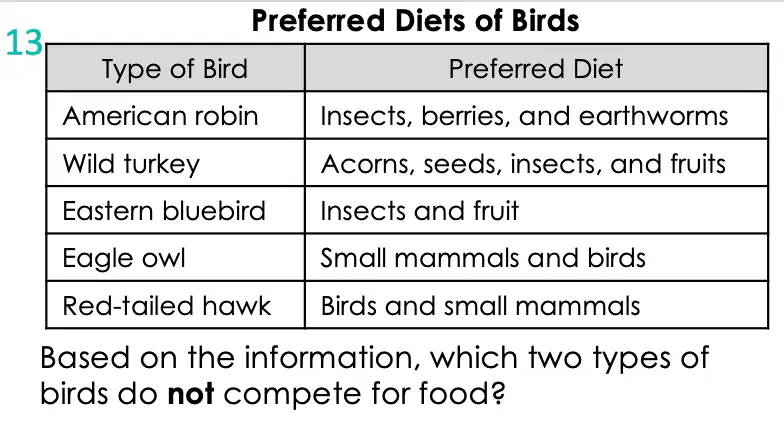
13.
a)
American robin and Eastern bluebird
b)
Eastern bluebirds and wild turkeys
c)
Eagle owls and American robins
d)
Red-tailed hawks and eagle owls
14.
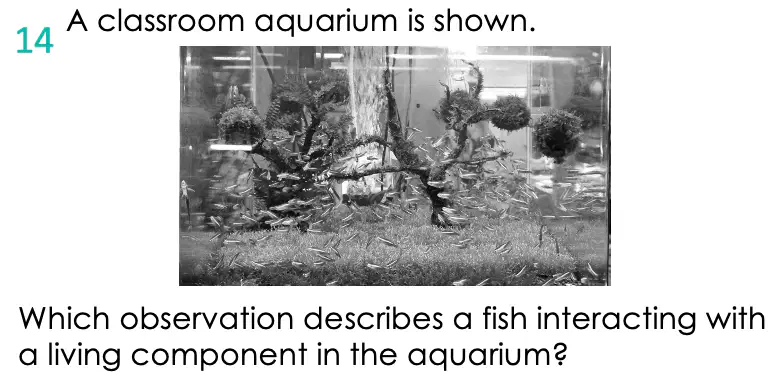
14.
a)
A fish hides below a plant.
b)
A fish takes in oxygen through its gills.
c)
A fish swims through the water.
d)
A fish swam over a rock.
15.

15.
a)
Longhorn beetles lay eggs inside dead, rotting logs.
b)
Moss growing on a rotting log takes in nutrients broken down by earthworms.
c)
A rotting log provides a moist habitat for woodlice.
d)
Woodpeckers fly above a rotting log.
16.
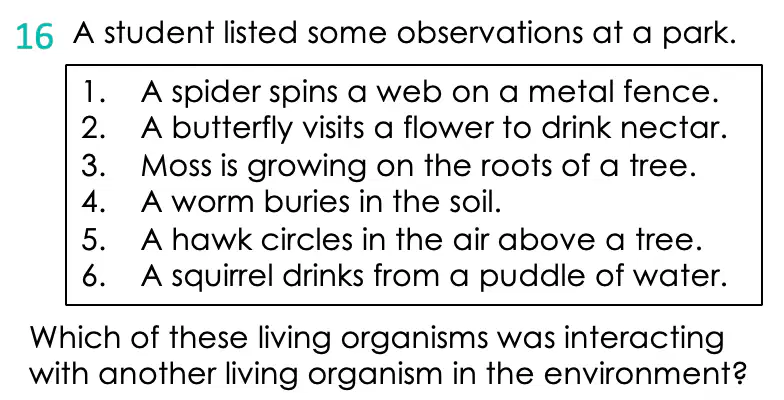
16.
a)
The butterfly, moss, and hawk only
b)
The spider and worm only
c)
The moss and butterfly only
d)
All of the organisms
17.
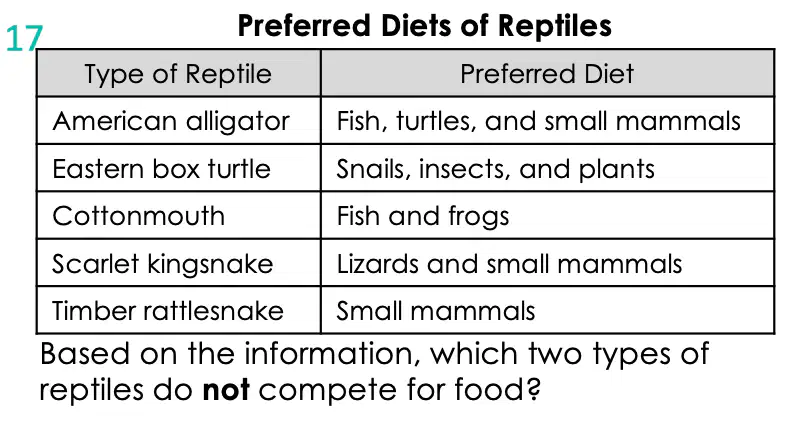
17.
a)
Timber rattlesnake and eastern box turtle
b)
American alligator and timber rattlesnake
c)
Cottonmouth and American alligator
d)
Scarlet kingsnake and timber rattlesnake
18.
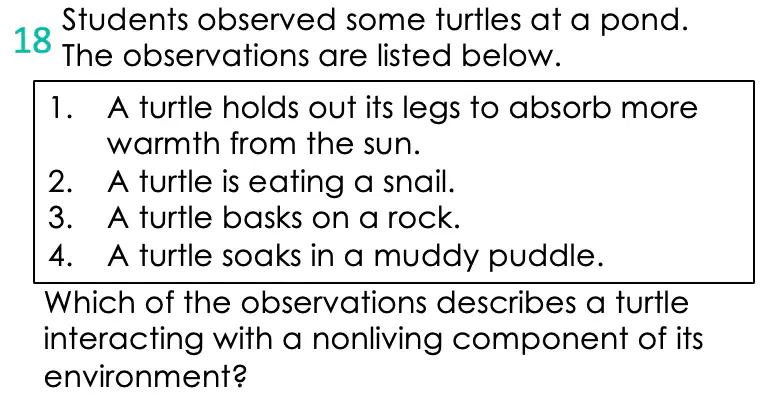
18.
a)
Observations 2 and 3 only
b)
Observation 2 only
c)
Observations 1 and 4 only
d)
Observations 1, 3, and 4 only
19.

19.
a)
A coyote hunts for prey.
b)
A Gila woodpecker digs out a cavity in a cactus for its nest.
c)
A lizard runs quickly across the desert.
d)
A jackrabbit has large ears that help it stay cool.
20.
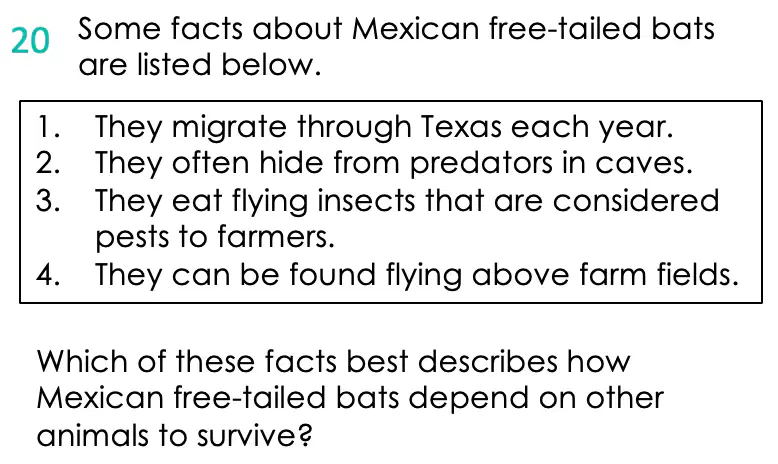
20.
a)
Fact 1
b)
Fact 2
c)
Fact 3
d)
Fact 4
100 %

