
Font size
 Worksheets
light revision
Total questions: 101
Worksheet time: 3585secs

Which is a natural light source?
Sun
Computer
Light bulb
Phone
What is the absence of light?
Dark.
A reflection
A mirror
When light cannot pass through an object, what forms?
reflection
refraction
shadow

This diagram best represents _____________
refraction
reflection

Which of the following is transparent?
desk
football
show
window
Which of the following is opaque?
water
wall
window
Which of the following is translucent?
window
book
wax paper
human


Absorb means______.
light bounces back
light goes through and bends
light gets taken in
light goes straight through

When you look on the surface of a lake, the light is______.
refracted
transmitted
absorbed
reflected

This situation shows that
light travels in a straight line
light is everywhere
light penetrates certain objects
light is produces by the Sun

What conclusion can be made from this investigation?
Light travels in parallel
Light travels in a straight line
Light cannot pass through and opaque object
Light cannot bend

The following diagram shows a driver who could see the image of a vehicle behind him without turning his back.
Why?
Light travels in a straight line
Light is refracted
Light is reflected
Light travels in two different mediums
Tick the correct of TWO devices which use the principle of light reflection in our daily lives.


Which of the following is shown?
Refraction
Reflection
Absorption

torch
Light Source
Reflector of Light

mirror
Light Source
Reflector of Light

sun
Light Source
Reflector of Light

stars
Light Source
Reflector of Light

lighthouse
Light Source
Reflector of Light

candle
Light Source
Reflector of Light

trophy
Light Source
Reflector of Light

moon
Light Source
Reflector of Light

firefly
Light Source
Reflector of Light

coffee mug
Light Source
Reflector of Light

lamp
Light Source
Reflector of Light
What does a source of light do?
Makes light
Reflects light
Absorbs light
Which of the following is not a source of light?
The Sun
The Moon
Torch
Which of these things can NOT create light?
Light bulb
Fireflies
Plastic
The light received from candle is...
Natural Source of light
Artificial Source of light
Sun is a natural source of light
True
False
Neon lamp is a Natural source of light
True
False

Light Source
Reflector

Reflector
Light source

Reflector
Light source
Gasses are ...
source of light
reflector
Eyes are ...
source of light
reflector
A smooth, shiny surface is very ...............................at reflecting light.
not
bad
good
this is a..............................
light diagram
dark diagram
ray diagram
reflection diagram
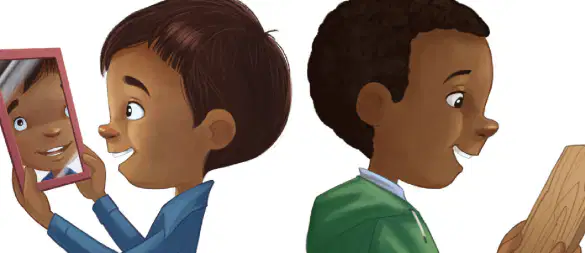
why wood don't reflect light very good? (2 answers)
because it's smooth and shiny surface
because it absorb more light than it reflect
because it's rough and and bumpy
it reflect light than it absorb
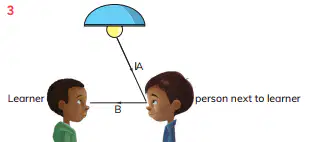
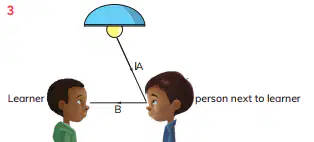
A is.............................
B is..............................
arriving ray, light ray
arriving ray , reflected ray
reflected ray, arriving ray
What is the third planet from the Sun?
Mercury
Venus
Earth
When Earth spins, it turns around an imaginary line called a(n)
rotation
axis
orbit
ellipse
Our planet is.......
Earth
Uranus
Mercury
the nearest planet is.......
Earth
Uranus
Mercury
the largest body in the solar system.....
sun
moons
planets
The earth rotates around itself only
true
false
The earth rotates around the itself once every 24 hours
true
false
The earth revolves around the sun in 365 days & quarter
true
false
All planets in our solar system are the same size.
true
false

The ______ makes the day sky bright.
sun
clouds

If the Earth makes 1 spin around its called a _________________.
twirl
rotation
It is _____ when our part of the Earth faces away from the sun.
day
night

The earth spins in .... direction.
three
two
one

The spin of the earth is what gives us .......
sun
day and night
space

When part of the earth faces AWAY from the sun, it is....
no time
day time
night time

The earth spins ..... every 24 hours.
once
twice
thrice

Which part of the Earth is in total darkness
A
B
C

The Earth spins on an invisible line called an ________?
Equator
Axel
Axis
Orbit

How long does it take the Earth to do one full rotation on its axis?
8 hours
24 hours
6 days
365 days

How long does it take for the Earth to do one full revolution of the sun?
365 days
366 days
24 days
5 years
The path that the Earth follows when completing its revolution is called an ________?
Axis
Direction
Orbit
Rotation
How does Earth’s rotation cause day and night?
As Earth rotates toward the east, the sun appears to rise in the west and set in the east.
As Earth rotates toward the east, the sun appears to rise in the east and set in the west.
Earth rotates in a clockwise direction, which makes the sun appear in the sky during the day.
Earth’s rotation does not cause day and night; its revolution does.
The Earth spins in ------- direction.
Clockwise
Anticlockwise

When an object blocks the path of light, what is formed?
Shadow
Fog

Where does the sun rise?
North
East
West
South
Does the sun move?
Yes, it moves across the sky.
No, it only looks like it is moving.
A shadow is created when...
an object blocks the light
an object lets light pass thru
an object is above light
If you can see light through an object it is called...
opaque
plastic
transparent
An opaque object means that ...
light passes through
no light passes through
some light passes through
you can see through it

When the Sun is behind you, your shadow is ...
behind you
in front of you
at the side of you
not there
Shadows are longest during _______.
morning and evening
noon
night

When was this picture most likely taken?
(Hint: think about the shadow's length)
morning or evening
night
noon

Based on the shadow, what time of day is it?
12:00 p.m (noon)
2:00 a.m.
1:00 p.m.
7:00 a.m.

Where will the tree's shadow be?
A
B
C
10.How is a shadow formed?
When light passes through an object.
When light cannot pass through an object
When we allow the shadows to be formed
When there is total darkness
Can the size and shape of shadows change?
No, they aren't living things.
Yes
Maybe, I think...
Never, they can't change...
What causes our view of the Sun to change?
Earth's rotation
Earth's revolution
A tree that is in the way
My neighbor's house
When an object blocks the path of light, what is formed?
A problem
A fog
A reflection
A shadow
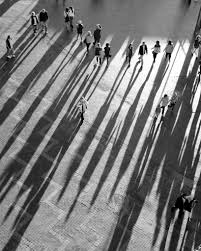
When was this picture most likely taken?
(Hint: think about the shadow's length)
morning or evening
night
noon
afternoon
When the sun gets lower in the sky, shadows get______.
longer
gone
shorter
darker
When the sun gets higher in the sky, shadows get ______.
longer
gone
shorter
darker
12.Translucent is?
When light bounces off an object
Material that only allows a little light to pass through
Our main source of light
Opaque is?
Material that allows light to pass through
Light made by nature
Material that allows no light to pass through
Transparent is?
A material that allows light to pass through
The colors of the rainbow
Light made by man
1. What is the only form of energy we can see?
prism
light
mirror

