
NEW
Font size
 Worksheets
GPHY203 Midterms Mastery Test Review
Total questions: 50
Worksheet time: 1hrs 2mins
What does it mean when the electric field lines are close together?
the field is positive
the field is negative
The field is strong
the field is weak
An atom loses an electron. What type of charge does it have now?
positive
negative
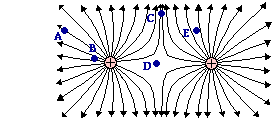
Which of the following labeled points is in the region with the strongest force of electric charge
A
B
C
D
Two similar metal spheres, A and B, have charges of +2.0 x 10⁻⁶ coulomb and +1.0 x 10⁻⁶ coulomb, respectively. The magnitude of the electrostatic force on A due to B is 4.0N newtons. What is the magnitude of the electrostatic force on B due to A?
2.0N
4.0N
8.0N
1.0N
which is the field for opposite charges


An uncharged capacitor of capacitance 8.0 μF is connected to a battery of e.m.f. V and negligible internal resistance. If the charge on each plate of the capacitor is 24 μC , what is the value of V?
3.0 V
6.0 V
10 V
14 V
A cylindrical wire has a radius R and length L. If both R and
L are doubled, does the resistance of the wire
increase
decrease
remain the same
What is the resistance if the voltage is 10V and the current is 2A?
20 Ω
5 Ω
12 Ω
8 Ω


Which circuit diagram represents the correct way to measure the current in a resistor?


Which circuit diagram represents the correct way to measure the voltage drop in the resistor?
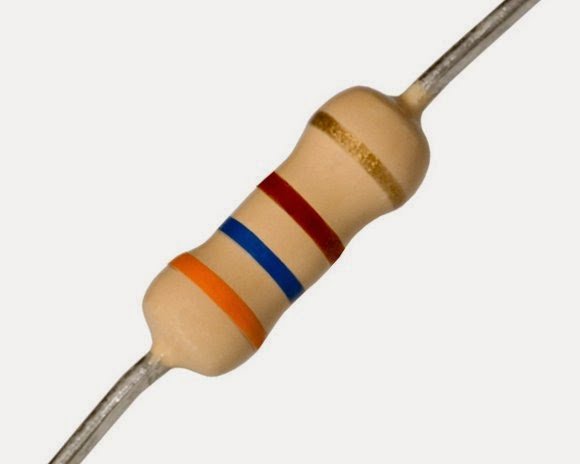
The gold color band refers to__________tolerance.
+ / - 20%
+ / - 10%
+ / - 5%
zero
What potential difference is required across an 8.0-Ω resistor to cause 2.0 A to flow through it?
4.0 V
16 V
8.0 V
32 V
An instrument is rated at 240 W if it is connected across a 120-V dc power supply.
(a) What current does it draw under normal operation?
(b) What is its resistance?
(a) 0.20 A (b) 360 Ω
(a) 60 A (b) 2.0 Ω
(a) 2.0 A (b) 60 Ω
(a) 0.2 A (b) 60 Ω


These magnetic domains are:
strongly magnetized
slightly magnetized
unmagnetized
How can a magnet be used to produce an electric current?
Hold a magnet next to a piece of wire.
Wrap wire around a magnet.
Spin the magnet around inside a coil of wire.


Which description best applies to Lenz's Law?
An induced current occurs when a magnet passes through a tube.
When a change in magnetic field occurs to a coil the direction of current goes in the in the other direction to this change.
The direction of an induced current is such to align with the change that created it.
A magnet is a tube is always slowed by its magnetic field.

In Fleming's Right Hand Rule, First finger and center finger represent
current, magnetic field
magnetic field, current
force, current
magnetic field, force

____________law states that the direction of the induced current is such that it always _______ ___ the change producing it.
Lenz's Law, oppose
Faraday's Law, oppose
Lez's Law, follow
Faraday's Law, follow
Assume primary has 240 turns and secondary has 60 turns. Primary is connected with 120V AC power supply. What is the voltage on the secondary?
30 V
0.333 V
2 V
120V

A 20-m wire of 0.10 mm2 cross-sectional area draws 0.5 A when connected across a 3.0-V potential difference.
(a) What is the resistance of the wire?
(b) What is the resistivity of the material from which the wire is made?
(a) 1.5 Ω (b) 6.0 × 10⁻⁹ Ω • m
(a) 1.5 Ω (b) 3.0 × 10⁻⁸ Ω • m
(a) 6.0 Ω (b) 3.0 × 10⁻⁸ Ω • m
(a) 6.0 Ω (b) 6.0 × 10⁻⁹ Ω • m
An electrostatic force of 2 X 10² N is exerted on a charge of 4 Coulomb at point P in an electric field. What is the magnitude of the electric field intensity at P?
8 X 10² N/C
5 N/C
2 X 10⁻² N/C
50 N/C

Which of the diagrams below best represents the charge distribution on a metal sphere when a positively charged plastic tube is placed nearby?
A
B
C
D
Electric charges can move most easily on which of the following objects?
glass tube
metal plate
rubber tire
plastic cup
If a negatively charged rod touches a conductor, the conductor will be charged by what method?
Friction
Induction
Conduction
Convection
For an object to have a positive charge, it must ____.
lose electrons
gain electrons
gain protons
lose proton
Like charges ___________________ and unlike charges ____________.
attract, repel
repel, attract
neither repel nor attract
either attract or repel
During a physics lab, a plastic strip was rubbed with cotton and became positively charged. The correct explanation for why the plastic strip becomes positively charged is that ...
The plastic strip acquired extra protons from the cotton.
The plastic strip acquired extra protons from the charging process
Protons were created as the result of the charging process
The plastic strip lost electrons to the cotton during the charging process

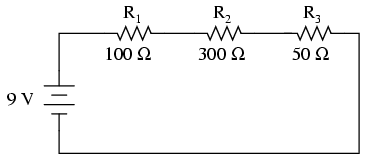
The following image respresents a
LED
Series circuit
Parallel circuit
Resistor

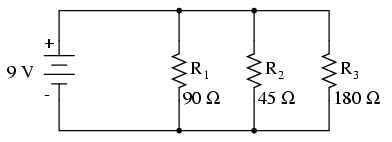
The following image respresents a
LED
Series circuit
Parallel circuit
Resistor

The formula to find the equivalent resistance in a series circuit is...


The formula to find the equivalent resistance in a parallel circuit is...

The equivalent resistance of the following circuit is...
9.23 Ω
90 Ω
60 Ω
70 Ω

A circuit contains two 1.5 -volt and a bulb with a resistance of 3 ohms. Calculate the current.
1 amperes
2 amperes
3 amperes
4 amperes

How much current is in a circuit that includes a 9 -volt battery, and a light bulb with a resistance of 3 ohms?
3 amperes
6 amperes
9 amperes
12 amperes

V = ?
I = 8 A
R = 4 Ω
16 V
32 V
64 V
128 V

V = 16 V
I = 2 A
R = ?
4 Ω
8 Ω
16 Ω
32 Ω

V =10 V
I = ?
R = 5 Ω
2 Ω
4 Ω
6 Ω
8 Ω

