
 Worksheets
Driver Education: Chapter 10 Vehicle Operation and Control
Total questions: 20
Worksheet time: 11mins

For the best steering control, always hold the steering wheel:
with palms pointing upward, thumbs tight to the wheel.
by the spokes, thumbs hooked in the steering wheel.
on the bottom half with the thumbs hooked on the inside rim of the wheel.
from the outside with the thumbs resting on the wheel.
To steer your vehicle straight ahead, you should:
use the traffic lane markings as a guide.
hold the steering wheel in the same position.
use the preceding vehicle as a guide.
look far ahead and target your path of travel.

To perform a turn at an intersection, you should turn the steering wheel:
without releasing either hand.
using one hand, palming the wheel.
using the "hand over hand" method.
using short motions, sliding your hands.
When using the hand-over-hand steering technique:
the palms should be up when moved to new grips.
keep hands, palms down, in the top half of the wheel.
hands should be at the top of the wheel with the palms downward.
each new grip, palm downward, should be at the 2 o'clock position.
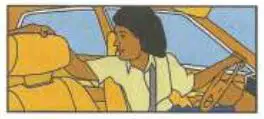
The one hand steering technique should be used:
only when changing lanes.
when turning at intersections.
to input evasive steering maneuvers.
only when reversing.
When you intend to reduce speed or stop, you should:
Put these in the correct order.
tap the brake pedal.
check the rear view mirror.
apply the brake pedal firmly.
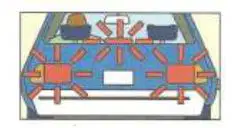
The moment the brake lights flash on the vehicle ahead, you should:
slow down.
change lanes.
move slightly to the left.
move slightly to the right.
The distance your vehicle will travel, from the moment you apply the brakes until it comes to a full stop, is called:
the total stopping distance.
the braking distance.
the perception and reaction distance.
all of these.
To stop smoothly, just before coming to a complete stop, you should:
ease up slightly on the brake pedal.
press more firmly on the brake pedal.
release the brake pedal completely.
maintain the same pressure on the brake pedal.
The braking distance increases with the speed of your vehicle. For example, if you double your speed, the braking distance will be:
doubled.
tripled (three times).
quadrupled (four times).
nine times greater.
When you drive three times faster, the distance travelled before you can bring your vehicle to a full stop while applying the brakes will be:
doubled.
tripled (three times).
quadrupled (four times).
nine times greater.
What can influence the total stopping distance of a vehicle?
The driver - physical and mental state, skill and experience.
The vehicle - speed, weight, and mechanical condition.
The roadway - friction factor and inclination.
All of these.
All of the factors listed below affect your braking distance. Which combination has the greatest effect?
Tire wear and vehicle weight.
Speed and vehicle weight.
Tire wear and the road surface.
Speed and the road surface.

If your vehicle requires a braking distance of 20 feet at 20 mph, what would it require at 60 mph?
60 feet.
120 feet.
180 feet.
240 feet.
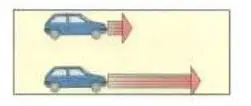
If your vehicle requires a braking distance of 20 feet at 20 mph, what would it require at 40 mph?
40 ft.
50 ft.
60 ft.
80 ft.
In normal driving situations, the preferred braking technique is:
controlled braking
threshold braking.
pumping the brakes.
locking the brakes.
The "pumping the brake pedal" technique (not with ABS):
permits steering control.
requires a longer braking distance.
is more efficient if you shift to neutral.
all of these.
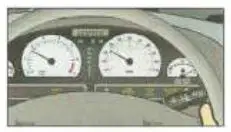
Once you attain a desired speed, in order to maintain this speed on a level road, you must:
press harder on the accelerator pedal.
release the accelerator pedal.
ease up slightly on the accelerator.
depress the accelerator a little further.
In normal driving situations, the ideal acceleration control would be:
smooth gradual acceleration.
thrusting acceleration.
covering the accelerator.
"kickdown" acceleration.
Progressive acceleration - a firm pressure on the accelerator to increase speed and gradually shift the balance of the vehicle towards the rear wheels - should be used:
when exiting curvatures and turns.
when starting a passing maneuver.
when entering an expressway.
all of these.

