Worksheets
Biology STAAR review
Total questions: 72
Worksheet time: 2hrs 43mins

This model represents what kind of cell?
Eukaryotic
Prokaryotic
Protozoal
Fungal
Amino acids are the monomer of which of the following macromolecules?
Carbohydrates
Lipids
Nucleic acids
Proteins

Identify the stage of mitosis.
Anaphase
Cytokinesis
Telophase
Metaphase
Movement of particles from high to low concentration is....
Passive Transport
Active Transport

What do viruses have in common with living cells? They both...
store genetic information
have chloroplasts
use glucose for cellular respiration
have endoplasmic reticulum
How would the DNA sequence GCATTC be transcribed to mRNA?
GCTAAG
GCATTC
CGUAAG

Scientists can determine relatedness among organisms by comparing partial amino acid sequences. The table shows four partial amino acid sequences from four organisms.
Which organism is the LEAST related to the other three organisms?
Organism 1
Organism 2
Organism 3
Organism 4

The image shows part of the humerus bone in different genera of primates.
These structures are...
Analogous
Homologous
Vestigial

The diagram shows light- and dark-colored beetles that live on a tree.
Most likely, over time...
the number of light-colored beetles in the population will increase.
There will be more dark-colored beetles than light-colored beetles.
The number of light-colored beetles will decrease.

In ALL cells, proteins are synthesized (created) by which organelle?
Golgi body
Mitoichondrion
Chromosomes
Ribosomes

Diffusion is a passive process because it requires NO ENERGY (ATP). What type of diffusion is shown in this diagram?
Osmotic Diffusion
Simple Diffusion
Facilitated Diffusion

Which process is represented by letter A?
Photosynthesis
Cellular respiration
Transpiration

What model of a biological process is shown?
Mitosis
Transcription
DNA Replication
Translation
In DNA, adenine bonds with...
Uracil
Thymine
Guanine
Cytosine
All of the following are functions of proteins EXCEPT—
Store and transmit genetic information
Build tissues such as bone and muscle
Control the rate of reactions and regulate cell processes
Help fight disease

Which of these occurs just before the cell enters the G2 stage of the cell cycle?
the nuclear membrane disintegrates
Centrioles form
the nucleolus divides
DNA replicates

According to the graphs, the enzyme works best at what pH and temp?
Temp above 50 degrees C & pH above 12
Temp and pH have no effect on the action of this enzyme
Temp of 50 degrees C and a pH of 10
Temp of 35 degrees C and a pH of 8
If 15% of a DNA sample is made up of thymine (T), what percentage of the sample is made up of adenine (A)?
15%
30%
70%
85%

Identify the monomer.
Amino acid
Nucleotide
Monosaccharide
Fatty acid
All populations living together in a given area is known as a(n)...
ecosystem
community
biodiversity
population
Organism that consume other organisms for food...
heterotroph
autotroph
producer
detritivore

In the food web shown, if the snake was removed from the ecosystem the grasshopper population would increase due to less predation from mice and birds.
True
False

Which is an example of a mutualistic relationship?
a bee pollinates a flower
a tapeworm takes nutrients from a dog
an orchid lives in a tree but does not harm the tree
In which type of relationship does one species benefit and the other is neither helped nor harmed?
parasitism
mutualism
commensalism
one
two
three
five
Bb
Homozygote
alleles
Blue eyes
Having two of the same genes for the trait is known as...
homozygous
heterozygous
In Snapdragons, crossing a white flower with a red flower produces offspring with pink flowers. Which of the following represents this pattern of inheritance?
Simple inheritance
Codominance
Incomplete dominance
Mendelian inheritance
DNA
phenotype
trait
allele
If green is dominant over purple, then which of the following would the possible genotype(s) of a purple individual?
gg
Gg
GG
Gg and gg


Nuclei are building amino acids for energy storage
Ribosomes are building carbohydrates to increase energy output
Chloroplasts are using energy to produce oxygen
Mitochondria are using oxygen to produce ATP
Which table correctly identifies how the plasma membrane contributes to the maintenance of cellular homeostasis?


Active transport, because energy is being used to move molecules against the concentration gradient
Facilitated diffusion, because energy is being used to move molecules with the concentration gradient
Osmosis, because energy is not being used to move molecules with the concentration gradient
Endocytosis because energy is not being used to move molecules against the concentration gradient
Put each label in the correct location in the Venn Diagram. (Make sure to put answers in DESCENDING number order.)
DNA
Holds the genetic information of all living things.
mRNA
Carry protein information from the DNA in a cell's nucleus to the cell's cytoplasm.
rRNA
Major constituent of ribosomes.
tRNA
Brings the amino acids and places them in the correct potsition to create the desired protein
When DNA splits into single strands to act as a template for a new strand of complementary DNA, it is called (a) . The process by which DNA is copied to (b) , which carries the information needed for protein synthesis is called (c) . The mRNA formed in transcription is transported out of the (d) , into the cytoplasm, to the ribosome (the cell's protein synthesis factory). With the help of tRNA the protein chain is assembled in a process known as (e) .
Gradualism happens slowly over time and P.E. involves rapid changes preceded followed by long periods of little or no change
P.E. is slowly but surely and Gradualism are rapid changes preceded followed by long periods of little or no change
Gradualism has no intermediate forms of species


Simple Diffusion
When molecules passively cross the plasma membrane through the phospholipid bilayer
Facilitated Diffusion
When molecules passively cross the plasma membrane through a channel protein
Osmosis
The movement of water across the cell membrane
Endocytosis
Bringing in large materials through the cell membrane into a vacuole.
Exocytosis
Moving larger amounts or large quantities of materials through the cell membrane
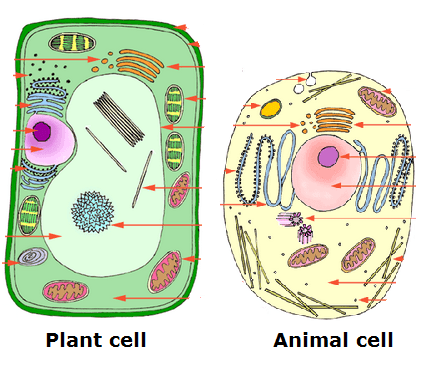
What distinguishes a plant cell from an animal cell? (How do you tell them apart) Hint: There's 3 ways (Check all 3)
Central Vacuole
Mitochondria
Cell Wall
Ribosomes
Chloroplasts
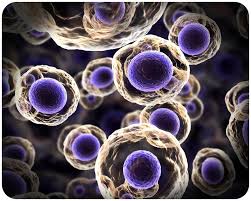

Control center of the cell.

Makes energy for the cell.

Site of photosynthesis.

Site of protein synthesis.

Controls what goes in/out of the cell.
Label the phases of Mitosis on the image shown. They are NOT in order.
Label the diagram

Each cell in the human body, with the exception of gametes, contains the same number of chromosomes and the same genetic sequences. Which process determines cell differentiation or cell specialization?
Gene Expression
Mutation of the Genes
Different methods of cell division
the host chooses

Using the Codon chart attached, drag and drop the corresponding amino acid to its mRNA base
AAA : (a)
GUU : (b)
UAA : (c)
AGU : (d)

Both the respiratory system and the digestive system involve the uptake of necessary molecules from an animal’s surroundings. Alveoli are tiny sacs that aid in the exchange of carbon dioxide and oxygen in the lungs. Intestinal villi are tiny projections along the lining of the intestines used to take in nutrients from food passing through.
Which system must interact with the respiratory and digestive systems to transport gases and nutrients throughout the body?
Endocrine
Integumentary
Immune
Circulatory

This plant is showing the turning or bending of a plant or other organism in response to a touch stimulus. It is known as _________________.
phototropism
thigmotropism
gravitropism
hydrotropism
Match the following
Mitochondria
Powerhouse of the cell
Photosynthesis
The process in which plants make their own food
Chloroplast
Site of photosynthesis`
Cellular Respiration
breaks down glucose to produce ATP
Which sequence represents the levels of organization found in a multicellular organism, from smallest to largest?
cell --> tissue --> organ --> organ system
organ system --> organ --> tissue --> cell
tissue --> organ --> organ system --> cell
cell --> organ system --> organ --> tissue

A model of two structures that perform cellular processes is shown.
What are the products of the cellular processes in these organelles?
I: glucose and carbon dioxide
II: oxygen and water
I: carbon dioxide and oxygen
II: glucose and water
I: oxygen and glucose
II: water and carbon dioxide
I: carbon dioxide and water
II: glucose and oxygen

Students studying the interaction among the reproductive parts of flowering plants make the graphic organizer shown.
Which terms best complete the numbered
blanks in the flowchart?
(1) filaments (2) petals
(3) stigma
(1) petals (2) ovule
(3) stigma
(1) filaments (2) petals (3) ovule
(1) petals (2) stigma (3) ovule

The populations of which organisms will most likely increase as a result of a disease that suddenly reduced the population of Texas horned lizards?
Grasses and ants
Ants and grasshoppers
Grasshoppers and Texas Cottonmouths
Texas cottonmouths and red shouldered hawks

F
G
H
J
What is the main difference between primary and secondary ecological succession?
Primary begins WITHOUT soil; Secondary begins WITH soil
Primary is the first state and secondary is the second stage
Primary builds plant community; secondary builds animal community.
Primary begins WITH soil; Secondary begins WITHOUT soil
In a Central Texas grassland, the producers incorporate 12,000 kJ of energy from the sun into their tissues. About how much energy would be incorporated into the tissues of herbivores?
12,000 kJ
1,200 kJ
10,800 kJ
1,080 kJ