Wayground logo

Free Printable Worksheets

Font size

S
M
L
XL
Worksheets

Law of Superposition

Total questions: 19

Worksheet time: 14mins

Name
Class
Date
1.

What is the law of superposition?

a)

Oldest rocks are at the bottom and youngest rocks are at the top

b)

Rocks are arranged by color

c)

Youngest rocks are at the bottom and oldest rocks are at the top

d)

The law of superposition does not apply to rocks

2.

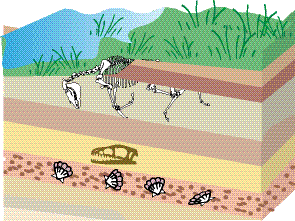
Lava that reaches the surface becomes an extrusion by cooling and solidifying. Will this layer be the oldest layer or the youngest layer?

a)

oldest layer

b)

youngest layer

3.

Analyze the seashell found in the white layer. Which statement is true of the rock layer that contains this fossil?

a)

The white layer could also contain a fossil from the top layer and the bottom layer

b)

The white layer is younger than the layers above it.

c)

The white layer is older than the layers above it.

d)

The white layer is older than the layers below it.

4.

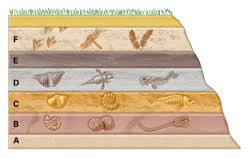
According to the Law of Superposition which letter represents the oldest layer?

a)

E

b)

D

c)

C

d)

B

e)

A

5.
Which rock layer in the diagram seems to be the oldest?
a)
F
b)
E
c)
B
d)
A
6.
According to the law of superposition, the oldest fossils are found 
a)
At the top of the rock layers
b)
Near the bottom of the rock layers
c)
In the middle of the rock layers
d)
Somewhat near the surface
7.
Which rock layer contains the newest fossils?
a)
F
b)
E
c)
B
d)
C
8.
Which fossil is relatively the oldest?
a)
Trilobite
b)
Ammonite
c)
Crinoid
d)
Gastropod
9.
Which of these rock layers is relatively the newest?
a)
Kaibab formation
b)
Zoraster Granite
c)
Redwall limestone
d)
Unkar group
10.
Which of the following orders the rock layers accurately from youngest to oldest?
a)
1, 2, 3, 4, 5
b)
5, 4, 3, 2, 1
c)
2, 3, 4, 5, 1
d)
1, 2, 3, 5, 4
11.
Which of the following orders the rock layers accurately from oldest to youngest?
a)
A, B, C, D, E, F, G, H
b)
B, F, G, C, D, H, A, E
c)
B, G, C, D, E, H, A, F
d)
F, A, H, E, D, C, G, B
12.
Which animal is the youngest in site 1?
a)
bird
b)
ammonite 
c)
shell
13.
An organism that no longer exists on Earth is called
a)
Decayed
b)
Evolved
c)
Extinct
d)
Preserved
14.
The Law of Superposition helps scientists to determine what?
a)
The absolute age of rock layers
b)
The age of fossils
c)
The relative age of rock layers
d)
the super powers of rocks
15.
Which of the following organisms formed last on Earth?
a)

Pliocene

b)

Archean

c)

Cambrian

d)

Triassic

16.

Which is the best index fossil?

a)
b)
c)
d)
17.
The top layer of sediments in a sedimentary rocks is...
a)
The newest and youngest layer.
b)
The oldest layer.
c)
The only layer that is made from pebbles.
d)
The second layer of sediments.
18.

What does the Law of Superposition state about sedimentary rock layers?

a)

The oldest layers are on the top, and the youngest are on the bottom.

b)

The youngest layers are on the top, and the oldest are on the bottom.

c)

All rock layers are of the same age.

d)

The age of rock layers cannot be determined.

19.

How does the Law of Superposition help scientists understand Earth's history?

a)

By showing that Earth is flat.

b)

By providing a method to determine the exact age of Earth.

c)

By helping to establish a relative timeline of events and formations.

d)

By proving that all rock layers were formed at the same time.