
 Worksheets
Chapter 9: Outbreak of Vietnam War
Total questions: 90
Worksheet time: 45mins
The Ho Chi Minh Trail was
a secret path which was used by the Viet Cong in Saigon.
a supply line for the Vietcong which ran through neutral countries.
the route that the Americans took when they left South Vietnam.
a supply line used by South Vietnam.
After the Vietnam War
South Vietnam stayed independent but communist.
both countries were reunited.
the Americans had to pay for most of the damage.
all of the above.
Where was the United States Navy allegedly attacked in 1964?
Gulf of Thailand
Gulf of Tonkin
Pearl Harbor
South China Sea
The United States experience in the Vietnam War supports the idea that the outcome of a war
is determined mainly be technological superiority.
is dependent on using the greatest number of soldiers.
is assured to countries dedicated to democratic ideals.
can be strongly affected by public opinion.
Which of the following was not a reason for the Vietnam War?
The Domino Theory
Containment
Gulf of Tonkin Incident
Vietnamization
In the ____________________, United States soldiers killed at least 450 women, children, and elderly men, shocking the American public.
My Lai Massacre
Attack on Sai Pan
Tet Offensive
Attack on Khe Sanh
Leading Vietnamese nationalist figure, supporting the Communist party
Ngo Dinh Diem
Ho Chi Minh
Viet Cong
Kent State University
President of the Republic of Vietnam, had US support, eventually would be overthrown
Ngo Dinh Diem
Viet Cong
Democratic Republic of Vietnam
Ho Chi Minh
If one country falls to communism, the countries around would also fall to communism
Vietnamization
Domino Theory
Tet Offensive
Democratic Republic of Vietnam
Ho Chi Minh declared Vietnam’s independence and established this
Tet Offensive
Viet Cong
Kent State University
Democratic Republic of Vietnam
The Vietnamese who fought against the U.S. and South Vietnamese troops
Democratic Republic of Vietnam
Ngo Dinh Diem
Viet Cong
Ho Chi Minh
1968, massive attack by the Viet Cong on major cities in South Vietnam; caused American public support of war to plummet
Operation Rolling Thunder
Gulf of Tonkin Resolution
Tet Offensive
Kent State University

Communist leader of North Vietnam

The ___, the belief that if one country fell to communism others would follow,
dominated US foreign policy for over twenty years.
counterculture
martial law
Domino Theory
Vietnamization

Guerilla fighters from North Vietnam who supported South Vietnamese troops
Guerilla fighters from South Vietnam who supported the North Vietnam cause


In Vietnam the fighters used an irregular warfare tactic that made it difficult for our soldiers to be successful...what was it called?

What country laid claim to the land area known as Indochina (now Vietnam) in the 1900s?
England
Japan
United States
France
One reason the USA was involved in the Vietnam War was to
prevent the spread of communism in Indochina
reduce French influence in Vietnam
stop china from seizing Vietnam
support the government of North Vietnam
The Vietnam War ended in a __________________?
cease-fire agreement
Vietnamese victory
U.S. victory
a nuclear bomb
What year did the US decided to withdraw its forces from Vietnam?
1965
1970
1973
1975
What was the Veit Cong's major offense on the veitnamise holiday .......
The Tet Offensive
The Tunnel Offensive
What kind of government did Ho Chi Minh establish?
Communism
Democracy
Socialism
Monarchy


Vietnamization was a policy advanced by Richard Nixon. What was its purpose?
to increase American forces in Vietnam
to decrease American forces in Vietnam
to increase friendly Chinese forces in Vietnam
to overwhelm the Viet Cong with U.S. forces

The physical conditions of Vietnam made fighting easy
True
False
Which U.S. president escalated the conflict in Vietnam by sending in the first ground troops in 1964?
John F. Kennedy
Lyndon B. Johnson
Dwight D. Eisenhower
Richard M. Nixon
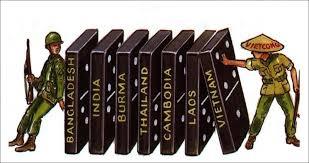
The idea that if South Vietnam fell to communism, other nations would soon follow...
Vietnamization
Communism
Domino Theory
Imperialism
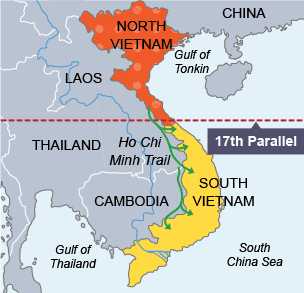

What decade did the Vietnam War mostly take place in?
1940s
1950s
1960s

What did the government of North Vietnam want?
Communism
Democracy
What did the government of South Vietnam want?
Communism
Democracy

What side did the United States fight on?
South Vietnam
North Vietnam

Who was a president during the war?
Lyndon Johnson
Franklin Roosevelt
Who won the War?
The United States
Vietnam
How the U.S. support the French in Vietnam?
They didn't.
Provided military and economic aid.
Ask Germany to step in to help the French.
True or False: North Vietnam wanted to unify itself with South Vietnam?
True
False
What was the National Liberation Front also known as?
Viet Cong
Red Soldiers
Nazis
True or False: Diem was a corrupt leader.
True
False

In the years after World War II, american presidents opposed the spread of communism in the world by supporting a policy called:
containment
isolation
colonialism

President Lyndon B. Johnson greatly increased U.S. troop strength in Vietnam in the years after Congress:
declared war on South Vietnam
passed the Tonkin Gulf Resolution
approved the Marshall Plan

U.S. warplanes carried out air strikes against targets in:
China
North Vietnam
Thailand

In 1975, two years after the last American troops left Vietnam,:
South Vietnam defeated the Viet Cong
the United Nations drew up a treaty ending the war
South Vietnam surrendered to North Vietnam

This country provided North Vietnam with war materials
United States
South Vietnam
Soviet Union

This country surrendered to the communists at the end of the war
South Vietnam
North Vietnam
United States

This country established the Ho Chi Minh Trail to supply the Viet Cong; later sent troops into South Vietnam
Vietnam
United States
North Vietnam

unpopular ruler of South Vietnam; the Viet Cong rebelled against him in 1957
Ho Chi Minh
Ngo Dinh Diem
Richard M. Nixon

the leader of North Vietnam during the war
Ho Chi Minh
Ngo Dinh Diem
William C. Westmoreland

announced the "Vietnamization" policy -- the training of South Vietnamese troops and withdrawal of American forces
Dwight D. Eisenhower
Richard M. Nixon
Lyndon B. Johnson

