Worksheets
Harnessing Human Energy
Total questions: 40
Worksheet time: 1hrs 20mins

Which statement best describes what Earth’s outer layer is like underneath the surface in the image?
Underneath both the soil and the ocean, Earth’s outer layer is made of sand and water.
Underneath both the soil and the ocean, Earth’s outer layer is made of hard, solid rock.
Underneath the soil, Earth’s outer layer is made of hard, solid rock. Underneath the ocean, Earth’s outer layer is made of sand.
Underneath the soil, Earth’s outer layer is made of water.

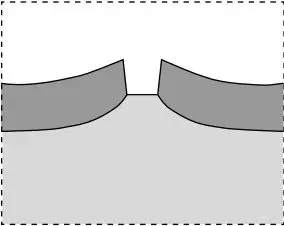
Dr. Raisa and her team of geologists have been studying GPS data that shows that two plates moved apart. Which diagram shows what happened between the two plates as they moved away from each other?
Diagram A: A new plate from underneath filled in the gap that was created by the plates moving apart.
Diagram B: Sand and dirt filled in the gap that was created by the plates moving apart.
Diagram C: Ocean water filled in the gap that was created by the plates moving apart.
Diagram D: Soft, solid rock from underneath the plates rose and hardened, adding solid rock to the edges of both plates.

Fossil remains of Lystrosaurus (an extinct four-legged animal) have been discovered in India and South Africa. When they were living, all the Lystrosaurus lived together on land, and they could not swim. However, now there is an ocean between the Lystrosaurus fossils. What could explain how these fossils got so far apart?
India and South Africa are parts of different plates. The plates slowly moved far apart as soft, solid rock from underneath got added to the edges of the plates over millions of years.
India and South Africa are parts of different plates. The plates floated away from each other across the ocean.
India and South Africa are parts of different plates. The plates slowly moved apart as new plates from underneath got added between them over millions of years.
India and South Africa are parts of different plates. The plates were sometimes pushed far apart by earthquakes, and soft, solid rock from underneath got added to the edges of the plates.

Scientists often study cross sections to better understand what the inside of something looks like. If we took a cross section of a potted plant by cutting it vertically, what would the cross section look like?
Diagram A
Diagram B
Diagram C
Diagram D

A team of geologists wants to study hard, solid rock under the surface of Earth. The team is considering drilling down in Saudi Arabia (1) or in the Arabian Sea (2). Where will the geologists find hard, solid rock?
neither under 1 nor 2, because there is sand and gravel under both places
neither under 1 nor 2, because there is water under both places
under 1 and 2, because Earth’s entire outer layer is made of hard, solid rock
only under 1, because Earth’s outer layer is made of hard, solid rock under continents but not under the ocean

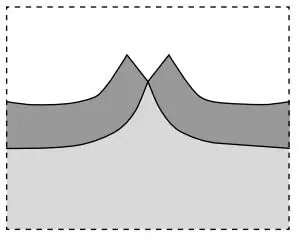
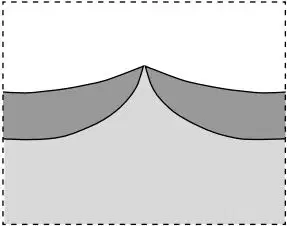
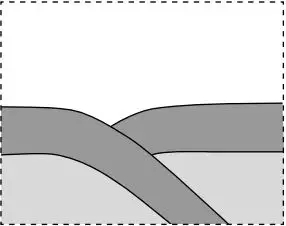
Dr. Patel and her team have been using GPS to track two plates that are moving toward each other. Which diagram shows what is happening at the place where the plates are moving toward each other?
Diagram A: Two plates are hitting each other, and the plates are breaking into pieces, creating sand.
Diagram B: Two plates are pushing against each other, causing the edges to bend upward.
Diagram C: One plate is going underneath the other plate and sinking into the soft rock below.
Diagram D: One plate is going underneath the other plate and sinking into the ocean below.

Similar rock formations have been discovered in Brazil and South Africa. These rock formations were formed at the same time and are made of the same types of rocks. What could explain how these rocks got so far apart?
Brazil and South Africa are parts of different plates. The plates were sometimes pushed far apart by earthquakes, and soft, solid rock from underneath got added to the edges of the plates.
Brazil and South Africa are parts of different plates. The plates floated away from each other across the ocean.
Brazil and South Africa are parts of different plates. The plates slowly moved apart as new plates from underneath got added between them over millions of years.
Brazil and South Africa are parts of different plates. The plates slowly moved far apart as soft, solid rock from underneath got added to the edges of the plates over millions of years.

Patterns on this map tell us that . . .
volcanic activity and earthquakes can cause damage to buildings and hurt people.
volcanic activity and earthquakes happened in similar areas.
volcanic activity and earthquakes happened in random locations all over the map.
volcanic activity and earthquakes happened in the following order: volcanic activity, earthquake, volcanic activity, earthquake, and so on.

Which statement best describes what Earth’s outer layer is like underneath the surface in the image?
Underneath the soil, Earth’s outer layer is made of water.
Underneath the soil, Earth’s outer layer is made of hard, solid rock. Underneath the ocean, Earth’s outer layer is made of sand.
Underneath both the soil and the ocean, Earth’s outer layer is made of hard, solid rock.
Underneath both the soil and the ocean, Earth’s outer layer is made of sand and water.

Dr. Bailey and his team are studying two plates that are far apart from each other. However, these two plates used to be next to each other. Which diagram shows what Dr. Bailey and his team would find between these plates?
Diagram A: Soft, solid rock from underneath the plates rose and hardened, adding solid rock to the edges of both plates.
Diagram B: A new plate from underneath filled in the gap that was created by the plates moving apart.
Diagram C: Sand and dirt filled in the gap that was created by the plates moving apart.
Diagram D: Ocean water filled in the gap that was created by the plates moving apart.

In the past, Africa used to be farther away from Europe than it is now (shown above). What could explain why Africa is closer to Europe now than it was before?
Africa and Europe are parts of different plates. The plates floated toward each other across the ocean.
Africa and Europe are parts of different plates. The plates were sometimes pushed toward each other by earthquakes, and one plate went under the other plate into soft, solid rock.
Africa and Europe are parts of different plates. The plates slowly moved toward each other over millions of years. When the plates hit each other, they broke into smaller pieces.
Africa and Europe are parts of different plates. The plates slowly moved toward each other as one plate went under the other plate into soft, solid rock over millions of years.

Scientists often study cross sections to better understand what the inside of something looks like. If we took a cross section of an apple by cutting it vertically, what would the cross section look like?
Diagram A
Diagram B
Diagram C
Diagram D

A team of engineers wants to study hard, solid rock under the surface of Earth. The team is considering drilling down in the Indian Ocean (1) and in Sri Lanka (2). Where will the team find hard, solid rock?
under 1 and 2, because Earth’s entire outer layer is made of hard, solid rock
only under 2, because Earth’s outer layer is made of hard, solid rock underneath continents but not under the ocean
neither under 1 nor 2, because there is water underneath both places
neither under 1 nor 2, because there is sand and gravel underneath both places

A team of researchers has been using GPS data to track two plates that are moving toward each other. Which diagram shows what is happening at the place where the plates are moving toward each other?
Diagram A: One plate is going underneath the other plate and sinking into the ocean below.
Diagram B: One plate is going underneath the other plate and sinking into the soft rock below.
Diagram C: Two plates are hitting each other, and the plates are breaking into pieces, creating sand.
Diagram D: Two plates are pushing against each other, causing the edges to bend upward.
Fossil remains of Cynognathus (an extinct large-bodied animal) have been discovered in Argentina and South Africa. When they were living, all the Cynognathus lived together on land, and they could not swim. However, now there is an ocean between the Cynognathus fossils. What could explain how these fossils got so far apart?
Argentina and South Africa are parts of different plates. The plates slowly moved apart as new plates from underneath got added between them over millions of years.
Argentina and South Africa are parts of different plates. The plates floated away from each other across the ocean.
Argentina and South Africa are parts of different plates. The plates slowly moved far apart as soft, solid rock from underneath got added to the edges of the plates over millions of years.
Argentina and South Africa are parts of different plates. The plates were sometimes pushed far apart by earthquakes, and soft, solid rock from underneath got added to the edges of the plates.

Patterns on this map tell us that . . .
volcanic activity and earthquakes happened in the following order: volcanic activity, earthquake, volcanic activity, earthquake, and so on.
volcanic activity and earthquakes happened in random locations all over the map.
volcanic activity and earthquakes can cause damage to buildings and hurt people.
volcanic activity and earthquakes happened in similar areas.
Earth's "outer" layer is made of
hard solid rock
soft solid rock
sediment
magma
Earths outer layer is divided into sections called
zones
plates
continents
countries

New plates are formed at the
Convergent Plate Boundary
Divergent Plate Boundary
Transform Fault
The plates of Earth's outer layer can
move very slowly
move very fast
not move at all
move to fast to measure
Earth's plates move on top of a soft, solid layer of rock called the
plate zone
diverging zone
converging zone
mantle

Plates are destroyed at
Convergant Plate Boundaries
Divergant Plate Boundaries
Transform Plate Boundaries
The reason the Mesosaurus fossils were found so far away from each other is because
they once swam across the ocean
they flew to the other continent
someone carried them to the other continent
there was a divergent plate boundary which pushed the land apart.
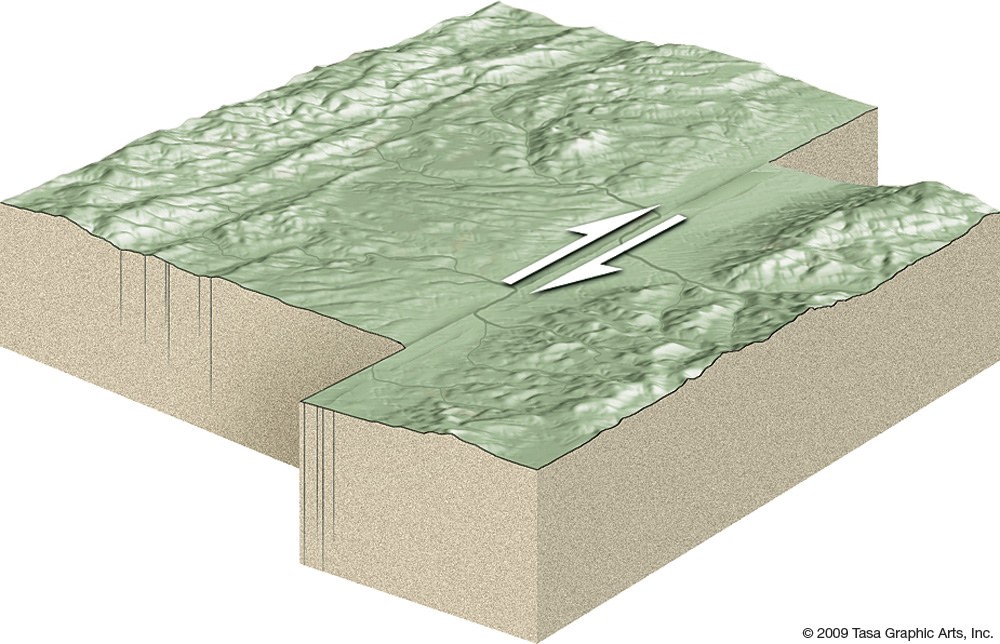
Transform?
Divergent?
Convergent?
Classic?
Mid-Ocean Ridge?
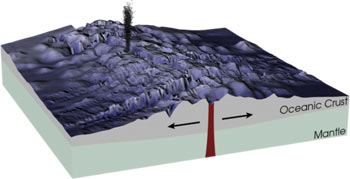
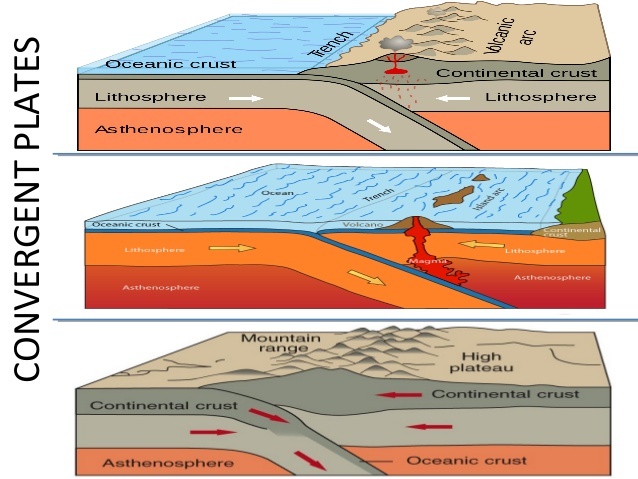
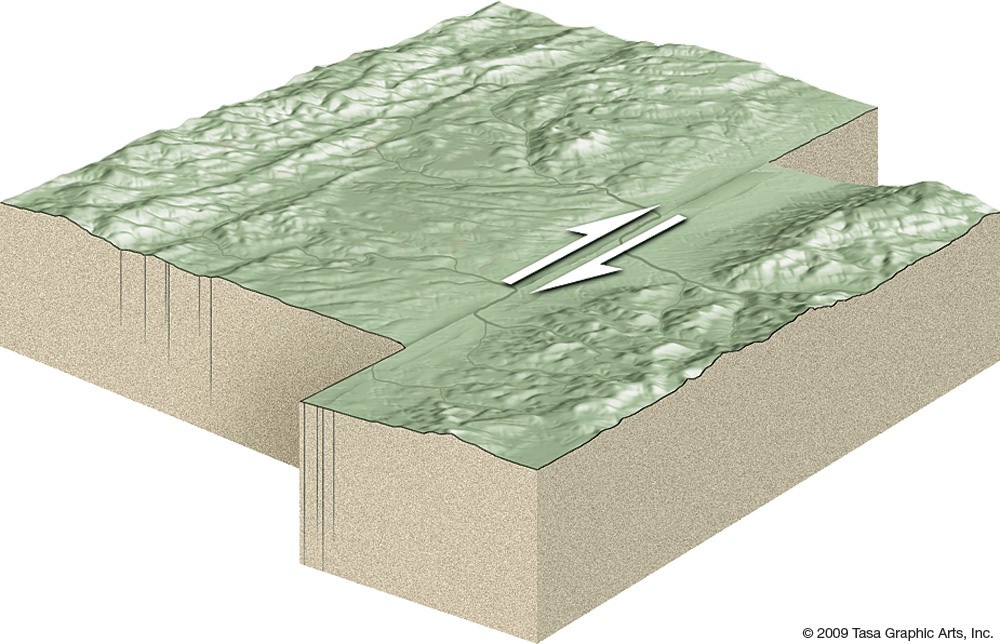
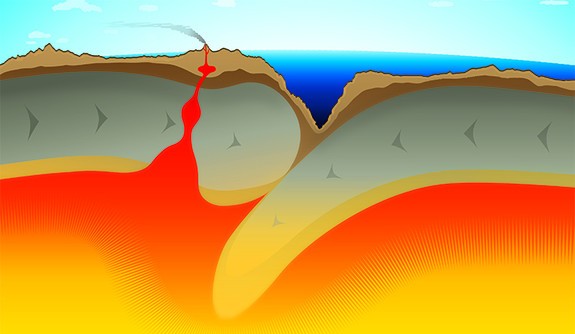
At which boundary do you find a trench?
Transform
Divergent
Convergent
Strike-Slip
Pattern
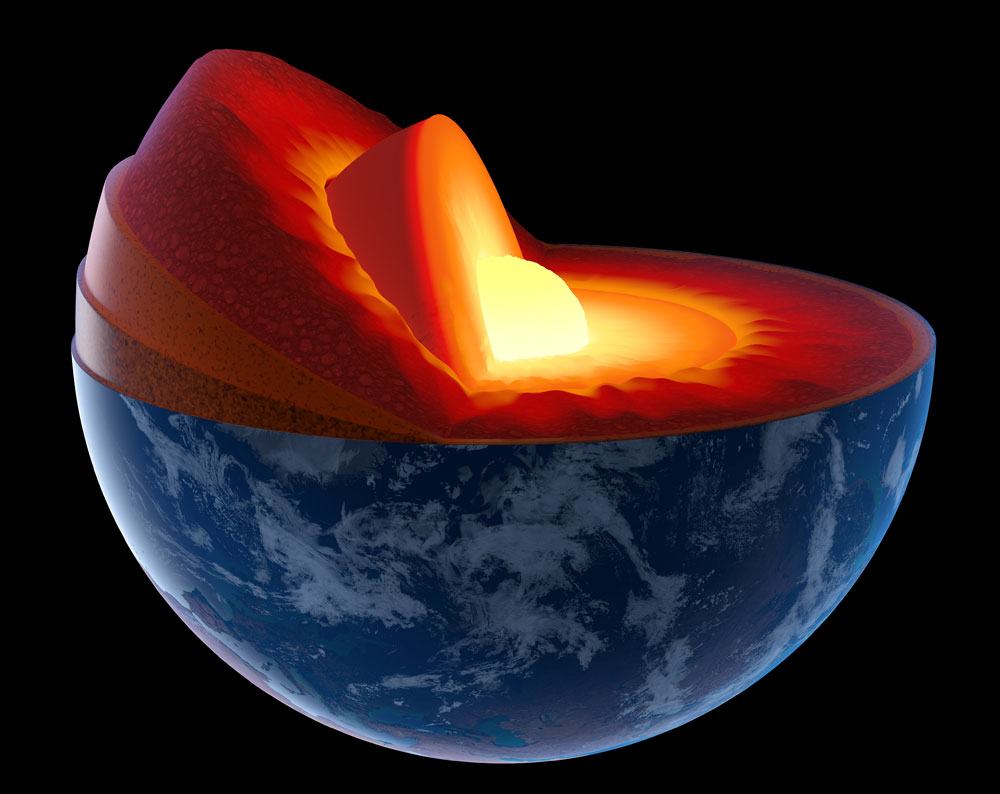
Earth’s outermost layer of hard, solid rock that is underneath the soil, vegetation, and water
a diagram that shows what the inside of something looks like
something we observe to be similar over and over again
the layer of soft, solid rock underneath Earth’s plates
Which area has the LEAST amount of earthquake activity?


Which Image(s) represent a convergent boundary? CHOOSE TWO


Which of the diagrams properly shows a Cross-Section?
Diagram A
Diagram B
Diagram C
Diagram D
Which statement did we discover to be true?
Plate motion causes earthquakes.
Earthquakes cause plate motion
Earthquakes are evidence that Earth's plates move.
true
false
Which one of the following is NOT evidence that Alfred Wegener used to support his idea of there once being a super continent called Pangea?
Fossils found on different continents
Shapes of the continents fitting together
Similar mountain ranges on different continents
He just wanted it to be true.
Most geologists rejected Wegener's idea of Continental Drift because _________.
He used too many pieces of evidence to support the idea.
He wanted to know what Earth looked like millions of years ago, which is impossible.
He couldn't identify what would cause continents to move around.
They were afraid of the new idea.
Wegener used the magnetic striping on the seafloor showing polar reversals as evidence to support his hypothesis of Continental Drift.
true
false
Wegener used evidence of convection currents in the mantle as evidence to support his hypothesis of Continental Drift.
true
false

The team is drilling underground at sites 1 and 2. Where will the team find hard, solid rock?
They will find hard, solid rock below site 1. At site 2, they will find water and sand.
They will find hard, solid rock below site 2. At site 1, they will find plants and soil.
They will find hard, solid rock below both sites.
They will find hard solid rock at neither of these sites; they will find water below both of them.
Which image best shows what the land is like where Mesosaurus fossils are found.


What is one way geologists determine where a plate boundary is located in real life?
By looking at a cross section of the Earth
By looking for a gap between plates
By looking at the distribution of earthquakes
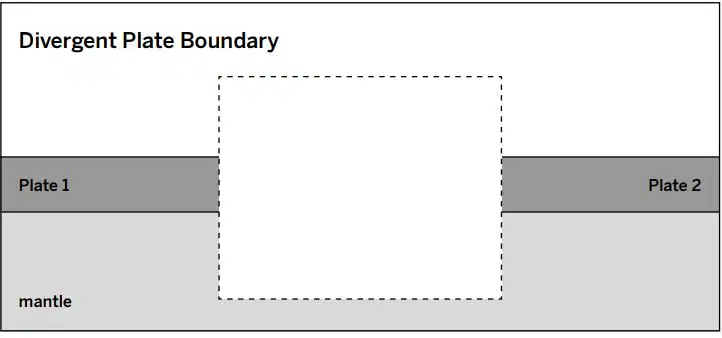
Which diagram represent the plate activity at a divergent boundary?