Wayground logo

Free Printable Worksheets

Font size

S
M
L
XL
Worksheets

Evolution Review

Total questions: 26

Worksheet time: 25mins

Name
Class
Date
1.
A change in a trait or characteristic that increases an organism’s ability to survive and reproduce.
a)
extinction
b)
natural selection
c)
adaptation
d)
choice
2.
The theory that organisms best adapted to their environment are more likely to survive and reproduce.
"Survival of the fittest."
a)
Natural selection
b)
Adaptation
c)
Extinction
d)
Fossil
3.
WHY is this variation is best for survival?
a)
longer claws for fighting
b)
longer legs for running faster
c)
bigger ears for better hearing
d)
fur color that blends in to it's environment
4.

How could a series of fossils show how a horse evolved over time?

a)

All the fossils would show varying levels of similar structures compared to modern horses.

b)

All the fossils would be found in the same place.

c)

All the fossils would be completely identical.

d)

All the fossils would be found in the same rock layer.

5.

During a freeze, most strawberry plants die. Why would some strawberry plants survive?

a)

The color of the strawberry helps maintain it's temperature.

b)

Some have larger leaves that protect the fruit.

c)

Some have genetic variations that cause them to be resistant to the cold.

d)

Some are able to reproduce more quickly than others.

6.

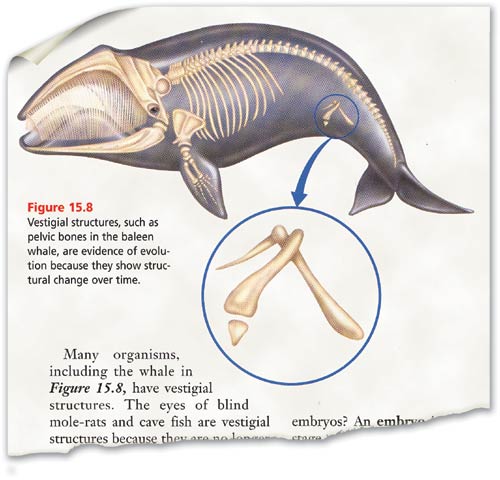
Wisdom teeth have no purpose and are often removed to make room for the other teeth. Wisdom teeth are

a)

homologous structures

b)

vestigial structures

c)

analogous structures

7.

Evolution means Change over (a)  

8.

Organisms with the Advantageous traits will

a)

Die and go extinct

b)

survive and reproduce

9.

Studying fossils helps helps us to see how things were____

a)

created over time

b)

formed over time

c)

evolved over time

10.
What is the cause for all variation within a population?
a)
Natural Selection
b)
Adaptation
c)
Mutation
d)
Environmental Changes
11.

Ten brown mice and ten white mice are placed in a desert (brown sand) environment. What will happen to the white population over time?

a)

It will increase

b)

It will decrease

c)

It will stay the same

d)

There is no way to tell

12.
Because of an environmental change, organisms develop mutations to survive in that environment.
a)
True
b)
False
13.
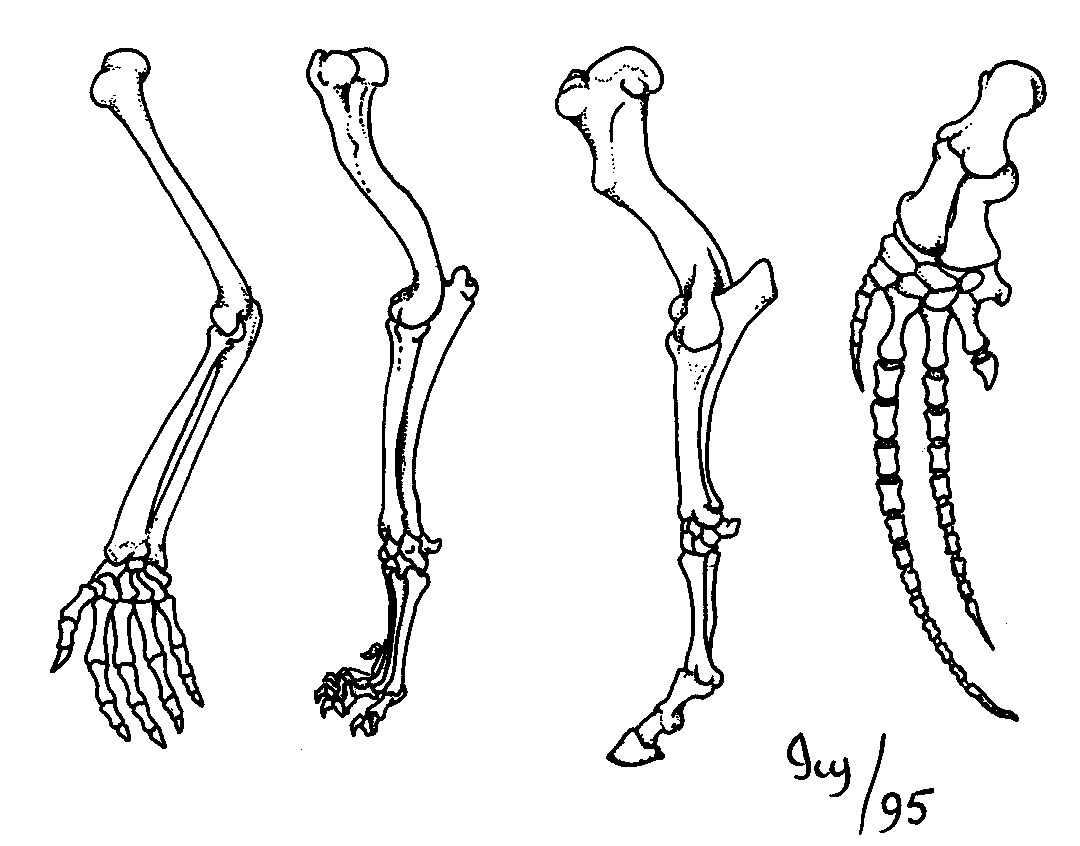
Humans, birds, whales, and lizards all have similar arm bones. What is the reason for this?
a)
The function of these bones is the same in all animals
b)
They live in similar environments
c)
They have a common ancestor
d)
All organisms resemble humans
14.
Individuals within a population can evolve.
a)
True
b)
False
15.
____________ believed that those organisms that were best suited for their environment would survive and pass on their beneficial traits to their offspring. 
a)
Darwin
b)
Lamarck
c)
Watson
d)
Mendel
16.

Structures with the same bone structure but different functions (jobs) suggest that organisms share a common ancestry. What are these structures called?

a)

vestigial structures

b)

homologous structures

c)

adaptive radiation

d)

fossil

17.
Which of the following is an example of a vestigial structure?
a)
the wings of a red-tailed hawk
b)
the hind limbs of a house cat
c)
the fins of sharks
d)
the tailbone of a human
18.

Two organisms that are closely related but not clones would have...

a)

very similar DNA sequences

b)

exactly the same DNA sequences

c)

no proteins in common

d)

completely different DNA sequences

19.

Which of the following are selection pressures in nature?

a)

Selective breeding by humans

b)

Available food

c)

classification of organisms

d)

Competition for mates

e)

Hot, dry climate

20.

When does natural selection happen the fastest in nature?

a)

when there is a large change to the environment

b)

when the species are most closely related to eachother

c)

when there are little to no mutations happening

d)

when there is very little genetic diversity

21.

In a cooling environment, which species will have the best chance for survival?

a)

the one with the smartest individuals

b)

the one with the smallest body size

c)

the one with the most genetic variation

d)

the one with the largest population

22.
Study of embryos of various organisms to show a common ancestor because of similarities in development
a)
natural selection
b)
embryology
c)
speciation
d)
evolution
23.
Some organisms that share a common ancestor have features that have different functions, but similar structures.  These are known as
a)
vestigial structures
b)
analogous structures
c)
homologous structures
d)
fossil structures
24.
How do fossils provide evidence that evolution has happened on Earth?
a)
Fossils show how the sizes of certain animals has changed drastically over millions of years
b)
Fossils show that some species have gone extinct
c)
Fossils show how life forms present today are different than those from the past
d)
Different sedimentary rock layers provide evidence for how the environment has changed over time
25.
The diagram illustrates an embryonic stage of two organisms.

Which of the following can be determined by observing the embryos shown in the diagram
a)
The organisms share a common ancestry.
b)
The organisms belong to the same genus.
c)
The organisms are native to the same geographic areas.
d)
The organisms will grow into anatomically similar adults.
26.

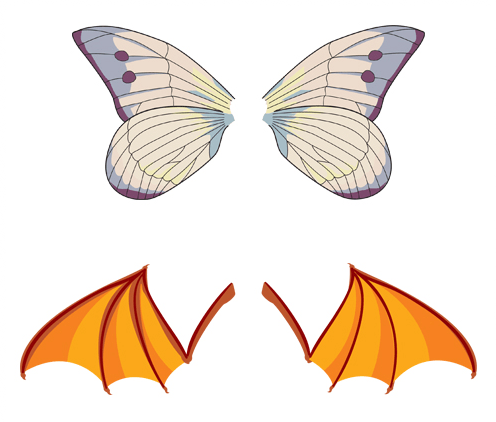
What is this an example of?

a)

Homologous structure

b)

Analogous structure

c)

Vestigial organs

d)

Functional adaption