
 Worksheets
NOCTI Culinary Arts Level 2 Knife Skills 4%: Cuts
Total questions: 87
Worksheet time: 44mins
What is the size of a Julienne cut?
2mm x 2mm x 2mm
2mm x 2mm x 5cm
1cm x 1cm x 5cm
2cm x 2cm x 5cm
Which cut is often used as a base for dicing into smaller cubes?
Chiffonade
Julienne
Batonnet
Allumette
What is the primary difference between a Brunoise and a Small Dice?
The shape
The cooking method
The size
The vegetables it is used on
Chiffonade is a technique most commonly used for:
Root vegetables
Leafy vegetables
Fruits
Meats
What is the size of a Medium Dice?
1/4 inch x 1/4 inch x 1/4 inch
1/2 inch x 1/2 inch x 1/2 inch
3/4 inch x 3/4 inch x 3/4 inch
1 inch x 1 inch x 1 inch
Which cut is similar in shape to Julienne but larger, often used for French fries?
Batonnet
Brunoise
Chiffonade
Allumette
The term "mince" is best described as:
Cutting into long, thin strips
Cutting into uniform square pieces
Cutting into very small pieces, finer than a dice
Rolling leafy vegetables and slicing them thinly
What is the size of a Large Dice?
1/2 inch x 1/2 inch x 1/2 inch
3/4 inch x 3/4 inch x 3/4 inch
1 inch x 1 inch x 1 inch
1.5 inches x 1.5 inches x 1.5 inches
Which of the following cuts is not a type of dice?
Brunoise
Julienne
Small Dice
Medium Dice
The Allumette cut is essentially a thinner version of which other cut?
Julienne
Batonnet
Brunoise
Large Dice
What is the primary use of the Chiffonade technique?
To create thin strips of leafy vegetables for garnishes
To dice vegetables for soups
To slice meats thinly for stir-fry
To prepare potatoes for frying
Which cut would be most appropriate for a mirepoix?
Julienne
Brunoise
Medium Dice
Chiffonade
The size of a Small Dice is:
1/4 inch x 1/4 inch x 1/4 inch
1/2 inch x 1/2 inch x 1/2 inch
3/4 inch x 3/4 inch x 3/4 inch
1 inch x 1 inch x 1 inch
Which cutting technique is primarily used for herbs and leafy vegetables to create ribbons?
Julienne
Chiffonade
Mince
Slice
What is the main purpose of the Batonnet cut before proceeding to other cuts?
To create a base for dicing into smaller cubes
To prepare vegetables for stir-fry
To garnish dishes
To prepare ingredients for stock

To cut food as small as possible into very fine pieces.
Mince
Chop
Pare
Slice
Which knife cut is thin, flat pieces
Julienne
Slice
Batonnet
Dice
Which cut resembles a thin ribbon and is used for leafy vegetables?
Batonnet
Julienne
Chiffonade
Allumette
What is the round cut for vegetables?
Rondelle
Julienne
Paysanne
Chiffonade
What cut is 1/8" x 1/8" by 2 1/2 length?
Julienne
Batonnet
Tournee
What cut is very small and in irregular pieces?
Dice
Brunoise
Mince
Which vegetable cut measures 1/4" by 1/4" by 2 1/2"?
Julienne
Batonnet
Brunoise
Which vegetable cut measures 1/8" by 1/8" and is made by turning a julienne and cutting the ends?
Brunoise
Batonnet
Dice
What vegetable cut is 1/4" cube?
Small Dice
Mince
Paysanne
What vegetable cut is a 1/2" cube?
Julienne
Medium Dice
Mince
What is a rule for cutting fruits and vegetables?
Chop in half to create a flat surface
Peel the skin off before cutting
Cut into cubes or slices
Boil the fruits and vegetables before cutting
What is the first step in creating small dice?
Cutting the item into manageable pieces
Squaring off the item
Topping and tailing the item
Peeling the vegetables
What is the size of the bata nay cut?
1 inch by 1 inch
1/2 inch by 1/2 inch
3/4 inch by 3/4 inch
1/4 inch by 1/4 inch
What is the purpose of the chiffonade technique?
To make large oblique cuts
To cut vegetables into julienne strips
To create thin matchstick cuts
To thinly slice tender leafy greens or herbs
What is the smallest size for the julienne cut?
1/8 inch
1/4 inch
1 inch
1/2 inch
What is the culinary name for the coin cut?
Brunoise
Half moon
Julienne
Rondelle
What is the recommended cook time for small dice?
Less than 30 minutes
Between 30 minutes and 1 hour
Between 1 and 3 hours
More than 3 hours
What is the recommended cook time for large dice?
Between 1 and 3 hours
Between 30 minutes and 1 hour
Less than 30 minutes
More than 3 hours
What is the size of a brunoise cut?
1/2 inch x 1/2 inch x 1/2 inch
1/4 inch x 1/4 inch x 1/4 inch
3/4 inch x 3/4 inch x 3/4 inch
1/8 inch x 1/8 inch x 1/8 inch
What is the size of a julienne cut?
1/4 inch x 1/4 inch x 1/4 inch
3/4 inch x 3/4 inch x 3/4 inch
1/8 inch x 1/8 inch x 1-2 inches
1/2 inch x 1/2 inch x 1/2 inch
What is the size of a small dice cut?
3/4 inch x 3/4 inch x 3/4 inch
1/4 inch x 1/4 inch x 1/4 inch
1/2 inch x 1/2 inch x 1/2 inch
1/8 inch x 1/8 inch x 1/8 inch
What is the size of a batonnet cut?
3/4 inch x 3/4 inch x 3/4 inch
1/2 inch x 1/2 inch x 1/2 inch
1/4 inch x 1/4 inch x 1/4 inch
1/8 inch x 1/8 inch x 1-2 inches
What is the technique used for oblique cut?
Cut on a diagonal, rolled 180, then cut same diagonal
Cut into stick-shaped pieces, approximately 1/8 inch x 1/8 inch x 1-2 inches
Cut into matchsticks shapes of ¼ inch x ¼ inch x 2 inches
Cut into cubes of 1/8 inch x 1/8 inch x 1/8 inch

what kind of cut is this?
dice
mince
strips
julienne

What kind of cut is this?
dice
mince
julienne
tiny cut

What kind of cut is this?
square
dice
clean
mince
Why is the hand-claw technique important when cutting?
Keeps fingers from cramping
Prevents strain on wrist
Keeps food sanitary
Guides food and prevents cuts
Similar to Julienne but larger
Brunoise
Diagonal
Battonnet
Tournee
Why is it important to cut foods into uniform shapes?
Improves flavors
Conserves nutrients
Ensure that the foods are safe to eat
Helps cooks food evenly
A Brunoise dice cut results from what other cutting technique?
Julienne
Batonnet
Rondelle
Chaffonade
What is the standard measurement for a Batonnet cut?
1/8"
1/4"
3/4"
1/2"
You can make a dice cut using which TWO techniques?
Rondelle and Julienne
Julienne and Batonnet
Batonnet and Brunoise
Julienne and Chaffonade

What type of cut is this?
Chiffonade
Julienne
Brunoise
Batonnet

What type of cut is shown?
Julienne
Brunoise
Batonnet
Rondelle

What type of cut is this?
Brunoise
Batonnet
Julienne
Dice (small)

What type of cut is this?
Round
Brunoise
Rondelle
Julienne
What are the 3 basic techniques used to cut food?
slicing, dicing, mincing
slicing, cutting, cubes
cutting, slicing, cut
slicing, mincing, trimming
Finely sliced or shredded leafy veggies is commonly made using what type of cutting technique?
Mincing
Rondelle
Chaffonade
Julienne
Mincing is commonly used for what type of food?
Spinach
Carrots
Shallots
Garlic
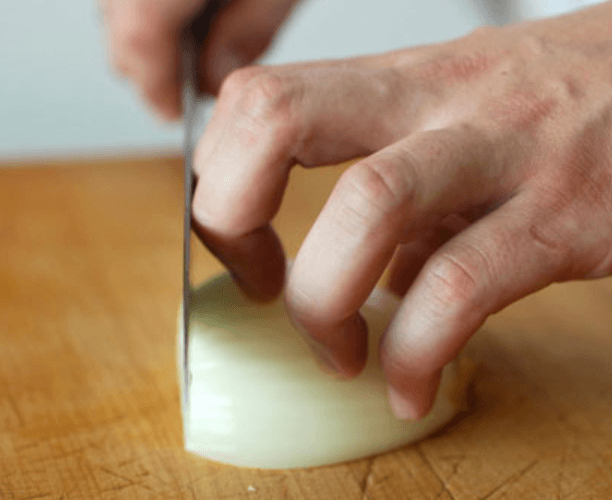
use the _________ technique to protect fingers while cutting foods.
Claw grip
flat fingers
Nuckle grip
Palm grip

True or false: a mince is smaller than a course chop.
True
False
What size is a minced food?
Large, irregular sized pieces
Medium, irregular sized pieces
Very small, irregular sized pieces
What types of food would a chiffonade cut be appropriate for?
Breads
Carrots
Meats
Herbs
Which knife is useful for cutting breads and pastries?
Utility knife
Serrated knife
Paring knife
Chef knife
A knife does a better job of cutting or slicing food when it is sharp?
True
False
What type of cut is this?
Chiffonade
Julienne
Dice
Mince

Finely sliced or shredded leafy veggies or herbs, especially basil, is commonly made using what type of cutting technique?
Mincing
Slicing
Chiffonade
Julienne


Which is the correct way to hold a knife?
#1
#2
#3
What is the difference between a large, medium, & small dice?
Type of vegetable being used
Type of knife being used
The measurements
Sharpness of the knife

Chopping and mincing can be used interchangeably in a recipe because they are the same type of cut.
True
False

What kind of cut is this?
Batonnette
Bruinoise
Rondelle
Juilenne

This cut is 1/8 in. x 1/8 in. x 1/8 in
Battonette
Brunoise
Juilenne
Rondelle

This is the smallest stick cut
Battonette
Juilenne
Brunoise
Rondelle

This cut is 1/4 in. x 1/4 in. x 2 1/2 - 3 in.
Batonnette
Bruniose
Juilenne
Rondelle
Which of the following is defined as being a cut that is 1/16 of an inch, squared
concasse
fine dice
fine brunoise
fine julienne
This cut is 1/8 in. x 1/8 in. x 1/8 in
Battonette
Brunoise
Juilenne
Rondelle
This is the smallest stick cut
Battonette
Juilenne
Brunoise
Rondelle
A Batonnet is a _________ shaped cut.
"french fry"
Cube
Very fine matchstick
Very fine cube

What cut is this?
Rondelle
Brunoise
Tourne
Batonnet

