
Font size
 Worksheets
Components of the Universe Vocab
Total questions: 24
Worksheet time: 13mins
What is a planet?
A huge system of millions or billions of stars, together with gas and dust held together by gravity.
A flat, disk-shaped galaxy with a central bulge and "arms" that extend outward.
A sphere-shaped object in space that orbits a star.
All of space and everything in it.
What is the Universe?
A sphere-shaped object in space that orbits a star.
A flat, disk-shaped galaxy with a central bulge and "arms" that extend outward.
A huge system of millions or billions of stars, together with gas and dust held together by gravity.
All of space and everything in it.
What is a galaxy?
A sphere-shaped object in space that orbits a star.
All of space and everything in it.
A flat, disk-shaped galaxy with a central bulge and "arms" that extend outward.
A huge system of millions or billions of stars, together with gas and dust held together by gravity.
What is a Spiral Galaxy?
A sphere-shaped object in space that orbits a star.
All of space and everything in it.
A huge system of millions or billions of stars, together with gas and dust held together by gravity.
A flat, disk-shaped galaxy with a central bulge and "arms" that extend outward.
What are the characteristics of a spiral galaxy?
A galaxy with no definite shape and very little structure.
A flat, disk-shaped galaxy with a central bulge and "arms" that extend outward.
A round galaxy with a highly concentrated center.
A galaxy that is almost entirely dark matter with no visible stars.
What is the most abundant type of galaxy that has a smooth, circular or oval shape?
Spiral Galaxy
Elliptical Galaxy
Irregular Galaxy
Lenticular Galaxy
What is an irregular galaxy?
A galaxy with a well-defined spiral shape.
A galaxy that is perfectly round.
A random, scattered type of galaxy that does not form a distinct shape or pattern.
A galaxy that only consists of old stars.
What does the term "Solar System" refer to?
A single star and all the celestial bodies that orbit it.
A collection of galaxies.
A type of galaxy with a distinct shape.
The region of space outside of our galaxy.
What is a star?
A planet with rings
A natural satellite
A huge burning sphere of gas fueled by nuclear fusion
A comet made of ice and dust
What is the name of the spiral shaped galaxy in which we live?
Andromeda Galaxy
Whirlpool Galaxy
Milky Way Galaxy
Triangulum Galaxy
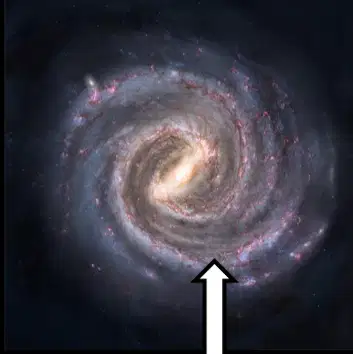
Where is our Solar System located?
In the Andromeda Galaxy
Near the edge of the Milky Way Galaxy
At the center of the Milky Way Galaxy
Outside of any galaxy
What is a light year?
The time it takes for light to travel in one year
A unit of time equal to one Earth year
A measurement of the distance light travels in one year
The distance between the Earth and the Sun
What is an asteroid?
A small, icy object that orbits the Sun and has a visible tail.
A large, rock-shaped object in space that orbits the Sun – smaller than a planet.
A celestial body that orbits the Earth and is visible by reflected sunlight.
A massive, glowing ball of gas that generates heat and light through nuclear fusion.
What is a comet?
A celestial body that orbits the Earth and is visible by reflected sunlight.
A massive, glowing ball of gas that generates heat and light through nuclear fusion.
A small, icy object that orbits the Sun and has a visible tail.
A large, rock-shaped object in space that orbits the Sun – smaller than a planet.
What are chunks of ice and dust traveling through space called?
Asteroid
Meteor
Comet
Meteorite
What is a rocky object that produces a streak of light in the sky as it enters Earth's atmosphere known as?
Comet
Meteorite
Asteroid
Meteor
What does EMS stand for in the context of the image?
Energy Management System
Electromagnetic Spectrum
Emission Monitoring Service
Electronic Messaging Service
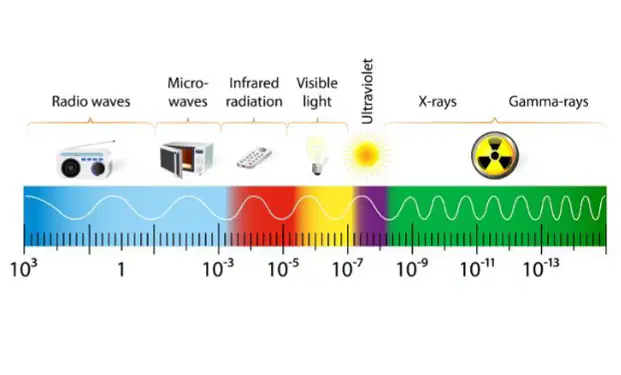
Which of the following is NOT shown in the electromagnetic spectrum diagram?
Radio waves
Infrared radiation
Sound waves
Gamma-rays
Hey there, space explorers! Scarlett, Ethan, and Charlotte are on a thrilling quest through the cosmos. They've just discovered that our Milky Way has a neighbor. Can you guess the name of the galaxy that is nearest to the Milky Way?
Andromeda Galaxy
Triangulum Galaxy
Magellanic Clouds
Whirlpool Galaxy
Which one is NOT considered a galaxy type?
Irregular
Spiral
Peculiar
Pelican
Galaxies are classified based on their --(8.8A)
size
color
shape
smell

What are shooting stars?
(a)

