
 Worksheets
Unit 8: Energy Resources Commonly Missed Questions
Total questions: 31
Worksheet time: 16mins
Name
Class
Date
1.
Which term can be defined as an energy resource that cannot be replenished naturally or near rate of consumption.
a)
Nondepletable Renewable Resource
b)
Nonrenewable Resource
c)
Depletable Resource
d)
Efficiency
2.
Which of the following is a depletable renewable resource?
a)
Biomass
b)
Wind
c)
Solar
d)
Geothermal
3.
True or False: As developing countries become more developed, their reliance on fossil fuels for energy increases.
a)
True
b)
False
4.
True or False: Availability, price, and governmental regulations influence which energy sources people use and how they use them.
a)
True
b)
False
5.
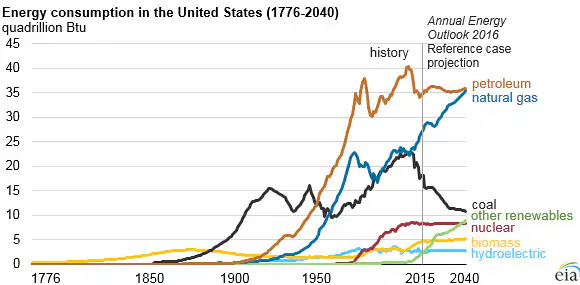
What energy source did not come into use until the 1950s?
a)
Hydroelectric
b)
Coal
c)
Nuclear
d)
Biomass
6.
Which of the following is the name for the best quality (energy dense) coal ?
a)
Lignite
b)
Peat
c)
Bituminous
d)
Anthracite
7.
Which term can be defined as the waste material leftover from valuable minerals being extracted from an ore?
a)
Reclamation
b)
Tailings
c)
Ore
d)
Peat
8.
Which of the following is NOT a negative consequence of coal mining?
a)
Increased Seismic Activity
b)
Releases pollution and GHGs
c)
Habitat destruction
d)
Acid mine drainage
9.
True or False: Coal is the most abundantly found fossil fuel.
a)
True
b)
False
10.
Which of the following is the largest aquatic oil spill in human history?
a)
Amoco Cadiz (1978)
b)
Bay of Campache (1979)
c)
Deepwater Horizon (2010)
d)
Exon Valdez (1989)
11.
True or False: All fossil fuels are hydrocarbons (CxHy)
a)
True
b)
False
12.
Coal typically formed when dead plant matter was submerged in swamp environments and subjected to the geological forces of heat and pressure over hundreds of millions of years. How do natural gas and oil form?
a)
In marine environments from algae and other microorganisms
b)
By the compression of volcanic gases over thousands of years.
c)
Through the fossilization of ancient terrestrial organisms in desert regions.
d)
By the decomposition of freshwater organisms in deciduous forest environments.
13.
What term can be defined as injecting a high-pressure fluid mixture (typically water, sand, and chemicals) into the rock formation to create fractures, which allows the oil or gas to flow more freely to the surface for extraction?
a)
Cracking
b)
Drilling
c)
Fracking
d)
Mining
14.
What is one of the tools we can use to find oil/ gas reserves?
a)
Fractional distillation
b)
Core Sampling
c)
Nuclear Fission
d)
Centrifuging
15.
Which is considered the "cleanest" fossil fuel?
a)
Petroleum Oil
b)
Natural gas
c)
Coal
d)
Nuclear
16.
Which country has the largest oil reserve?
a)
Saudi Arabia
b)
Iraq
c)
Canada
d)
Venezuela
17.
Which of the following was not a nuclear power plant disasters that we discussed?
a)
Hiroshima
b)
Three Mile Island
c)
Chernobyl
d)
Fukushima Daiichi
18.
What of the following is an advantage of nuclear energy?
a)
No air pollution/ GHG emissions
b)
Lower electricity cost to consumers
c)
Provides high paying jobs
d)
All of the above
19.
What term can be defined as the process of an element being broken down into a smaller element and radioactive particles?
a)
Nuclear fusion
b)
Nuclear division
c)
Nuclear fission
d)
Nuclear diffusion
20.
What is the currently accepted way to deal with nuclear waste from power plants?
a)
Volcanic disposal
b)
Launch into space
c)
Bury in deep underground tunnels
d)
Antarctic burial
21.
Which energy resource is derived from the heat in the interior of the earth?
a)
Hydrogen Fuel Cell
b)
Solar
c)
Hydroelectric
d)
Geothermal
22.
How does biomass reduce our carbon footprint by producing less CO2 than fossil fuels?
a)
Plants absorb the same amount of CO2 that is released when it is burned.
b)
Biomass filters CO2 to make it more environmentally stable.
c)
Plants remove CO2 from the atmosphere and put it permanently into the ground.
d)
Biomass doesn't release any CO2 when burned
23.
Which type of renewable energy does not require spinning a turbine?
a)
Hydroelectric
b)
Tidal
c)
Wind
d)
Solar
24.
What is the largest renewable source of electricity globally?
a)
Hydropower
b)
Biomass
c)
Solar
d)
Wind
25.
In what nation do 90% of its citizens use geothermal energy to heat their homes and businesses?
a)
Iceland
b)
Australia
c)
Hawaii
d)
Saudi Arabia
26.
Which of the following is NOT a disadvantage of biomass/ biofuels?
a)
Requires a large amount of land
b)
Can require the use of pesticides
c)
Can lead to deforestation
d)
Expensive energy source
27.
Which of the following is an advantage of using solar panels for energy?
a)
Solar panels last for a long time (25-30 years)
b)
Solar panels have great energy storage capacity.
c)
Solar panels are relatively low cost to install and build.
d)
Solar panels are able to utilized nearly anywhere on the globe.
28.
What is one potential drawback of wind energy in terms of its impact on wildlife?
a)
Increased air pollution
b)
Habitat destruction due to turbine installation
c)
Noise pollution damages hearing or scares away wildlife
d)
Bird and bat collisions with turbine blades
29.
Where would be best for us to install a windmill?
a)
In a densely populated urban area with tall buildings
b)
Near a forest with dense tree cover
c)
Offshore from the East Coast
d)
In a valley between two mountains
30.
Which of the following is the product (emission) of a hydrogen fuel cell car?
a)
Hydrogen
b)
Oxygen
c)
Water
d)
Carbon dioxide
31.
Which of the following is NOT a challenge for hydrogen fuel cell cars?
a)
H fuel stored in gas form in vehicles would require much larger tanks than current gasoline tanks
b)
Obtaining pure H gas for use because it doesn’t exist by itself as a gas naturally.
c)
Widespread H fuel cell use would require building widespread H distribution network (similar to current system for gasoline) and we currently don’t have this.
d)
Hydrogen fuel cell cars are currently not very energy efficient.
100 %

