wayground logo

Free Printable Worksheets

Font size

S
M
L
XL
Worksheets

Thermo Review #1

Total questions: 23

Worksheet time: 12mins
Name
Class
Date
1.
If 5.0 grams of a substance cools from 35.0°C to 22.6°C and loses 23.6 joules of heat, what is the specific heat of the substance?
a)
0.076 J/g°C
b)
0.24 J/g°C
c)
0.38 J/g°C
d)
0.62 J/g°C
2.
The same amount of heat is added to a 10-g sample of each of the following metals all at the same initial temperature. Which metal will experience the smallest temperature change? (specific heats are provided next to each metal)
a)
beryllium c=1.82 J/g°C
b)
calcium c=0.653 J/g°C
c)
copper c=0.385 J/g°C
d)
gold c=0.129 J/g°C
3.
1 cal = 4.184 J How much energy in joules is supplied by a breakfast bar containing 170 kcal?
a)
170 J
b)
711 J
c)
1.7x10^5 J
d)
7.11x10^5 J
4.
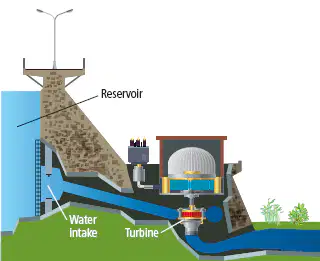
Before the water behind the dam is taken in through the water intake valve, what sort of useful energy does it possess?
a)
heat energy
b)
kinetic energy
c)
potential energy
d)
mass energy
5.
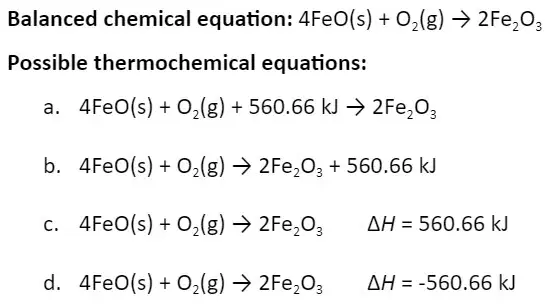
The chemical equation for the oxidation of iron(II) oxide is given below. This oxidation is an exothermic reaction with an enthalpy change of 560.66 kJ. Which of the thermochemical equations can be used to represent the enthalpy change for the given reaction? Select all that apply.
a)
a
b)
b
c)
c
d)
d
6.

The chemical equation for the oxidation of iron(II) oxide is given below. This oxidation is an exothermic reaction with an enthalpy change of 560.66 kJ. Calculate the amount of heat released when 3.8 moles of Fe₂O₃ are formed from the reaction. Answer with correct sig figs and units.

(a)  
7.
Heat is equal to the change in enthalpy
a)
when the temperature is constant.
b)
when the density is constant.
c)
when the specific heat is constant.
d)
when the pressure is constant.
8.
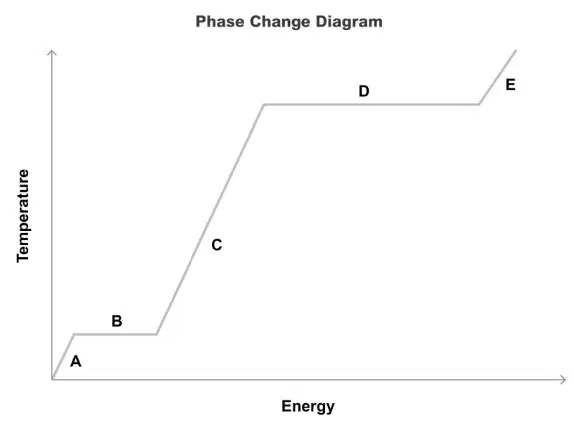
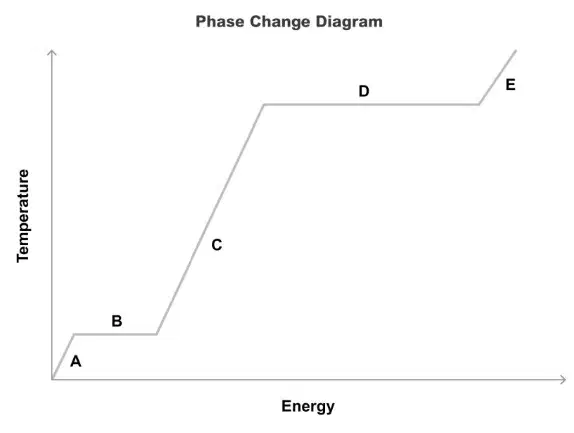
In the heating curve shown here, what process occurs at D?
a)
heating
b)
melting
c)
freezing
d)
evaporation
9.

In the heating curve shown here, identify a letter that represents the average kinetic energy increasing. (more than one possible answer but only one is required)

(a)  
10.
How much heat is required to melt 45.0 g of ice (M=18.0 g/mol, ΔHfus = 6.01 kJ/mol)?
a)
270 kJ
b)
7.49 kJ
c)
15.0 kJ
d)
0.416 kJ
11.
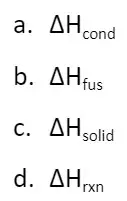
Which of these quantities is equal and opposite to the heat of vaporization for a substance?
a)
a
b)
b
c)
c
d)
d
12.
Which of the following statements is always true?
a)
Energy flows from hot to cold.
b)
Energy flows from cold to hot.
c)
Energy flows from the system to the surroundings.
d)
Energy flows from the surroundings to the system.
13.
What is the SI unit of heat?
a)
J
b)
kJ
c)
cal
d)
Cal
14.
Which equation would be used to determine the heat absorbed during a substance moving from a liquid state of matter to a gas?
a)
a
b)
b
c)
c
d)
d
15.
A student is trying to develop a model of an instant cold pack. What is the essential characteristic of the chemical reaction that the student should use to develop the cold pack?
a)
The standard enthalpy of reaction should be zero.
b)
The standard enthalpy of reaction should be negative.
c)
The standard enthalpy of reaction should be positive.
d)
The enthalpy of formation of products should be negative.
16.
Which two statements about the standard enthalpy of formation of a compound are true?
a)
It is calculated when all substances are in their gaseous states.
b)
It is calculated when all substances are in their respective states at STP.
c)
It is the enthalpy change that occurs to form 1 gram of the compound.
d)
It is the enthalpy change that occurs to form 1 mole of the compound.
17.
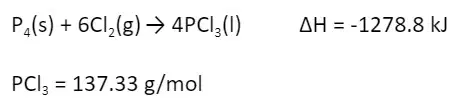
The thermochemical equation for the formation of PCl₃ from its constituent elements is shown. How much energy is released when 82.1 g of PCl₃ form?
a)
-65.4 kJ
b)
-191.1 kJ
c)
-223.2 kJ
d)
-261.7 kJ
18.
The assumption that the heat gained is equal to the heat lost in a calorimetry experiment is based on what concept?
a)
thermal expansion
b)
thermal compression
c)
thermal equilibrium
d)
thermal conductivity
19.
An element in its standard state has a heat of formation of 0 kJ/mol. What two conditions define standard state?
a)
0*C and 1 atmosphere
b)
25*C and 1 atmosphere
c)
100*C and 0 atmospheres
d)
32*F and 0 atmospheres
20.
Your fingers quickly begin to feel cold when you touch an ice cube. What important thermochemical principle does this change illustrate? Choose the best answer.
a)
the law of conservation of energy
b)
Hess's law of heat summation
c)
chemical bonds breaking when molecules collide
d)
the flow of energy from warmer to cooler objects
21.
Which of the following statements are true regarding Hess’s law of summation? Select both statements that apply.
a)
It allows you to indirectly determine the enthalpy of a reaction.
b)
It requires the use of at least one thermochemical equation.
c)
The enthalpy change for a reaction equals the sum of the enthalpy changes in each step of a reaction.
d)
It measures the enthalpy change caused by the dissolution of one mole of a substance.
22.
When reversing a reaction that originally has ΔH = -86 kJ, what change needs to be made to the ΔH value?
a)
Find its inverse.
b)
Multiply it by two.
c)
Make it positive.
d)
No changes are necessary.
23.

When 34.18 g of metal shavings at 60.3°C are quickly stirred into 40.00 g of water at 22.0°C in a calorimeter, the water's temperature rises to 24.0°C. The specific heat of water is 4.184 J/g°C. Find the specific heat of the metal (in J/g°C) to three decimal places. Only enter the number!

(a)