
 Worksheets
Government Topic 7 Test
Total questions: 20
Worksheet time: 10mins
In which courts are most cases in the United States heard?
federal courts
state courts
constitutional courts
special courts
Which types of federal courts were formed under Article III to exercise 'the judicial Power of the United States'?
constitutional courts
district courts
appeals courts
special courts
The Supreme Court exercises original jurisdiction in cases
appealed from a lower court
to which a State is a party
involving federal crimes
relating to copyright violations
Why do you think the Supreme Court justices meet in private to discuss cases?
To preserve the privacy of all parties to the case
To prevent onlookers from interrupting and influencing deliberations
To ensure that justices can speak their mind and be free from politics
To protect the secrecy of classified documents
Supreme Court justices write opinions on cases that they decide because
their reasoning will affect future decisions
their opinions are not always unanimous
they wish to provide a written record of the conferences
they wish to give credit to cases that influenced them
An independent judicial branch makes a society more democratic because
it interprets laws that are unclear
it protects the rights of individuals
it enforces laws related to elections
it deters citizens from breaking the law
Federal district court judges hear
mostly criminal cases, with an occasional civil case
criminal cases only
civil cases only
both criminal and civil cases
Which of the following statements is TRUE about the Trade Court?
court of first instance; constitutional court
trials heard en banc; first established in 1890
focuses on port cities; highly secretive
appeals go to Court of Appeals for the Federal Circuit; chief judge is from Supreme Court
Which statement about the United States Tax Court is TRUE?
The Treasury Department brings criminal cases to this court
Appeals to cases generated in this court go to the Supreme Court
Congress established this court using the same clause as the Court of Appeals for Veterans Claims
The Internal Revenue Service brings civil cases to this court
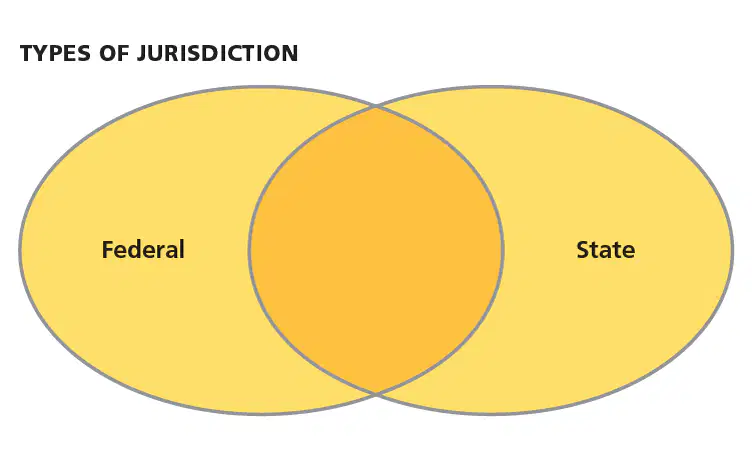
The type of jurisdiction shared by both Federal and State courts is known as
Appellate
Concurrent
Exclusive
Original
The excerpt is the basis for which tradition about federal judges’ terms? 'The Judges… shall hold their Offices during good Behaviour...'
Judges remain in office until appointing officials leave power
Good conduct requirements can lead to removal
Judges remain unless recalled by popular vote
Judges are appointed for life unless they resign, retire, or die

All of the following would fall under federal jurisdiction except a case in which
A citizens’ group challenges a U.S. land management policy
A Texas citizen appeals a ruling on State law made by a State court
New York charges a UN ambassador with a crime
A Florida man sues a Georgia car dealer over a car purchase
In the federal system, a district court has the power to
retry a case first decided by a State court
exercise original jurisdiction over a federal case
apply appellate jurisdiction to a federal case
determine if a lower court made an unconstitutional ruling
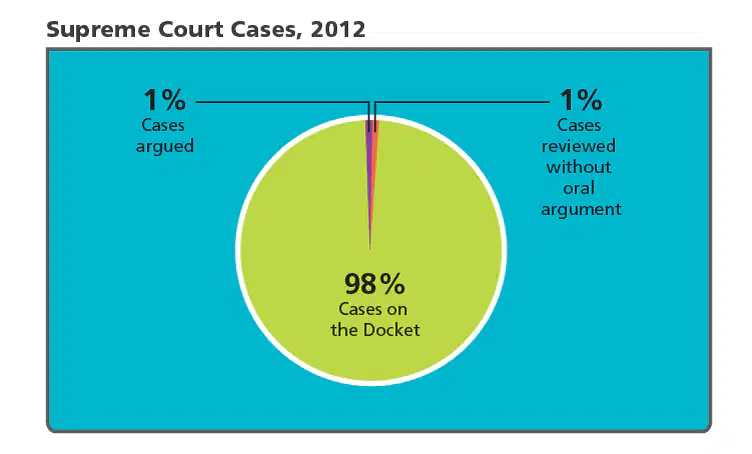
What conclusion can be drawn regarding cases appealed to the Supreme Court in 2012?
The Court accepted almost all cases brought to it
It ruled on only a handful due to constitutional focus
Many were appealed but only a few could be heard
It used three different ruling methods
In the federal court system, cases tried by district courts
are usually appealed by the losing side
make up the majority of federal cases
deal only with federal crimes
always involve the U.S. as plaintiff
Why did the Constitution provide for two separate court systems?
To keep federal courts from being overwhelmed
To establish federal courts as more powerful
To maintain balance between Federal Government & States
To strengthen balance between the three federal branches
A patent case heard for the first time is an example of
concurrent jurisdiction
exclusive jurisdiction
appellate jurisdiction
local jurisdiction
What is the difference between original and appellate jurisdiction?
Federal vs. State
Criminal/civil vs. civil only
Federal-or-State vs. federal-only
First hearing vs. review after lower court
How are federal judges selected?
President names & Senate confirms
President names & no confirmation needed
Publicly elected & Senate confirms
Senate nominates & President chooses

Choose the answer that best completes the chart about how a case gets to the Supreme Court.
Declares the law unconstitutional
Sends the case to Congress
Sends it back to the lower court
Passes the case to a higher court

