
 Worksheets
Unit 8: The World Wars
Total questions: 65
Worksheet time: 33mins
“Germany, Austria-Hungary, and Italy Form Triple Alliance”
“Serbian Nationalism Grows in Balkans”
“Archduke Franz Ferdinand Assassinated in Bosnia”
The events in these headlines contributed most directly to the
beginning of World War I
development of communist rule in Europe
outbreak of the Cold War
strengthening of European monarchies
What was the 'spark' that immediately led to the outbreak of World War I?
start of the civil war in Russia
sinking of the British liner, Lusitania
assassination of the heir to the throne of the Austro-Hungarian Empire
attack on Poland by the German army
“If I should die, think only this of me:
That there’s some corner of a foreign field
That is for ever England. There shall be
In that rich earth a richer dust concealed;
A dust whom England bore, shaped, made aware,
Gave, once, her flowers to love, her ways to roam,
A body of England’s, breathing English air,
Washed by the rivers, blest by suns of home. . . .”
— Rupert Brooke, “The Soldier”
Which idea is expressed in this excerpt from Brooke’s poem?
pacifism
neutrality
nationalism
anarchy
What role did alliances play in the outbreak of World War I?
They prevented the spread of communism
They encouraged economic cooperation between countries
They created a complex web of obligations that pulled countries into war
They helped maintain peace by creating a balance of power

What is this political cartoon arguing?
Zimmerman bombs were dangerous and unpredictable
Germany's plan to recruit Mexico in the Zimmerman Note backfired on them
the terms of the Treaty of Zimmerman were difficult for the German people to handle
The German military was ill equipped for the war
What was the Zimmermann Note?
The German policy of attacking all ships entering or leaving Britain
Wilson's speech concerning why the U.S should enter WWI
A proposal by Germany that Mexico attack the US in return for territory
a note left behind by a Serbian Nationalist in Austria-Hungary
Which of the following is the best example of imperialism?
France building a powerful navy
England's alliance with France
German schools teaching English
England and Germany competing for colonies
Which treaty ended World War I?
The Treaty of Paris
The Treaty of Versailles
The Armistice of Versailles
The Treaty of World Powers
What style of fighting came to dominate the Western Front in World War I?

What condition from the Treaty of Versailles is this map illustrating?
The new country of Belgium being created
Russian loss of land due to dropping out of the war
German loss of territory
Territories that were destroyed due to trench warfare

What do the two maps show?
Post-war decolonization
New countries created following World War I
NATO alliance
The German empire under Hitler
What was one major criticism of the Treaty of Versailles?
It failed to address the issue of colonialism adequately
It unfairly targeted Germany as the sole reason of the war
It effectively prevented any future conflicts in Europe
It provided compensation to all parties involved
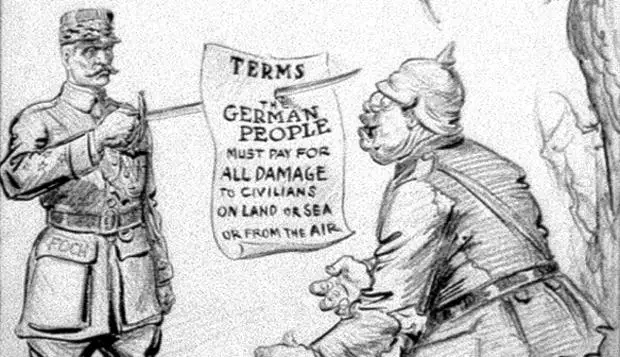
What term of the Treaty of Versailles does this political cartoon represent?
German demilitarization
German loss of territory
Germany paying war reparations
Germany accepting the War Guilt Clause

Japan began an aggressive policy of imperialism in the late 19th and early 20th centuries because Japan
needed raw materials for its factories
hoped to spread Shinto
sought Western technology
wanted revenge for the Opium Wars
"It took the Big Four just five hours and twenty five minutes here in Munich today to dispel the clouds of war and come to an agreement over the partition of Czechoslovakia. There is to be no European war, after all. There is to be peace, and the price of that peace is, roughly, the ceding by Czechoslovakia of the Sudeten territory to Herr Hitler's Germany. The German Führer gets what he wanted, only he has to wait a little longer for it. Not much longer though — only ten days. . . ."
The policy that France, Britain, and Italy chose to follow at this meeting is known as
appeasement
self-determination
liberation
pacification

Which policy did the "nursemaids" use to keep the "baby" quiet?
militarism
isolationism
imperialism
appeasement
"The National Socialist movement must strive to eliminate the disporportion between our population and our area." --Adolf Hitler, Mein Kampf The above passage is most closely connected with which of Hitler's goals?
anti-Semitism
creation of a totalitarian state
territorial expansion
suprression of communism
How did the conditions in Russia prior to the 20th century lead to support of a communist government?
The Czar's oppressive autocratic rule gave no political freedom to the people
A majority of the population lived a basic agricultural lifestyle in poverty
Russia's society was divided between a small noble class and a large lower class
All are correct
What was the main goal of the Bolsheviks during the Russian Revolution?
establish a constitutional monarchy
create a capitalist society
expand Russian imperialism across Europe
overthrow the Provisional Government and establish a socialist state
In 1922, after the Bolshevik Red Army won the Russian Civil War, what became the new name of Russia?
Russian Republic
Union of Russian Federation
Union of Soviet Socialist Republics
Russian Democratic Republic

Q. Which term indicated that Hitler wanted more "living space" in Europe?
Anschluss
Mare Nostrum
Lebensraum
Mein Kampf
Q. What two countries declared war on Germany after the invasion of Poland?
Britain and the Soviet Union
Britain and France
Britain and the United States
Italy and the Soviet Union
What impact did the Treaty of Versailles have on Germany?
it led to economic hardships and political instability
it caused Germany to lose the First World War
it destabilized the German monarchy, leading to the creation of the Weimar Republic
it caused great anti-German sentiment, resulting in the war guilt clause

After WWI, Japan attempted to solve some of its economic problems by
establishing extensive trade with the Soviet Union
expanding its influence in Asia
practicing the principles of Marxism
refusing to rely on Western technology
Which statement regarding the impact of geography on Japan is most accurate?
Large plains served as invasion routes for conquerors.
Arid deserts and mountains caused isolation from Asia.
Lack of natural resources led to a policy of imperialism.
Close proximity to Africa encouraged extensive trade with Egypt.

The image depicts which event in Germany?
Children joining the Hitler Youth after the rise of Nazism
The severe economic depression that caused widespread inflation and unemployment under the Weimar Republic
Rise of nationalism prior to World War I
Invasion of Poland
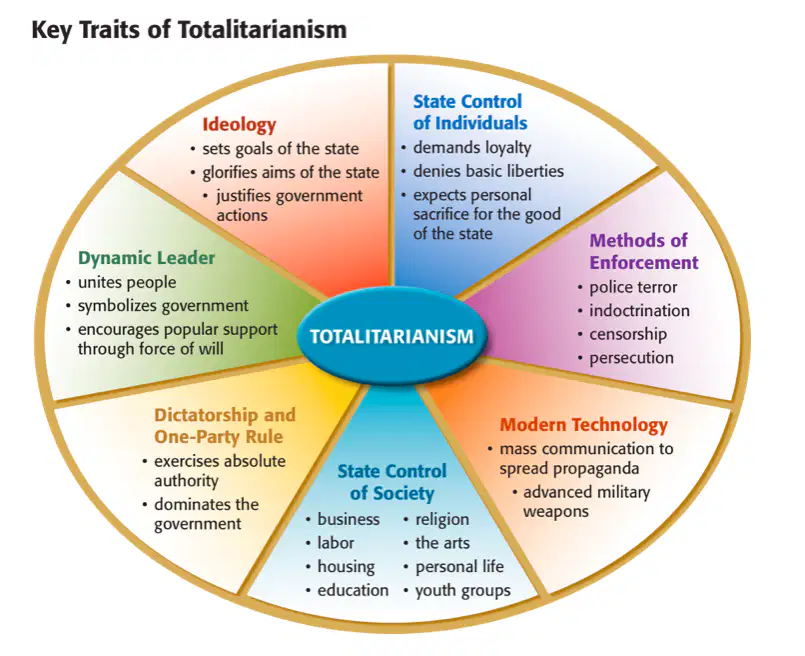
What allowed for the rise of totalitarianism in Post-World War I society?
Increased calls for capitalism
Demands for more freedoms such as women's suffrage
Feelings of bitterness/betray from the Treaty of Versailles along with the economic conditions
Desire for a revival in mercantilist policies
The term appeasement is best defined as
an attempt to avoid conflict by meeting the demands of an aggressor
a period of peace and prosperity, resulting in cultural achievement
a declaration of war between two or more nations
an agreement removing economic barriers between nations
“Mussolini Attacks Ethiopia”(1935)
“Germany Takes the Rhineland Back”(1936)
“Germany and Russia Divide Poland”(1939)
These headlines might be used to illustrate the weakness of the
United Nations
Congress of Vienna
Warsaw Pact
League of Nations
The Japanese attack on Pearl Harbor caused
Germany to enter the war
The United States to enter the war
Southeast Asia to fall to the Japanese
The European theater of war to become more important than fighting in the Pacific
Harry S. Truman authorized dropping the atomic bomb on Japan because
he wanted to see if it would work
he thought an invasion would kill too many U.S. troops
he was concerned that Japan also had an atomic bomb
he was afraid Spain would get to Japan first.
What does the term “blitzkrieg” mean?
lightning war
lightning fast
lightning speed
lightning bolt
In what way did the ending of World War II contribute to rising global tensions?
A. An armistice agreement was never reached due to the death of Franklin Roosevelt.
B. The German government refused to relinquish control to the victorious allied forces.
C. The use of the atomic bomb earned the United States a reputation as an aggressor.
D. A new struggle emerged between democratic and communist nations across the world.
What was the name for the secret project to build an atomic bomb?
Manhattan Project
Tuskegee Airben
Secret Boom
Normandy
What is the name of the Allied military strategy in the Pacific Ocean?
firebomb
island hopping
kamikaze
blitzkrieg
The purpose of the Nuremberg Trials was to
test the newly developed atomic bomb.
determine how the holocaust happened.
punish German leaders for war crimes.
remove the emperor of Japan from power.
The military conflicts of World War II ended in August 1945 when
the bombing of Hiroshima and Nagasaki prompted Japan’s unconditional surrender
Allied armies captured Berlin and divided Germany
Germany and Japan negotiated a settlement for “peace without victory
the International Military Tribunal for the Far East began hearing testimony in Tokyo

What was the significance of the D-Day Invasion (Operation Overlord)?
Germany invaded Russia trying to take land for lebensraum
Created a western front forcing Germany to fight a two-front war
Caused the turning point in the Pacific so Allied forces could begin regaining islands
Led to atrocities committed by the Japanese troops against Chinese citizens
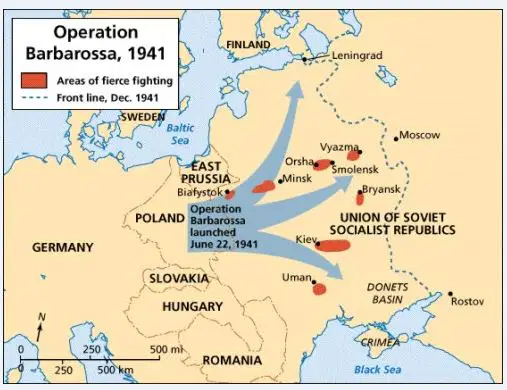
What was Operation Barbarossa?
The largest land & sea invasion in history that allowed for the Western front to open
Germany's invasion of the Soviet Union which ultimately failed
Germany's annexation of Austria
Germany's last counter-offensive of the war in Belgium
What is the name of the international organization established after WW2 to promote cooperation among nations & prevent another world war?
League of Nations
United Nations
World Health Organization
Federal Bureau of Investigation
What is the significance of the Battle of Stalingrad?
Resulted in a German victory and the Nazis kept pushing through the Soviet Union
Created a Western Front by the Allies
Turning point on the Eastern Front and the Soviets began pushing toward Germany
Demonstrated the failure of the Schlieffen Plan
What was the significance of the Battle of Britain?
It marked the first time Germany invaded British soil.
It convinced Hitler to abandon his plans for invading Britain.
It resulted in significant losses for the British Navy.
It led to the immediate surrender of Britain to Germany.
Why did the Big Three meet at the Yalta Conference?
Discuss post-war plans for Europe
Discuss post-war plans for Asia
Decide to invade through Italy
Create a plan to open a western front
a statement signed by President Franklin Roosevelt and Prime Minister Winston Churchill pledging that both the United States and Great Britain would work for a world free of aggression.
Fascism
Atlantic Charter
Executive Order 9066
Lend-Lease Act
Which of the following is a major reason the Holocaust is considered a unique event in modern history?
Hitler concealed his anti-Jewish feelings throughout the war
Civilians were rarely killed during the air raids on Great Britain
The genocide was planned in great detail and required the cooperation of many people
Jews have seldom been victims of persecution

What does this political cartoon represent?
Operation Barbarossa
Nazi-Soviet Non Aggression Pact
Creation of the Axis Powers
Lend-Lease Act
World War I had four MAIN causes known as
machine guns, artillery, investigations, nationalism
militarism, assassinations, imperialism, negotiations
mustard gas, assault rifles, intelligence reports, new technology
militarism, alliances, imperialism, nationalism
What was the importance of the Battle of Midway?
Turning point of the Pacific War in the favor of an American victory
Destroyed the entire Japanese fleet in the Pacific
Proved the Japanese military was superior to the Allied Powers
Marked the end of the war for the Japanese

