wayground logo

Free Printable Worksheets

Font size

S
M
L
XL
Worksheets

LEH Regents Review

Total questions: 200

Worksheet time: 5hrs 6mins
Name
Class
Date
1.
Proteins are composed of what smaller building blocks?
a)
amino acids
b)
nucleic acids
c)
fatty acids
d)
nucleotides
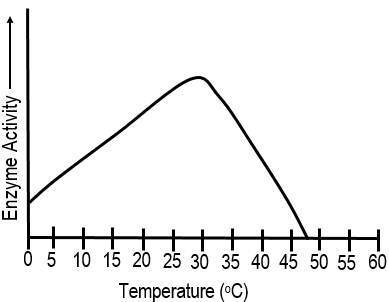
2.

Based on the graph, what is the optimum temperature for this enzyme? 

a)
15 C
b)
40 C
c)
30 C
3.
What happens when enzymes are heated to a high temperature?
a)
The enzymes die.
b)
The shapes of the enzyme are altered or denatured
c)
The enzymes' amino acid sequence changes.
d)
The enzymes remain the same
4.
Enzymes are
a)
nucleic acids
b)
proteins
c)
lipids
d)
carbohydrates
5.

Which is the strongest acid?

a)

ph of 1

b)

ph of 4

c)

ph of 7

d)

ph of 9

6.
DNA and RNA are two types of
a)
proteins
b)
lipids
c)
carbohydrates
d)
nucleic acids
7.

Which is the initial color of starch indicator solution?

a)

blue

b)

yellow/brownish orange

c)

amber

d)

blue-black

8.

In our diffusion lab, what happened to the “cell” that contained starch solution after 20 minutes?

a)

The contents of the dialysis tube turned blue-black.

b)

The liquid in the beaker would turn blue-black.

c)

The dialysis tube would burst.

d)

There would be no change.

9.

When a cell shrinks in size, what type of solution was added to it?

a)

Salt solution

b)

Tap water

c)

distilled water

d)

iodine solution

10.
Cell membranes are said to be selectively permeable. Which statement best explains what selectively permeable means?
a)
The cell membrane prevents any harmful substance from entering the cell.
b)
The cell membrane lets certain substances enter the cell and keeps certain substances out of the cell.
c)
The cell membrane allows only large molecules to diffuse into the cell.
d)
The cell membrane has pores that let only water and glucose into the cell and carbon dioxide out.
11.
Base your answer to the question on the diagram below and on your knowledge of biology. The diagram represents two solutions, A and B, separated by a selectively permeable membrane. Which statement best describes the outcome after 20 minutes?
a)
Solution A will contain approximately the same number of glucose molecules as solution B.
b)
Solution A will contain all of the water molecules.
c)
Solution B will remain unchanged.
d)
Solution B will lose all of the glucose molecules to solution A.
12.
The diagram below represents a cell in water.  Formulas of molecules that can move freely across the cell membrane are shown.  Some molecules are located inside the cell and others are in the water outside the cell.

Based on the distribution of these molecules, what would most likely happen after a period of time?
a)
The concentration of O2 will increase inside the cell.
b)
The concentration of CO2 will remain the same inside the cell.
c)
The concentration of O2 will remain the same outside the cell.
d)
The concentration of CO2 will decrease outside the cell.
13.
A substance is most likely to diffuse into a cell when
a)
it is a large organic food molecule such as protein or starch
b)
it is enclosed in an organelle such as a vacuole
c)
the concentration of the substance is greater outside the cell than inside
d)
the pH of the substance is greater than the pH of the cellListen
14.
The diagram below shows the relative concentration of molecules inside and outside of a cell.

Which statement best describes the general direction of diffusion across the membrane of this cell?
a)
Glucose would diffuse into the cell.
b)
Protein would diffuse out of the cell.
c)
Oxygen would diffuse into the cell.
d)
Carbon dioxide would diffuse out of the cell.
15.

If an DNA sequence reads AGGCTA then the mRNA sequence would read

a)

TCCGAT

b)

UGGCUA

c)

UCCGAU

16.

What is the total magnifications of a microscope on high power (40x) if the eyepiece is 10x?

a)

40x

b)

400x

c)

4000x

d)

4x

17.

What process requires energy?

a)

active transport

b)

osmosis

c)

diffusion

d)

passive transport

18.

creating large, complex molecules by combining smaller molecules is referred to as ____

a)

excretion

b)

transport

c)

synthesis

d)

homeostasis

19.

A solution with a pH of 9 is a(n) ___.

a)

Acid

b)

Base

20.

Organic compounds such as starch are too ___ to fit though the cell membrane. They must be digested into ___ before they can be absorbed

a)

Big

simple sugars

b)

Big

amino acids

c)

small

amino acids

d)

Big

fatty acids

21.

What term is used to describe the living components of an ecosystem?

a)

Abiotic

b)

Biotic

c)

aerobic

d)

anaerobic

22.

What occurs in the organelle that looks like this?

a)

Break down excess or worn-out cell parts.

b)

Helps process and package proteins and lipid molecules

c)

Production of Ribosomes

d)

Production of Energy

23.

What form is energy made in?

a)

ATP

usable

b)

Lithium

transportable

c)

Fat

storable

24.

What direction does a microscope turn the object you are viewing?

a)

Forward

b)

Inside out

c)

Backwards and upside down

d)

Sideways

25.

What is the substance the enzyme works on called?

a)

Substrate

b)

Product

c)

Active Site

d)

Complex

26.

Name the most important inorganic compound to living things…

a)

Carbon Dioxide

b)

Oxygen

c)

Glucose

d)

Water

27.

How should the control group be treated differently than the experimental group?

a)

The control group gets double the variable.

b)

Both groups should be exactly the same EXCEPT for the variable. The control group doesn’t get the variable.

c)

The control group gets half the variable.

28.

What term defines a cell without a nucleus?

a)

Dead

b)

Virus

c)

Prokaryote / prokaryotic

d)

Eukaryote /

eukaryotic

29.

A cell maintains life by undergoing ….

a)

Metabolic (life) functions

b)

Homeostasis

c)

Mitosis

d)

Budding

30.

What part of a plant cell allows them to make their own food?

a)

Chloroplast

b)

Golgi Body

c)

Rough Endoplasmic Reticulum

d)

Mitochondria

31.

What molecule has the instructions (blueprint) for the cell?

a)

ATP

b)

RTI

c)

DNA

32.

Name the building block of a starch

a)

Polysaccharide

b)

Monosaccharide

c)

Amino Acid

d)

Lipid

33.

If a segment of DNA is ATCGA what would its complement be?

a)

UAGCU

b)

TAGCT

34.

What organism is an ecosystem that would be most affected by a decrease in CO2?

a)

Bacteria

b)

Consumers

c)

Green Plants/Algae

d)

Humans

35.

Which biological process is represented in the diagram below?

a)

photosynthesis

b)

respiration

c)

digestion

d)

replication

36.

The diagram below shows specialized plant cells that control openings called stomates. The proper function of these cells is vital to the survival of the plant because they regulate the

a)

rate of glucose use by root cells

b)

absorption of sunlight by leaf cells

c)

products of photosynthesis in the stem

d)

exchange of gases in leaves

37.

Substance X directly supplies energy for various life functions, as shown in the diagram below. Which substance is represented by X in the diagram?

a)

ATP

b)

DNA

c)

starch

d)

glucose

38.
Which gas is removed from the atmosphere during photosynthesis?
a)
hydrogen
b)
oxygen
c)
nitrogen
d)
carbon dioxide
39.
Which organisms perform Photosynthesis?
a)
Only Autotrophs
b)
Only Heterotrophs
c)
Autotrophs and Heterotrophs
40.
Which of the following is the correct equation for PHOTOSYNTHESIS?
a)
CO+ light + H2O --> O+ Sugar
b)
CO+ sugar + H2O --> O+ light
c)
O2 + light + H2O --> CO+ Sugar
d)
CO+ O2 + H2O --> Light+ Sugar
41.
An individual eats a hamburger. Which two systems must interact to transfer the nutrients in the hamburger to human muscle tissue?  
a)
circulatory and respiratory
b)
digestive and circulatory
c)
digestive and immune
d)
 respiratory and excretory
42.
An individual walks out of his air-conditioned (75°F) home into the hot outside environment (85°F). His ability to adjust to this changing environment involves a mechanism similar to:  
a)
glucose production in the pancreas 
b)
using ATP for the diffusion of water
c)
the digestion of carbohydrates by enzymes 
d)
the regulation of water loss by guard cells in plant leaves
43.

Which sequence represents structures organized from MOST complex to LEAST complex?

a)

(1) cells → organ systems → organelles → organisms

b)

(2) organelles → cells → tissues → organs

c)

(3) tissues → organs → cells → organ systems

d)

(4) organs → tissues → cells → organelles

44.
molecules small enough to pass through the pores of cell membranes can passively leave the digestive system and enter the blood through what process?
a)
diffusion
b)
active transport
c)
photosynthesis
d)
cellular respiration
45.
When a person is exercising on a hot day, he or she sweats, helping to maintain homeostatic body temperature. This is an example of:
a)
organ system malfunction
b)
feedback
c)
fighting infection
d)
a disruption of homeostasis
46.

The movement of molecules from side A to side B is an example of the process of

a)

active transport

b)

chromatography

c)

cellular respiration

d)

diffusion

47.

Why are sexually reproducing organisms more likely to survive in a changing environment?

a)

they produce more offspring in each generation

b)

offspring are identical

c)

offspring have more variety

48.
Proteins are composed of what smaller building blocks?
a)
amino acids
b)
nucleic acids
c)
fatty acids
d)
nucleotides
49.

Doctors often use certain medications to treat infections. A few people have a reaction to some of these medications, such as itching, swelling, or trouble breathing. This is an example of

a)

using antibodies to cure a medical problem

b)

the body’s immune system overreacting to a usually harmless substance

c)

the body creating a mutation to fight unknown pathogens

d)

a vaccine causing the body to produce antigens against the infection

50.

A small lizard spends the morning hours lying in the sunlight until its body temperature rises. Later on in the day, the lizard rests in a shady area until its body temperature cools. This type of behavior is important to

a)

maintain homeostasis

b)

detect variations

c)

attract mates

d)

obtain nutrients

51.

It may be harmful when people compete to see who can hold their breath the longest under water. Without oxygen, brain cells

a)

cannot make enough ATP

b)

have too few mitochondria

c)

make too many enzymes

d)

have too much water

52.

Students did an experiment comparing the activity of four different enzymes, A, B, C, and D. The results are represented in the graph below. A valid conclusion based on the information in the graph is that

a)

the pH of some enzymes changes as the temperature changes

b)

enzymes change color in proportion to the rate of activity

c)

a difference in the pH of an environment changes enzyme activity

d)

enzyme activity causes acids to change into bases over time

53.

The diagram below represents changes that take place within the human body. The diagram represents

a)

cellular differentiation

b)

dynamic equilibrium

c)

gene interaction

d)

biological evolution

54.

Doctors sometimes use a vaccine to prepare the body to defend itself against future infections. These vaccines most often contain

a)

antibodies

b)

antibiotics

c)

white blood cells

d)

weakened pathogens

55.

Humans have an effect on ecosystems when they use native grasslands or forested areas for farming or urban use. One negative effect of these changes on the ecosystem is that there will be

a)

Less biodiversity

b)

More homes

c)

Successful economic growth

d)

Increased food production

56.

Based on this information, which ecosystem is likely to be the most stable?

a)

A

b)

B

c)

C

d)

D

57.

The organisms represented by X are

a)

Decomposes

b)

Producers

c)

Carnivores

d)

Scavengers

58.

Energy for this ecosystem originally comes from

a)

water

b)

consumers

c)

sunlight

d)

plants

59.

An environment can support only as many organisms as the available energy, minerals, and oxygen will allow. Which term is best described by this statement?

a)

biological feedback

b)

carrying capacity

c)

homeostatic control

d)

biological diversity

60.

Which sequence shows increasing complexity of levels of ecological organization?

a)

biosphere, ecosystem, population, community,

b)

population, biosphere, community, ecosystem

c)

population, community, ecosystem, biosphere

d)

ecosystem, population, biosphere, community

61.

Great horned owls and red-tailed hawks have similar requirements for food, space, and nesting materials. What would most likely be the result of great horned owls and red-tailed hawks living in the same community?

a)

ecological succession

b)

competition

c)

habitat destruction

d)

parasitism

62.

Which organisms are not shown in this diagram but are essential to a balanced ecosystem?

a)

heterotrophs

b)

autotrophs

c)

producers

d)

decomposers

63.

Organisms that can make their own food are called

a)

consumers

b)

heterotrophs

c)

detrivores

d)

autotrophs

64.

Which of these is an abiotic factor?

a)

Bacteria

b)

Sunlight

c)

Worms

d)

Algae

65.
All of the living and nonliving things in an area that interact with each other are called a/an ______.
a)
community
b)
habitat
c)
population
d)
ecosystem
66.
The living part of an ecosystem
a)
Biotic
b)
Abiotic
c)
Mother Earth
d)
Flowers
67.
Examples of a producer
a)
frog
b)
algae
c)
worm
d)
mouse
68.
What is a herbivore?
a)
an animal that gets energy from eating other animals
b)
an organism that gets energy from eating only plants
c)
an animal that gets energy by eating both plants and other animals
d)
an animal that eats only herbs
69.
The shrew provides energy for the _______?
a)
cricket
b)
grasshopper
c)
frog
d)
snake
70.
What is this called?
a)
Food Web
b)
Food Chain
c)
Abiotic Factors
71.
What is this called?
a)
Food Web
b)
Food Chain
c)
Abiotic Factors
72.
An animal that eats other animals is a....
a)
carnivore
b)
omnivore
c)
herbivore
d)
decomposer
73.
Another name for a consumer is a
a)
heterotroph
b)
autotroph
c)
producer
d)
plant
74.
The image provided is an example of a:
a)
Producer
b)
Heterotroph
c)
Consumer
d)
Decomposer
75.
The study of how living things interact in an environment is called
a)
Ecosystem
b)
Biology
c)
Ecology
76.
a relationship between two in which one species, the predator, feeds on the other species, the prey
a)
chemosynthesis
b)
predation
c)
cellular respiration 
d)
commensalism
77.
An organism that is killed and eaten by another organism
a)
Predator
b)
Prey
c)
Competition
d)
Adaptation
78.

What happens if a population grows past its carrying capacity?

a)

The population keeps growing

b)

The population starts to die off

c)

The entire species will go extinct

d)

The carrying capacity just increases

79.
Which is 1?
a)
ribosome
b)
nucleus
c)
mitochondria
d)
cell membrane
80.
Which does photosynthesis?
a)
a
b)
b
c)
c
d)
d
81.

Do all systems work together to keep you in a state of homeostasis?

a)

True

b)

False

c)

Both true and false

d)

Some work together and some do not

82.

What three main systems are interacting to allow you to walk around?

a)

Endocrine & Nervous & Skeletal

b)

Nervous & Muscle & Skeletal

c)

Muscle & Endocrine & Leg

d)

Skeletal & Endocrine & Muscle

83.

What two systems are interacting when your body is digesting food, and spreading nutrients around your body?

a)

Digestion & Circulatory

b)

Respiratory & Digestion

c)

Circulatory & Respiratory

d)

Nervous & Respiratory

84.

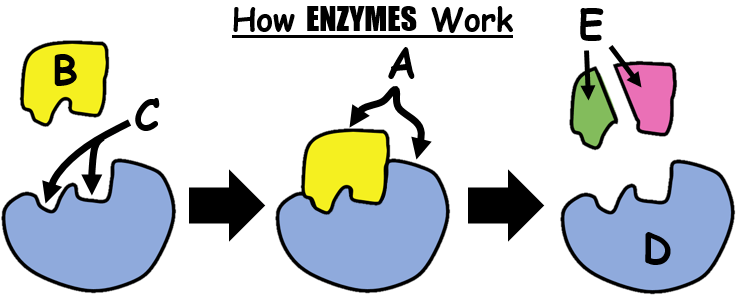
What is letter C pointing to?

a)

active site

b)

enzyme

c)

substrate

d)

products

85.
Which of the following conclusions can be drawn from this graph?
a)
The optimum pH of the enzyme is 6.6.
b)
The optimum pH of the enzyme is 5.8
c)
The enzyme’s activity increases as pH increases 5.0 to 9.0
d)
The enzyme’s activity is greater around pH of 8.0 .
86.
A microscope is an instrument that.
a)
makes faraway objects look closer.
b)
makes small objects appear larger.
c)
decreases the size of small objects.
d)
increases the size of small objects.
87.
If your teacher asks you to move a microscope to table, how do you carry it?
a)
by the body tube and the eyepiece
b)
with one hand
c)
one hand on the arm and the other under the base
d)
with one hand on the base and the other on the eyepiece.
88.
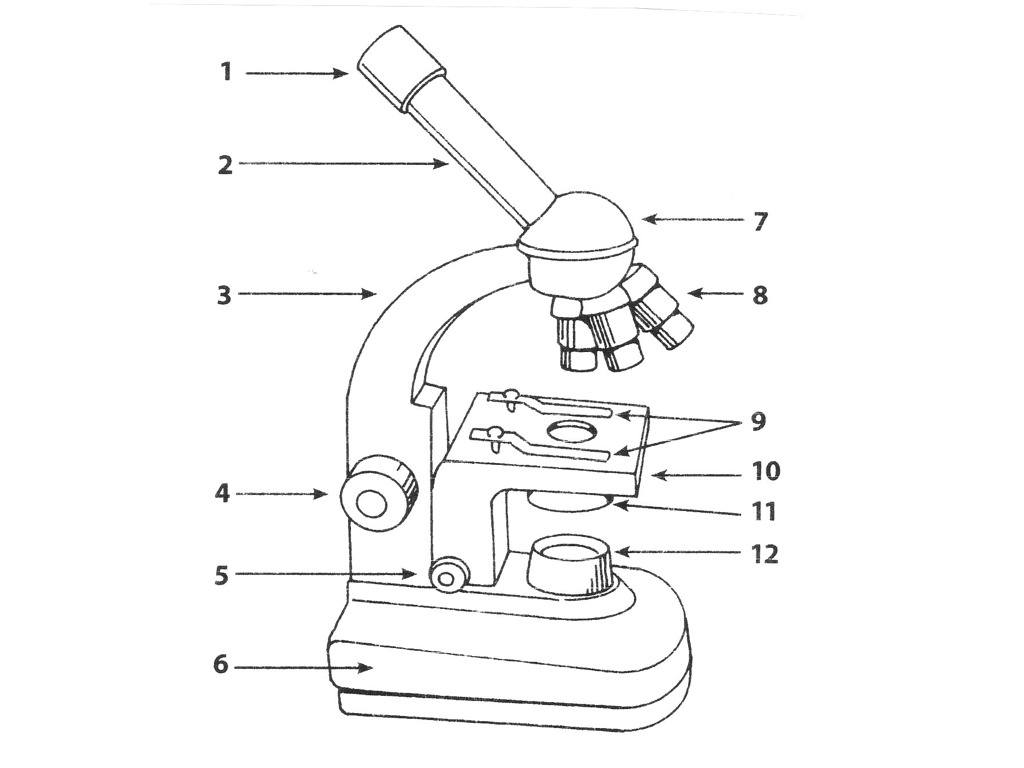
What is part 1?
a)

occular

b)
body tube
c)
arm
d)
coarse adjust
89.
What part is 3?
a)
eye piece
b)
base
c)
arm 
d)
coarse adjust
90.
What is part 11?
a)
coarse adjustment
b)
fine adjustment
c)
diaphragm
d)
stage
91.
What is part 6?
a)

Diaphragm

b)
base
c)
body tube
d)
illuminator
92.

Moves stage up and down for focusing; locates the specimen

a)

Coarse Adjustment Knob

b)

Large Focus Knob

c)

Course Focus Knob

d)

Small Focus Knob

93.
What will be the total magnification if ocular lens is 10X and objective lens is 4X?
a)
4X
b)
40X
c)
10X
d)
100X
94.
What will be the total magnification if the ocular lens is 10X and the objective lens is 40X?
a)
40X
b)
10X
c)
100X
d)
400X
95.

Label the part of the microscope. What is part E?

a)

stage

b)

stage clips

c)

focus knob

d)

eyepiece tube

96.

The lab microscopes (not the research microscopes) we used in class had three ________________ which allows different amounts of magnification.

a)

detail

b)

magnification

c)

objectives

d)

body

97.
Part 13
a)
Fine Adjustment Knob
b)
Course Adjustment Knob
c)
Stage
d)
Diaphragm
98.

If you get hurt or injured in any way, you should

a)

tell your teacher immediately

b)

find bandages or a first aid kit

c)

go to the principal's office

d)

get help after you finish the lab

99.

If your glassware is chipped or broken, you should

a)

use it for only solid materials

b)

give it to your teacher

c)

put it back in the materials area

d)

increase the damage so that it is obvious

100.

If electrical equipment has a cord or plug that appears damaged, you should

a)

unplug the equipment by pulling on the cord

b)

let the cord hang over the side of a counter or table

c)

tell your teacher about the problem immediately

d)

wrap tape around the cord to repair it

101.

When working with materials that might fly into the air and get into your eyes or someone else's eyes, you should wear

a)

goggles

b)

an apron

c)

gloves

d)

a hat

102.

Before doing experiments involving a heat source, you should know the location of the

a)

door

b)

windows

c)

fire extinguisher

d)

overhead lights

103.

When working with a flame or heat source, you should

a)

tie back long hair that hangs in front of your eyes

b)

heat substances or objects inside a closed container

c)

touch an object with your bare hand and see how hot it is

d)

throw hot objects into the trash when you are done with them

104.

Goofing around in the lab is acceptable

a)

True

b)

False

105.
The parts of the experiment that must be kept the same.
a)
Constants
b)

Independent variable

c)

Dependent variable

d)

Conclusion

106.

Maya designed an experiment to answer the following question:

How does the amount of water given to a lima

bean seed affect how tall it grows?

In this experiment, what variable should Maya CHANGE?

a)

the amount of water

b)

the kind of plant

c)

the type of soil

d)

the amount of sunlight it gets

107.

Esther became interested in insulation while her parent’s new house was being built. She decided to determine which insulation transferred the least heat. She filled each of 5 jars half-full with water.

She sealed each jar with a plastic lid.Then she wrapped each jar with a different kind of insulation. She put the jars outside in the direct sunlight. Later, she measured the temperature of the water in each jar. What is the independent variable?

a)

The type of insulation

b)

The temperature of the water

c)

Number of houses

d)

The amount of sunlight

108.

Why is the placebo effect used?

a)

To compare results between the real medicine and placebo

b)

To make new medicine

c)

To train doctors

d)

To make food

109.
How many variables should you change in an experiment?
a)
none
b)

only 1

c)
2 or more
d)
depends on the type of experiment
110.

The type of variable that responds to the experiment and is what you measure or count to determine if your hypothesis is true.

a)
Independent
b)
Dependent
c)
Control
111.

Thomas tests different types of liquids to see which will grow his plants the most. He has water, soda, milk, and no liquid at all. What is the control group?

a)

the one with water

b)

the one with soda

c)

the one with milk

d)

the one with no liquid

112.
Three baseball players investigate to see who can throw a baseball the farthest. They mark off an area on the playground for their investigation. Which should they keep constant?
a)
height of the players
b)
color of the balls thrown
c)
order in which the players throw
d)
spot from which the players throw
113.
Dory set up an experiment to see how the mass of a ball affects the distance it rolls off a ramp. What is the dependent variable?
a)
distance traveled by the ball
b)
height of the ramp
c)
mass of the ball
d)
ball type
114.

A scientist hypothesizes that the temperature at which an alligator's egg is incubated will determine whether the alligator will be male or female. The independent variable is

a)
the male alligators
b)
the incubator
c)
the gender of the alligator
d)
the temperature
115.
In this graph, what is the dependent variable? 
a)
Walla Walla Island
b)
Time
c)
Number of Deer
116.

Homeostasis mechanisms...

a)

keep everything exactly the same.

b)

usually operate by positive feedback systems.

c)

act to keep the internal environmental conditions outside the normal range

d)

is the ability to maintain a relatively stable internal environment

117.

This feedback system amplifies a change until a desired outcome is reached.

a)

positive feedback system

b)

negative feedback system

c)

neutral feedback system

d)

self-monitoring feedback system

118.
Every living organism is made up of one or more cells
a)
True
b)
False
119.
A cell is...
a)
the basic unit of structure and function in living organism
b)
an organism
c)
a basic part of everything that we see
d)
found only in animals, not plants
120.
Which of the following are NOT found in animal cells
a)
chloroplasts and cytoplasm
b)
chloroplasts and cell wall
c)
cell wall and cell membrane
d)
mitochondria and nucleus
121.
The nucleus is like the ____________ of the cell.
a)
foot
b)
hand
c)
stomach
d)
brain
122.

Which of the following converts food into energy for the cell?

a)

vacuole

b)

mitochondria

c)

cytoplasm

d)

cell membrane

123.

The fluid that surrounds the organelles is... (hint... "Try to pull a fast one and..."

a)

chloroplast

b)

cytoplasm

c)

vacuole

d)

cell wall

124.
What do vacuoles do? 
a)
They actually do not have an important role
b)
They protect the cell
c)
They are the brain of the cell
d)
storage area for cells; water storage in plants 
125.
If you were some bad guy trying to sneak into an animal cell, who would be there to stop you?
a)
nucleus
b)
mitochondria
c)
cell membrane
d)
cell wall
126.
Which of the following, found ONLY in plant cells, provides structure?
a)
cell wall
b)
chloroplast
c)
mitochondria
d)
vacuole
127.

Which of the following equations represents the overall chemical reaction for photosynthesis?

a)

6O2+ 6H2O → C6H12O6+ 6O2

b)

C6H12O6 + 6H2O→ 6O2+ 6O2

c)

6CO2+ 6H2O→ C6H12O6+ 6O2

d)

6O2 + 6H2O→ C6H12O6 + 6CO2

128.

The rate of photosynthesis can be influenced by...

a)

Temperature

b)

Carbon dioxide levels

c)

Light intensity

d)

Oxygen concentration

129.

Temperatures that are too high can slow photosynthesis because

a)

stomata stay open

b)

enzymes are ruined

c)

there is not enough CO2

d)

there is too much water

130.

Only heterotrophs use respiration.

a)

true

b)

false

131.

Only autotrophs use photosynthesis but both autotrophs and heterotrophs use respiration.

a)

true

b)

false

132.

The main purpose for the process cellular respiration is ATP.

a)

true

b)

false

133.

What are the products of cellular respiration? Choose 3.

a)

water

b)

ATP

c)

Oxygen

d)

Sunlight

e)

Carbon Dioxide

134.

During cellular respiration, energy is released from food. What else does the cell need for this process to take place.

a)

carbon dioxide

b)

oxygen

c)

sunlight

d)

nitrogen

135.

A version of a gene is called a(n)

a)

allele

b)

characteristic

c)

specific gene

d)

trait

136.

A trait that is expressed if one copy of the allele is present is a(n)

a)

characteristic

b)

dominant trait

c)

gene

d)

recessive trait

137.

An organism’s genetic makeup; the pair of alleles for a trait is called a(n)

a)

dominant trait

b)

genotype

c)

phenotype

d)

recessive trait

138.

An organism’s physical expression of a trait is called a(n)

a)

dominant trait

b)

genotype

c)

phenotype

d)

recessive trait

139.

What is it called when both alleles in a genotype are the same?

a)

Dominance

b)

Heterozygous

c)

Homozygous

d)

Recessiveness

140.

What is it called when the alleles in a genotype are different?

a)

Dominance

b)

Heterozygous

c)

Homozygous

d)

Recessiveness

141.

Which pair of alleles is an example of homozygous recessive?

a)

bb

b)

BB

c)

Bb

142.

Which pair of alleles is an example of homozygous dominant?

a)

tt

b)

TT

c)

Tt

143.

Which pair of alleles is an example of heterozygous alleles?

a)

ll

b)

LL

c)

Ll

144.
the passing of genetic traits from parent to offspring.
a)
heredity
b)
trait
c)
gene
d)
allele
145.

This is the practice of producing a genetically identical cell or organism

a)

Cloning

b)

Gel Electrophoresis

c)

Genetic Engineering

d)

DNA Fingerprinting

146.
A lab technique used in crime fighting to prove a suspects innocence or guilt is known as:
a)
genetic engineering
b)
PCR
c)
electrophoresis
d)
gene therapy
147.
What is recombinant DNA?
a)
Adding DNA from one organism into the DNA of another
b)
DNA which has been changed over generations by natural selection
c)
DNA that causes genetic disorders
d)
DNA that has been sequenced
148.

Why is Dolly the sheep considered a clone?

a)

the source of Dolly's DNA is a single cell taken from an adult donor

b)

the DNA molecules in each of Dolly's cells are different

c)

Dolly has a mix of genes from her foster mother and the sheep that donated a nucleus of one of its cells

d)

Dolly is genetically identical to her offspring

149.
Another name for GMO (Genetically Modified Organsim) is ____________.
a)
Transgenic
b)
Transplanted
c)
Transducted
d)
Plasmid
150.
True or False: Gel electrophoresis allow scientist to compare DNA of different individuals.
a)
True
b)
False
151.

Which suspect left the blood stain?

a)

Bob

b)

Sue

c)

John

d)

Lisa

152.

The process that has been used for centruries to create purebred animals such as black labs is called

a)

recombinant DNA

b)

cloning

c)

selective breeding

153.

The insertion of a gene of interest into a bacterial DNA loop is called

a)

recombinant DNA

b)

insertion technique

c)

mutation propagation

154.

The chemical molecule that is the basic genetic material found in all cells.

a)

DNA

b)

GMO

c)

Hybrid

d)

Protein

155.

Which of the following is the process of using technology to create or modify living things?

a)

Biotechnology

b)

GMO

c)

Pest resistant crops

d)

Transpiration

156.

Plants that have been genetically modified so that certain insects are toxic to it.

a)

GMO

b)

Pest resistant crops

c)

Biotechnology

d)

I don't know

157.

GMO stands for

a)

Genetically Modeled Organisms

b)

Genetically Modified Organism

c)

I have no idea

158.
When an organism completely dies out, it is called.....
a)
Adaption
b)
Extinction
c)
Fossilization
d)
Mutation
159.
In the graph shown, how many species of lizards seem to have beneficial adaptations?
a)
1
b)
2
c)
3
d)
4
160.

What is the term for the variety of life in a particular habitat or ecosystem?

a)

species diversity

b)

habitat diversity

c)

ecosystem diversity

d)

biodiversity

161.

What is the term for a group of organisms of the same species that live in the same area?

a)

population

b)

tribe

c)

community

d)

herd

162.

What is an ecosystem?

a)

A collection of plants in a garden.

b)

A single organism living in its natural habitat.

c)

A community of living organisms and their interactions with the non-living components of their environment.

d)

A group of animals living together in a zoo.

163.

What is ecology?

a)

The study of ancient civilizations.

b)

The study of human behavior.

c)

The scientific study of the relationships between organisms and their environment.

d)

The study of rocks and minerals.

164.
Between starch, glucose, water, and starch indicator, which could NOT pass through an artificial membrane in our lab, because its particles were too big?
a)
starch
b)
glucose
c)
water
d)
starch indicator
165.
When was this viewed?
a)
After distilled (pure) water was added
b)
after salt water was added
166.
When was this viewed?
a)
After distilled (pure) water was added.
b)
After salt water was added
167.
At this stage of the experiment, have either starch or starch indicator passed (noticeably) though the dialysis tubing?
a)
yes, both
b)
yes, starch only
c)
yes, starch indicator only
d)
no
168.
what does the amber coloring of the fluid indicate?
a)
glucose has passed through membrane
b)
starch has passed through membrane
c)
it proves NO glucose passed through membrane
d)
it proves NO starch has passed through membrane
169.
What does the blue black coloring inside the artificial cell indicate?
a)
starch indicator passed through dialysis membrane
b)
glucose indicator passed through dialysis membrane
c)
glucose had a chemical reaction with starch
d)
someone spilled ink in their "cell"
170.
What is the purpose of adding a biological stain to these cheek cells before viewing?
a)
to cause diffusion to occur 
b)
to shrink the cell
c)
to make everything darker and easier to view
d)
to increase magnification
171.
this coverslip is being lowered over the specimen (which is in a few drop of water) at a 45 degree angle. What is the importance of this angle?
a)

it decreases air bubbles

b)
no importance
c)
it will make the specimen more focused
d)
it will make the specimen darker and easier to view
172.
Why could many students squeeze a clothespin more times in a minute after exercising? 
a)
heart beating faster delivers more glucose and oxygen to muscle cells
b)
you do better when you're tired
173.
Exercise causes your heart and lungs to work faster. Which organ systems does this most directly involve, and which process is sped up?
a)
circulatory and digestive; photosynthesis
b)
nervous and endocrine; active transport
c)
respiratory and skeletal; diffusion
d)
circulatory and respiratory; (cellular) respiratory
174.
what is a possible disadvantage to humans if deforestation continues, as represented by the fictional plant "Botana curus"
a)
loss of future sources of medicine or food
b)
loss of income for the logging industry
c)
loss of sources of renewable energy
175.
Which gives more accurate information regarding relationships between species?
a)
structural evidence
b)
molecular evidence
176.
which was NOT a test we performed on Botana curus and species X, Y and Z?
a)
gel electrophoresis
b)
paper chromatography
c)
pH indicator
d)
test for enzyme M
177.
what does a paper chromatography do?
a)
compares DNA of various organisms
b)
tells whether a particular enzyme is present
c)
separates substances in a liquid compound
d)
gives a view of cross section of stems
178.
Which amino acid is coded for by the codon GUG?
a)
val
b)
ile
c)
gly
d)
phe
179.
Which amino acid is coded for by the codon that is formed by basepairing with the DNA code TCG?
a)
ser
b)
ile
c)
val
d)
phe
180.
What codons are formed by transcription of the following DNA code: TAG GTC AAA CAC CGT
a)
TAG GTC AAA CAC CGT
b)
ATC CAG TTT CTC GCA
c)
AUC CAG UUU GUG GCA
181.
What is this equipment used for?
a)
paper chromatography
b)
gel electrophoresis
c)
test for enzyme m
d)
pH test
182.
What is a gel electrophoresis used for?
a)
separate compounds in a liquid mixture
b)
compare DNA samples
c)
test for the presence of an enzyme
183.
according to this, which species is the closet relative of botana curus (green)?
a)
species x (red)
b)
species z (yellow)
c)
species y (blue)
184.
which would be least likely to coexist on an island with the large tree finch.
a)
vegetarian finch
b)
small ground finch
c)
woodpecker finch
d)
cactus finch
185.
what was the selecting agent that caused finches to evolve into a number of individual species from a single ancestral species.
a)
available food on individual islands
b)
mating preferences
c)
adaptation to environmental toxins
d)
weath
186.
What cuts DNA into fragments in Gel Electrophoresis (the same molecule is used in gene splicing).
a)
restriction enzymes
b)
the hormone thyroxine
c)
the protein melanin
d)
an antioxidant
187.
•What molecule is needed to start cellular respiration and fermentation?
a)
glucose
b)
oxygen
188.
This is the manipulated variable, or the variable you control.
a)
Independent
b)
Dependent
c)
Control
d)
Constant
189.
This is the responding variable, or the variable you observe or measure. 
a)
Independent
b)
Dependent
c)
Control
d)
Constant
190.
This group in an experiment that does not receive the independent variable.
a)
Independent variable
b)
Dependent variable
c)
Control group
d)
constant
191.
How can you make an experiment more valid?
a)
Increase the sample size
b)
Repeat the experiment
c)
Add more trials 
d)
All of the above 
192.

Which of the following describes what is meant by Natural Selection?

a)

An organism will survive no matter what its adaptations may be

b)

An organism with adaptations that do not allow it to reproduce as effectively as others will survive.

c)

An organism with adaptations that allow it to obtain resources and reproduce more effectively than others will survive.

d)

No organisms will survive.

193.

Mutations are always harmful to an organism's survival.

a)

True

b)

False

194.
Mutations are a source of variations.
a)
True
b)
False
195.

What did Gregor Mendel study?

a)

Mold Spores

b)

Pea Plants

c)

Sun Flowers

d)

Rats

196.
Charles Darwin’s observation that finches of different species on the Galápagos Islands have many similar physical characteristics supports the hypothesis that these finches 
 
a)
have the ability to interbreed.
b)
acquired traits through use and disuse.
c)
all eat the same type of food.
d)
descended from a common ancestor.
197.
What is survival of the fittest?
a)
It is where the fittest die out and therefore reproduce and pass on their genes
b)
It is where the fittest die out and therefore can't reproduce and pass on their genes
c)
It is where the fittest don't die out and therefore can't reproduce and pass on their genes
d)
It is where the fittest don't die out and therefore reproduce and pass on their genes
198.

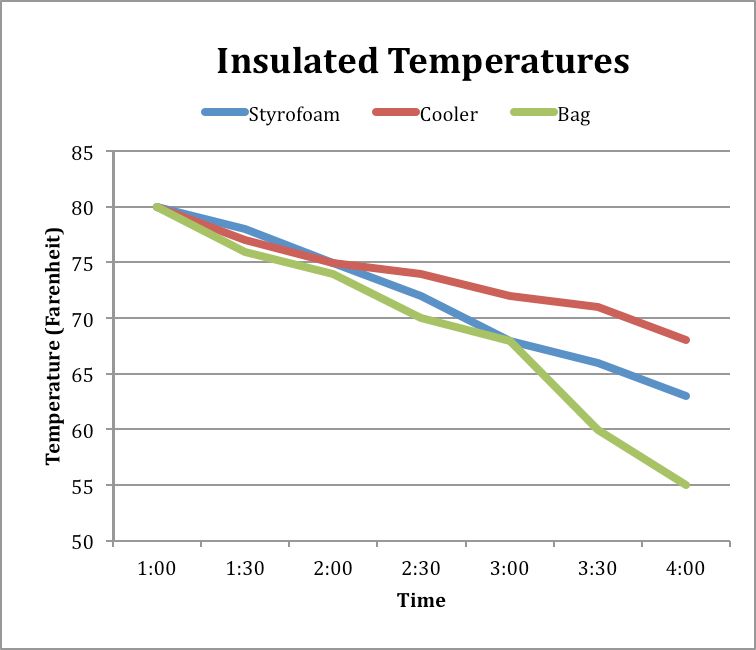
What was the temperature of the liquid in the Styrofoam container at 4:00?

a)

55 degrees

b)

68 degrees

c)

73 degrees

d)

63 degrees

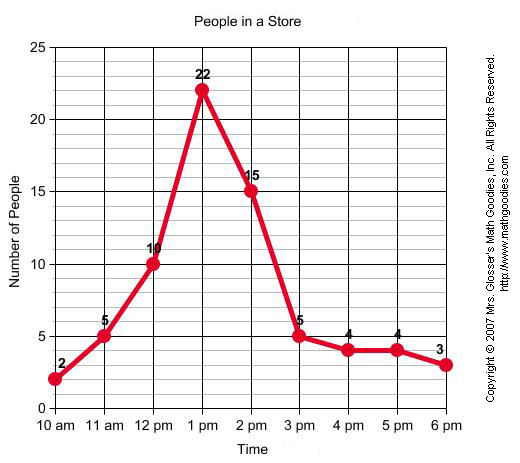
199.
When was the greatest amount of shoppers at the store?
a)
10am
b)
1pm
c)
6pm
d)
2pm
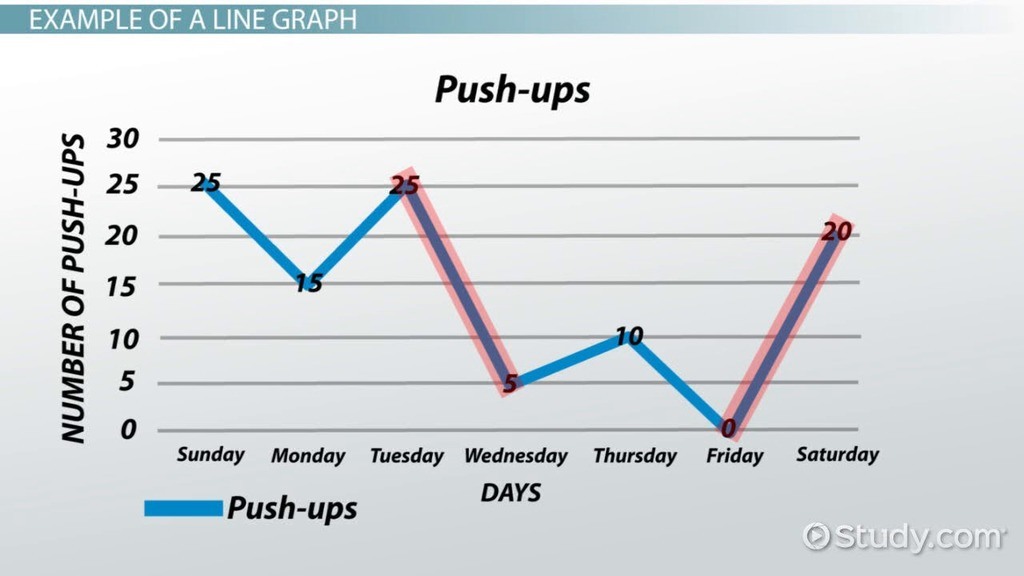
200.
How many push-ups were done on Monday?
a)
5
b)
10
c)
15
d)
20