wayground logo

Free Printable Worksheets

Font size

S
M
L
XL
Worksheets

DCA #1 PREP

Total questions: 200

Worksheet time: 4hrs 16mins

Name
Class
Date
1.

I have 1 proton. Who am I?

a)

hydrogen

b)

Lithium

c)

Sodium

d)

Calcium

2.

I have 2 protons. Who am I?

a)

Helium

b)

Hydrogen

c)

Sodium

d)

Calcium

3.

I have 3 protons. Who am I?

a)

Helium

b)

Hydrogen

c)

Lithium

d)

Calcium

4.

I have 5 protons. Who am I?

a)

Beryllium

b)

Boron

c)

Lithium

d)

Calcium

5.

I have 6 protons. Who am I?

a)

Carbon

b)

Boron

c)

Lithium

d)

Calcium

6.

I have 7 protons. Who am I?

a)

Nitrogen

b)

Oxygen

c)

Fluorine

d)

Calcium

7.

I have 4 protons. Who am I?

a)

Helium

b)

Hydrogen

c)

Beryllium

d)

Calcium

8.

I have 8 protons. Who am I?

a)

Nitrogen

b)

Oxygen

c)

Fluorine

d)

Calcium

9.

I have 9 protons. Who am I?

a)

Nitrogen

b)

Oxygen

c)

Fluorine

d)

Calcium

10.

I have 10 protons. Who am I?

a)

Nitrogen

b)

Oxygen

c)

Fluorine

d)

Neon

11.

Which subatomic particles are located in the nucleus

a)

proton

b)

neutron

c)

electron

d)

valence electron

12.

Which subatomic particles are located on the electron clouds?

a)

proton

b)

neutron

c)

electron

d)

valence electron

13.

which subatomic particle is positively charged?

a)

proton

b)

neutron

c)

electron

d)

valence electron

14.

which subatomic particle is negatively charged?

a)

proton

b)

neutron

c)

electron

15.

which subatomic particle is neutrally charged?

a)

proton

b)

neutron

c)

electron

16.

which subatomic particle is has no charge?

a)

proton

b)

neutron

c)

electron

17.

which subatomic particle is negative?

a)

proton

b)

neutron

c)

electron

18.

which subatomic particle is positive?

a)

proton

b)

neutron

c)

electron

d)

valence electron

19.

name the three subatomic particles

a)

protons, neutrons and electrons

b)

popcorn, neutrons and electrons

c)

pewtons, newtons and valence electrons

d)

protons, neutrons and electronics

20.

Which subatomic particles are located on the orbitals?

a)

proton

b)

neutron

c)

electron

d)

valence electron

21.

Which subatomic particles are located on the energy levels?

a)

proton

b)

neutron

c)

electron

d)

valence electron

22.

Which subatomic particles are located on the rings?

a)

proton

b)

neutron

c)

electron

d)

valence electron

23.

Which subatomic particles are located on the shells?

a)

proton

b)

neutron

c)

electron

d)

valence electron

24.

How many protons does Hydrogen have?

(a)  

25.

How many protons does Helium have?

(a)  

26.

How many protons does Lithium have?

(a)  

27.

How many protons does Beryllium have?

(a)  

28.

How many protons does Boron have?

(a)  

29.

How many protons does Carbon have?

(a)  

30.

How many protons does Nitrogen have?

(a)  

31.

How many protons does Oxygen have?

(a)  

32.

How many protons does Fluorine have?

(a)  

33.

How many protons does Neon have?

(a)  

34.

How many electrons does Sodium have?

(a)  

35.

How many electrons does Magnesium have?

(a)  

36.

How many electrons does Aluminum have?

(a)  

37.

How many electrons does Silicon have?

(a)  

38.

How many electrons does Phosphorus have?

(a)  

39.

How many electrons does Sulfur have?

(a)  

40.

How many electrons does Chlorine have?

(a)  

41.

How many electrons does Argon have?

(a)  

42.

How many electrons does Potassium have?

(a)  

43.

How many electrons does Calcium have?

(a)  

44.

Hydrogen is...

a)

stable

b)

very reactive

c)

a little reactive

45.

Lithium is...

a)

stable

b)

very reactive

c)

a little reactive

46.

Sodium is...

a)

stable

b)

very reactive

c)

a little reactive

47.

Potassium is...

a)

stable

b)

very reactive

c)

a little reactive

48.

Beryllium is...

a)

stable

b)

very reactive

c)

a little reactive

49.

Magnesium is...

a)

stable

b)

very reactive

c)

a little reactive

50.

Calcium is...

a)

stable

b)

very reactive

c)

a little reactive

51.

Helium is...

a)

stable

b)

very reactive

c)

a little reactive

52.

Neon is...

a)

stable

b)

very reactive

c)

a little reactive

53.

Argon is...

a)

stable

b)

very reactive

c)

a little reactive

54.

Boron is...

a)

stable

b)

very reactive

c)

a little reactive

55.

Aluminum is...

a)

stable

b)

very reactive

c)

a little reactive

56.

Carbon is...

a)

stable

b)

very reactive

c)

a little reactive

57.

Silicon is...

a)

stable

b)

very reactive

c)

a little reactive

58.

Nitrogen is...

a)

stable

b)

very reactive

c)

a little reactive

59.

Fluorine is...

a)

stable

b)

very reactive

c)

a little reactive

60.

Chlorine is...

a)

stable

b)

very reactive

c)

a little reactive

61.

How many neutrons does Hydrogen have?

(a)  

62.

How many neutrons does Helium have?

(a)  

63.

How many neutrons does Lithium have?

(a)  

64.

How many neutrons does Carbon have?

(a)  

65.

How many neutrons does Oxygen have?

(a)  

66.

How many neutrons does Chlorine have?

(a)  

67.

How many neutrons does Aluminum have?

(a)  

68.

Who reacts the same as Sodium but has a greater mass?

a)

Hydrogen

b)

Lithium

c)

Potassium

69.

Who reacts the same as Strontium but has a greater mass?

a)

Beryllium

b)

Magnesium

c)

Lithium

d)

Barium

70.

Who reacts the same as Strontium but has a greater mass?

a)

Beryllium

b)

Magnesium

c)

Lithium

d)

Barium

71.

Who reacts the same as Chlorine but has a greater mass?

a)

Fluorine

b)

Bromine

c)

Nitrogen

d)

Boron the moron

72.

Which element is more reactive?

a)

Calcium

b)

Potassium

73.

Which element is more reactive?

a)

Helium

b)

Hydrogen

74.

Which element is more reactive?

a)

Beryllium

b)

Lithium

75.

Which element is more reactive?

a)

Nitrogen

b)

Fluorine

76.

Which element is more reactive?

a)

Carbon

b)

Chlorine

77.

Lithium is a..

a)

metal

b)

metalloid

c)

non-metal

d)

noble gas

78.

Cobalt is a..

a)

metal

b)

metalloid

c)

non-metal

d)

noble gas

79.

Tin is a..

a)

metal

b)

metalloid

c)

non-metal

d)

noble gas

80.

Silver is a..

a)

metal

b)

metalloid

c)

non-metal

d)

noble gas

81.

Boron is a..

a)

metal

b)

metalloid

c)

non-metal

d)

noble gas

82.

Arsenic is a..

a)

metal

b)

metalloid

c)

non-metal

d)

noble gas

83.

Sulfur is a..

a)

metal

b)

metalloid

c)

non-metal

d)

noble gas

84.

Helium is a..

a)

metal

b)

metalloid

c)

non-metal

d)

noble gas

85.

Neon is a..

a)

metal

b)

metalloid

c)

non-metal

d)

noble gas

86.

How many valence electrons does Hydrogen have?

(a)  

87.

How many valence electrons does Carbon have?

(a)  

88.
How many atoms of carbon (C) are in C6H12O6?
a)
3
b)
6
c)
12
d)
24
89.
How many Sodium (Na) are in 6NaCl?
a)
1
b)
12
c)
6
90.
How many Aluminum are in Al2O3?
a)
3
b)
2
c)
5
91.
How many Hydrogen are in 4H2O?
a)
6
b)
8
c)
2
d)
4
92.
Which of the following shows the correct way to balance the chemical equation?
Fe + O2 -> Fe2O3
a)
4Fe + 3O2 -> 2Fe2O3
b)
2 Fe + 3O2 -> Fe2O6
c)
4 Fe + O6 -> 2Fe2O3
d)
None of the options are correctly balanced.
93.
What is the left part of a chemical equation called?
2H2 + O2 --> 2H2O
a)
Reactants
b)
Products 
c)
Yields 
d)
Chemical Equation 
94.
What does the Law of Conservation of Mass state?
a)
Matter cannot be gained or lost in a chemical reaction.
b)
Matter can only be lost in a chemical reaction.
c)
Matter can only be gained in a chemical reaction.
d)
Matter can be gained and lost in a chemical reaction. 
95.
What is the right part of a chemical equation called...
2H2 + O2 --> 2H2O
a)
Reactants
b)
Products 
c)
Yields 
d)
Chemical Equation 
96.
What is the total number of atoms present in 5Na3PO4
a)
5
b)
40
c)
55
d)
8
97.
What is the little number after an element in a chemical equation called.
Example: H2
a)
Coefficient 
b)
Subscript
c)
Atom
d)
Equation
98.
Is the following equation balanced?...
Al + O2 --> 2Al2O3
a)
Yes!
b)
No!
99.
What is the number before a chemical formula called?
Ex: 2H2 + O2 --> 2H2O
a)
Coefficient
b)
Subscript
c)
Atom
d)
Equation
100.
Is the following equation balanced?
2C2H2 + 5O2 --> 4CO2 + 2H2O
a)
yes
b)
no
101.
Is the following equation balanced?
4Fe + 3O2 --> 2Fe2O3
a)
yes
b)
no
102.
Is the following reaction balanced?
2CH3OH + 3O2 --> 2CO2 + 4H2O
a)
yes
b)
no
103.
Is the following reaction balanced?
2CH3OH + 3O2 --> 2CO2 + 4H2O
a)
yes
b)
no
104.
Balance this equation
_Al +_HCl --> _H+_AlCl3
a)
2, 6, 3, 2
b)
it is already balanced
c)
4, 12, 3, 4
d)
2, 1, 4, 5
105.
How many atoms of carbon (C) are in C6H12O6?
a)
3
b)
6
c)
12
d)
24
106.

What is the energy transformation that occurs in an electric pencil sharpener?

a)

mechanical energy to electrical energy

b)

electrical energy to mechanical energy

c)

radiant energy to sound energy

d)

chemical energy to mechanical energy

107.

Which object shows an energy transformation from electrical to mechanical?

a)
b)
c)
d)
108.

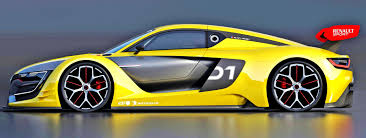
When a car burns gasoline it creates hot air to move the pistons in the engine, which causes the car to move. What energy transformation occur from the fuel to the movement of a car?

a)

thermal energy to mechanical energy

b)

thermal energy to chemical energy to mechanical energy

c)

chemical energy to thermal energy to mechanical energy

d)

chemical energy to electrical energy

109.
Which of the following energy transformations occur when a lamp that is plugged into a wall socket is functioning correctly?
a)
Chemical to light
b)
Electrical to chemical
c)
Electrical to light
d)
Chemical to electrical
110.

The roller coaster cart has the most kinetic energy at position-

a)

W

b)

X

c)

Y

d)

Z

111.
A hairdryer converts -- 
a)
electrical energy into chemical
b)
electrical energy into thermal
c)
chemical energy into mechanical
d)
thermal energy into mechanical
112.
Which items would have this energy transformation: electrical energy -> thermal energy and light energy?
a)
toaster
b)
candle burning
c)
windmill turning
d)
Iron for your clothes
113.

Which items would have this energy transformation: mechanical energy -> sound energy?

a)

turning on a flashlight

b)

nuclear power plant

c)

wind turbine turning

d)

playing a violin

114.

Which items would have this energy transformation: mechanical energy -> sound energy?

a)

turning on a flashlight

b)

nuclear power plant

c)

wind turbine turning

d)

playing a violin

115.
Electrical Energy is transferred to _____ Energy.
a)
Thermal
b)
Solar
c)
Electrical
d)
None
116.
The cycle that powers the ocean currents, weather, and tectonic plates it called
a)
conduction current
b)
radiation
c)
condition current
d)
convection current
117.
In convection, COOL air
a)
Rises
b)
Sinks
118.
In convection, WARM air
a)
Rises
b)
Sinks
119.

UP and DOWN columns on the periodic table are

a)

groups

b)

periods

120.

SIDE TO SIDE rows on the periodic table are

a)

groups

b)

periods

121.

The period number tells you the number of

a)

protons

b)

energy levels

c)

valence electrons

122.

These elements are in a:

a)

group

b)

period

123.

These elements are in a:

a)

group

b)

period

124.

Which elements have 1 valence electron?

a)

period 1

b)

group 1

c)

group 4

125.

periods on the periodic table tell you

a)

the number of valence electrons

b)

the number of protons

c)

the number of energy levels

d)

the total number of subatomic particles in the element

126.

Which element is located in Group 11 & Period 4?

a)

Vanadium

b)

Cadmium

c)

Copper

d)

Rhodium

127.

What element is located in Group 18 & Period 5?

a)

Xenon

b)

Krypton

c)

Radon

d)

Helium

128.

Which element is located in Group 3 & Period 5?

a)

Yttrium

b)

Scandium

c)

Lanthanum

d)

Magnesium

129.

Which element is located in Group 5 & Period 4?

a)

Nitrogen

b)

Phosphorus

c)

Antimony

d)

Vandium

130.

Which element is located in Group 1 & Period 2?

a)

Hydrogen

b)

Beryllium

c)

Lithium

d)

Sodium

131.

The period for Bromine is ___________.

a)

3

b)

2

c)

4

d)

5

132.
Beryllium is in group number______.
a)
Group 2
b)
Group 3
c)
Group 4
d)
Group 7
133.

The period for Bromine is ___________.

a)

3

b)

2

c)

4

d)

5

134.

If the wind is heading south with a force of 5 N, and a car is going north with force of 78936 N, what is the Net Force and Direction.

a)

78931 N North

b)

78931 N South

c)

78531 N North

d)

78531 N South

135.

What is the overall Net Force and which side has a greater Net Force?

a)

641, Left

b)

571, Left

c)

601, Right

d)

480, Right

136.

What is the Overall Net Force and which side has a greater Net Force?

a)

12, Right

b)

0, Both are balanced

c)

12, Both are balanced

d)

0, Left

137.

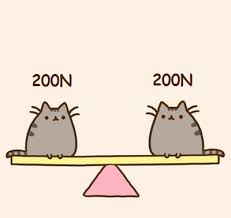
8 N to the left , and 4 N to the right. Find the net force. Is this balanced

a)

12 N Right No

b)

12 N Right Yes

c)

4 N Left Yes

d)

4 N Left No

138.

If a person is picking up a book with the force of 50 N and the gravity is pushing down with 15 N, what is the net force?

a)

50 N

b)

35 N

c)

65 N

d)

15 N

139.

What is Force?

a)

A pull exerted on an object

b)

A push exerted on an object

c)

A push or pull exerted on an object

d)

Nothing

140.

You and your friend, are playing tug of war. Your friend pulls with a force of 55 N, to the rights. You pull with a force of 65 N, to the left. What is the net force on the rope?

a)

20 N, to the left

b)

20 N, to the right

c)

10 N, to the right

d)

10 N, to the left

141.
What is the FORCE? 
a)
5 N
b)
10 N
c)
400 N
d)
0 N
142.
If there are two forces going in the same direction how would you find the net force?
a)
Subtract
b)
Add
c)
Neither
d)
Multiply
143.
A train travels 25 km in .5 hrs. How fast is the train going?
a)
25 miles/hr
b)
5 miles/hr
c)
125 km/hr
d)
50 km/hr
144.
Mr. Rudman drives his speed boat 22 km at 45 km/hr how, how long will it take him to go the 22 km?
a)
48 hrs 
b)
0.48 hrs
c)
990 hrs
d)
45 min
145.
Mr. Rudman drives his race car for 4 hrs at 150 miles/hr. How far will he travel?
a)
600 km
b)
60 miles
c)
6 miles
d)
600 miles
146.
1.  How far will a train moving at 5.7 km/min go in 45 minutes?
a)
256.5 km
b)
0.12 km
c)
7.89 km
147.
If a robot chases you down at a speed of 900 m/s for a distance of 200 m. How long has the robot been chasing you?
a)
0.22 s
b)
4.5 s
c)
180000 s
148.
Michael rides his bike at a constant speed of 12 miles per hour. How far can he travel in 2 hours?
a)
1/2 mile
b)
6 miles
c)
24 Kilometers
d)
24 miles
149.
Joanna drives for 400km at an average speed of 80km/h. How long was her journey?
a)
Joanna's journey was 5hrs long
b)
Joanna's journey was 10hrs long
c)
Joanna's journey was 20hrs long
d)
Joanna's journey was 15hrs long
150.
Mr. Hoppe drives his race car for 4 hrs at 150 miles/hr. How far will he travel?
a)
600 km
b)
60 miles
c)
6 miles
d)
600 miles
151.
James walked 14 miles at an average speed of 4 miles/hour.  How long did it take him to walk 14 miles?
a)
18 hours
b)
3.5 hours
c)
18,000 minutes
d)
3.5 seconds
152.
A bee can fly at an average rate of 7 miles/hour.  If a bee flew nonstop for 18 hours, how far will it have traveled?
a)
126 miles
b)
25 meters
c)
25 miles
d)
0.38 miles/hour
153.
If a 10 kilogram object accelerates suddenly at 15 m/s^2, how much force was applied to the object?
a)
150 Newtons
b)
15 Newtons
c)
150 kilograms
d)
100 kilograms
154.
If a force of 50 Newton's was applied to an object with a mass of 500 grams, what will the object's acceleration be?
a)
10 m/s^2
b)
.1 m/s^2
c)
100 m/s^2
d)
1 m/s^2
155.
If a force of 26 N is exerted on two balls, one with a mass of 0.52 kg and the other with a mass of 0.78 kg, which ball will have the greater acceleration?  (F=ma)
a)
The one with a mass of .78 kg will have the greatest acceleration.
b)
The one with a mass of .52 kg will have the greatest acceleration.
c)
They will both accelerate at the same rate.
156.
A 20 kg bike accelerates at 10 m/s2.  what was the force?
a)
25 Newtons
b)
20 Newtons
c)
200 Newtons
d)
10 Newtons
157.
The mass of a car is 1000 kg.  How much force would be required to accelerate the car at a rate of 3 m/s2? 
a)
1000 ÷ 3
b)
3 ÷ 1000
c)
1000 x 3
158.
A force of 250 N is applied to an object that accelerates at a rate of 5 m/s2.  What is the mass of the object? To solve this problem you must do - 
a)
250 ÷ 5
b)
5 ÷ 250
c)
250 x 5
159.
A 5 kg block is pulled across a table by a net force of 32 N. Calculate the acceleration of the object. To solve this problem you must do - 
a)
32 ÷ 5
b)
5 ÷ 32
c)
32 x 5
160.
A skier needs to apply a force of 132 N to accelerate at a rate of 2 m/s2. What is the mass of the skier? To solve this problem you must do - 
a)
132 ÷ 2
b)
2 ÷ 132
c)
132 x 2
161.
A skier needs to apply a force of 132 N to accelerate at a rate of 2 m/s2. What is the mass of the skier? The answer to this question is most likely (HINT: Look at the units!!!) - 
a)
66 N
b)
66 m/s2
c)
66 kg
162.
The masses of four objects are given in this table. If all objects are struck with the same amount of force, which one will have the greatest acceleration?
a)
Object 1
b)
Object 2
c)
Object 3
d)
Object 4
163.

What happens immediately after a hurricane makes landfall?

a)

It gets stronger

b)

It gets weaker

c)

Its winds pick up speed

d)

It starts hailing

164.

What is a hurricane?

a)

is a type of natural disaster

b)

is a storm that happen over open water

c)

is a spiral of heavy winds

d)

is a mixture of hot and cold air

165.

Where does a hurricane happen?

a)

Over open water, off the coast of Africa

b)

When rock suddenly break along a fault

c)

Happens in many parts of the world

d)

In latitude areas of warmer climates

166.
What does this symbol show? 
a)
High pressure
b)
Low pressure
c)
Low humitidy
d)
Longing for someone (strong feelings)
167.
What does this image show? 
a)
A flag banner
b)
Blue alligator teeth
c)
Warm Front
d)
Cold Front
168.
What does this image represent?
a)
Cold front
b)
Red bulbous things
c)
Warm front
d)
Sarah Ju
169.
a)

cold air moving into an area

b)

warm air moving into an area

c)

humid air over an area

d)

dry air over an area

170.
a)

cold air moving into an area

b)

warm air moving into an area

c)

humid air over an area

d)

dry air over an area

171.
a)

Cold air is approaching Location A

b)

Warm air is approaching Location A

c)

Cold air is approaching Location B

d)

Warm air is approaching Location B

172.
a)

Cold air is approaching Location A

b)

Warm air is approaching Location A

c)

Cold air is approaching Location B

d)

Warm air is approaching Location B

173.
a)

Cold air is approaching Location A

b)

Warm air is approaching Location A

c)

Cold air is approaching Location B

d)

Warm air is approaching Location B

174.
a)

Cold air is approaching Location A

b)

Warm air is approaching Location A

c)

Cold air is approaching Location B

d)

Warm air is approaching Location B

175.
a)

It's warmer at location A

b)

It's warmer at location B

176.
a)

It's cooler at location A

b)

It's cooler at location B

177.
What direction is the cold front moving?
a)
Northwest
b)
Southeast
c)
Northeast
d)
Southwest
178.
What direction is the warm front moving?
a)
Northeast
b)
Northwest
c)
Southeast
d)
Southwest
179.
What kind of energy is in a moving skateboard?
a)
Potential
b)
Kinetic
180.
What kind of energy is in a rock at the edge of a cliff?
a)
Potential
b)
Kinetic
181.
What kind of energy is in flowerpot sitting on a windowsill?
a)
Potential
b)
Kinetic
182.
When a pendulum swings, at which point is kinetic energy highest?
a)
1
b)
2
c)
3
d)
4
183.
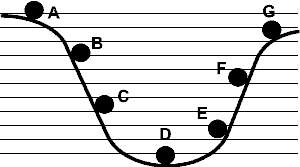
Which point has the most potential energy?
a)
G
b)
f
c)
b
d)
a
184.
Which 2 letters have the most kinetic energy
a)
W & Y
b)
X & Z
185.
At which point is potential energy greatest?
a)
W
b)
X
c)
Y
d)
Z
186.
At which point is kinetic energy greatest?
a)
W
b)
X
c)
Y
d)
Z
187.

Which of Newton's Laws states that an object's force depends on an object's mass?

a)

Newton's 1st Law of Motion

b)

Newton's 2st Law of Motion

c)

Newton's 3st Law of Motion

188.

According to Newton's law, when a person pushes on a wall, the wall will have a equal and opposite reaction. Which Newton's law does this apply to?

a)

Newton's 1st law

b)

Newton's 2st law

c)

Newton's 3st law

d)

Newton's 4st law

189.

As the wheels of a train push down on a track, the track pushes back against the wheels. Which of

Newton’s laws is used to explain these forces?

A

a)

An object at rest tends to stay at rest unless acted upon by an unbalanced force.

b)

The net force of an object is equal to its mass times its acceleration.

c)

For every action, there is an equal and opposite reaction.

d)

Any two objects exert a gravitational force of attraction on each other.

190.

An automobile you are riding in suddenly stops, but you continue to go forward.

a)

Newton's 1st Law of Motion

b)

Newton's 2st Law of Motion

c)

Newton's 3st Law of Motion

d)

Law of gravity

191.
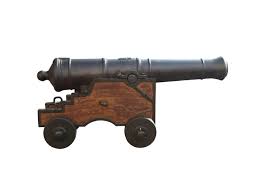
When a cannon fires a cannonball we observe Newton's third law. Which force is the reaction force?
a)
The cannon moving forward
b)
The cannonball moving forward
c)
The cannon moving backward
d)
The cannonball moving backward
192.
What law?
a)
1st
b)
2nd
c)
3rd
193.
This person bought coffee and put it on the seat next to them. If they stopped quickly and the coffee spilled which law would that represent?
a)
Newton's 1st Law
b)
Newton's 2nd Law
c)
Newton's 3rd Law
194.
A magician pulls a tablecloth out from under dishes and glasses on a table without disturbing them.
a)
Newton's 1st Law
b)
Newton's 2nd Law
c)
Newton's 3rd Law
195.
In the picture, the vehicle will move because of...
a)
Newton's 1st Law
b)
Newton's 2nd Law
c)
Newton's 3rd Law
d)
Newton's 9th Law
196.
In the picture, the blocks are flying out of the truck based on which of Newton's laws?
a)
Newton's 1st Law
b)
Newton's 2nd Law
c)
Newton's 3rd Law
d)
Newton's 6th Law
197.

What is the output of this code?

int x = 8;

// x = 3;

Console.WriteLine(x);

a)

3

b)

8

c)

error

d)

24

198.
Which is the name of the kind of solid substance formed in this figure?  
a)
aqueous 
b)
precipitate
c)
acid
d)
synthesis 
199.
Provides evidence that a chemical reaction has occurred. 
a)
dissolving 
b)
melting
c)
formation of a gas
d)
bending
200.

A change in the shape of an object is an example of _________________.

a)

a chemical change

b)

energy

c)

an endothermic change

d)

a physical change