
 Worksheets
LEAP Mega Challenge
Total questions: 196
Worksheet time: 3hrs 16mins

The transfer of energy through molecules in direct contact is ...
Heat
Conduction
Convection
Radiation
The transfer of energy through molecules in direct contact is ...
Heat
Conduction
Convection
Radiation


As you touch a hot stove the heat transfers -
from your hand to the stove by conduction.
from the stove to your hand by conduction.
from your hand to the stove by radiation.
from the stove to your hand by radiation.
Which sentence explains why a cold metal spoon placed in a pot of boiling water becomes hot?
Thermal energy is transferred from the spoon to the water by conduction
Thermal energy is transferred from the water to the spoon by conduction.
Thermal energy in the water is transformed into kinetic energy in the spoon by convection.
Thermal energy in the spoon is transformed into kinetic energy in the water by convection.


True or False?
Heat and temperature are different.
True
False
As thermal energy increases, kinetic energy also...
Increases
Decreases
Remains the same

What tool is used to measure temperature?
a stove
a beaker
a thermometer
a glove
Metal objects heat up more slowly than plastic or wooden objects?
True
False

What type of plate boundary is shown in the picture?
Convergent
Divergent
Transform

What type of plate boundary is shown in the picture?
Convergent
Divergent
Transform

What type of plate boundary is shown in the picture?
Convergent
Divergent
Transform
What geologic event would most likely be found at a transform boundary?
Volcano
Mountain
Earthquake
Mid-Ocean Ridge
What landform would you most likely find at a divergent boundary between two pieces of oceanic crust?
Rift Valley
Mountain
Mid-Ocean Ridge
Volcano
What landform would you most likely find at a divergent boundary between two pieces of continental crust?
Mid-Ocean Ridge
Rift Valley
Mountain
Volcano
What landform would you most likely find at a convergent boundary between two pieces of continental crust?
Mid-Ocean Ridge
Oceanic Trench
Mountain
Volcano
What landform would you most likely find at a convergent boundary between two pieces of oceanic crust?
Rift Valley
Mid-Ocean Ridge
Mountain
Ocean Trench
When one tectonic plate sinks under another, this is called...
Convegent
Divergent
Subduction
Transform
Which type of boundary do plates move away from each other?
Convergent
Divergent
Transform
Plates slide past one another at ____ boundaries.
Convergent
Divergent
Transform
When plates collide together, this boundary occurs...
Convergent
Divergent
Transform
Plate movement is caused by ____________.
the rotation of the Earth
convection currents in the mantle
ocean tides
the moon's gravity
The Great Rift Valley in Africa and the Mid-Atlantic Ridge were both created by this type of plate boundary.
Convergent
Divergent
Transform
What are the two types of crust?
Thick and thin
Ocean and basin
Lower and upper
Continental and oceanic
According to Wegener's hypothesis of continental drift,
Earth's surface is made up of seven major landmasses
The continents were once joined together in a single landmass
Earth is slowly cooling and shrinking
the continents DO NOT move
What is Pangaea?
The name of a German scientist
Another name for continental drift
The name of the super-continent that existed millions of years ago
The name of ancient fossil
What type of evidence was NOT used by Alfred Wegener to support his continental drift theory?
evidence from landforms
evidence from human remains
evidence from fossils
evidence from climate
Most geologists rejected Alfred Wegener's idea of continental drift because...
it did not agree with their current theory
Wegener was interested in what Earth was like millions of years ago
Wegener used several different types of evidence to support his hypothesis
Wegener could not identify the force that moved the continents
The geological theory that states that pieces of Earth's lithosphere are in constant, slow motion is the theory of
subduction
plate tectonics
evolution
seafloor spreading
How do convergent boundaries between ocean and continent plates affect Earth's surface? Select 3.
Oceanic Trench
Volcanoes
Mountains
Mid Ocean Ridge
Rift Valley
How do convergent boundaries between ocean and ocean plates affect Earth's surface? Select 2.
Oceanic Trench
Volcanoes
Mountains
Mid Ocean Ridge
Rift Valley
How do divergent boundaries between ocean and ocean plates affect Earth's surface? Select 2.
Oceanic Trench
Volcanoes
Mountains
Mid Ocean Ridge
Rift Valley
How do divergent boundaries between continent and continent plates affect Earth's surface? Select 2.
Oceanic Trench
Volcanoes
Mountains
Mid Ocean Ridge
Rift Valley
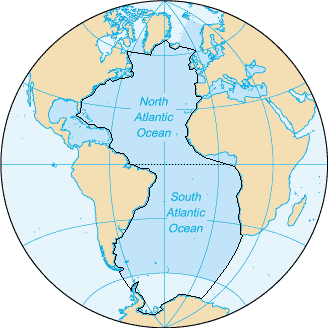


What is label D
Trench
Mid ocean ridge
abyssal plain
sea mount
This scientist was the first to propose seafloor spreading
William Watts
Harry Hess
Alfred Wegener
Tenzing Norgay

Label "a"
protons
neutrons
electrons
Label "b"
protons
neutrons
electrons
Label "c"
protons
neutrons
electrons
Diamonds and coal are both made of carbon atoms, yet their physical properties are very different. What makes them so different?
The carbons in the coal have a different number of protons than the carbons in the diamonds.
The atoms in the diamonds are clear and the atoms in the coal are black.
The coal has softer electrons.
They have different molecular structures.
Which of the following are considered elements (more than one)?
carbon
Dr Pepper
Sand
Water
Hydrogen
Coal is made from carbon, and the carbon repeats itself in a pattern. Because of this repeating process, we call the sub-units of coal molecules
compounds.
simple molecules.
mixtures.
extended structures.

What statement best describes the model?
1 molecule with 9 atoms
9 molecules with 1 atom
9 molecules representing 9 elements
9 elements representing 9 molecules

How many atoms are present?
1
2
3
How many elements are present?
1
2
3

How many atoms are present?
1
2
3
How many elements are present?
1
2
3

How many atoms are present?
1
2
3
How many elements are present?
1
2
3
In a(n) _____, the atoms should repeat themselves in a regular pattern.
molecule
subunit
extended structure
atom
Which of these is a simple molecule?


Which of these is an extended structure


Check both of the Extended Structures


This kind of molecule repeats over and over.
Extended structures
Simple Molecule

What is the CHEMICAL FORMULA for the molecular model pictured above?
CH
C4H
CH4

This is an example of...
a simple molecule
an extended structure

This is an example of...
a simple molecule
an extended structure

This is an example of...
a simple molecule
an extended structure

This is an example of...
a simple molecule
an extended structure

This is an example of...
a simple molecule
an extended structure

What is the example in the image?
The electrons in an atom
A diatomic structure
An extended structure (crystal lattice)
A water molecule
What is the difference between a molecule and a compound?
One is radioactive.
Molecules are made of the same atoms, while compounds are made up of two or more different types of atoms.
They are both made of only a single atom.
One makes you up and the other makes the thing that make you up.

How many molecules are there?
3
2
1
0

How many elements are there?
3
2
1
0

How many atoms are there?
3
2
1
0
How do molecules in a crystal arrange themselves?
Crystals of molecules always form in a spherical shape.
Crystals of molecules form in a regular, repeating pattern.
Crystals of molecules form in an irregular, diamond-like pattern.
Crystals of molecules always form in a shape similar to a snowflake.
Which of these statements is true of a polymer?
The subunit is always an atom.
Polymers cannot extend forever.
The subunit is always a molecule.
The subunit can be a molecule or an atom.
What is the atomic difference between water (H2O) and hydrogen peroxide (H2O2)?
The only difference is that they have different structures
Hydrogen peroxide has one more oxygen atom than water.
The only difference is that they have different compositions.
Atoms in water have stronger bonds than atoms in hydrogen peroxide.
How do molecules in a crystal arrange themselves?
Molecules of crystals always form in a spherical shape.
Molecules of crystals form in a regular, repeating pattern.
Molecules of crystals form in an irregular pattern with no clear shape.
Molecules of crystals are always made of a single element.
Which of the following is true about both polymers and extended structures like diamonds or chunks of gold?
Formed of repeated subunits
Can contain thousands of atoms
Always have precise, geometric shapes
Always are strong, durable solids
What are design constraints?
Limitations or restrictions imposed on the design process.
What you want a project to do
Guidelines or specifications that must be followed during the design process.
Conditions that the design must meet in order to be considered successful.
What is the purpose of performance criteria in design?
To define specific goals and requirements for performance in a design.
To evaluate the aesthetics of a design.
To determine the cost of a design.
To analyze the structural integrity of a design.
What is the importance of considering constraints and criteria in designing science experiments?
Constraints and criteria only limit the creativity in designing science experiments.
Considering constraints and criteria in designing science experiments is a waste of time.
Constraints and criteria are not important in designing science experiments.
Constraints and criteria are important in designing science experiments that are reliable, valid, ethical, and actually achieve what we want.
Explain the concept of trade-offs in design.
Trade-offs in design are unnecessary and should be avoided.
Trade-offs in design are compromises made to achieve design goals without sacrificing anything.
Trade-offs in design are compromises or sacrifices made to achieve design goals.
Trade-offs in design are decisions made without considering design goals.
Describe the relationship between criteria and constraints in design.
Criteria define the goals or requirements, while constraints are the limitations or restrictions in design.
Criteria and constraints are interchangeable terms in design.
Criteria and constraints have no relationship in design.
Criteria are the limitations or restrictions, while constraints define the goals or requirements in design.
A speedboat is not permitted to go faster than 100 knots in a lake. Therefore, the company decides to redesign the throttle so it cannot exceed 95 knots. This is an example of:
constraint.
criteria.
trade-off.
design challenge.
A design challenge is given that says, create a birdhouse, but do not let it cost more than $20.00 in materials. The cost of the birdhouse would be considered a/an:
criterion.
constraint.
requirement.
example.

Changing a prototype that didn't work as desired:
redesign
evaluate
criteria
control
The qualities you want your solution to have:
criteria
constraint
limitation
rationale
Limitations on your design, such as materials you may use:
control
criteria
constraint
representation
You can only use materials given
You have two days to build
It must travel 3 meters
It must drive in a straight line and stay in the 24" wide lane.
Criteria or Constraint:
The things your design HAS to do or HAVE
Criteria
Constraint
Criteria or Constraint:
The LIMITS placed on your design solution
Criteria
Constraint
Criteria or Constraint:
Usually uses the clue words ONLY or CAN'T
Criteria
Constraint
Criteria or Constraint:
Usually uses the clue words NEEDS, MUST or HAS TO
Criteria
Constraint
Criteria or Constraint:
You only have until the end of the weekend to finish
Criteria
Constraint
Criteria or Constraint:
You must use wood in your design
Criteria
Constraint
Criteria or Constraint:
Your Helicopter has to land gently so it won't hurt its passenger
Criteria
Constraint
Criteria or Constraint:
You can't spend any more than $10 on your design
Criteria
Constraint
Criteria or Constraint:
Your Bird's nest needs to safely hold an egg overnight
Criteria
Constraint
Criteria or Constraint:
You can only use a single piece of paper and some tape
Criteria
Constraint
Claim, Evidence or Reasoning
One sentence telling whether your design met or did not meet the criteria or constraint
Claim
Evidence
Reasoning
Exchange of one thing for another is called a
Gift
Trade-off
Criteria
Constraint
Your essay must have correct grammar and punctuation.
CRITERIA
CONSTRAINT
TRADE-OFF
NEITHER
In order to increase the speed of a vehicle, a lighter material is used to build it.
CRITERIA
CONSTRAINT
TRADE-OFF
NEITHER
______ are the goals that must be met in order to successfully solve a problem.
CRITERIA
CONSTRAINTS
TRADE-OFFS
PLANS
________ are factors that limit the design, or limit how the problem can solved.
CRITERIA
CONSTRAINTS
TRADE-OFF
PLANS
A team of engineers is asked to design pop sockets for kids in a variety of colors for less than $3 using recycled materials.
Which of the following is a criteria? (Choose all that apply)
designed to appeal to kids
cannot cost more than $3
made out of recycled materials
a variety of colors
What is the definition of a polymer?
A polymer is a large molecule composed of repeating subunits called monomers.
A polymer is a type of plant cell.
A polymer is a type of metal alloy.
A polymer is a small molecule composed of repeating subunits called monomers.
What is the definition of a monomer?
A monomer is a molecule that can join together with other molecules to form a polymer.
A monomer is a type of polymer.
A monomer is a molecule that cannot form polymers.
A monomer is a substance that cannot combine with other molecules.
Polymers are made up of repeating units called ________.
monomers
elements
compounds
atoms
Monomers are the ________ units that combine to form polymers.
separate
isolated
building
individual
A __________ consists of many monomers bonded together.
monomer
hydrocarbon
peptide
polymer
Repeating subunits that make up a polymer are called...
(a)

What is the monomer for the polymer in this picture?


What is the monomer for the polymer in this picture?
Many monomers bonded together form a:
Multimer
Polygon
Polymer
Manymer
A large macromolecule formed from monosaccharide.
monomer
monosaccharide
macromolecule
polysaccharide
A process that changes one set of chemicals into another set of chemicals.
polymerization
chemical reaction
amino acid
polysaccharide
Element or compound that produced by the chemical reaction.
polymerization
reactant
product
polysaccharide
Select all the examples of polymers.
carbon dioxide
adhesives (ex. glue)
polyester
plastic
brass
What is the smallest repeating unit of a polymer called?
unimer
monomer
factoid
atom
A chain of repeating units (called monomers)
monomer
dimer
replicate
polymer
Define polymer
circular molecule made with many repeating units
short molecule made of a few repeating units
long, chain-like molecule made of repeating units
chain-like molecule that contains hydrogen and oxygen
Plastics are _____ polymers.
synthetic
natural
monomer
fraction
What is the monomer of poly(propene)?
poly
ethene
propene
propane
Evolution is the result of a process called ____________
Natural Selection
Artificial Selection
Survival of the Weakest
Supernatural Selection
Evolution is the result of a process called ____________
Natural Selection
Artificial Selection
Survival of the Weakest
Supernatural Selection
According to natural selection, organisms more suited to their environment are better able to
Sleep
Survive
Perish
Migrate
The process of passing down favorable traits to one's offspring is called
Artificial Selection
Mutations
Evolution
Inheritance
Natural selection happens when an individual's genes ______________ from the genes of other members of its species.
Become different
Stay the same
Become separated
Differences in genes can cause differences in __________ (Choose the best answer).
Mutations
RNA
Appearance
Changes in genetic material are called _____________
Mutations
RNA
Genes
Mutations can be inherited or be
Chosen by the individual organism
Caused by environmental factors
Refused at any time
True or False? All changes in genes are harmless.
True
False
Some changes in genes can help organisms _____
Survive
Mutate
Rest

This makes an organism more suited to its environment
species
lifespan
adaptation
mutation
Evolution
Natural Selection
Extinction
Artifical Selection
the best adapted
the fastest
the strongest
the most domesticated (tamed)
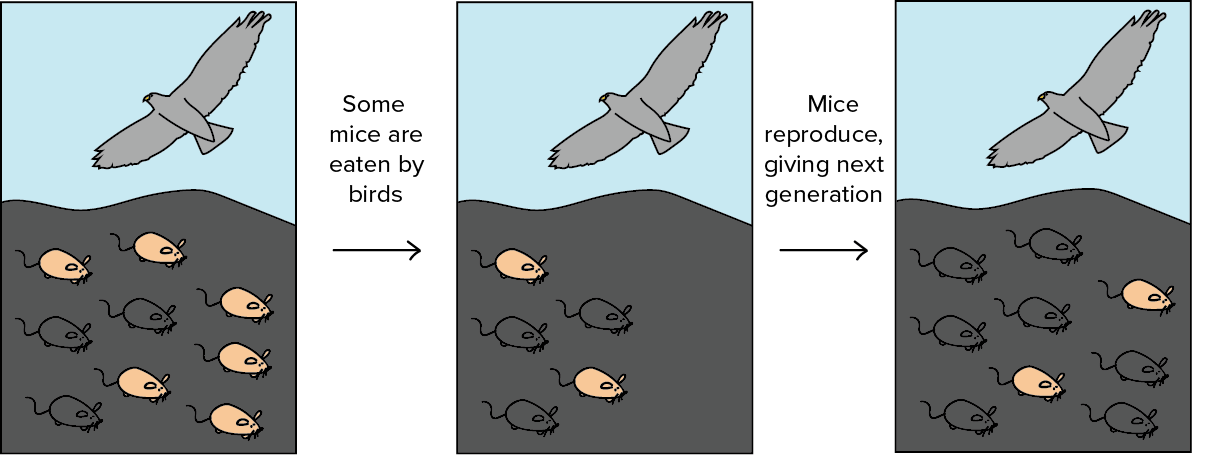
The light mice can reproduce more successfully than the dark mice
The hawks eat more dark mice than light mice because the dark mice taste better
The hawks eat more light mice than dark mice because they can see the light mice more easily
The hawks eat more dark mice than light mice because they can see the dark mice more easily
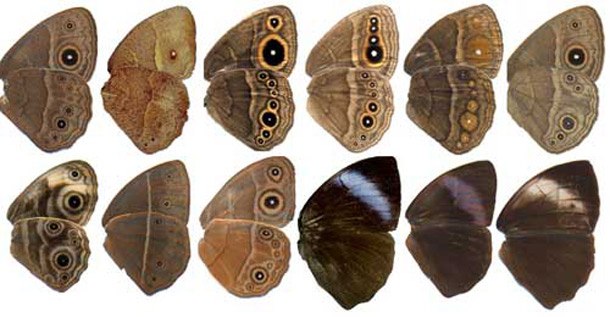
Natural Selection
Variation
Homeostasis
Extinction

How does waterproof feathers help penguins survive in the Antarctic. (Choose all that apply)
Helps keep them warm and dry
Helps them blend in
Helps them swim in cold waters
Helps them see further in cold weather

Guppies are small fish that live in South American rivers. They can have different- sized spots on their bodies.
The river bottoms are covered in rocks. Guppies with spots that are the same size as the rocks on the bottom are harder for bigger fish to see and catch.
The diagram below shows a population of guppies that live in a river. At time 1, the population had the same number of guppies with small and large spots. At time 2, after many generations, there were many more guppies with small spots and fewer guppies with large spots in the population.
How did the environment change between time 1 and time 2? How did the population change?
You cannot tell how the environment changed. With each generation, more guppies passed on the gene for small spots to their offspring.
The rocks became smaller. With each generation, more guppies with small spots survived long enough to pass on the gene for small spots to their offspring.
The rocks became smaller. Guppies with small spots are more likely to survive, so the guppies with large spots changed to have small spots.
The rocks became smaller. Guppies with small spots are more likely to survive, so both kinds of guppies passed on the gene for small spots to their offspring.
What is the process where animals live or die based on their adaptations to their environment.
Genetic Drift
Natural Selection
The Circle of Life
Mammoth

A white moth living on a brown tree is an example of a(n).....
adaptive trait
non-adaptive trait
trait
moth in trouble
Which word describes the word "variation"?
Adaptations
Differences
Traits
Genetics
A variation is . . .
when organisms have camouflage like spots or stripes
an organism from a different dimension
when you order different food than your friend
differences between organisms in the same species


Which animal is the most FIT to live in the desert?
Penguin
Bear
Tiger
Lizard
A green rat snake that lives in the grass and a brown rat snake that lives in the desert is a form of ______________.
Human Genetic Modification
Selective Breeding
Natural Selection
Artificial Breeding
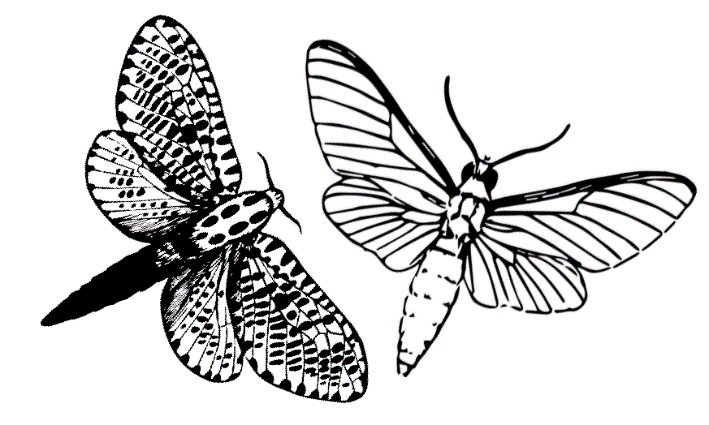
According to natural selection, light colored tree trunks would favor
light colored moths
dark colored moths
red colored moths
red and light colored moths
A fox with thicker fur than average would have a survival advantage over other foxes if:
There is more competition for food in the fox population.
The air temperature significantly decreases in winter.
A drought occurs, limiting the amount of water available.
A new disease appears that infects the foxes.
What is the advantage of having different shaped beaks?
To look different from other species.
To protect itself against predators.
To protect itself against prey
To be able to eat the food readily available in the environment.
Which word best describes the following definition?
The process by which individuals that are better adapted to their environment are more likely to survive and reproduce than other members of the same species.
Trait
Generation
Adaptive Trait
Natural Selection

Tree squirrels can have different fur colors.
Squirrels live in forests where foxes also live. Foxes hunt squirrels for food. Squirrels that have fur that is the same color as the trees are harder for the foxes to see and catch.
The diagram below shows a population of squirrels that live in a forest. At time 1, the population had the same number of black and gray squirrels. At time 2, after many generations, there were many more black squirrels and fewer gray squirrels in the population.
How did the environment change between time 1 and time 2? How did the population change?
You cannot tell how the environment changed. With each generation, more squirrels passed on the gene for black fur to their offspring.
There were more black trees. Squirrels with black fur are more likely to survive, so the squirrels with gray fur changed to have black fur.
There were more black trees. Squirrels with black fur are more likely to survive, so both types of squirrels passed on the gene for black fur to their offspring.
There were more black trees. With each generation, more squirrels with black fur survived long enough to pass on the gene for black fur to their offspring.

Which histogram has more variation?
A
B
C
The both have the same amount of variation
Variations are caused by . . .
Kaleidoscopes
Variety Shows
Mutations
A change in phenotypic expression
The phrase "Survival of the Fittest" would best describe...
Natural selection
Artificial selection
Selective breeding
None of the above

What type of beak is best for sucking nectar from flowers?
Chopstick
Spoon
Straw
Tweezer
Some bird have large, sharp claws and beaks. These birds most likely eat -
tall grasses
small animals
pond microorganisms
tiny insects
Which adaptation of a frog most helps it capture insects to eat?
croaking sound
sticky tongue
laying eggs
smooth skin
Some bears have thick layers of fat and fur that help to keep them warm. These adaptations are best suited to an environment that is –
dry
cold
dark
windy
All of the following would be adaptations that would be an advantage in a hot, dry desert habitat EXCEPT –
being active at night
getting water from plants
hunting other animals
digging burrows underground
Camels live in the desert and have wide, flat, leathery pads on the bottoms of their feet. This adaptation most likely helps them –
walk on hot sand
find sources of water
climb rocky hills
sleep standing up
Many animals hibernate during the winter. During the winter they spend most of the time sleeping. This behavior is an adaptation that helps animals by –
allowing them to avoid harsh sun and rains
building strong muscles for fighting enemies
conserving energy when food is hard to find
making them easy for predators to see

Which is an adaptation of the bison that allows it to stay warm in the cold winter months
it uses its horns to defend itself from predators
it has hooves that allow it to move quickly across the grasslands
it has a thick layer of fur covering its entire body
it has flat teeth that helps it to chew the grasses on the plains

What is an adaptation of the snowshoe hare that allows it to remain unseen by predators in the winter time?
heavy fur on feet to stay warm
small ears to prevent heat loss
turns white in winter to match snow
sense of smell to detect food
Which adaptation of a cactus allows it to prevent water loss in dry desert conditions?
Shallow roots that spread out very widely
Bright flowers that attract insects
Waxy outer covering on stems
None of these
Which of the following describes a behavioral adaptation instead of a structural adaptation
being nocturnal to avoid extremely hot day time temperatures
having a sharp beak and talons to devour prey
using webbed feet and paddle tail to propel through water
having long eyelashes that prevent sand from entering the eye
All of the following are behavioral adaptations EXCEPT -
being nocturnal and only active at night
hibernating during the winter months
migrating to avoid cold weather
being camouflaged to remain unseen
What adaptation makes the most sense for living in a cold snowy area?
gills
colorful wings
white fur
striped skin
Chameleons are reptiles that have the ability to hide from predators and prey by blending in with their environment. They can change the pattern and/or color of their skin. This ability is known as --
natural selection
imitations
mimicry
camouflage
Living things have two kinds of adaptations: __________________. Choose the best answer.
behavioral and physical
physical makeup and structural
behavioral and structural
thrive and survive
Which one is a behavioral adaptation for humans?
walking upright
having thumbs
eyes on the front of our heads
molar teeth
all of the above

