
 Worksheets
Earth and Space - Review(273pts.)
Total questions: 175
Worksheet time: 3hrs 46mins

Mountain ranges located on both side of the Atlantic Ocean
are the same height and width.
have the same rock types, structures and ages.
have ancient fossils and coal seams.
are just separate mountain ranges.
What was Wegener’s continental drift idea?
The continents have moved slowly apart to their current locations.
The continents have always been located at their current locations.
The continents are moving slowly together from their current locations.
None of these
True or False-Similar fossil records across continents is evidence for continental drift.
True
False
Alfred Wegener named his single supercontinent ____________, which means "all Earth" in ancient Greek.
Pandora
Gandowandaland
Pangea
Percia
The remains or traces of ancient life are called ____________.
bones
remanents
fossils
none of the above
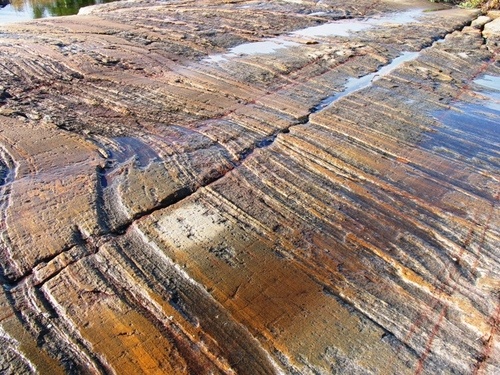
This is a picture of glacier scars found in Africa. What are these evidence for?
Africa has always been near the equator
Africa was once in an area of the Earth that had a very cold climate
The continents have not moved
sea floor spreading

According to the continental drift hypothesis, the presence of similar fossils in South America and Africa supports which scientific idea?
Animals easily and frequently travel from Africa to South America.
Species of animals probably traveled between continents on natural rafts (such as trees destroyed in tsunamis).
Land bridges once existed that connected the continents.
South America and Africa were once connected together.
Which type of evidence was NOT used by Alfred Wegener to support his continental drift hypothesis?
evidence from fossils
evidence from human remains
evidence from climates
evidence from landforms
Order the pictures of Pangaea from oldest to present day.


When we observe the same reptile fossil in two places, we infer ___.
The reptile flew to a new habitat.
The habitats used to be near each other.
Someone buried the fossils in a new place to trick us.
Label the parts of the plate boundary
Label the parts of this plate boundary.
Label each plate boundary.

Hypothesis that states that the continents once formed a single landmass then broke apart:
continental drift
seafloor spreading
plate tectonics
convection currents
Continental crust is (a) and (b) dense than oceanic crust.
thicker
less
thinner
more
Match the scientist with their contribution
Alfred Wegener
Proposed the continental drift theory
Marie Tharp
Created the first scientific map of the sea floor
Harry Hess
Used SONAR images to explain the mechanism behind continental drift
Match the landform that is found at each boundary
Continental-continental convergent
Mountains
Continental-oceanic convergent
Continental volcano arc
Oceanic-oceanic convergent
Volcanic island arc
Continental-continental divergent
Rift valley
Oceanic-oceanic divergent
Mid-ocean ridge
What plate boundary is most responsible for earthquakes?
Convergent boundary
Divergent boundary
Transform boundary
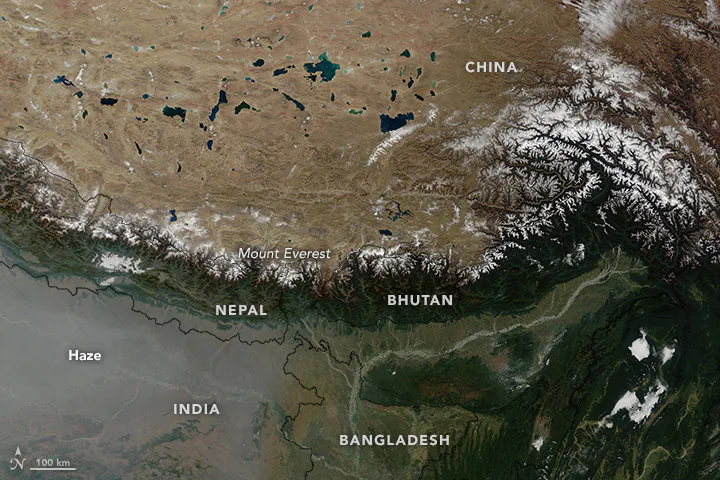
The Himalayan mountains formed at which type of boundary?
Convergent boundary
Divergent boundary
Transform boundary

The Great African Rift Valley formed at which type of boundary?
Convergent boundary
Divergent boundary
Transform boundary

The San Andreas Fault formed at which type of boundary?
Convergent boundary
Divergent boundary
Transform boundary
Convection currents in the mantle are caused by differences in temperature and (a)
density
mass
composition
pressure

At subduction zones, plates (a) and (b)
converge
one is pushed under and destroyed
diverge apart
new crust is created
slide past each other
form mountains

Continents were once joined together in a single large landmass called what?
Panthalassa
Gondwana
Pangaea
Laurasia
Which of the follow is not evidence of sea-floor spreading?
Paleomagnetism
Mountain Ranges
Earthquake Patterns
Ages of ocean floor rock
Why do most earthquakes occur along plate boundaries?
At many divergent boundaries, subduction occurs.
The crust at plate boundaries is brittle and weak.
Stress accumulates in rocks where plates collide, separate, or slide past one another.
At many convergent boundaries, rifting occurs.
The __ is the point of origin of an earthquake.
aftershock
viscosity
epicenter
focus
Rocks release strain energy and move along a(n) __ during an earthquake.
volcano
focus
epicenter
fault
Match the following

P-waves

S-waves

Surface or Long waves
The sudden release of strain energy along a fault is called __.
epicenter
distribution
Richter Scale
Elastic rebound
Match the following based on the description given

(Body wave) - Solid, Liquid and Gas

(Body wave) - Solid only

(Surface wave) - Surface only

A seismic wave boundary marking an abrupt change in rock density is __.
Divergent boundary
Convergent boundary
Transform boundary
Discontinuity

The __ is a plastic-like layer upon which Earth's lithospheric plates move.
asthenosphere
lower mantle
lithosphere
outer core

A __ zone is a "dead zone" between 105 and 140 degrees from an earthquake's epicenter, where nothing is recorded on a seismograph.
wave
seismic
shadow
dark
Why do scientists speculate the inner core is composed of iron and nickel?
The densest materials settled toward the core.
Iron and Nickel are the most abundant elements on the Earth.
It is impossible to speculate the core's composition.
Iron and Nickel are only stable under high temperature pressure environments.

The outer core of Earth is __.
silicate
gaseous
solid
liquid

Which occurs when a change in speed causes a wave
to bend and change direction?
Reflection
Referendum
Refraction
Reformation

According to the Image, which layer is directly on top of the Asthenosphere?
Upper Mantle
Lithosphere
Oceanic Crust
Inner Core
Reorder the following from OUTERMOST (Left) to INNERMOST (Right)
Crust
Lithosphere
Asthenosphere
Lower Mantle
Outer Core
Click on the 1. NAME and 2. PICTURE of Earth that is solid metal. [click on 1 word and 1 picture]
True or False: Earthquakes can help scientists understand Earth's Interior
True
False
Earth's Inner core is solid because of the extreme ______ at the center of the Earth.
Thermal Energy
Heat
Convection
Pressure

A valley formed as a rapid river cuts rapidly through sediment and rock is a (a)
V-Shaped
U-Shaped
S-Shaped

A root that cracks a rock as it grows is an example of
(a)
Mechanical Weathering
Chemical Weathering
Match each sediment transport process to one of its resulting landforms.
Running Water
V-Shaped valley
Glacier
U-Shaped valley
Wind
Dunes
Wave Action
Sea Stacks
Mass Wasting
Slumps

What is the name of the process where surface materials are dropped by an erosional agent like water or wind?
infiltration
Deposition
Mechanical Weathering
Sediment Transport

What is true of erosional forces? (2 points)
They build landforms.
They do not affect landforms
They destroy landforms

What is erosion?
The process of wearing away or breaking down of rocks, soil, or other materials on the Earth's surface by natural forces such as water, wind, or ice.
The process of removing rocks, soil, or other materials from one place to another on the Earth's surface by natural forces such as water, wind, or ice.
The process of melting rocks, soil, or other materials on the Earth's surface by natural forces such as water, wind, or ice.
The process of warping Earth through solar winds or other extra terrestrial forces on the Earth's surface by unnatural forces.

The process in which sediments are dropped when an erosional agent slows down or melts is called
(a)
(a) (b) (c) and (d) can all cause changes to the landscape.
Water
Wind
Glaciers
Gravity
Inner Core
Outer Core
Lunar Cycles
Cellular Service
Pythons in the Everglades
Photosynthesis

Plant root grow in a rock and cause it to split.
Weathering
Erosion
Deposition

A fast-moving river carries rocks downstream.
Weathering
Erosion
Deposition

Waves dropping sand on the beach.
Weathering
Erosion
Deposition

Flood water pounds against a wall and wears it down.
Weathering
Erosion
Deposition

Wind blowing sand from one location to another.
Weathering
Erosion
Deposition

Layers of sediment forming at the bottom of the ocean.
Weathering
Erosion
Deposition

Rainwater enters the cracks of a rock, freeze, and causes the rock to break apart.
Weathering
Erosion
Deposition

The soil from a hillside is washed away by rain.
Weathering
Erosion
Deposition

Sand is dropped when the wind stops blowing and forms sand dunes.
Weathering
Erosion
Deposition

Fast running water causes rocks to hit one another breaking them into smaller rocks.
Weathering
Erosion
Deposition

A mudslide flowing down a steep hill.
Weathering
Erosion
Deposition

When glaciers melt, they drop the rocks they were carrying.
Weathering
Erosion
Deposition
Rocks get (a) by weathering, (b) through erosion, and (c) somewhere else through deposition.
Water, wind, ice, and gravity are all causes of weathering.
TRUE
FALSE
Erosion is the process by which water, ice, wind, or gravity move pieces of rock and soil.
TRUE
FALSE
Deposition is the dropping of sediment by wind, water, ice, or gravity.
TRUE
FALSE
Atmosphere layers end with...
tude
sphere
pause
ology
78% of troposphere gas is...
argon
carbon dioxide
oxygen
nitrogen
Solar radiation is a type of ___________.
energy
matter
A greenhouse gas
reflects heat energy
absorbs heat energy

The atmosphere is divided into layers based on
(a)
temperature
water amount
gasses
Reorder the following layers from the Earth's surface up:
troposphere
stratosphere
mesosphere
thermosphere
exosphere
Weather happens in the
exosphere
stratosphere
hydrosphere
troposphere
Which gas in the stratosphere absorbs harmful ultraviolet light?
carbon dioxide
oxygen gas
ozone
arbon
Reorder the following troposphere gasses from the largest percent[on the LEFT] to the least [on the RIGHT]
Nitrogen gas
Oxygen gas
Argon
Greenhouse gasses

The boundary between the troposphere and the stratosphere is the (a) .
tropopause
mesopause
stratopause

The temperature of each atmospheric layer depends on the ______ of the sun's energy.
(2 Points)
reflection
ejection
absorption
diffusion
Which is not a trace gas?
Argon
Ozone
Nitrogen
Carbon Dioxide
A temperature __ is an increase of temperature with altitude, resulting in very stable air that resists the rising needed for cloud formation or dispersal.
Inversion
Structure
Aversion
Front
__ is energy released or absorbed during the phase changes of water, such as evaporating water or melting snow.
Greenhouse Effect
Latent Heat
Urban Heat Island
Coriolis Effect
Match the following Cloud images to the name.

Cirrus Clouds

Cumulus Clouds

Stratus Clouds
Where does the Hydrosphere interact with the geosphere?
(3 points)
Where does the water on Earth turn from Saltwater to Freshwater?
Using the model, show where transferred energy is being "trapped" by greenhouse gasses.
Forms over Land
Continental
Forms over the Ocean or Sea
Maritime
Forms over a cold region
Polar
Forms over warm region
Tropical
Which climate zone has great ranges in temperature and little ocean influence?
continental climate
maritime climate
La Niña
El Niño

What is the cryosphere?
liquid water in oceans, lakes, rivers, soil, and underground
water vapor found in the stratosphere
frozen water in snow, ice, and glaciers
the solid Earth, including its soil, rocks, and mantle

Which is the most important factor in determining climate at a given location?
mountains
latitude
altitude
continents
Which type of air mass would most likely be moist and warm?
continental tropical
continental polar
maritime polar
maritime tropical

The water cycle involves interactions between __.
the hydrosphere, the atmosphere, the lithosphere, the cryosphere, and the biosphere
the hydrosphere, the atmosphere, and the lithosphere
the hydrosphere and the atmosphere
rivers and oceans
Where is condensation occurring?
Tag precipitation. [2 points]
Select the area where the Sun's rays are MOST direct.
Select the TWO regions you expect to have the COLDEST temperatures. [2 points]
Select the city that would be considered to have a Maritime climate.

Pavement and buildings heat ____ rapidly than land.
more
less
The effect pavement and buildings have on the temperature is called the ___________ effect.
sea breeze
El Nino
La Nina
heat island

Which is the short term change in Atmospheric conditions?
Climate
Weather
Which one of the choices below is NOT a cause of global warming?
Having too many farm animals
Burning Fossil Fuels
Planting new trees
What do humans do that releases greenhouse gases into the atmosphere?
Burn fossil fuels (like gas and coal)
Ride bikes and use solar energy
Compete in the Olympics


How do volcanic eruptions affect weather?
Eruptions form clouds that drop large amounts of precipitation.
Gases and particles may block sunlight and lower temperatures.
Vibrations caused by eruptions shift ocean currents, which in turn affect weather.
Which of the following is NOT a natural cause of climate change?
Sunspot Cycles
Milankovitch Cycles
Deforestation
Volcanic Eruptions / Asteriod Impacts
A greater number of sunspots leads to increased temperatures on Earth.
True
False
Which of the following is a human cause of climate change?
Deforestation
Carbon capture
Melting glaciers
Tornadoes
What does burning fossil fuels do to the greenhouse effect?
Decreases it
Does nothing
Expands it
Enhances it

Compare and Contrast Earth, Venus and Mars
supports life
moderate surface temperature
Atmosphere has CO2
about 38,000 - 40,000 km Circumference
Dense atmosphere
highest surface temperature
Very high levels of CO2
Has oceans to absorb CO2
Almost no Atmosphere
Smaller, so less gravity
No Magnetic Field
(a) is the attractive force between two objects that depends on the masses of the objects and the distance between them.
This force was able to shape Earth because early Earth was (b) .
Gravity
molten
Inerta
Motion
full of water
solid

What is the name of the phenomena that occurs when electrically charged particles collide with atoms in the atmosphere and emit light?
Magnetic Field
Aurora
Solar wind
Harmful Radiation

What causes the high surface temperature on Venus?
Large amounts of carbon dioxide in Venus's atmosphere traps heat.
The absence of rain forests on Venus causes the high surface temperatures.
The clouds in Venus's atmosphere cause high surface temperatures.
Venus is the closest planet to the Sun, which causes it to have high surface temperatures.

The shape of Earth's Orbit.
(a)
During which month of the year is Earth farthest from the Sun? (a)
July
January
March
August
December
Organize these options as evidence that Earth is a Sphere
Objects fall straight down
Earth's Shadow is round during an Eclipse

Earthquake wave differences
Fossils on differnt mountains
Bubble in Arctic Ice

What causes the apparent daily motion of the Sun?
Earth's rotation
gravitational pull
the Sun's rotation
the Moon's rotation

When it is winter in northern hemisphere, it is (a) in the southern hemisphere.
summer
winter
fall
spring

In the Northern Hemisphere, Earth’s rotational axis points directly toward the Sun during the (a) . The Earth has equal length of day and night during the (b) .
summer solstice
equinox
winter solstice
Aurora Borealis

When does an equinox occur?
when the Sun reaches the greatest distance south of Earth's equator
when the Sun reaches the greatest distance north of Earth's equator
when the Sun is directly above Earth's equator and the number of daylight hours equals the number of nighttime hours
when there are more daylight hours than there are nighttime hours

On average, how many degrees of longitude are contained in one time zone?
JUST THE NUMBER
If it is 1:00 PM (afternoon) in North Carolina [NC], in what region would it be 11:00 am?
If it is 3:00 PM (afternoon) in California [CA], in what region would it be 6:00 pm?
Tag the spot that best represents summer in the Northern Hemisphere.
Distinguish the factors that cause Earth's seasons.


Match the following description to the correct image.

Earth's Tilt

Earth's Rotation/ 1 Day

Earth's Revolution/ 1 Year

Summer in the Northern Hemisphere

Winter in the Northern Hemisphere
What is the year called according to the Sun?
Sidereal Year
Solar Year
New Year
The Zodiac

What is the year called according to the Zodiac (stars behind the sun)?
Sidereal Year
Solar Year
New Year
Leap Year
We use a base 10 system, the ancient Babylonians used what number as a base to their system?
NUMBER ONLY
If Earth is (1 AU = 150,000,000 km) and Venus is 0.71 AU from the Sun, what is the distance from EARTH to VENUS in kilometers?

What is an extrasolar planet?
It is a piece of an asteroid belt.
It is a comet captured in the gravitational pull of a star.
It is a planet orbiting a star other than the Sun.
It is a star orbiting another planet.
Organize these people with their contribution to Astronomy

Ptolemy

Copernicus

Galileo

Kepler
Kepler's (a) Law states that because the Sun has such tremendous gravitational pull, Planets and Comets (b) when they get closer and (c) as they get further. Kepler's (d) law mathematically relates a planet's (e) and its orbital period.
If a planet is 15.0 AU away from the Sun, what is its period in years?
(T2 = R3 )
[round to the nearest tenth]
The solar system formed out of a (a) of gas and dust. That nebula, started forming about (b) billion years ago. As the nebula contracted, it's speed (c) . (d) started to occur, and that is the beginning of our star: the Sun.
Where is the sun in this heliocentric model?
Where is the Earth in this heliocentric model?
Where is the Earth in this geocentric model?
Where is the Sun in this geocentric model?

A (a) is the distance (b) travels in one (c) . This is the standard unit of measurement scientists use for measuring distances between (d) and galaxies.
light-year
light
year
stars
Astronomical Unit
Organize the Telescopes by type or description.
Uses lenses to collect and focus light.
Uses mirrors to collect and focus light.


Which of the following statements best explain the benefits of using radio telescopes?
Select all that apply.
Radio telescopes don't have to be launched into space.
Radio waves can be detected 24 hours per day.
Radio telescopes are less expensive than optical telescopes.
Radio waves can be detected when its cloudy.

Which of the following statements best explain the benefits of using space telescopes?
Select all that apply.
Space telescopes don't have to be launched into space.
Space telescopes are not affected by weather.
Space telescopes can obtain the clearest, most detailed images of space.
Space telescopes have discovered alien life.

Which magnifies the image in a telescope?
focal length
eyepiece
objective
focus
Use the equation Mp = fo/fe to determine the magnifying power of a telescope in which the focal lengths of the objective lens and the eyepiece lens are 1500 mm and 9 mm, respectively.
[Number only, no units]
Tap the [2 spots] above the spectra lines that PROVE the Sun has Helium.

The dark lines that show astronomers what elements are present in Stars are called (a) .
Star-Spectra
Light-Year
Astronomical Unit
Electromagnetic Spectrum

What are groups of stars as seen from Earth called?
{Often names come from ancient cultures or stories}
Constellations
Zodiac
Light-Years
Galaxies

True or False?
Radio telescopes observe visible light.
True - Radio telescopes detect light.
False - Radio telescopes detect Star Spectra.
False - Radio telescopes detect radio waves.
False - Radio telescopes detect gamma rays.

Approximately how fast does light travel in space?
3 km/s
3,000 km/s
300 km/s
300,000 km/s
Select where the Sun is currently on the H-R Diagram.
Select the coldest, dimmest stars on the H-R Diagram.
Select the hottest, brightest stars on the H-R Diagram.

Which type of star is formed from a supernova?

giant

supergiant

neutron star

white dwarf

What do scientists call the dark, cool areas on the Sun, caused by weakness in the Sun's magnetic field?
Prominences
Sunspots
Solar Flares
Coronal Mass Ejections

What Solar event causes the Ionized gasses in Earth's atmosphere to glow?
Prominences
Sunspots
Solar Flares
Coronal Mass Ejections
Reorder the following stages of a Star's life Cycle.
(Youngest on the LEFT/1, oldest on the RIGHT/5. Like reading a book)

Nebula

Protostar

Nuclear Fusion

Blue Giant

Supernova
Select the layer of the sun where MATERIALS CYCLE around, due to heating/rising and cooling/sinking.
Select the layer of the sun where thermal radiation is moving away from the core.

A star forms from cloud of gas and dust called a (a) . Gravity pulls the material together forming a hot, dense region called a (b) . Once (c) occurs, a (d) is born. If the star is big enough, it will eventually end its life with a (e) creating new elements in the process.
nebula
protostar
nuclear fusion
star
supernova
sunspots
gravity
Nuclear Fusion can occur when a protostar achieves an internal temperature of at least (a) Kelvin. A nebula becomes a protostar at (b) Kelvin.
10 Million
1 Million
100 Million
100 Thousand
13.8 Billion
A team of astronomers discover a new main sequence star. After obtaining all the data they can, the astronomers calculate the star has approximately the same mass as the Sun. One of the astronomers claims that the star will fuse nuclei into progressively heavier nuclei, until an iron core is built up. Then it will explode in a supernova and finally collapse into a black hole.
Explain why the claim is incorrect.
The sun is not a main sequence star.
The sun has no mass.
Stars do not fuse nuclei of atoms.
The sun will not explode and leave behind a black hole.
What is the the life cycle of a star with the same mass as the Sun?
Main Sequence -> Giant -> White Dwarf
Main Sequence -> White Dwarf -> Super Giant
Giant-> Super Giant -> Black Hole
Supernova -> Black Hole -> Neutron Star
An astronomer examining a distant galaxy detects the atomic spectrum for gold.
Which of the following are they most likely studying?
Black Hole
Supergiant
Supernova
Planetary Nebula
Tag where Sagittarius A-star is located.
In this performance task, you apply what you have learned about the life cycle of a star to answer four questions.
A student is developing a model to show different phases of a star’s life span. The model will show how a star begins as a massive cloud of gas and dust. Gravity pulls the cloud together into a dense, hot core, where hydrogen fusion begins. The fusion of hydrogen into helium releases huge amounts of energy, providing the pressure that allows the star to keep its shape. When the hydrogen fuel is exhausted, the core of the star collapses and the external layers expand, changing the star into a red giant.
A medium-mass star will extend its life by fusing helium nuclei. Eventually, however, the core will cool and shrink, becoming a white dwarf.
A more massive star will undergo additional stages that allow fusion reactions to form a series of elements, ending in iron. When the iron core reaches a critical mass, the star explodes in an event called a supernova. In many cases, the remnants of a supernova become an extremely dense structure called a neutron star.
However, if the star was massive enough, the remnants will collapse into a black hole.
Scientists use letters to classify stars by mass. The Sun is a G-type main-sequence star. From smallest to largest in mass, the classes of main-sequence stars are M, K, G, F, A, B, and O.

What will the Sun become when it reaches the end of its life span?
red giant
black hole
white dwarf
neutron star
Nuclear reactions within the core of a stable star provide pressure that prevents it from collapsing under its own weight.
Which statement correctly describes the interaction of forces on a stable star?
Pressure pushing outward from the star is in balance with gravity pushing inward.
Pressure pushing inward toward the star is in balance with gravity pushing outward
The level of pressure from within the star is less than the force of gravity pressing on the star.
The level of pressure from within the star is greater than the force of gravity pressing on the star.
How does the life cycle of a very massive star differ from the life cycle of the Sun?
A very massive star will never run out of Hydrogen because it is regenerative.
A very massive star will will burn through its hydrogen faster and can end up as a black hole.
A very massive star will become a white dwarf, then a red giant.
A very massive star is the same as the sun, the sun is the largest thing in the solar system.

An emission spectrum of a star is rarely smooth. Instead the spectrum has peaks and dips that reveal which elements make up the star. Stars that contain only hydrogen and helium formed early in the universe. These stars created heavier elements through nuclear fusion. Stars that are made up of hydrogen, helium, and other elements were formed later.

Do you think the star was formed early in the universe??
The star was probably formed later in the lifespan of the universe because all elements were present in the early universe.
The star was probably formed later in the lifespan of the universe because it contains heavier elements such as oxygen and sulfur.
The star was probably formed early in the life of the universe because it is made up of hydrogen and helium.
The star was probably formed early in the lifespan of the universe because it is made up of all the elements.

What conclusion can be drawn about the elements that were present at the beginning of the universe?
The only elements that were in the early universe were stars and galaxies because they are the only elements that make up stars that were formed early in the universe.
The only elements that were in the early universe were Carbon and Neon because they are the only elements that make up stars that were formed early in the universe.
The only elements that were in the early universe were Oxygen and Iron because they are the only elements that make up stars that were formed early in the universe.
The only elements that were in the early universe were Hydrogen and Helium because they are the only elements that make up stars that were formed early in the universe.

What type of galaxy is the Milky Way?
Irregular
Spiral
Elliptical
Candy bar

