wayground logo

Free Printable Worksheets

Font size

S
M
L
XL
Worksheets

Global - Islam/ Medieval Asia

Total questions: 40

Worksheet time: 20mins
Name
Class
Date
1.
The rise of Islam occurred in which part of the world?
a)
Eastern Europe
b)
Southern Africa
c)
Eastern Asia
d)
Arabian Peninsula
2.
The term “Bedouin” means…?
a)
Arab camel
b)
Islamic clay house
c)
Arab desert nomad
d)
Islam holiday
3.
Allah and Eluhim are two religious terms in Arabic and Hebrew that mean…?
a)
Mother Mary
b)
Religion above all
c)
God
d)
loyalty
4.
The Dome of the Rock is the oldest standing Islamic monument in Jerusalem. It is known for which event?
a)
The death of God
b)
The crusade of Allah
c)
The spot where Abraham prepared to sacrifice his son
d)
The site of war between Muslims and Christians
5.
When Muhammad began spreading Islam, he was met with which sentiment in Mecca?
a)
Open-mindedness
b)
jealousy
c)
hostility
d)
kindness
6.
In Medina, Muhammad joined both Jews and Arabs into one community known as…?
a)
Hajra
b)
Talib
c)
Umma
d)
Yakhze
7.
After Muhammad’s death, what event occurred?
a)
his writings were collected and turned into the Qu'ran
b)
his body was buried in the heart of Syria
c)
war broke out over the cause of his death
d)
his children took over his legacy
8.
Which of the following are NOT aspects of the Muslim way of life?
a)
no alcohol or pork allowed
b)
no central religious authority
c)
people worship Allah directly
d)
prayer takes place once per month
9.
Which of the following defines the term “Hajj”?
a)
the scarf worn by women
b)
the term for Muslim schools
c)
A Muslim priest
d)
A pilgrimage to Mecca
10.
The Arabian Peninsula links together which regions?
a)
American and Europe
b)
Western and Eastern Europe
c)
Africa, Asia, and Europe
d)
Southern Africa and Eastern Asia
11.
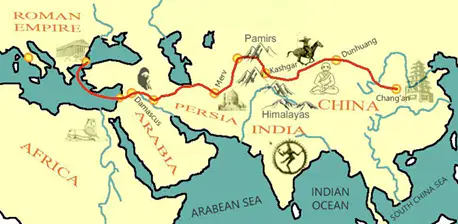
Across the Old World, many people encountered each other via trade. Which trade route pictures below was one of the longest in the world?
a)
Trail of Tears
b)
Silk Roads
c)
The Spice Routes
d)
Colombian Trade Exchange
12.
As one of the 5 Pillars, the Qu’ran encourages people to -
a)
eat together
b)
play music
c)
travel
d)
farm
13.
Abu Bakr was known to be one of the 4 Guided Caliphs of Islam. Those who supported him ultimately became known as which of the following?
a)
Shi'a Muslims
b)
Sunni Muslims
c)
Bedouin Muslims
d)
Sharia Muslims
14.
The division between Islam’s two major sects still exists today. Which sect contains the majority of Muslims?
a)
Sunni
b)
Shi'a
c)
Druze
d)
Bedouins
15.
In order to motivate the spread of Islam worldwide, what concept did Abu Bakr invoke and push to implement?
a)
Hajj
b)
Jihad
c)
Allah
d)
Alammdin
16.
Islam often appealed to non-Muslims because of its message of -
a)
equality
b)
military prowess
c)
maritime superiority
d)
religious superiority
17.
When Muslims conquered Persia and the Byzantine empire, what incentive did they offer non-Muslims to compel them to convert religions?
a)
free educataion
b)
no poll tax
c)
the promise of political power
d)
free food and water
18.
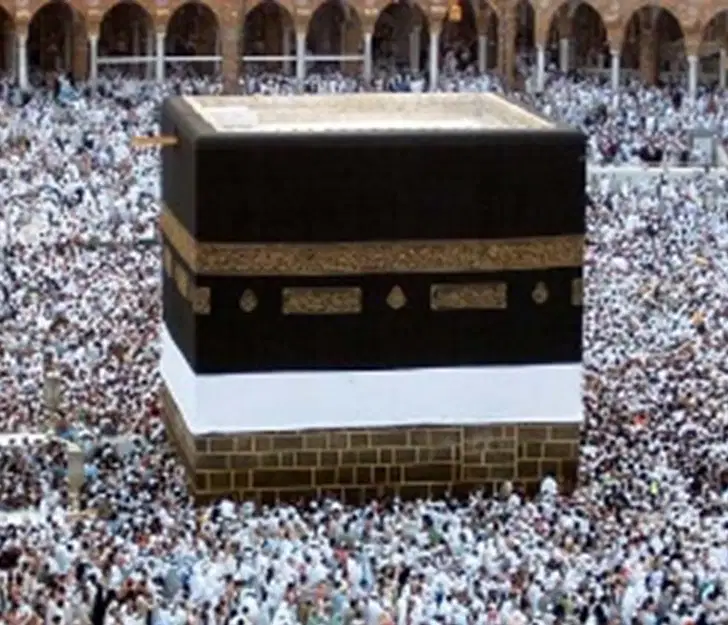
The sacred site pictured below is the - ?
a)
Western wall
b)
Kaaba
c)
Kashi Vishwanath
d)
Golden Temple
19.
What was an enduring characteristic of Japanese government?
a)
a strong emperor who was supported by shoguns and samurai
b)
Shinto teachers as the power behind the throne
c)
an equal balance of power between the feudal lords and the emperor
d)
an emperor who reigned as a figurehead while another power ruled
20.
Which Mongolian practice did Kublai Khan NOT follow?
a)
military conquest of China
b)
increased trade in the Mongol Empire
c)
the rituals of his ancestors
d)
a nomadic way of life
21.
What happened during the Pax Mongolica?
a)
The irrigation systems in the Tigris and Euphrates valleys were rebuilt.
b)
A cure for the bubonic plague was developed in China.
c)
Ideas and inventions spread with trade between Europe and Asia.
d)
Movable type, gunpowder, and the magnetic compass were invented.
22.
Genghis Khan succeeded as a conqueror through -
a)
brilliant military strategy and organization
b)
conquering only empires that had become weak
c)
dressing his soldiers as warriors of the opposing country
d)
offering people, the Mongol Peace if they surrendered
23.
What geographic reason explains why the Mongols did not conquer India?
a)
the rivers in North India
b)
the Gobi Desert
c)
the Himalayas
d)
inland seas
24.
Why did Japanese samurai fight for their lord?
a)
in exchange for an allowance
b)
in exchange for land
c)
in exchange for weapons and armor
d)
so that their lord would protect their wives
25.
Which of the following is NOT true of both Japanese samurai and European knights?
a)
They lived by a code of honor that valued bravery and loyalty.
b)
They fought for a lord in exchange for something.
c)
They entered battle with protective gear and weapons.
d)
They would commit ritual suicide rather than face defeat.
26.

Which of the following was NOT one of the Five Pillars of Islam?

a)

Prayer 5 times a day facing Mecca

b)

Forcing non-Muslims to convert

c)

Pilgrimage to Mecca

d)

Fasting during the holy month of Ramadan

27.

What was the primary reason for the rapid expansion of Islam in the 7th and 8th centuries?

a)

Economic incentives

b)

Military conquests

c)

Diplomatic relations

d)

Religious conversions

28.
What characteristic describes the earliest followers of Islam?
a)
Nomads in west Africa
b)
Migrated from Central Asia
c)
Lived on the Arabian Peninsula 
d)
Sea traders from South Asia
29.

Which city is considered the birthplace of Islam?

a)

Jerusalem

b)

Mecca

c)

Medina

d)

Baghdad

30.

What is the term for the community of Muslims worldwide?

a)

Ummah

b)

Caliphate

c)

Sharia

d)

Jihad

31.

How many pillars of Islam are there?

a)

3

b)

5

c)

7

d)

10

32.

Which city is considered the birthplace of Islam?

a)

Mecca

b)

Damascus

c)

Baghdad

d)

Cairo

33.

What is the holy book of Islam called?

a)

Vedas

b)

Qur'an

c)

Torah

d)

Bible

34.

Which of the following is a required daily practice for Muslims?

a)

Praying five times a day

b)

Fasting every day

c)

Donating all wealth

d)

Making a pilgrimage every year

35.

Which of the following is NOT a requirement for Muslims during Ramadan?

a)

Fasting from dawn to sunset

b)

Giving charity to the poor

c)

Praying five times a day

d)

Making a pilgrimage to Mecca

36.

What is the name of the journey Muhammad and his followers made from Mecca to Medina?

a)

Hijrah

b)

Hajj

c)

Umrah

d)

Jihad

37.

Which empire was NOT conquered by early Muslim armies?

a)

Persian Empire

b)

Byzantine Empire

c)

Roman Empire

d)

Egyptian Empire

38.

Which of the following is NOT one of the Five Pillars of Islam?

a)

Praying five times a day

b)

Reading the Torah daily

c)

Charity to the poor

d)

Fasting during Ramadan

39.

Who was the first caliph to lead the Muslim community after Muhammad's death?

a)

Ali

b)

Uthman

c)

Abu Bakr

d)

Umar

40.

What is the holy book of Islam called?

a)

Bible

b)

Vedas

c)

Torah

d)

Qur'an