
 Worksheets
9th Grade Humanities Art Final 2025
Total questions: 40
Worksheet time: 20mins
Name
Class
Date
1.
What is Notre Dame Cathedral famous for?
a)
Being a small, simple church with plain walls
b)
Its Gothic architecture,ointed arches, and beautiful stained glass windows
c)
Being built entirely of wood and having no windows
d)
Its large dome like the Pantheon in Rome
2.
What is the main message behind the Danse Macabre (Dance of Death) imagery in Medieval art?
a)
To celebrate the wealth of kings and queens
b)
To show the joy of life after death
c)
To remind people that death comes for everyone, no matter their status
d)
To teach anatomy and the human form
3.
How did Albrecht Dürer’s artwork become widely known during the Renaissance?
a)
He painted large murals in churches across Europe.
b)
He traveled to every city to show his paintings in which he sold to Kings
c)
He used the printing press to create many copies of his woodcuts and prints, spreading his art to more people.
d)
He taught students who copied and sold his art.
4.

What was a common theme shown on Greek pottery?
a)
Farming tools and cooking recipes
b)
Abstract shapes with no people or stories
c)
images of Christ
d)
Everyday life, mythology, and athletic competitions
5.

Why is calligraphy important in Islamic art?
a)
It is used to sign paintings made by famous artists.
b)
It is only used to decorate pottery
c)
It replaces pictures of people and animals, showing words from the Qur’an in a beautiful way.
d)
It was invented by Greek artists and copied in Islamic art.
6.
Renaissance artists frequently revisited themes from Classical mythology, demonstrating:
a)
A dislike for the past
b)
Interest in humanist values and ancient stories
c)
Iconoclasm
d)
a relook at mathematical patterns and tessellation
7.
Why was 1-point perspective important during the Renaissance?
a)
It helped artists create religious symbols only.
b)
It was used to flatten space in paintings.
c)
It allowed artists to create realistic depth and space in their artwork.
d)
It was mainly used in sculpture, not painting.
8.

What does the Danse Macabre show about society’s view of death during the Medieval period?
a)
Death was feared only by the poor, while the rich were protected.
b)
Death was seen as a random and avoidable event.
c)
Death was a universal force that united all people, regardless of class or status.
d)
Only clergy and royalty were concerned about the afterlife.
e)
Option 5
9.

What is a mosaic, and how was it used in Greek, Byzantine, and Medieval art?
a)
A type of sculpture carved from marble and used only in temples
b)
An artwork made from small pieces of stone, glass, or tile, used to decorate floors, walls, and ceilings with religious or symbolic images
c)
A painting technique that used oil paints to show realistic human forms
d)
A form of medieval stained glass art used only in Gothic cathedrals
10.

The Pantheon in Rome was originally a temple dedicated to:
a)
Julius Caesar
b)
All Roman gods
c)
Athena
d)
Emperor Hadrian
11.
What is an oculus in architecture, and where is it famously used?
a)
A pointed arch found in Gothic cathedrals
b)
A sculpture area used in Roman baths
c)
A circular opening at the top of a dome, famously used in the Pantheon in Rome to let in light
d)
a painted ceiling used in Renaissance churches
12.
What is a fresco in art?
a)
A sculpture made of marble placed in a church
b)
A painting made on wood panels using oil paint
c)
A drawing made with chalk on blackboards
d)
A type of painting done on wet plaster, so the colors become part of the wall
13.

Which Classical order features scroll-shaped capitals and inspired later Renaissance buildings?
a)
Doric
b)
Ionic
c)
Corinthian
d)
Gothic
14.

Roman portrait busts of emperors are noted for their:
a)
Abstract swirls
b)
Cartoon features
c)
Use of bright plastic colors
d)
Realistic details—even wrinkles
15.

What is the purpose of the rose window in the Cathedral of Notre Dame?
a)
It was used as a door to let people enter the church
b)
It was designed to show the wealth of the king and power
c)
It is a large stained glass window that tells religious stories using light, color, and symbolism
d)
It was built for knights to practice their archery
16.

What does Michelangelo’s sculpture David represent, and why is it important to Renaissance art?
a)
its a Greek sculpture from Greek times
b)
A medieval knight shown in armor with flat features who
c)
A biblical hero shown with idealized human anatomy, symbolizing human strength from classical influence
d)
A Roman emperor shown in motion during battle
17.

What did the Iconoclasts do?
a)
They made lots of pictures of saints.
b)
They broke, burned and removed pictures of religious people.
c)
They built big churches.
d)
They painted colorful mosaics.
18.
Mosaic floors and walls in Roman houses often showed:
a)
Dragons and unicorns
b)
Only written words
c)
Scenes of daily life, nature, and myths
d)
computer codes
19.

Which of the following best describes the style of Classical Greek sculpture?
a)
Abstract and unrealistic with no human form
b)
Flat and symbolic with little emotion
c)
Idealized and balanced with calm facial expressions
d)
Exaggerated and muscular with angry faces
20.

How does Hellenistic Greek sculpture differ from Classical Greek sculpture?
a)
It shows more emotion and movement
b)
It is more rigid and formal.
c)
It focuses only on gods and goddesses.
d)
It avoids depicting the human body.
21.
Oil paint was an invention from
a)
Russia
b)
The Netherlands
c)
China
d)
England
22.

The artist of this painting is
a)
Michelangleo
b)
Leonardo da Vinci
c)
Boticelli
d)
Donatello
23.
What was a major focus of Greek art?
a)
Religious icons only
b)
Abstract shapes and patterns
c)
Idealized human bodies and balance
d)
Dark and emotional subjects
24.
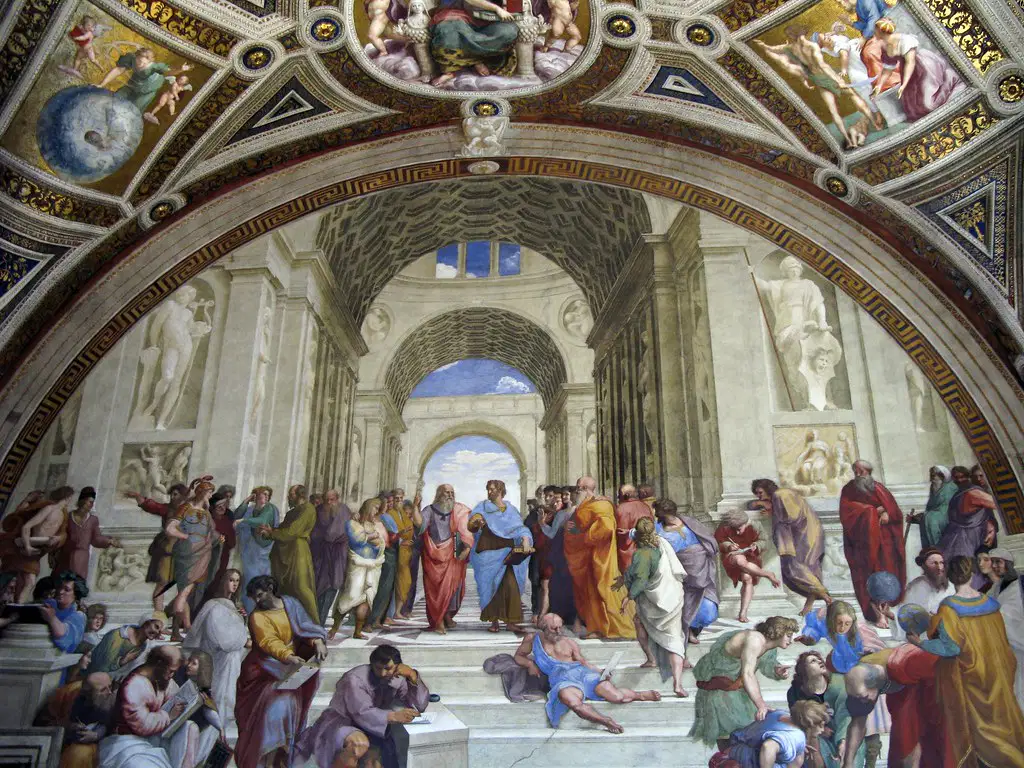
Raphael’s painting The School of Athens was made during which time period, and what does it show about that era?
a)
Medieval period; it shows religious devotion and flat figures
b)
Byzantine period; it focuses on gold and spiritual symbolism
c)
Hellenistic period; it highlights emotional drama and movement
d)
Renaissance; it reflects a revival of classical Greek and Roman ideals, including philosophy, math, and balanced composition
25.

What do the mosaics of Emperor Justinian and Empress Theodora in the Church of San Vitale show about their rule?
a)
They held both political and religious power, shown by their central, symbolic placement in religious art.
b)
They were both artists who created religious mosaics.
c)
They ruled separately and had little influence on religion.
d)
They were not important figures in Byzantine history.
26.
Art Project: When recreating the front of the Dome of the Rock, which rules of Islamic art did you have to follow?
a)
Use of Christian symbols and portraits of leaders
b)
Include realistic images of people and animals
c)
Avoid images of living things, use geometric patterns, repetition, calligraphy, and bright colors
d)
.Focus on shading, perspective, and realism like in Renaissance art
27.
How did the use of light change during the Renaissance?
a)
Artists ignored shadows
b)
Artists used light to create mood and depth
c)
Everything looked the same
d)
Light was not used at all
28.

What was the main purpose of the Roman Colosseum?
a)
Worship
b)
Gladiator battles and public shows
c)
Government meetings
d)
Market shopping
29.

The great church Hagia Sophia in Constantinople was commissioned by which emperor?
a)
Nero
b)
Justinian
c)
Constantine
d)
Hadrian
30.
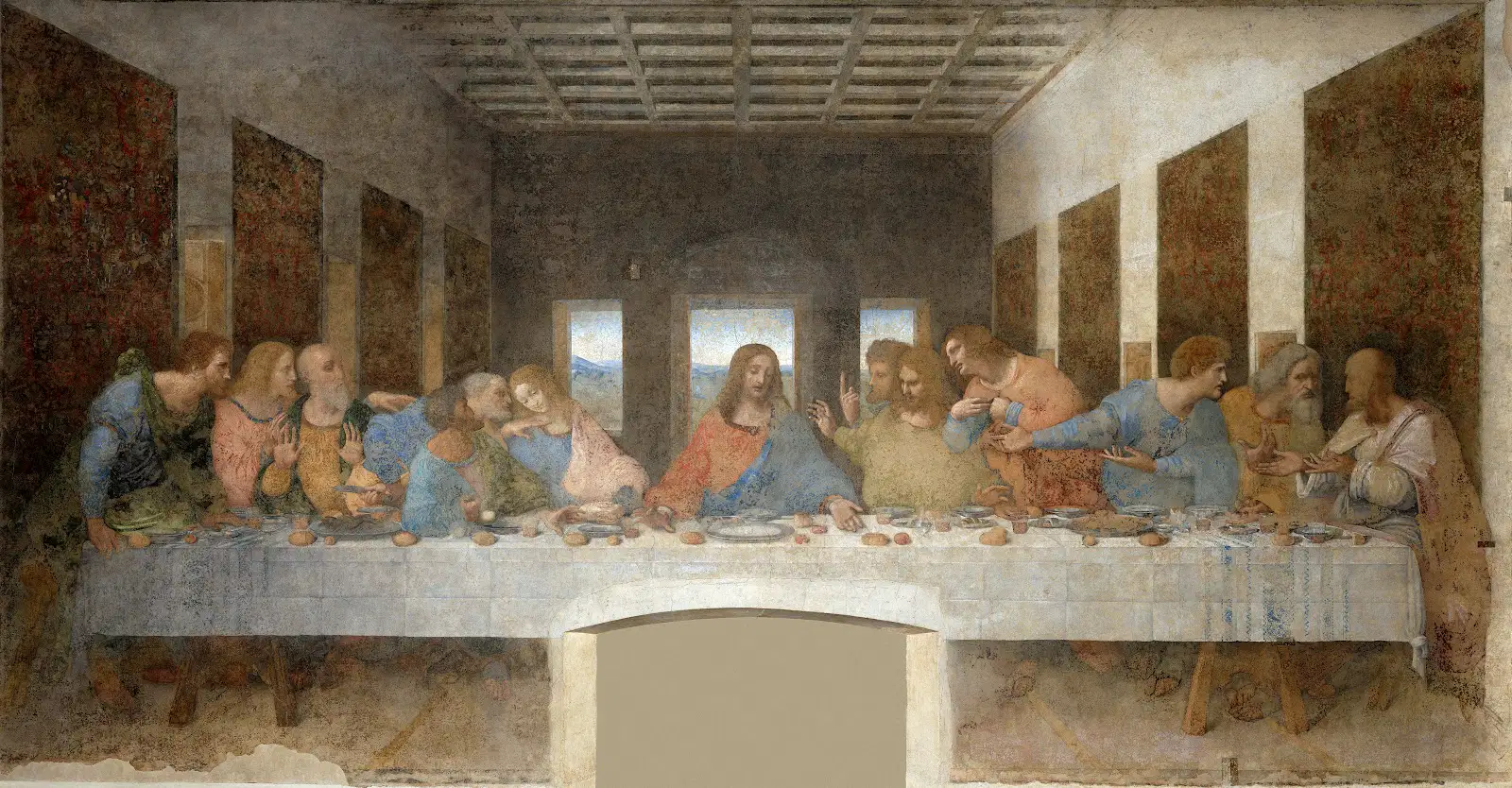
Why was 1-point perspective important during the Renaissance?
a)
It helped artists create religious symbols only.
b)
It was used to flatten space in paintings.
c)
It allowed artists to create realistic depth and space in their artwork.
d)
It was mainly used in sculpture, not painting.
31.

What is the main idea shown in Michelangelo’s The Creation of Adam on the Sistine Chapel ceiling?
a)
Two people shaking hands to make peace
b)
God giving Adam the spark of life, showing their connection
c)
A group of angels creating the Earth
d)
Adam and God building the world together
32.
Renaissance portraits often included average merchants and scholars. This reflects:
a)
Complete rejection of realism
b)
Hatred of color
c)
Only royal power
d)
Growing interest in individual identity
33.
How did the status of artists and the concept of art change during the Renaissance compared to the Middle Ages?
a)
Artists were still seen as anonymous craftsmen working only for the church
b)
Art became more about following strict religious rules with no creativity
c)
Artists gained recognition as creative individuals, and art was seen as a form of intellectual and personal expression
d)
Craft and fine art were treated exactly the same, with no change in social value
34.
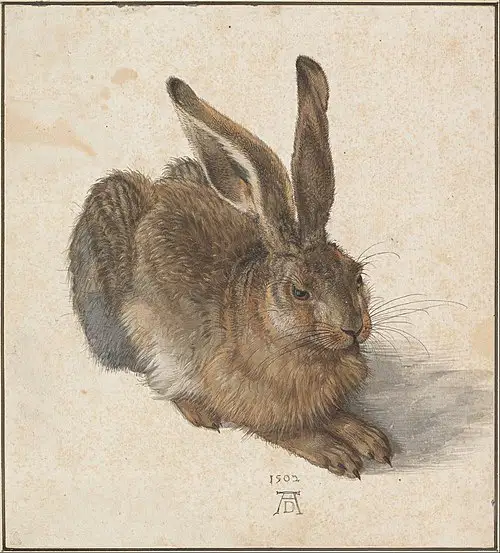
What type of artwork did the artist Albercht Durer become famous for ? ( see example of his work below)
a)
printmaking and etching
b)
painting
c)
colored pencils
d)
crayons and etching
35.

What is atmospheric perspective, and how did Leonardo da Vinci use it?
a)
Making things look flat and close to the viewer
b)
Making distant objects look lighter and blurrier to show depth
c)
Using bright colors to decorate churches
d)
Painting only portraits of famous people
36.
What is special about Jan van Eyck’s painting The Arnolfini Wedding?
a)
It shows a simple, plain background with no details.
b)
It uses detailed symbols and reflections to tell a story about marriage and wealth.
c)
It was painted using only black and white colors.
d)
It shows a battle scene from Roman history.
37.

What are common features of Gothic paintings?
a)
Realistic bodies, detailed shadows, and natural backgrounds
b)
Flat figures, gold backgrounds, halos, and religious subjects
c)
Abstract shapes, with 1 point perspective
d)
Portraits of everyday people with emotions and perspective
38.
Halos in medieval paintings primarily indicate:
a)
Nighttime
b)
Sainthood or holiness
c)
Sadness
d)
none of these
39.
During the Middle Ages most large art projects (cathedrals, altarpieces) were owned by
a)
Private galleries
b)
The Church
c)
Individual artists only
d)
The Medici Family
40.
Islamic religious art generally avoids images of living creatures because:
a)
No one liked portraits
b)
Pigments were rare
c)
The Qur’an emphasizes that only God should create life
d)
artists lacked skill
100 %

