wayground logo

Free Printable Worksheets

NEW

Font size

S
M
L
XL
Worksheets

Evolution Review #1

Total questions: 34

Worksheet time: 40mins
Name
Class
Date
1.
Inherited trait that helps an organism survive is a(n) __________.
a)
Fossil
b)
Adaptation
c)
Ancestor
d)
Natural selection
2.
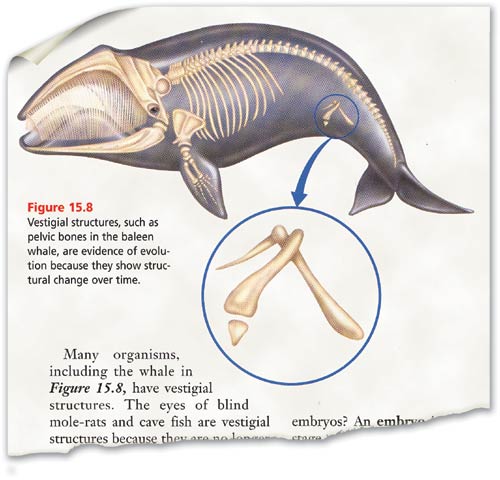
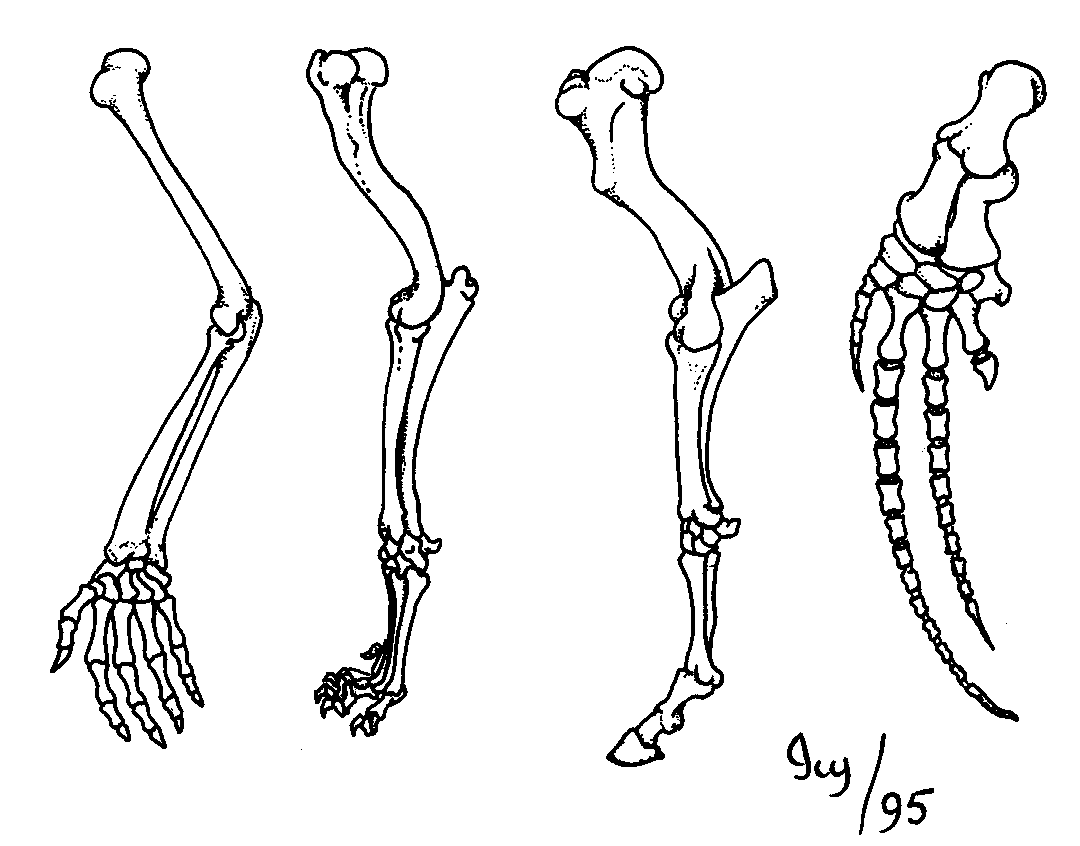
Structures with the same parts have different functions; suggests that organisms share a common ancestry
a)
vestigial structures
b)
homologous structures
c)
adaptive radiation
d)
fossil
3.
Which of the following is an example of a vestigial structure?
a)
the wings of a red-tailed hawk
b)
the hind limbs of a house cat
c)
the fins of sharks
d)
the tailbone of a human
4.
The diagram shows fossils in different rock layers. Which of these statements about the age of these fossils is most likely correct?
a)
Fossil A and C are the same age
b)
Fossil B is older than fossil C
c)
Fossils A is older than fossil B
d)
Fossil D is older than fossil C
5.

What do we call a change in a species over time?

a)

Adaptation

b)

Evolution

c)

Extinction

d)

Environmental influences

6.

Ostrich wings (they don't fly) are examples of
a)
homologous structures
b)
vestigial structures
c)
adaptations
d)
traits
7.
What is embryology?
a)
the age of organisms
b)
the oldest stage of development
c)
the life span of an organism
d)
the earliest growth stage of development
8.
Two organisms that are closely related would have
a)
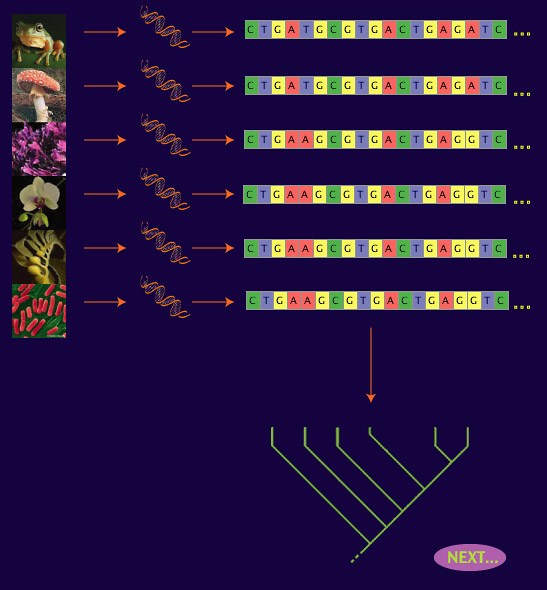
very similar DNA sequence
b)
exactly the same DNA sequences
c)
no proteins in common
d)
completely different DNA sequence
9.
All the individuals of a species that live in a particular area are called a
a)
variation
b)
population
c)
fossil
d)
group
10.
Which layer is oldest?
a)
A
b)
W
c)
G
d)
Z
11.
Why are advantageous traits more likely to be passed onto offspring?
a)
Because they are more likely to survive and reproduce.
b)
Because they come from dominant alleles.
c)
Because they come from recessive alleles.
d)
Because the trait is an acquired phenotype.
12.
Natural selection is when ____________ decides who survives and who doesn't
a)
nature
b)
humans
c)
animals
d)
years
13.
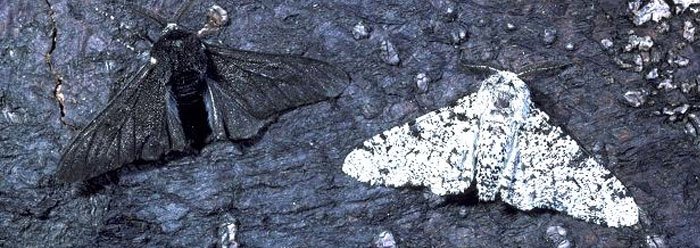
The trees these moths used to live on were white, but have been covered in soot from coal factories. Which moth will be more successful in this environment?
a)
Dark moth
b)
Light moth
c)
Both will be equally successful
d)
Neither will be successful
14.
Which best describes mutations?
a)
Always helpful
b)
Always harmful
c)
Can be helpful or harmful
d)
Always neutral
15.
What does Darwin's theory of evolution suggest?
a)
species change over time
b)
extinct species are not related to living species
c)
different species can interbreed
d)
animals that look alike are most closely related
16.
Which of these best represents a time period in which an organism could evolve?
a)
5 days
b)
100 years
c)
10,000 years
d)
2 decades
17.

A theory has significant (a lot) evidence to support it.  True or False
a)
True
b)
False
18.
The ability of an organism to survive and reproduce in its specific environment 
a)
diversity.
b)
evolution
c)
adaptation
d)
 fitness
19.
Where humans have bred organisms together based on traits we like.
a)
Evolution
b)
Natural Selection
c)
Extinction 
d)
Artificial Selection
20.
Genetic differences between organisms of the same species
a)
Variation
b)
Adaptation
c)
Behavior
d)
Environment
21.

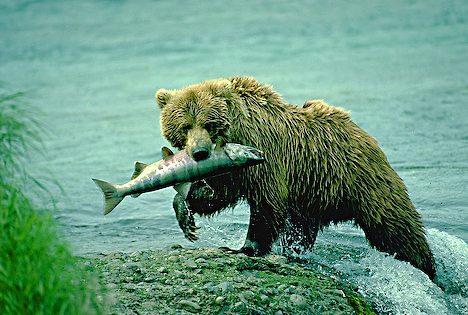
A grizzly bear survives because he is well-adapted to his environment. When he reproduces he passes on those traits to his offspring. This process is called

a)

Natural Selection

b)

Selective Breeding

c)

Random mutations

d)

Variations in a species

22.

Do organisms "decide" to evolve and change? (they have the ability to change whenever they want)
a)
Yes, they know they need to change to survive 
b)
No, they change because of natural selection
23.
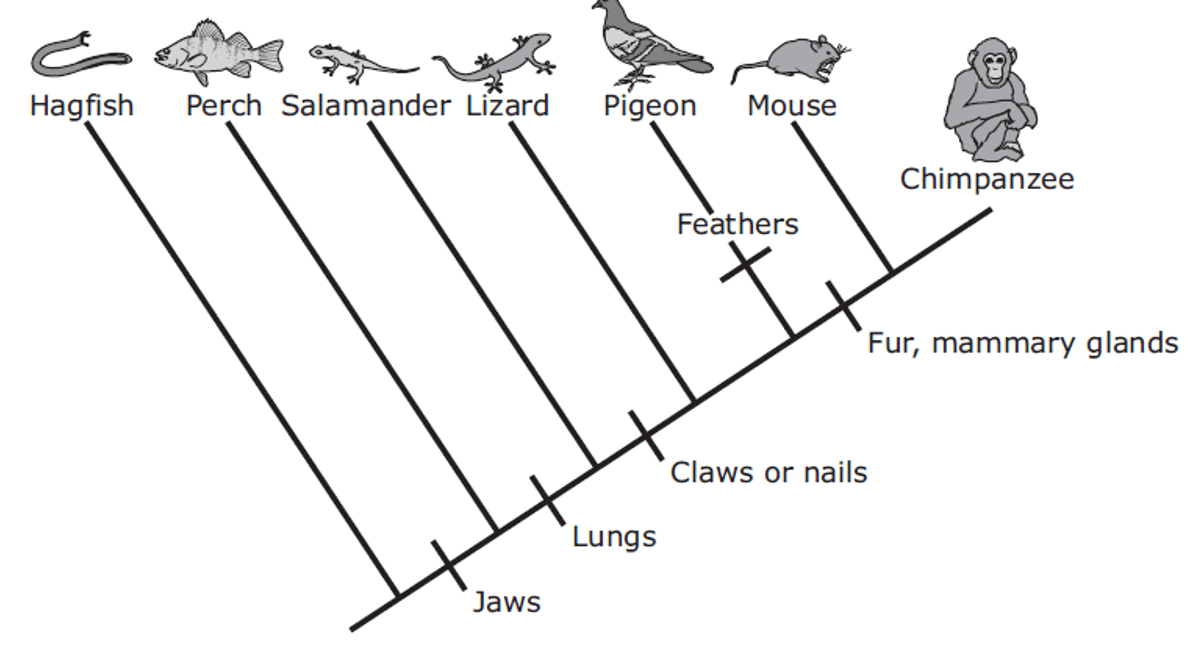
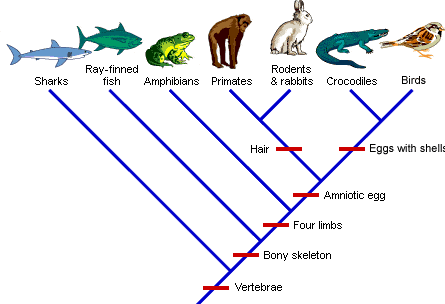
According to this cladogram, sharks are MOST closely related to which organism? 
a)
Amphibians
b)
Ray finned fish
c)
Crocodiles
d)
Birds
24.

All the animals to the right of the salamander would have the common characteristic of...

a)

Fur

b)

Claws or nails

c)

Lungs

d)

Jaws

25.

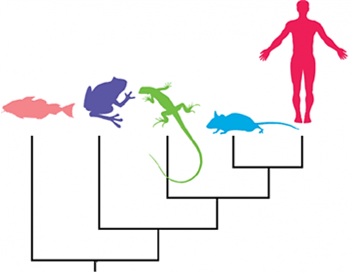
What is the human most closely related to?

a)

Fish

b)

mouse

c)

Salamander

d)

Human

26.

The tail bone, wisdom teeth, and appendix are all parts of the human anatomy that would be considered...

a)

homologous structures

b)

vestigial structures

c)

fossils

d)

extinct

27.

A bird's wing and a butterfly's wing have the same function, but they have very different structures. These structures are classified as follows:

a)

homologous structures

b)

analogous structures

c)

vestigial structures

d)

embryological homologues

28.

Based on the number of differences in amino acid sequence, which pair of organisms is LEAST RELATED to each other?

a)

human- chimpanzee

b)

Human - gorilla

c)

Fruit fly- pigeon

d)

Human-horse

29.

This mechanism of evolution occurs when individuals, and their genetic material, move from one population to another.

a)

Extinction

b)

Gene flow

c)

Genetic drift

d)

Natural Selection

30.

Which scientist started the modern Theory of Evolution?

a)

Albert Einstein

b)

Robert Hooke

c)

James Watson

d)

Charles Darwin

31.

Which species' DNA is most similar to the DNA of the toothed whale? 

a)
Hippopotamus 
b)
Baleen Whale
c)
Grazing Mammals
d)
Camels
32.

Genetic drift is a process that causes a change in a population's gene pool. What can cause genetic drift?

a)

disease plague

b)

hurricane

c)

volcanic eruption

d)

all of the above

33.
The opossum and kangaroo both incubate their young in a pouch. This provides evidence that they---
a)
are descended from a common ancestor
b)
Have very similar skeletal structures
c)
belong to the same species
d)
must range great distances to eat
34.

The table shows the survival rate of two types of beetles in the same environment over a period of three years.


Based on the table, which statement is correct?

a)

Brown beetles have a shorter life cycle than green beetles have

b)

Green beetles are more fit for their environment than brown beetles

c)

Brown beetles undergo more unfavorable mutations than green beetles

d)

Green beetles do not have the adaptations suited for survival in this environment