wayground logo

Free Printable Worksheets

Font size

S
M
L
XL
Worksheets

Inverse, determinants and Cramers Rule

Total questions: 123

Worksheet time: 9hrs 6mins

Name
Class
Date
1.

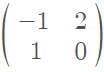
What is the inverse of this matrix?

a)
b)
c)
d)
2.

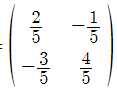
Find the inverse of this matrix

a)

No inverse

b)
c)
d)
3.

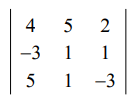
What is the determinant of the matrix?

a)

0

b)

-8

c)

8

d)

-16

4.

Which matrix is an identity matrix

a)

A

b)

B

c)

C

d)

D

5.
What is the inverse of this matrix?
a)
(1/25)  (-4/25)
(3/25)  (13/25)
b)
(1/5)  (-4/5)
(3/5)  (13/5)
c)
(6/25)  (-2/25)
(2/25)  (9/25)
d)
(1/150)  (-4/150)
(3/150)  (13/150)
6.

Which of the following is the inverse of the matrix A=

⌈3 0⌉

⌊0 2⌋

a)

[1/2 0]

[0 1/3]

b)

[-3 0]

[0 -2]

c)

⌈1/3 0⌉

⌊0 1/2⌋

d)

[2 0]

[0 3]

7.

What is A-1?

a)
b)
c)
d)
8.

What size is this matrix?

a)

2x2

b)

2x3

c)

3x2

d)

1x6

9.

What is the determinant of this matrix?

a)

-2

b)

2

c)

10

d)

24

10.

What is the determinant of this matrix?

a)

5

b)

-5

c)

0

d)

-12

11.

What is the determinant of this matrix?

a)

0

b)

24

c)

-24

d)

-12

12.

Will this matrix have an inverse?

a)

Yes

b)

No

c)

Unable to Determine

13.

Are these matrices inverses of each other?

a)

Yes

b)

No

c)

Unable to Determine

14.

Which option below correctly shows the steps to find the inverse of this matrix?

a)
b)
c)
d)

No Inverse Exists

15.

Find the inverse of the matrix.

a)
b)
c)
d)

No Inverse Exists

16.

Find the inverse of the matrix.

a)
b)
c)
d)

No Inverse Exists

17.

What size is this matrix?

a)

2x2

b)

2x3

c)

3x2

d)

1x6

18.

What is the formula for the determinant of a 2x2 matrix?

a)

ad-bc

b)

ab-cd

c)

ad+bc

d)

(a+d)(b+c)

19.

What is the determinant of this matrix?

a)

5

b)

-5

c)

0

d)

-12

20.

Will this matrix have an inverse?

a)

Yes

b)

No

c)

Unable to Determine

21.
Calculate the determinant
a)
0
b)
-15
c)
-70
d)
10
22.

Calculate the Determinant

a)

det = 2

b)

det = -2

c)

det = -64

d)

det = 64

23.

What is a23

a)

14

b)

4

c)

1

d)

3

24.
Which of the following matrices do NOT have an inverse? 
*Inverse=
                 ¹∕detA × ⌈d  −b⌉                                      ⌊−c  a⌋
a)
[1  2]
[3  4]
b)
[6  0]
[4  2]
c)
⌈6  3⌉
⌊4  2⌋
25.
What is the inverse of this matrix?
a)
(1/25)  (-4/25)
(3/25)  (13/25)
b)
(1/5)  (-4/5)
(3/5)  (13/5)
c)
(6/25)  (-2/25)
(2/25)  (9/25)
d)
(1/150)  (-4/150)
(3/150)  (13/150)
26.
Which of the following is the inverse of the matrix A= 
⌈3  0⌉
⌊0  2⌋
*Inverse=
                 ¹∕detA × ⌈d  −b⌉                                      ⌊−c  a⌋
a)
[1/2    0]
[0    1/3]
b)
[-3  0]
[0  -2]
c)
⌈1/3   0⌉
⌊0   1/2⌋
d)
[2  0]
[0  3]
27.
Are A and B inverses? 
A = ⌈3  -10⌉
        ⌊1      4⌋
B = ⌈2/11  5/11⌉
         ⌊-1/22   3/22⌋
*AB=I
a)
Yes
b)
No
28.

Are these matrices inverses of each other?

a)

Yes

b)

No

c)

Unable to Determine

29.

Find the inverse.

a)

A

b)

B

c)

C

d)

D

30.

What is the determinant of this matrix?

a)

-2

b)

2

c)

10

d)

24

31.

What is the formula for the determinant of a 2x2 matrix?

a)

ad-bc

b)

ab-cd

c)

ad+bc

d)

(a+d)(b+c)

32.

What is the determinant of this matrix?

a)

0

b)

24

c)

-24

d)

-12

33.

Are these matrices inverses of each other?

a)

Yes

b)

No

c)

Unable to Determine

34.

Find the inverse of the matrix.

a)
b)
c)
d)

No Inverse Exists

35.

Find the inverse of the matrix.

a)
b)
c)
d)

No Inverse Exists

36.
Calculate the determinant
a)
0
b)
-15
c)
-70
d)
10
37.
What is the inverse of this matrix?
a)
(1/25)  (-4/25)
(3/25)  (13/25)
b)
(1/5)  (-4/5)
(3/5)  (13/5)
c)
(6/25)  (-2/25)
(2/25)  (9/25)
d)
(1/150)  (-4/150)
(3/150)  (13/150)
38.
Solve for the determinant of the following matrix:  
⌈12  −3⌉
⌊−6  15⌋
*detA= ad-bc
a)
198
b)
162
c)
-333
d)
-9
39.
Determine whether the matrices are multiplicative inverses.
a)
Yes
b)
No
c)
Elevator
d)
Pi
40.
Evaluate the determinant of the matrix.
a)
-21
b)
0
c)
9
d)
12
41.
Determine if the matrix has an inverse, if so find it.
a)
No
b)
 0   1
-1   2
c)
-1   3
  1   -2
d)
  2   -1
-1   1
42.
Determine if the matrix has an inverse, if so find it.
a)
No
b)
 0   1
-1   2
c)
-1   3
  1   -2
d)
  2   -1
-1   1
43.

Find the determinant of the given matrix?

a)

5

b)

-5

c)

0

d)

-75

44.

What is the determinant of matrix A?

a)

0

b)

-16

c)

16

d)

undefined

45.
How many columns are in a 5 x 4 matrix?
a)
5
b)
4
c)
20
d)
9
46.

The order of the matrix is

a)

2 x 3

b)

3 x 2

47.
Multiply
a)
20     15    -10
30     -5         0
b)
-20      15     -10
30     -5          0
c)
1        8       3
11     4        5
d)
20     -15     10
-30         5        0  
48.
Determine if the matrix has an inverse, if so find it.
a)
No
b)
 0   1
-1   2
c)
-1   3
  1   -2
d)
  2   -1
-1   1
49.
Determine if the matrix has an inverse, if so find it.
a)
No
b)
 0   1
-1   2
c)
-1   3
  1   -2
d)
  2   -1
-1   1
50.

Which matrix is an identity matrix

a)

A

b)

B

c)

C

d)

D

51.

Find Inverse of M

a)
b)
c)
d)
52.

That is the matrix M.Given that the determinant of M is y.Find Y

a)

1/2

b)

3

c)

2

d)

Y

53.
What is the inverse of this matrix?
a)
(1/25)  (-4/25)
(3/25)  (13/25)
b)
(1/5)  (-4/5)
(3/5)  (13/5)
c)
(6/25)  (-2/25)
(2/25)  (9/25)
d)
(1/150)  (-4/150)
(3/150)  (13/150)
54.
What is the inverse of the following matrix?
⌈4  −3⌉
⌊12  3⌋
*det= 38
a)
⌈³∕₃₈  ³∕₃₈⌉
⌊−⁶∕₁₉  ²∕₁₉⌋
b)
⌈⁴∕₃₈  −³∕₃₈⌉
⌊¹²∕₃₈  ³∕₃₈⌋
c)
⌈²∕₁₉  −³∕₃₈⌉
⌊−⁶∕₁₉  ³∕₃₈⌋
d)
⌈³∕₃₈  ³∕₃₈⌉
⌊−¹²∕₃₈  ⁴∕₃₈⌋
55.

Which of the following is the inverse of the matrix A=

⌈3 0⌉

⌊0 2⌋

*Inverse= ¹∕detA × ⌈d −b⌉

⌊−c a⌋

a)

[1/2 0]

[0 1/3]

b)

[-3 0]

[0 -2]

c)

⌈1/3 0⌉

⌊0 1/2⌋

d)

[2 0]

[0 3]

56.
Determine if the matrix has an inverse, if so find it.
a)
No
b)
 0   1
-1   2
c)
-1   3
  1   -2
d)
  2   -1
-1   1
57.

If A is any invertible matrix then A is

a)

square matrix

b)

non singular matrix

c)

both

d)

none of these

58.

If A is an invertible matrix of order 3 and |A|=5 then find |Adj A|

a)

5

b)

15

c)

25

d)

125

59.

If A is square matrix of order 3 such that |AdjA| =64 , find |A|

a)

64

b)

8

c)

4

d)

192

60.

If |A| = 0, then A is

a)

zero matrix

b)

singular matrix

c)

non-singular matrix

d)

Identity matrix

61.

Det(A+B) = Det(A) + Det(B)

a)

Question statement is true.

b)

Question statement is false

62.

Det(AB) = Det(A).Det(B)

a)

Statement is true only for some A and B.

b)

Statement is always true.

c)

Statement is never true.

63.

Find the inverse of the matrix, if it exists.

a)

singular, no inverse

b)
c)
d)
64.

If A is an invertible square matrix and k is a non-negative real number then  (kA)1=\left(kA\right)^{-1}=  

a)

k(A1)k\left(A^{-1}\right)  

b)

1k(A1)\frac{1}{k}\left(A^{-1}\right)  

c)

k(A1)-k\left(A^{-1}\right)  

d)

none of these

65.
a)
b)
c)
d)
66.

Determine if the matrix has an inverse, if so find it.

a)

Not Invertible

b)
c)
d)
67.

Determine if the matrix has an inverse, if so find it.

a)

Not invertible

b)
c)
d)
68.

What is the inverse of this matrix?

a)
b)
c)
d)
69.

Find the inverse of the matrix

a)

A

b)

B

c)

C

d)

D

70.
Find the inverse of the matrix
a)
A
b)
B
c)
C
d)
D
71.

When you multiply a matrix by the inverse matrix, you obtain the

a)

inverse matrix.

b)

transpose matrix.

c)

Identity matrix

d)

original matrix.

72.
a)
A
b)
B
c)
C
73.
a)
A
b)
B
c)
C
d)
D
74.
a)
A
b)
B
c)
C
d)
D
75.
a)
A
b)
B
c)
C
d)
D
76.
a)
A
b)
B
c)
C
d)
D
77.
a)
A
b)
B
c)
C
d)
D
78.
a)
A
b)
B
c)
C
d)
D
79.
a)
A
b)
B
80.
a)

A

b)

B

c)

C

d)

D

81.
a)

A

b)

B

c)

C

d)

D

82.
Use Cramer's Rule to Solve the Following:
2x - 5z = 6
-3x + 4y - 2z = 26
-3x + y - 4z = 18
a)
(-6, 5, -3)
b)
(5, -6, 4)
c)
(5, -6, -3)
d)
(-2, 4, -2)
83.
Use Cramer's Rule to solve the following:
-3x + y = 4
-5x + 2y - 4z = -3
-x - 4y - 6z = 11
a)
(2, -5, -3)
b)
(2, -4, -4)
c)
(2, -3, -5)
d)
(-3, -5, 2)
84.
Solve using Cramer's Rule:
x - 3y - 5z = 7
-y - 4z = 11
-3x - y + 3z = 5
a)
(1, -5, -3)
b)
(-5, 1, -3)
c)
(2, 0, 3)
d)
(0, 2, 3)
85.
Solve for x and y using CRAMER'S RULE
3x + 2y = 16
7x + y = 19
a)
(-2,5)
b)
(-2,-5)
c)
(2,-5)
d)
(2,5)
86.
Solve for x and y.  Use Cramer's
2x − 3y = −1
 y = x − 1
a)
(-2,-3)
b)
(0,-1)
c)
(3,4)
d)
(4,3)
87.
Use Cramer's Rule to Solve
a)
x=-3
y=4
b)
x=-3
y=5
c)
x=3
y=-4
d)
x=2
y=-5
88.
Solve for x and y using Cramer's Rule
3x + 2y = 16
7x + y = 19
a)
(-2,5)
b)
(-2,-5)
c)
(2,-5)
d)
(2,5)
89.
Solve using Cramer's Rule
a)
(-5,-6)
b)
(-6,3)
c)
(-5,0)
d)
(0,-5)
90.
Use Cramer's Rule to Solve
a)
x=-3
y=4
b)
x=-3
y=5
c)
x=3
y=-4
d)
x=2
y=-5
91.
Solve for x and y using Cramer's Rule
3x + 2y = 16
7x + y = 19
a)
(-2,5)
b)
(-2,-5)
c)
(2,-5)
d)
(2,5)
92.
Solve using Cramer's Rule
a)
(-5,-6)
b)
(-6,3)
c)
(-5,0)
d)
(0,-5)
93.
Solve the system using Cramer's Rule.  
5x + 8y = -12
3x + 5y = -7
a)
(1, -10)
b)
(-4, 7)
c)
(-4, 1)
d)
(1, 10)
94.
Use Cramer's Rule to solve the system of equations.
6x-5y=73
-7x+3y=-71
a)
(8, -5)
b)
(8, -7)
c)
(4, -5)
d)
(8, 8)
95.

Solve system by using Cramer's Rule. Answers are written in the following form (x,y)
4x+6y=34x+6y=3  
8x3y=18x-3y=1  

a)

(14,13)\left(\frac{1}{4},\frac{1}{3}\right)  

b)

(13,14)\left(-\frac{1}{3},\frac{1}{4}\right)  

c)

(13,14)\left(\frac{1}{3},\frac{1}{4}\right)  

d)

(14,13)\left(\frac{1}{4},-\frac{1}{3}\right)  

96.

Solve system by using Cramer's Rule. Answers are written in the following form (x,y)
2x+3y=152x+3y=15  
x3y=3x-3y=3  

a)

(1,5)\left(1,5\right)  

b)

(5,1)\left(5,-1\right)  

c)

(5,1)\left(5,1\right)  

d)

(1,5)\left(-1,5\right)  

97.

Solve system by using Cramer's Rule. Answers are written in the following form (x,y)
4x+7y=10-4x+7y=10  
x3y=10x-3y=-10  

a)

(8,10)\left(-8,-10\right)  

b)

(8,10)\left(8,-10\right)  

c)

(10,8)\left(10,-8\right)  

d)

(10,8)\left(-10,8\right)  

98.

Find the determinant of the above matrix.

a)

-23

b)

23

c)

-7

d)

7

99.

Find the determinant of the above matriz.

a)

33

b)

-33

c)

15

d)

-15

100.

Find the determinant of the above matrix.

a)

81

b)

-81

c)

-129

d)

129

101.

Evaluate the determinant of the matrix.

a)

30-30

b)

10-10

c)

1010

d)

55-55

102.

Evaluate the determinant of the matrix.

a)

5-5

b)

4545

c)

10-10

d)

1010

103.

Evaluate the determinant of the matrix.

a)

99

b)

1-1

c)

11

d)

1919

104.

Evaluate the determinant of the matrix.

a)

00

b)

10-10

c)

2020

d)

20-20

105.

Solve the system of equations using Cramer's Rule.

a)

(3,1)\left(-3,-1\right)  

b)

(6,6)\left(-6,6\right)  

c)

(5,3)\left(5,-3\right)  

d)

(2,6)\left(2,-6\right)  

106.

Solve the system of equations using Cramer's Rule.

a)


(2,0)\left(-2,0\right)

b)

(1,4)\left(1,4\right)

c)

(2,6)\left(2,6\right)

d)

(2,3)\left(2,-3\right)

107.

Solve the system of equations using Cramer's Rule.

a)


(4,0)\left(-4,0\right)

b)

(5,2)\left(-5,-2\right)

c)

(3,2)\left(-3,-2\right)

d)

(5,1)\left(5,1\right)

108.

Solve the system of equations using Cramer's Rule.

a)


(6,6)\left(6,-6\right)

b)

(6,6)\left(-6,6\right)

c)

(6,2)\left(-6,2\right)

d)

(2,6)\left(2,-6\right)

109.

Solve system by using Cramer's Rule. Answers are written in the following form (x,y)
4x+6y=34x+6y=3  
8x3y=18x-3y=1  

a)

(14,13)\left(\frac{1}{4},\frac{1}{3}\right)  

b)

(13,14)\left(-\frac{1}{3},\frac{1}{4}\right)  

c)

(13,14)\left(\frac{1}{3},\frac{1}{4}\right)  

d)

(14,13)\left(\frac{1}{4},-\frac{1}{3}\right)  

110.

Solve system by using Cramer's Rule. Answers are written in the following form (x,y)
2x+3y=152x+3y=15  
x3y=3x-3y=3  

a)

(1,6)\left(1,6\right)  

b)

(6,1)\left(6,-1\right)  

c)

(6,1)\left(6,1\right)  

d)

(1,6)\left(-1,6\right)  

111.

When setting up Cramer's Rule, what is the 2x2 determinant for the numerator for the x in the system?


a)

4   2\left|-4\ \ \ -2\right|  
5   4 \left|-5\ \ \ -4\right|\  

b)

4   16\left|-4\ \ \ -16\right|  
5  26\left|-5\ \ -26\right|  

c)

16   2\left|-16\ \ \ -2\right|  
26    4\left|-26\ \ \ \ -4\right|  

d)

4  4\left|-4\ \ -4\right|  
2  5\left|-2\ \ -5\right|  

112.

When setting up Cramer's Rule, what is the 2x2 determinant for the numerator for the y in the system?


a)

4   2\left|-4\ \ \ -2\right|  
5   4 \left|-5\ \ \ -4\right|\  

b)

4   16\left|-4\ \ \ -16\right|  
5  26\left|-5\ \ -26\right|  

c)

16   2\left|-16\ \ \ -2\right|  
26    4\left|-26\ \ \ \ -4\right|  

d)

4  4\left|-4\ \ -4\right|  
2  5\left|-2\ \ -5\right|  

113.

What size is this matrix?

a)

2x2

b)

2x3

c)

3x2

d)

1x6

114.

What is the formula for the determinant of a 2x2 matrix?

a)

ad-bc

b)

ab-cd

c)

ad+bc

d)

(a+d)(b+c)

115.

Solve system by using Cramer's Rule. Answers are written in the following form (x,y)

4x+7y=10-4x+7y=10  
x3y=10x-3y=-10  

a)

(8,10)\left(-8,-10\right)  

b)

(8,6)\left(8,6\right)  

c)

(6,8)\left(6,-8\right)  

d)

(10,8)\left(-10,8\right)  

116.

Find the determinant of the above matrix.

a)

81

b)

-81

c)

-129

d)

129

117.

Use Cramer's Rule to solve the system.  What is the solution?


a)


(1,5)\left(1,5\right)

b)

No unique solution

c)


(3, 4)\left(3,\ -4\right)  

d)

(2,4)\left(2,4\right)  

118.

Evaluate the determinant of the matrix.

a)

30-30

b)

10-10

c)

1010

d)

55-55

119.

Evaluate the determinant of the matrix.

a)

5-5

b)

4545

c)

10-10

d)

1010

120.

Evaluate the determinant of the matrix.

a)

00

b)

10-10

c)

2020

d)

20-20

121.

Solve the system of equations using Cramer's Rule.

a)

(3,1)\left(-3,-1\right)  

b)

(6,6)\left(-6,6\right)  

c)

(5,3)\left(5,-3\right)  

d)

(2,6)\left(2,-6\right)  

122.

Solve the system of equations using Cramer's Rule.

a)


(2,0)\left(-2,0\right)

b)

(1,4)\left(1,4\right)

c)

(2,6)\left(2,6\right)

d)

(2,3)\left(2,-3\right)

123.

Solve the system of equations using Cramer's Rule.

a)


(6,6)\left(6,-6\right)

b)

(6,6)\left(-6,6\right)

c)

(6,2)\left(-6,2\right)

d)

(2,6)\left(2,-6\right)