
Font size
 Worksheets
Nixon, Ford, and Carter
Total questions: 3
Worksheet time: 10mins

Which U.S. President is associated with the crises of the 1970s as mentioned in the title of the notebook page?
Gerald Ford
Jimmy Carter
Richard Nixon
Ronald Reagan
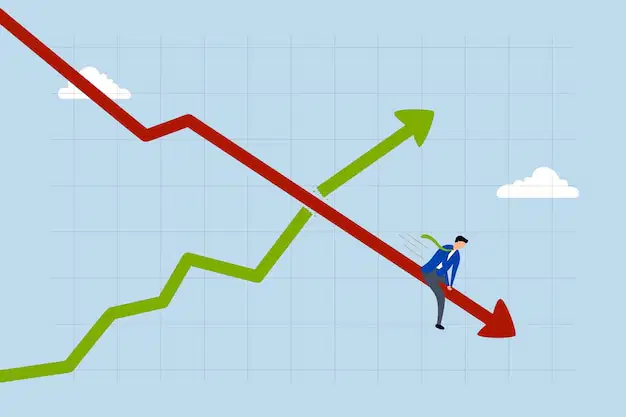
What economic phenomenon characterized the American economy in the early 1970s?
Deflation
Stagflation
Hyperinflation
Recession

Which of the following was NOT a feature of the American economy during the stagflation period of the 1960s and 70s?
High unemployment
Stagnant wages
Price deflation
Price inflation

Until when did the problems of stagflation remain in the American economy?
Early 1970s
Late 1970s and 1980s
Mid-1980s
Early 1990s
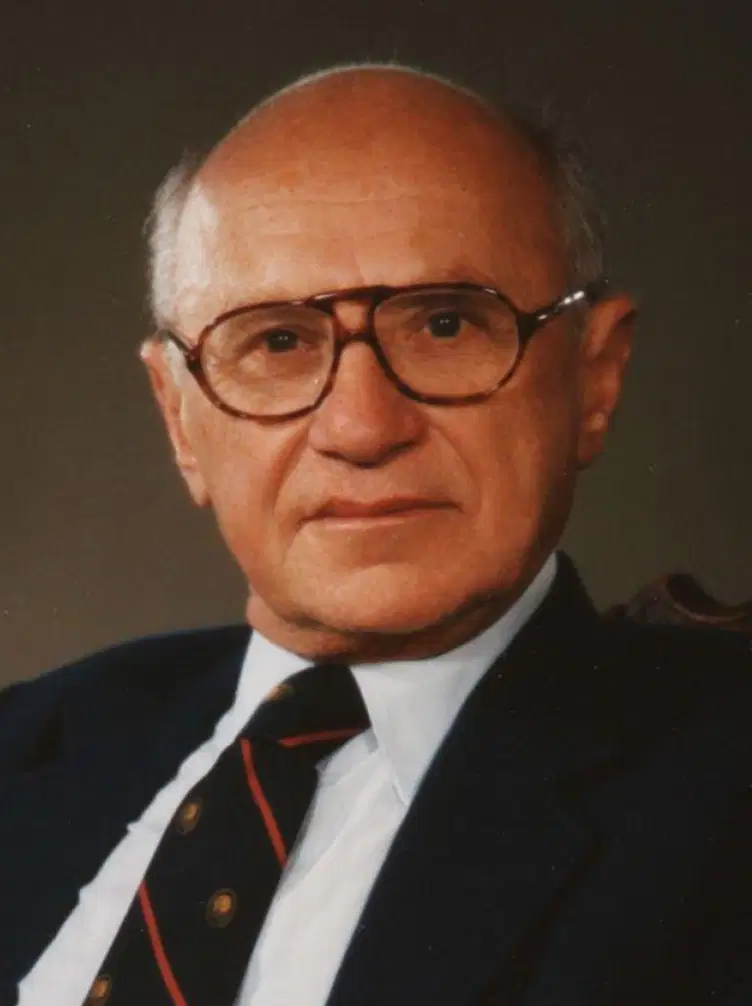
Whose theories were popularized and employed to address the issues of stagflation in the American economy?
John Maynard Keynes
Adam Smith
Milton Friedman
David Ricardo

What event in 1973 led the Arab nations of OPEC to halt oil sales to the West, causing gasoline prices to skyrocket?
The Gulf War
The Suez Crisis
The Yom-Kippur War
The Iran-Iraq War

What was the primary consequence in the West due to the 1973 Oil Crisis?
Decrease in oil prices
Increase in gasoline prices
Stabilization of oil supply
Improvement in Western economies

During the 1970s, what was the main reason for the threat to American control and influence of Middle Eastern oil?
Increased oil production in the U.S.
Decreased demand for oil globally
Political instability in the Middle East
Economic downturn in the U.S.
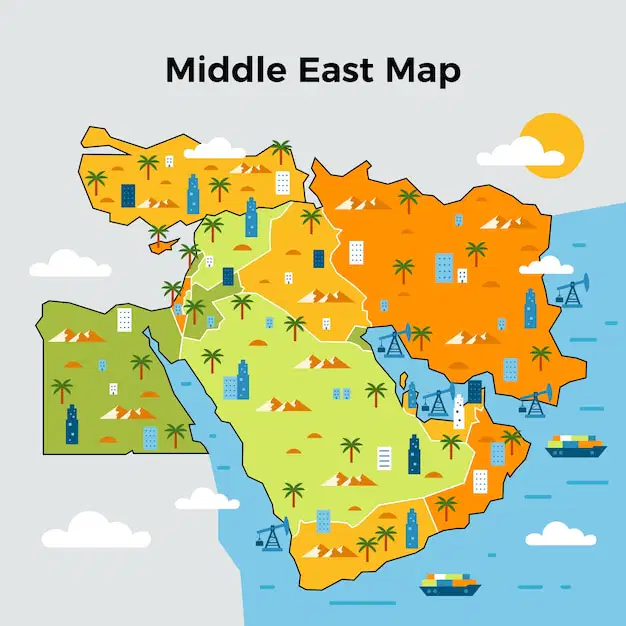
What was a common practice by the West in Middle Eastern states before the 1973 Oil Crisis?
Promoting democratic governments
Funding dictators and pro-Western regimes
Encouraging free trade policies
Reducing oil production
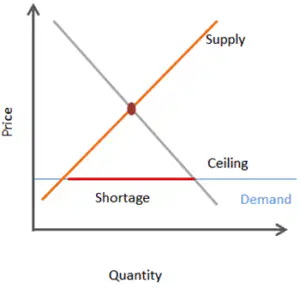
What was one of the disastrous reactions in the West following the 1973 Oil Crisis?
Implementation of renewable energy sources
Use of price controls
Increase in oil imports from Asia
Deregulation of oil prices
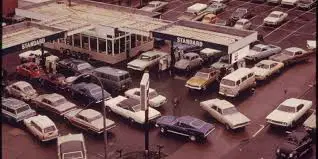
What event is depicted in the image related to the 1973 Oil Crisis?
The signing of an oil treaty
Long queues at gas stations due to fuel shortages
A protest against oil prices
A celebration of new oil discoveries
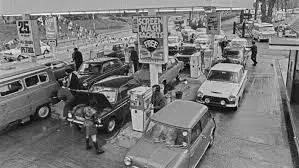
What event is depicted in the image related to the 1973 Oil Crisis?
People celebrating a festival
A typical day at a gas station in the 1970s
Long lines at gas stations due to fuel shortages
A car show displaying 1970s vehicles

What significant agency did Richard Nixon establish during his presidency?
CIA
FBI
EPA
NASA
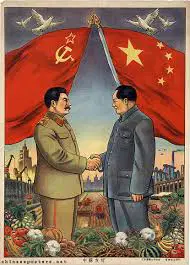
Which two countries did Richard Nixon focus on improving relations with during his presidency?
Germany and Japan
Soviet Union and China
Canada and Mexico
France and Italy
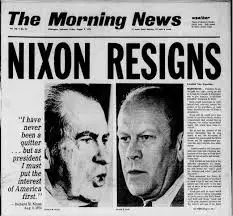
What scandal led to the downfall of Richard Nixon's presidency?
Iran-Contra Affair
Watergate Scandal
Lewinsky Scandal
Teapot Dome Scandal
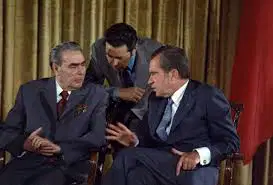
What term describes the easing of strained relations, especially in a political situation, that was pioneered by Nixon during the Cold War?
A) Containment
B) Brinkmanship
C) Détente
D) McCarthyism
Which significant agency did Nixon establish that focuses on environmental protection?
A) Federal Bureau of Investigation
B) Central Intelligence Agency
C) Environmental Protection Agency
D) National Security Agency
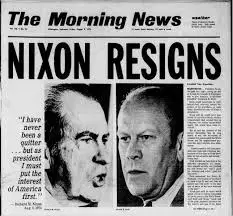
What scandal led to Nixon's resignation?
A) Iran-Contra Affair
B) Teapot Dome Scandal
C) Watergate Scandal
D) Whitewater Controversy
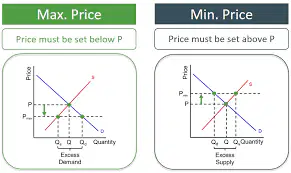
During the 1973 oil crisis, what controversial economic policy did Nixon introduce?
A) Wage freezes
B) Price controls
C) Tax cuts
D) Subsidies
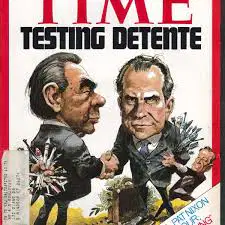
What does the term "Détente" refer to in the context of Cold War history?
The escalation of nuclear arms between the United States and the Soviet Union
The relaxation of tensions between the United States and its two major Communist rivals, the Soviet Union and China
The economic sanctions imposed by the United States on the Soviet Union
The alliance formed between the United States and China against the Soviet Union

What action did Nixon decide to take regarding the recognition of China's government during his presidency?
Recognize Taiwan as the legitimate government of China
Recognize mainland China as the legitimate government of China
Not recognize any government as the legitimate government of China
Recognize Hong Kong as the legitimate government of China

What policy change did Nixon implement concerning trade and travel with China?
Increased trade and travel restrictions
Maintained existing trade and travel restrictions
Began lifting trade and travel restrictions
Imposed new trade and travel restrictions
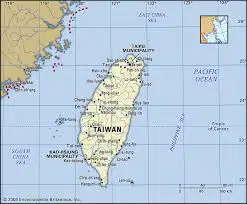
What military decision did Nixon make regarding Taiwan?
Deployed the U.S. Seventh Fleet to defend Taiwan
Increased U.S. military presence in Taiwan
Removed the U.S. Seventh Fleet from defending Taiwan
Signed a defense pact with Taiwan
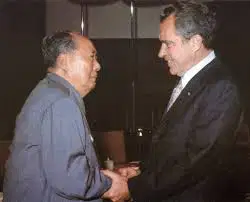
Which two leaders are depicted in the historical photograph shaking hands, symbolizing a significant diplomatic event during the Cold War era?
John F. Kennedy and Nikita Khrushchev
Richard Nixon and Mao Zedong
Franklin D. Roosevelt and Winston Churchill
Jimmy Carter and Leonid Brezhnev

Who founded the Environmental Protection Agency (EPA)?
John F. Kennedy
Richard Nixon
Gerald Ford
Jimmy Carter

What is the primary task of the Environmental Protection Agency (EPA)?
Regulating nuclear energy
Protecting the environment
Promoting oil and gas industries
Managing wildlife reserves
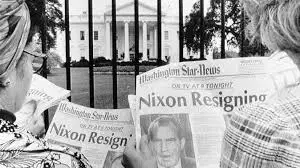
What was the Watergate Scandal primarily about?
A financial fraud involving the Democratic Party
A spying campaign against the Democratic Party
A military operation ordered by the President
A public health misinformation campaign
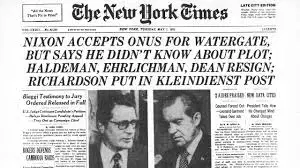
In what year did Nixon resign due to the Watergate Scandal?
1972
1973
1974
1975
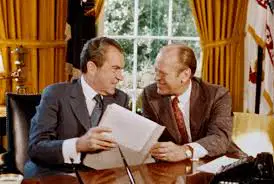
Who pardoned Nixon for the crimes related to the Watergate Scandal?
Jimmy Carter
Gerald Ford
Lyndon B. Johnson
Ronald Reagan
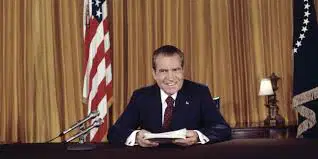
What was the consequence of the Watergate Scandal on public perception?
Increased trust in the government
No significant change in public views
Permanent harm to public views and trust of the state
Improved transparency in government operations
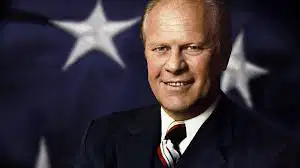
Who was the only person to become President of the United States without having been elected as either President or Vice President?
Gerald Ford
Richard Nixon
Jimmy Carter
George H. W. Bush
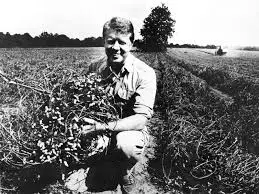
What was Jimmy Carter's profession before becoming the Governor of Georgia and later the President of the United States?
Lawyer
Peanut farmer
Doctor
Teacher
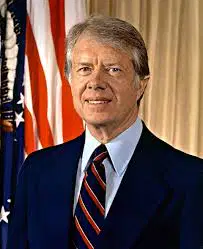
In which year did Jimmy Carter become President of the United States?
1975
1977
1979
1981
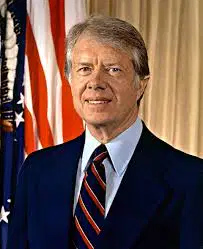
What did Jimmy Carter promise to restore when he came to Washington as President?
Economic stability
International relations
Honesty to the federal government
Military strength
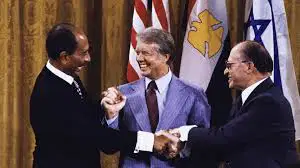
What was the primary significance of the Camp David Accords in the context of Middle Eastern peace efforts?
It led to the establishment of the European Union
It marked the first step to achieving peace in the Middle East
It initiated economic sanctions against Israel
It resulted in a military alliance between Egypt and the United States
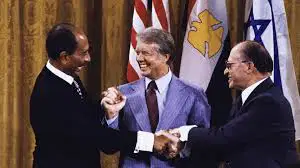
Which two countries were the traditional enemies that made a historic peace deal through the Camp David Accords?
Iran and Iraq
Egypt and Israel
Saudi Arabia and Iran
Jordan and Lebanon
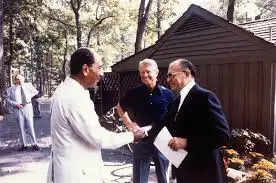
How did most other Arab countries react to the Camp David Accords?
They supported the deal enthusiastically
They provided financial aid to facilitate the deal
They rejected the deal
They remained neutral and did not comment
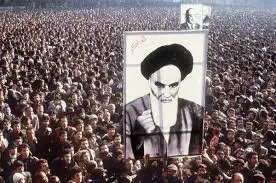
What event led to the removal of a pro-western leader in Iran in 1979?
The Gulf War
The Islamic Revolution
The Cold War
The Suez Crisis
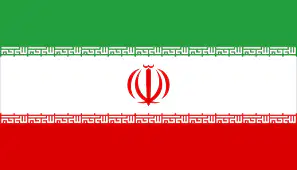
What was established in Iran following the Islamic Revolution in 1979?
A Communist State
A Monarchy
An Islamic Republic
A Democratic Republic
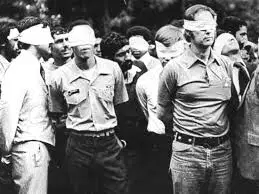
How many Americans were taken hostage during the Iran Hostage Crisis?
44
52
60
75
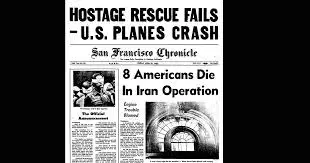
When did President Carter authorize a rescue attempt during the Iran Hostage Crisis?
March 1980
April 1980
May 1980
June 1980
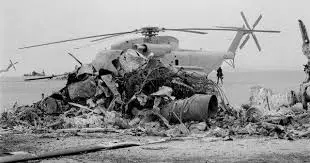
What was the outcome of the rescue mission authorized by Carter in the Iran Hostage Crisis?
The mission was successful
The mission partially succeeded
The mission failed with no casualties
The mission failed and eight American servicemen died
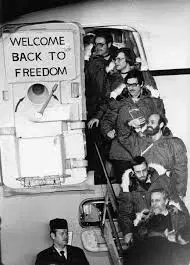
How long were the hostages held in captivity during the Iran Hostage Crisis?
444 days
365 days
500 days
550 days
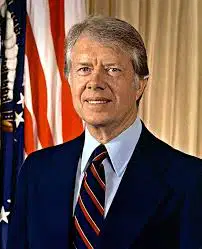
What significant political consequence did the failure of the hostage rescue attempt have for President Carter?
He was re-elected
He decided not to run for re-election
He lost the 1980 presidential election
He resigned from office
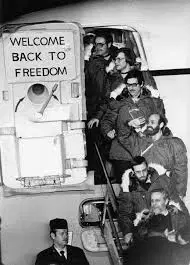
On what date were the hostages released from captivity in the Iran Hostage Crisis?
January 20, 1980
January 20, 1981
December 25, 1980
November 4, 1980
This type of political typically supports government spending on welfare programs, higher taxes on the rich, and trying new ways of governing.
Conservative
Liberal
Radical
Right Wing
This is a set of political views that favors free enterprise, private ownership, and socially traditional ideas.
Conseratism
Liberalism
Radicalism
Left Wing

